


Picking the right dinnerware can feel overwhelming when you’re standing in the store aisle. I’ve been there, debating between stoneware and ceramic for my own kitchen.
In this guide, I’ll walk you through everything about stoneware vs ceramic so you can make the best choice for your home.
We’ll cover what makes each material different, how they perform in daily use, and which one fits your lifestyle. I’ve tested both types over the years, and I’m here to share what actually matters.
You’ll learn about durability, heat retention, appearance, and price. By the end, you’ll know exactly which option works for your needs.
What is Stoneware?

Stoneware is dense clay pottery fired at extremely high temperatures between 1175°C and 1280°C. This intense heat creates a non-porous, chip-resistant material perfect for daily use.
The high firing temperature makes the clay particles bond tightly. You get thick, heavy pieces with a rustic, earthy look.
Stoneware holds heat exceptionally well, keeping your food warm throughout the meal. I’ve dropped stoneware plates before, and they often survive the fall.
These dishes work in the oven, microwave, dishwasher, and freezer. Most families use stoneware for everyday plates, bowls, and mugs. You can bake casseroles directly in stoneware and bring them to the table.
For Indian cooking, stoneware is perfect for curries, rice dishes, and soups. The pieces last for years and are better for the environment than many alternatives.
What is Ceramic?
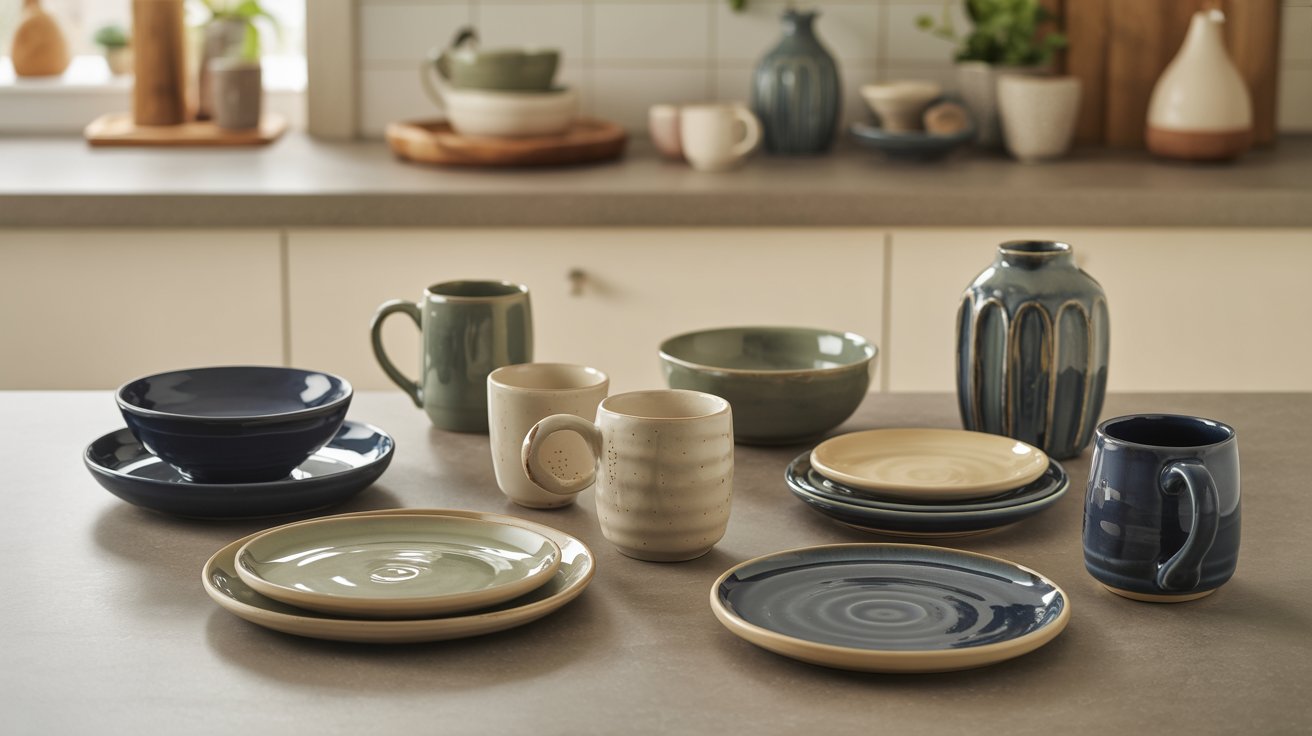
Ceramic is a broad category that includes earthenware, stoneware, and porcelain. Each type uses different firing techniques and temperatures.
Most ceramic pieces are fired at lower temperatures between 1000°C and 1150°C. This makes the material more porous, so items get glazed to seal the surface. The glaze adds color and prevents liquid absorption.
Ceramic dishes feel lighter than stoneware. They come in bright colors, glossy finishes, and intricate patterns. The variety of designs is huge. You can find ceramic dinnerware in any color or pattern you want at budget-friendly prices.
Ceramic works well for lighter meals like salads, snacks, and side dishes. Many people buy ceramic pieces for their decorative value.
They look great on display or for special occasions. Most ceramic dishes are microwave and dishwasher-safe. The lightweight feel makes them easy to handle and store.
Stoneware vs Ceramic: Key Differences
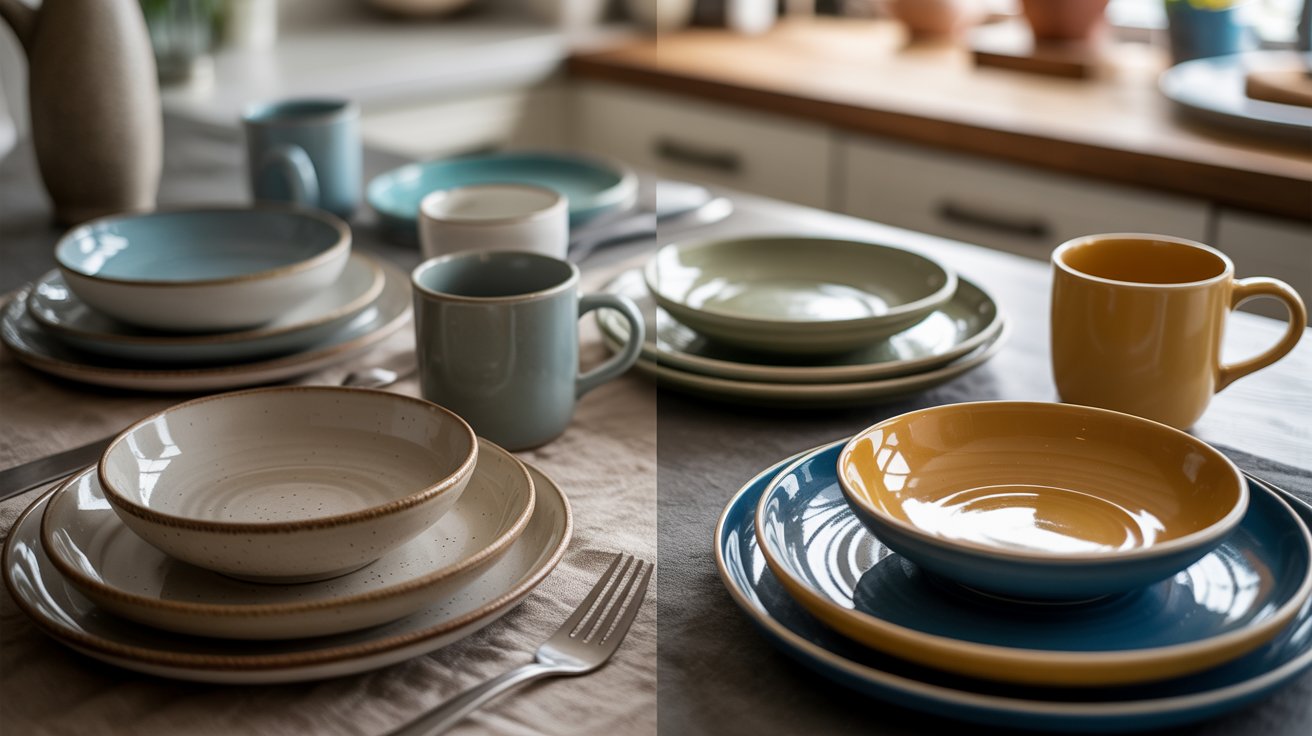
Understanding how these materials compare helps you pick the right one. Each has strengths in different areas.
|
Feature |
Stoneware |
Ceramic |
|
Durability and Strength |
Thick, dense structure resists chips and cracks. Can handle heavy daily use without breaking easily. |
Varies by type. Earthenware is fragile. Porcelain is stronger. Generally lighter and breaks more easily. |
|
Heat Retention and Cooking Use |
Holds heat much longer. Keeps soup hot for the entire meal. Great for casseroles and baked dishes. |
Heats up quickly but cools down faster. Works fine for everyday meals. Better suited for serving than cooking. |
|
Aesthetic Appeal |
Rustic, earthy vibe. Handmade and natural look. Warm, muted colors. |
More variety in appearance. Vibrant colors, shiny glazes, detailed patterns. Polished and refined look. |
|
Price and Value |
Costs more upfront. Might run twice the price of ceramic. Lasts longer, saving money over time. |
More affordable and budget-friendly. Good value for casual use. Easier to replace without hurting your wallet. |
Your choice depends on what matches your kitchen style and how you plan to use your dinnerware.
Durability and Strength
Stoneware wins when it comes to toughness. The thick, dense structure resists chips and cracks. You can use these dishes hard without worrying too much.
Ceramic varies depending on the type. Earthenware is the most fragile, while porcelain is stronger. Overall, ceramic tends to be lighter and break more easily than stoneware.
Heat Retention and Cooking Use
Stoneware holds heat much longer than ceramic. Your soup stays hot in a stoneware bowl for the entire meal. This makes it great for casseroles and baked dishes.
Ceramic heats up quickly but cools down faster. It works fine for everyday meals that don’t need to stay hot for long. Ceramic is better suited for serving rather than cooking.
Aesthetic Appeal
Stoneware has that rustic, earthy vibe. The pieces look handmade and natural. Colors are usually warm and muted. Ceramic offers more variety in appearance.
You get vibrant colors, shiny glazes, and detailed patterns. The look is often more polished and refined. Your choice depends on what matches your kitchen style.
Price and Value
Stoneware costs more upfront. A set of stoneware dishes might run you twice the price of ceramic. But the pieces last longer, which can save money over time. Ceramic is more affordable and gives you good value for casual use.
If you need to replace pieces, ceramic won’t hurt your wallet as much. Think about long-term value versus immediate cost.
Tips for Choosing Between Stoneware and Ceramic
Your lifestyle and needs should guide your decision. Here’s what to consider before you buy.
- Stoneware is your best bet for busy households with kids. The durability handles daily wear and tear from regular family meals. I use stoneware for our family dinners because it holds up to everything we throw at it, from fridge to oven, without problems.
- Ceramic makes sense if you want pretty dishes for special occasions. The designs add charm to your table setting, and it’s perfect for people who like to change their dinnerware style often without spending too much.
- If you bake casseroles or cook in the oven frequently, stoneware handles temperature changes better. It goes from freezer to oven safely and keeps food hot longer during meals.
- Ceramic works fine if you mostly eat salads, snacks, or reheat things in the microwave. Both options are generally microwave and dishwasher-safe, but always check the label before buying.
- Think about long-term value versus upfront cost. Stoneware costs more initially but lasts longer. Ceramic is more affordable but may need replacing sooner. Also consider that stoneware takes up more cabinet space due to its thicker, heavier build.
Conclusion
Both stoneware and ceramic have their place in the kitchen. Stoneware gives you durability and versatility for years of heavy use. Ceramic offers affordability and countless design options for lighter needs.
I keep both types in my cabinets because they each do different jobs well. Think about how you cook, what you serve, and what matters most to you. Pick stoneware if you want dishes that last through everything.
Choose ceramic if you value variety and price. Either way, you’ll have dinnerware that serves you well. Let me know in the comments which one you’re leaning toward!
Frequently Asked Questions
Can stoneware go in the oven?
Yes, stoneware is oven-safe and handles high temperatures without cracking. You can use it for baking and roasting, then serve directly from the same dish.
Is ceramic dinnerware safe for daily use?
Ceramic dinnerware is safe for daily use as long as it has a food-safe glaze. Always check that pieces are labeled as lead-free and dishwasher-safe.
Which is heavier, stoneware or ceramic?
Stoneware is heavier because of its dense structure and thick walls. Ceramic, especially earthenware, feels lighter and easier to handle.
Does stoneware chip easily?
Stoneware is chip-resistant due to its high firing temperature and dense composition. It’s more durable than most ceramic types but can still chip if dropped on hard surfaces.
Can I use ceramic bowls for hot soup?
You can use ceramic bowls for hot soup, but they won’t keep the food warm as long. Stoneware retains heat better if you want your soup to stay hot throughout the meal.
