


After making spider crafts with preschoolers for years, I know what works and what does not.
Spider crafts for preschoolers are one of the best ways to keep little ones busy, happy, and learning all at once.
In this post, I’ll share easy craft ideas, art activities, and simple tips that actually work for small hands.
No fancy supplies. No stress. Just fun, hands-on projects your child will love making and showing off.
I’ll also cover display ideas and safety tips to make the whole process smooth for you.
Let’s get started.
Why Spider Crafts Work So Well for Preschoolers
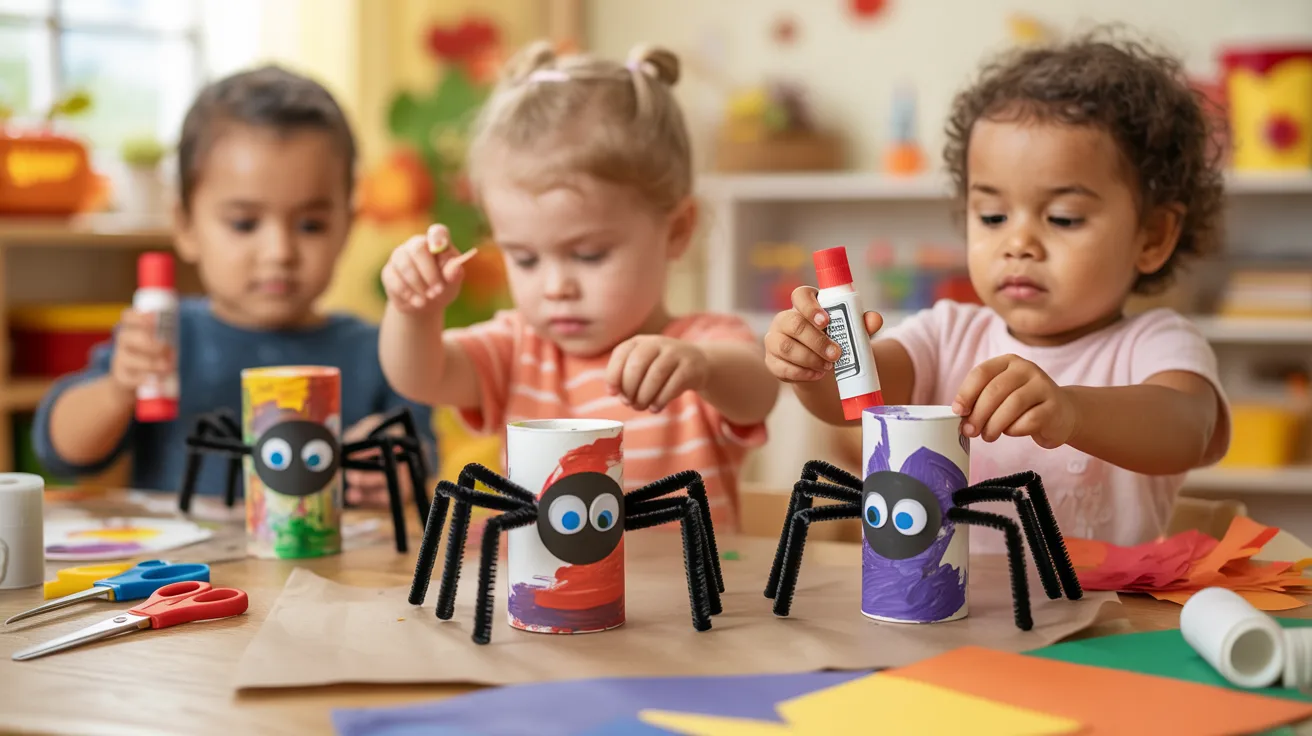
Spider crafts are not just fun, they actually help kids grow. Every time a child tears paper, threads yarn, or twists a pipe cleaner, they are building fine motor skills without even knowing it.
These activities also feed imagination and give little ones a sense of pride in what they make.
The best part? Most of these crafts use supplies you already have at home. Toilet paper rolls, tissue paper, googly eyes, paint.
That is all you need. Spider crafts also fit perfectly into seasonal themes, making them great for autumn classrooms or Halloween prep at home.
List of 7 Fun and creative Spider Craft Ideas for Preschoolers
These seven hands-on spider crafts are simple enough for preschoolers and use materials you likely already have at home.
1. Scrunched Paper Spider

You’ll need tissue paper, cardstock, glue, and scissors. Help your child tear and scrunch small pieces of tissue paper, then glue them onto cardstock in a spider shape.
Once dry, hang them on the wall for a fun mini spider gallery. This craft works well for toddlers since tearing and scrunching paper is easy for small hands.
It is also a great way to use up leftover tissue paper you already have at home.
2. Paper Plate Spider Web

Grab a paper plate, yarn, and a small paper or plastic spider. Punch holes around the edge of the plate. Let your child thread yarn through the holes to make a web pattern.
Attach the spider at the center. Great for building threading and fine motor skills.
Kids also feel a real sense of accomplishment when the web comes together, it looks impressive with very little effort.
3. Fuzzy Pipe-Cleaner Spider

You need chenille stems and googly eyes. Twist several stems together at the center for the body, then bend the ends out to form legs. Glue on the eyes.
Place it in a sensory bin or hang it from a window. Kids love both options. You can also bend the legs into different positions to make each spider look a little different from the last.
4. Spider Necklaces with Beads

Use pony beads, string, and a small spider figure. Let your child thread beads and create color patterns. Add the spider charm at the end.
This builds counting skills and fine motor development in a way that feels like play. You can also turn it into a small math activity by asking your child to count beads as they go.
5. Paper Roll Spider

Save your toilet paper rolls for this one. Paint a roll black and let it dry. Poke pipe cleaners through the sides for legs and glue on googly eyes.
These little spiders can sit on shelves or join pretend play setups. This is a great craft for using up supplies you would normally throw away, making it budget-friendly and fun at the same time.
6. Blow Painting

Drop a little paint onto paper. Give your child a straw and let them blow the paint around to make web-like patterns. Add plastic spiders on top once it dries.
It is messy in the best way. This activity also helps build breath control, which is actually good for early speech and language development in young children.
7. Spider Name Art
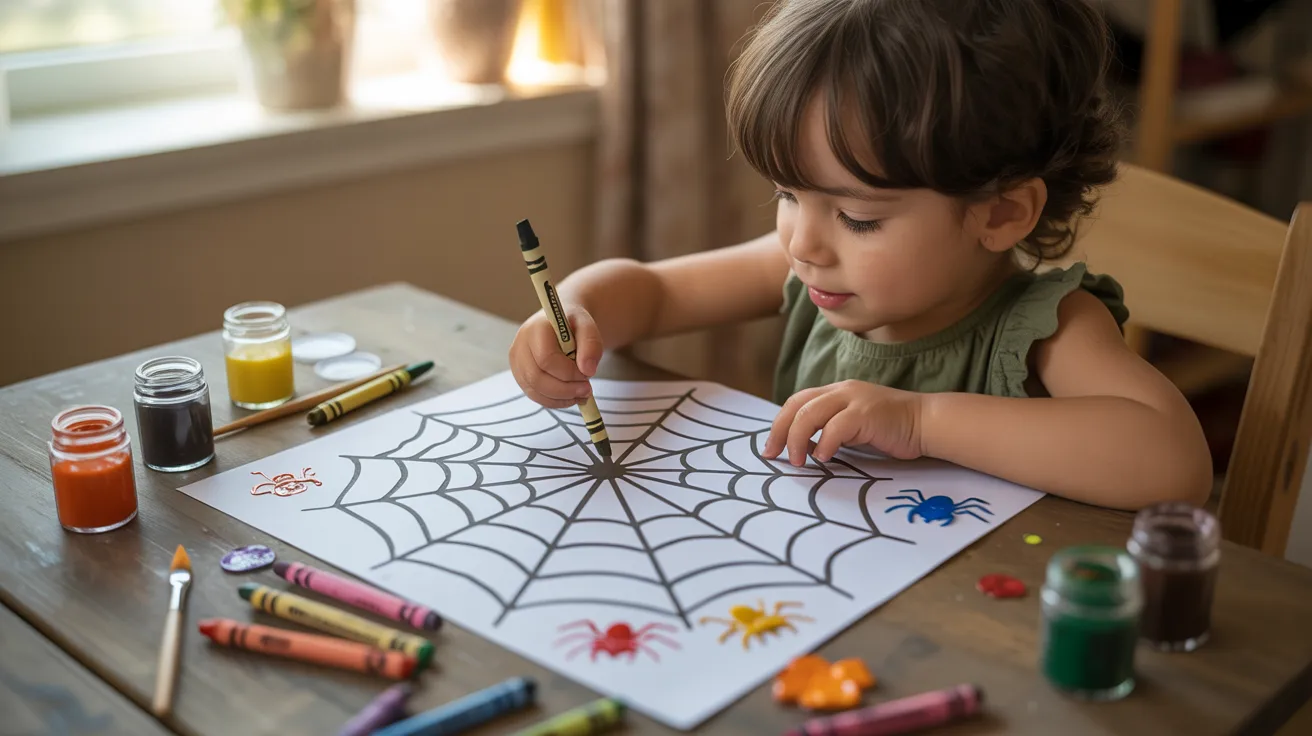
Print or draw a simple spider web coloring page. Have your child write their name across the web, then decorate it with paint, crayons, or stickers.
It is art and literacy wrapped into one activity. This craft also makes a sweet keepsake, something you can save and look back on when your child is older.
Materials You’ll Need for Easy Spider Crafts

You do not need to spend much to make these crafts work. Most supplies are already sitting in your home.
Here is what comes in handy: tissue paper, cardstock, paper plates, yarn, pipe cleaners, chenille stems, googly eyes, pony beads, string, toilet paper rolls, black paint, glue, scissors, straws, and construction paper.
A dollar store run covers almost everything on this list. Keep a small craft box stocked and you will be ready to go anytime.
Fun Ways to Display and Play with Finished Spiders

Once the crafts are done, put them to work. Hang spiders on windows, walls, or string them across a doorway for a festive touch.
Set up a pretend play scene where spiders catch “flies” cut from paper.
Drop finished spiders into a sensory bin filled with kinetic sand or dried beans for open-ended play.
Kids stay engaged much longer when their creations become part of a game. It turns a simple craft into an activity that lasts all day.
Tips for Making Spider Crafts Kid-Friendly
Making crafts with preschoolers is always a good time with a little planning. Here are five tips to keep things running smoothly.
- Always supervise when scissors or small beads are involved.
- Stick to child-safe materials and non-toxic glue for all projects.
- Skip the perfectionism ,let kids pick their own colors and shapes.
- Set up a simple workspace with a plastic sheet or newspaper to cut down on cleanup.
- Keep sessions short, around 15 to 20 minutes, so little ones stay focused and happy.
There is no wrong way for a child to make a spider craft. The process matters more than the result.
Conclusion
I hope these spider crafts for preschoolers gave you some fresh ideas to try at home or in the classroom.
My favorite has always been the pipe-cleaner spider. kids light up when it starts to look like something real.
Pick one project, gather your supplies, and just go for it. I’d love to know which craft your little one enjoyed most.
Drop a comment below and share your experience. And if a friend could use these ideas too, feel free to pass this post along!
Frequently Asked Questions
What age group are spider crafts best suited for?
Best for ages 2 to 6, with adult help for younger children.
What materials do I need for basic spider crafts?
Paper rolls, pipe cleaners, googly eyes, paint, and glue.
Are spider crafts safe for very young children?
Yes, with supervision and non-toxic materials.
Can spider crafts be used in a classroom setting?
Yes, most work well as simple group stations.
How do spider crafts help with child development?
They build fine motor skills, creativity, and color recognition.
