


I still remember the first time I tried drawing a soccer ball. It looked more like a sad balloon. But with a few simple steps, it started to actually look right.
That's the thing about soccer drawing. It's forgiving, fun, and way easier than it looks.
In this guide, you'll learn how to draw players, a ball, a goal, and simple scenes. All you need is paper, a pencil, an eraser, and some colors.
Let's get into it.
What You Need to Get Started

You do not need fancy tools or art skills to draw soccer. Just a few basic supplies and you are good to go.
Grab a pencil for light sketching and plain white paper or a sketchbook to draw on. Keep an eraser nearby for quick fixes.
A ruler helps with straight lines like goal posts. Colored pencils or markers are great for the final step. That is all you really need.
Step 1 – How to Draw a Simple Soccer Ball

The soccer ball is the best place to start. Get this right and the rest comes easy.
Draw the Basic Circle Shape
Start with a light, loose circle. Use your wrist for a smoother curve. Don't press too hard at first. If it looks wobbly, trace over it slowly. A compass works great for a cleaner shape.
Add Classic Soccer Ball Patterns
Start with one pentagon in the center. Draw hexagons around it. Keep the shapes small and roughly the same size. They don't need to be perfect to look good.
Outline and Shade
Go over your lines with a darker pencil once you're happy. Pick one side as your light source. Leave it light and add soft grey on the other side. This gives the ball a 3D look with very little effort.
Step 2 – Easy Soccer Player Drawing for Beginners
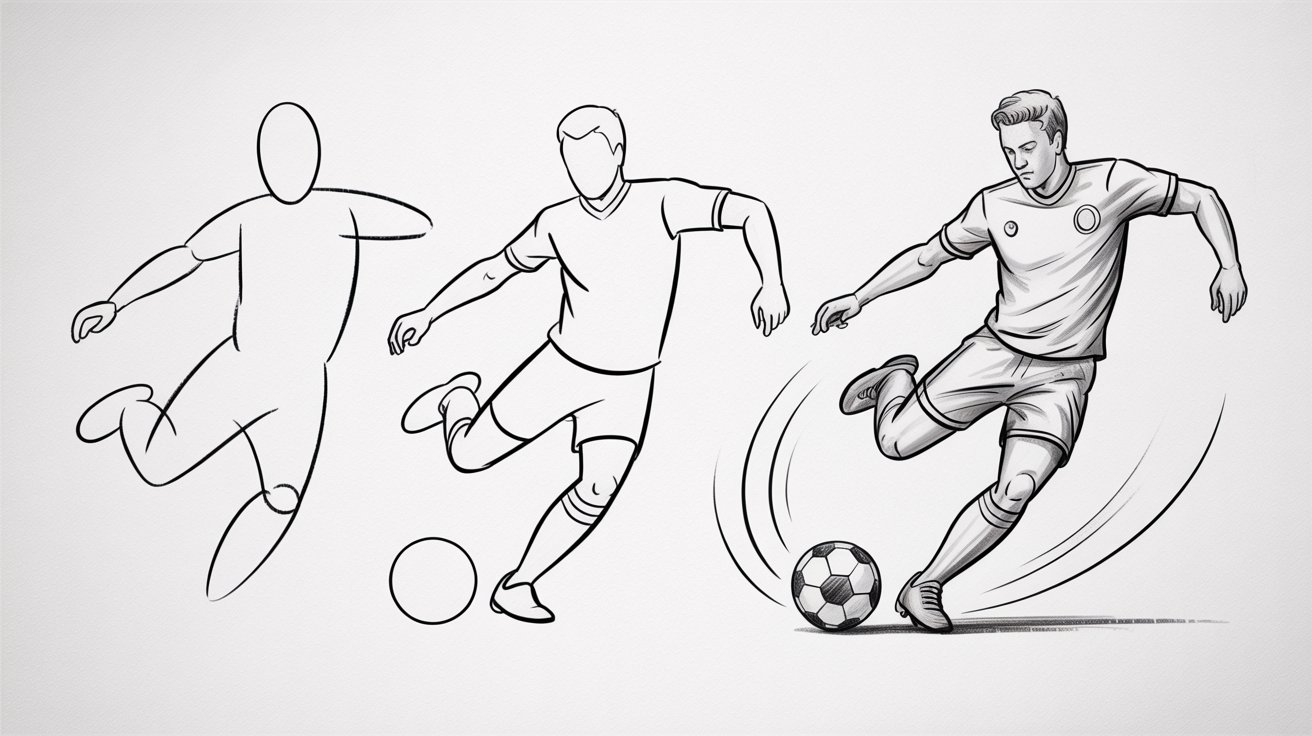
Break the player into simple shapes and it stops feeling hard.
Sketch the Basic Body Shape
Start with a stick figure. Add ovals for the torso and thighs. Use cylinders for the arms and lower legs. Keep the head about one-seventh of the total height.
Add Details Like Jersey and Shoes
Draw a simple t-shirt shape over the torso. Add shorts at the hips. Shoes are just rounded rectangles at the base of the legs. A few lines for stripes or a number keeps it clean.
Draw Action Poses (Kicking the Ball)
Bend one leg forward at the knee. Keep the other on the ground. Lean the upper body slightly back. Add a small motion line near the foot. Even a basic kick pose makes the drawing feel alive.
Step 3 – How to Draw a Soccer Goal Post
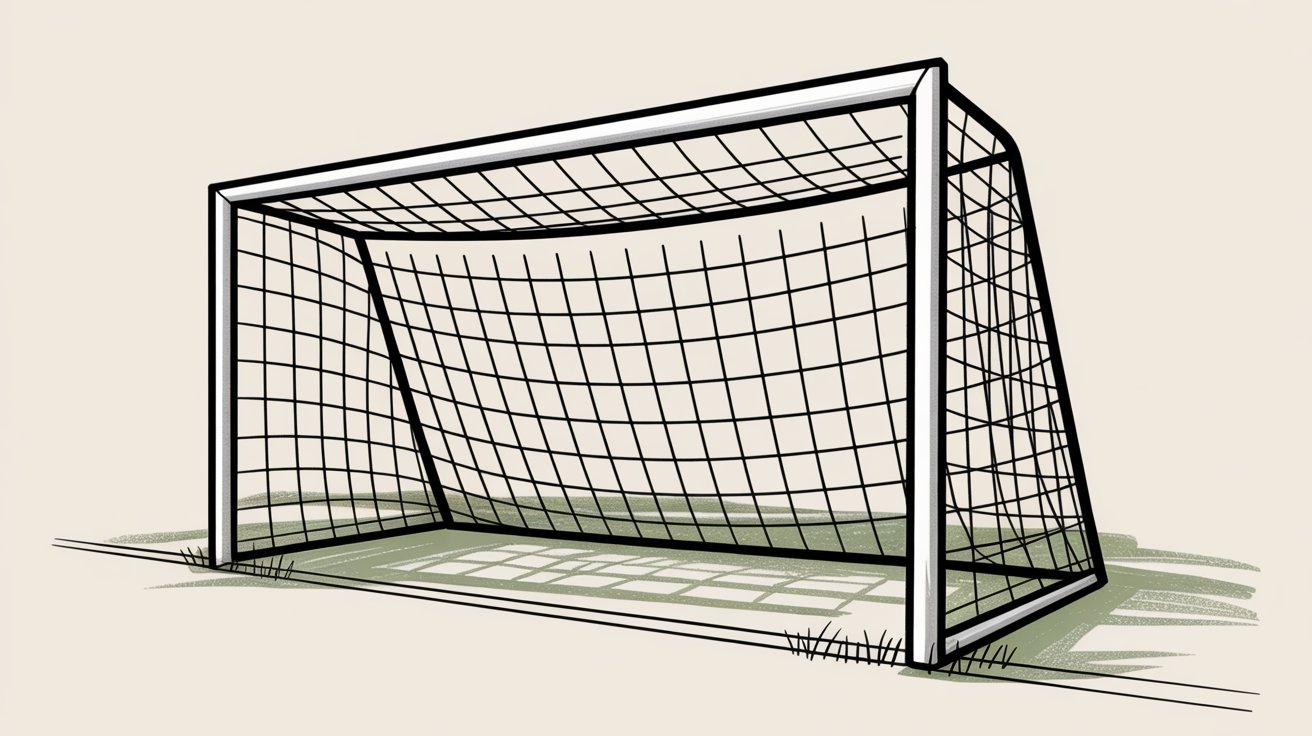
Just straight lines and a simple grid. That's all this takes.
Draw the Frame Structure
Draw two vertical lines for the side posts. Connect them at the top. Add two short lines going back from the top corners for a 3D look. Use a ruler if needed.
Add the Net with Simple Lines
Draw diagonal lines inside the frame going one way. Then cross them in the other direction. Six to eight lines each way is enough to look like a net.
Final Touches
Add a short line at the base of each post. Draw a soft shadow underneath. A few grass strokes nearby finish it off nicely.
Step 4 – Drawing a Simple Soccer Scene
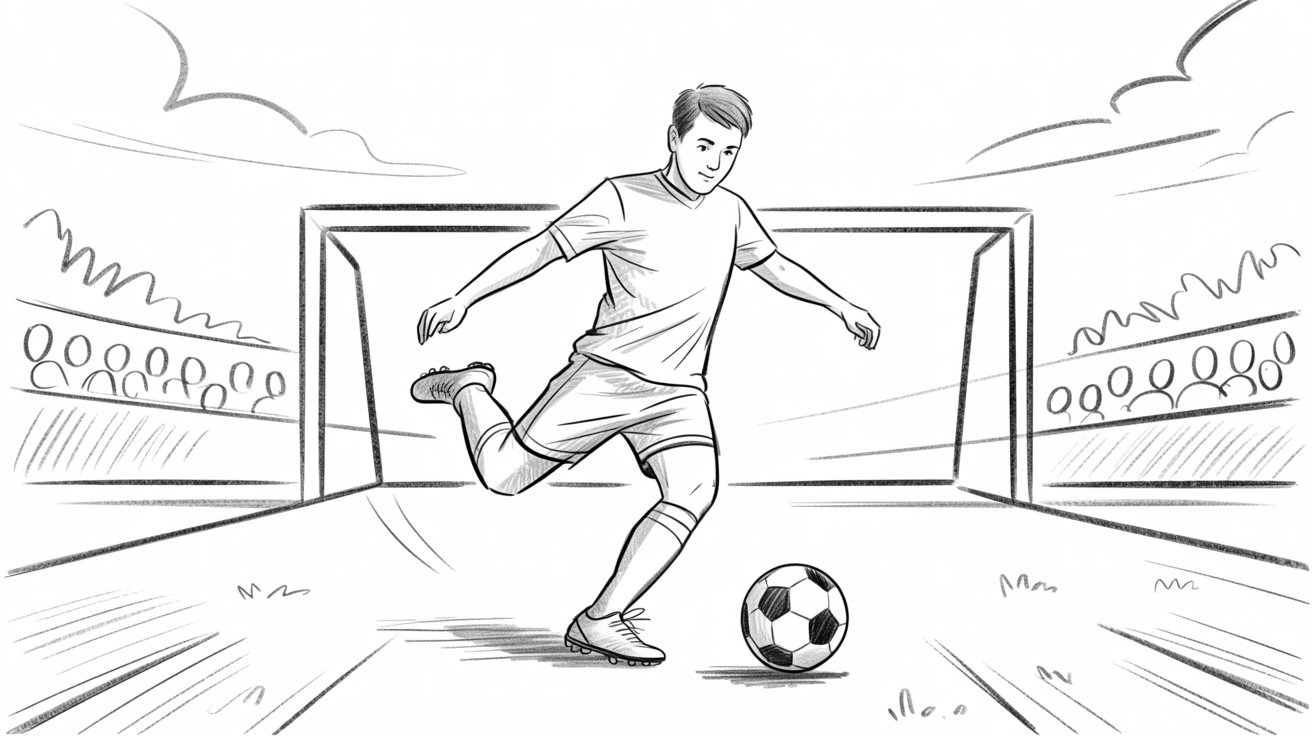
This is where everything comes together.
Combine Ball, Player, and Goal
Place the goal in the background, slightly smaller. Put the player in the middle, mid-kick. Draw the ball near the player's foot. Keep the sizes realistic so the scene looks natural.
Add Background Details
Draw a long line for the field. Add short V-strokes for grass. Sketch a few clouds for the sky. Small oval shapes along the far end work well as a crowd. Keep it all rough and light.
Keep It Minimal and Clean
Add background details last. A clean drawing always beats a cluttered one. One strong focal point is all you need.
Step 5 – Coloring and Final Enhancements
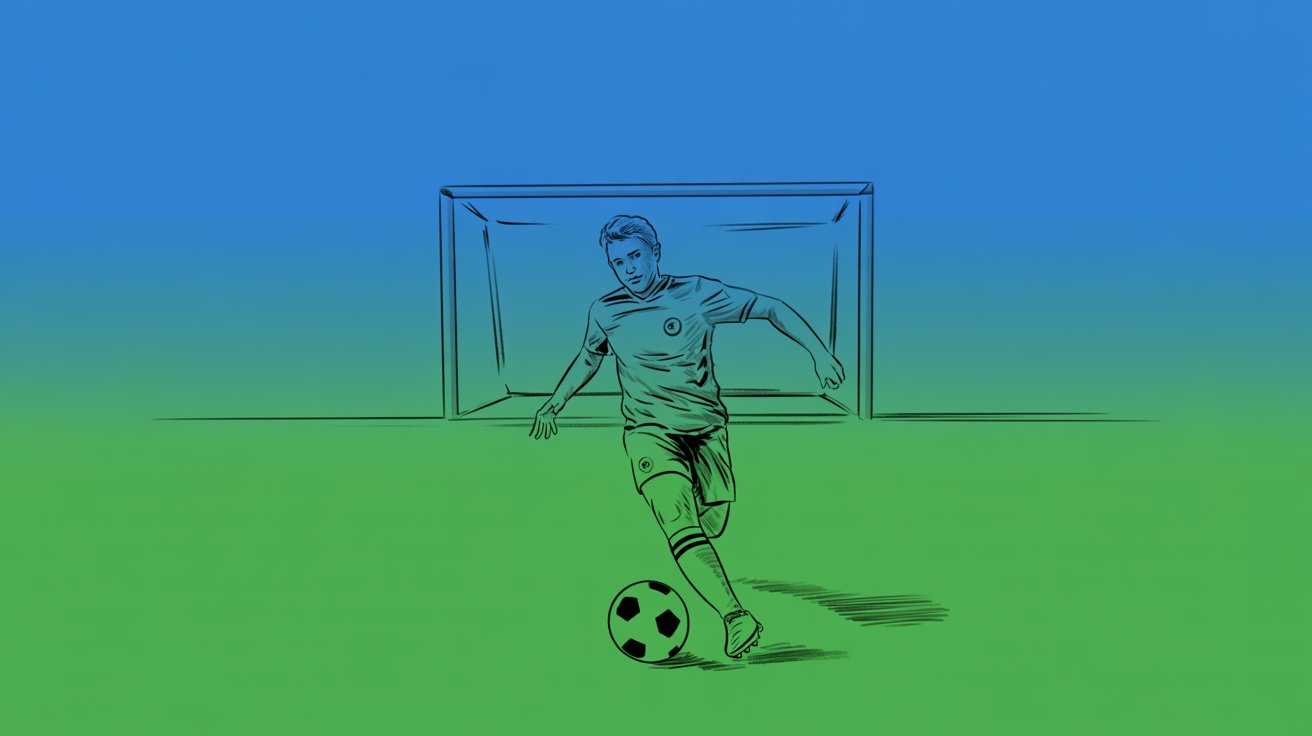
Color is what pulls the whole thing together.
Choose Bright Soccer Colors
Use green for the field and light blue for the sky. Pick bold colors for the jersey. Keep the ball black and white. Use darker green strokes over the base field color for texture.
Add Highlights and Shadows
Leave a small white spot on the ball where the light hits. Add a thin lighter streak on one side of the goal post. Use a slightly darker shade under the player's feet and below the ball.
Common Mistakes to Avoid
- Adding too much detail before the base shapes are set
- Making the head too big or legs too short
- Drawing net lines too thick or uneven
- Pressing too hard before you're ready to finalize
- Using too many colors at once
Easy Soccer Drawing Tips for Beginners
Getting better at soccer drawing comes down to a few simple habits. These tips will save you a lot of frustration early on.
- Practice basic shapes first. Every soccer drawing starts with circles, rectangles, and simple lines. Get comfortable with these before anything else.
- Use references for better accuracy. Keep a photo of a soccer ball or player nearby while you draw. It helps you get proportions right without guessing.
- Start simple, then improve gradually. Don't try to draw a full scene on day one. Master one element at a time and build from there.
- Draw lightly before going dark. Light pencil strokes are easy to fix. Dark ones are not. Always sketch loose first, then commit to your final lines.
- Be consistent with your practice. Even ten minutes a day adds up fast. The more you draw, the more natural it starts to feel.
Conclusion
Soccer drawing is one of those skills that gets better every time you pick up a pencil. Start with the ball, move to the player, then build a full scene. Each step teaches you something new.
Don't wait for the perfect drawing. Just start, make mistakes, and keep going. That's how it actually works.
Try drawing different scenes, a penalty kick, a goal celebration, a full match view. The more you try, the better you get.
Drop your drawing in the comments. I'd love to see it.
Frequently Asked Questions
How do I start soccer drawing if I have no experience?
Start with basic shapes like circles and straight lines. Once you get comfortable with those, building a full soccer drawing becomes much easier.
What tools do I need for easy soccer drawing?
All you need is a pencil, paper, and an eraser to get started. Colors are optional but make your drawing look a lot more fun.
How long does it take to learn soccer drawing?
Most beginners can draw a basic soccer ball or player within a few practice sessions. The key is to keep drawing regularly, even if it's just for ten minutes a day.
Can kids learn soccer drawing with this guide?
Yes, this guide is beginner-friendly and works well for kids too. The steps are simple and easy to follow at any age.
Do I need to be good at drawing to follow these steps?
Not at all. This guide is built for complete beginners with no drawing background. Every step is broken down so anyone can follow along and get good results.
