


I’ve spent years helping kids connect with science through art, and I can tell you this: a pencil and some curiosity go a long way.
If you’ve ever stared at a blank page with no idea where to start, I’ve been there too. That’s exactly why I put this list together.
These ideas solve the ‘what should I draw?’ problem for good.
I’ll cover easy sketches for beginners and slightly more detailed ones for kids who want a challenge. You’ll also get practical tips to make each drawing session a success.
With over a decade of experience in kids’ educational content, I’ve tested what works and what doesn’t.
Why Science Drawing Inspires Learning

Drawing science subjects helps kids pay closer attention to the world around them. When a child draws a leaf or a cell, they’re not just making art.
They’re observing, thinking, and remembering. Research shows that visual note-taking improves memory and understanding.
It also builds confidence. A kid who draws a heart diagram once is more likely to remember how it works. Science drawing turns passive learners into active ones.
It’s one of the simplest ways to make learning stick.
And the best part? You don’t need to be a great artist. You just need a pencil, some paper, and one idea to get started.
Inside the Lab & Science Scene
These ideas bring the science classroom to life on paper. Great for kids who love experiments and gadgets.
1. Laboratory Scene

Draw a full lab bench with flasks, test tubes, and a Bunsen burner. Add small details like smoke or bubbles to make it pop.
Try adding a chalkboard in the background with science equations on it.
A stool and a lab coat hanging on the wall add a nice touch. Keep the lines simple and build up the details slowly.
2. Library for Scientists
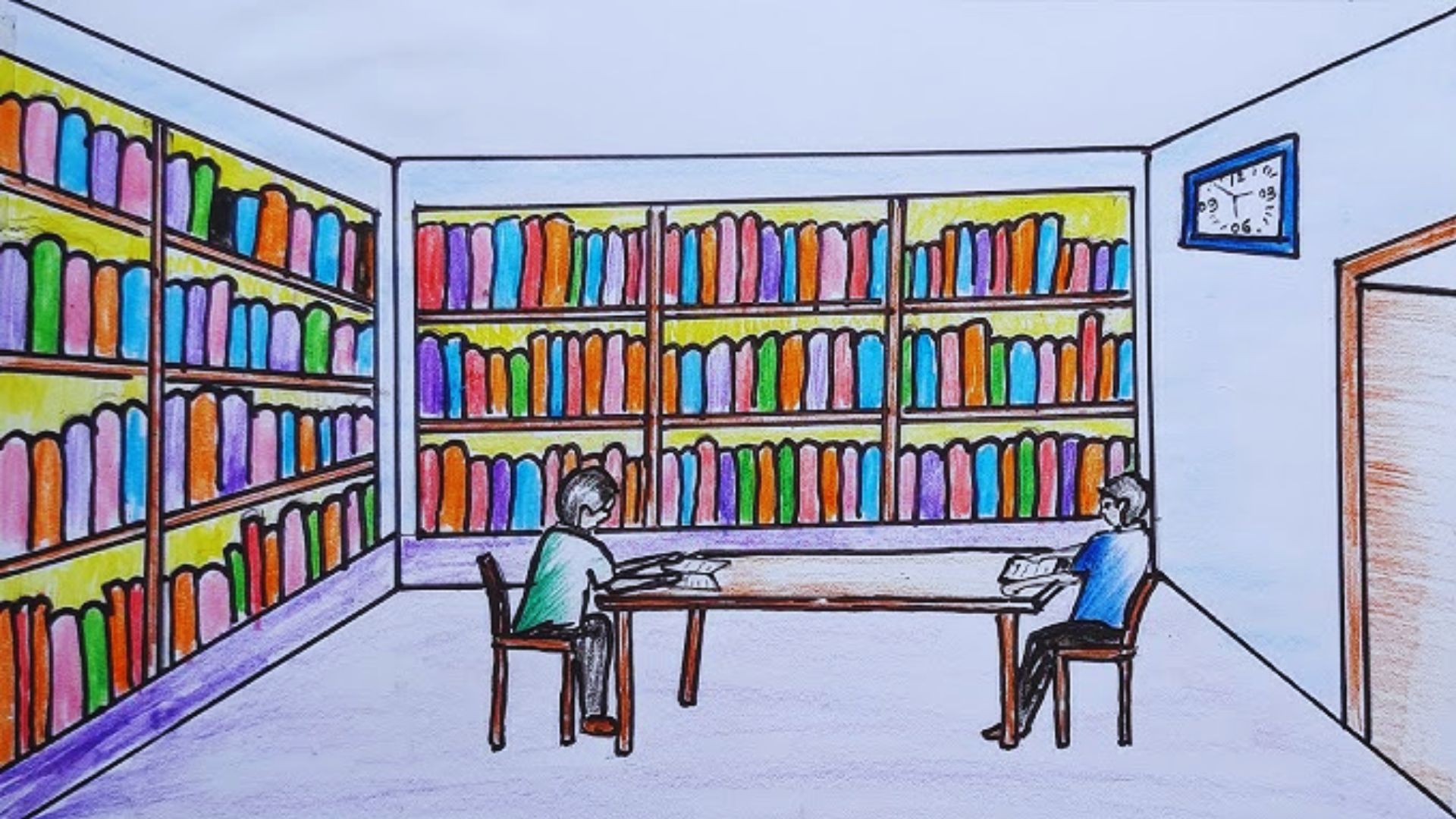
Sketch tall bookshelves filled with thick science books. Add a small scientist reading at a desk in the corner.
Label a few book spines with fun science titles to add character.
A globe or a plant on the desk makes it feel more real. Soft shading on the shelves gives the drawing depth.
3. Cartoon Scientist
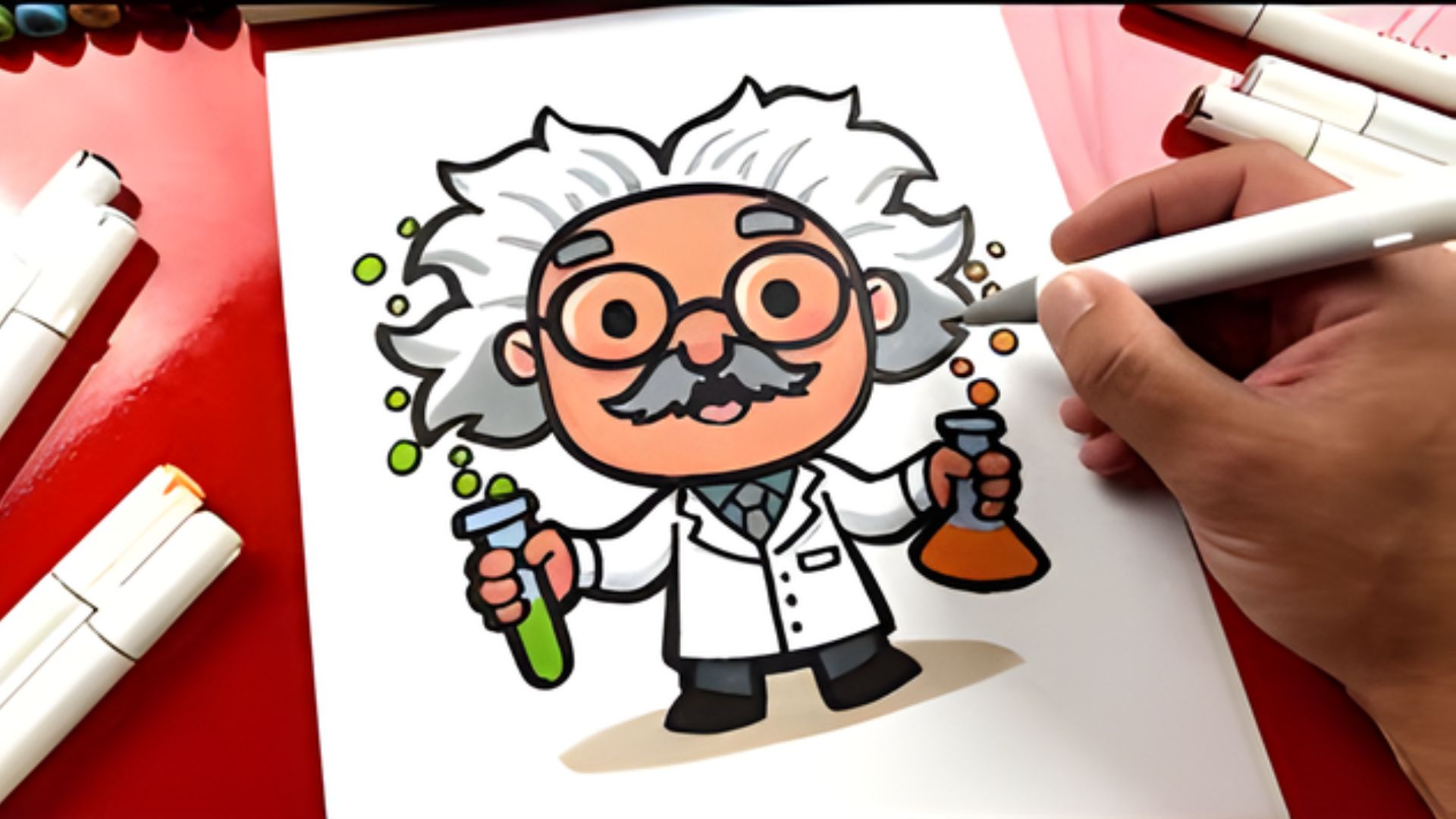
Draw a fun cartoon character in a lab coat with big glasses and wild hair. Keep the face simple and expressive.
Give the scientist a beaker in one hand and a notepad in the other.
A big smile or raised eyebrow makes the character feel alive. Kids love adding their own name tag to the lab coat.
4. Robot
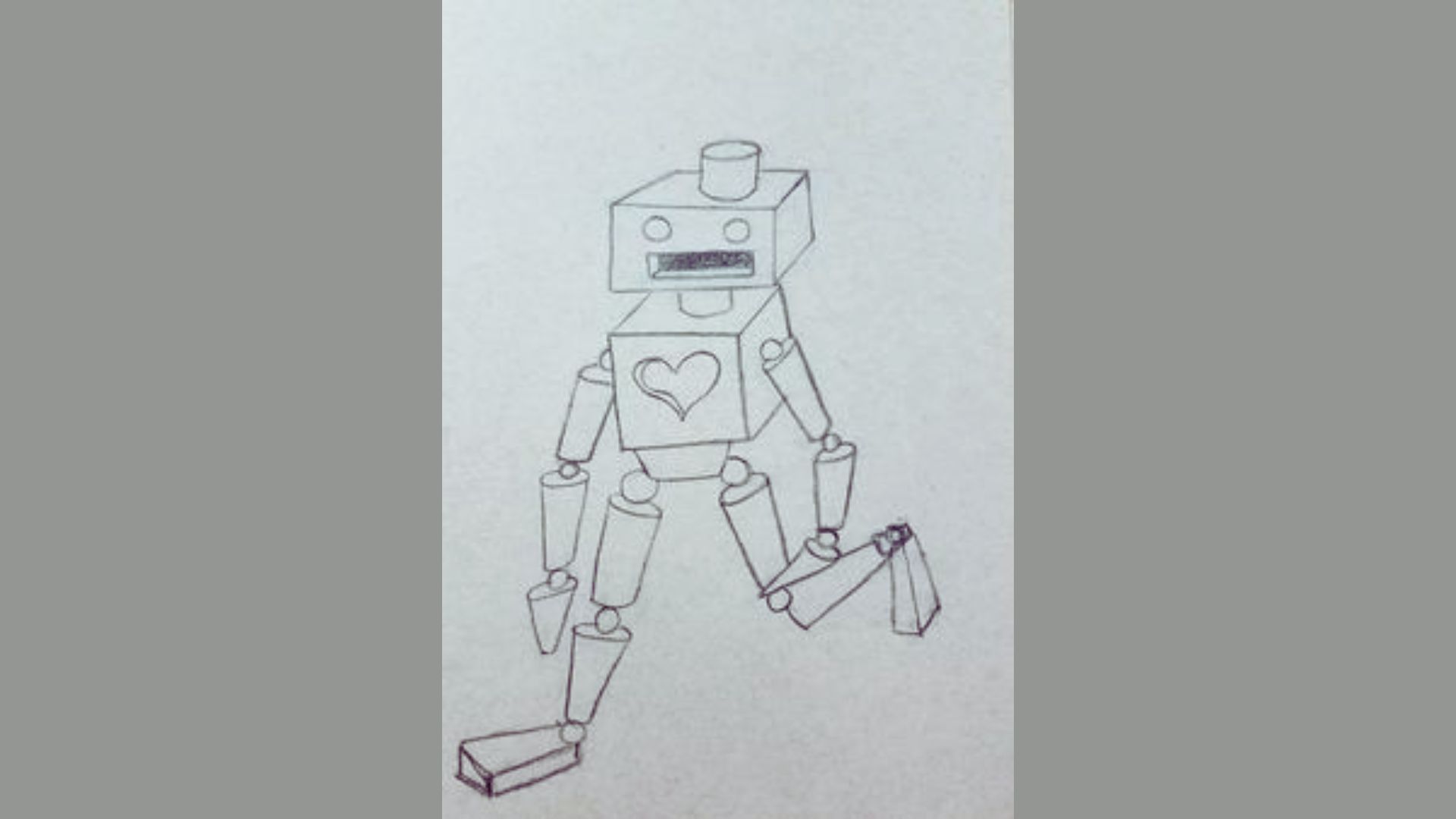
Build a blocky robot using simple shapes like squares and circles. Add bolts, buttons, and antennae for detail.
Give the robot a screen on its chest showing a heart or a smiley face.
Claw hands and big square feet make it look strong. Use a ruler to keep the lines straight and neat.
5. Laptop
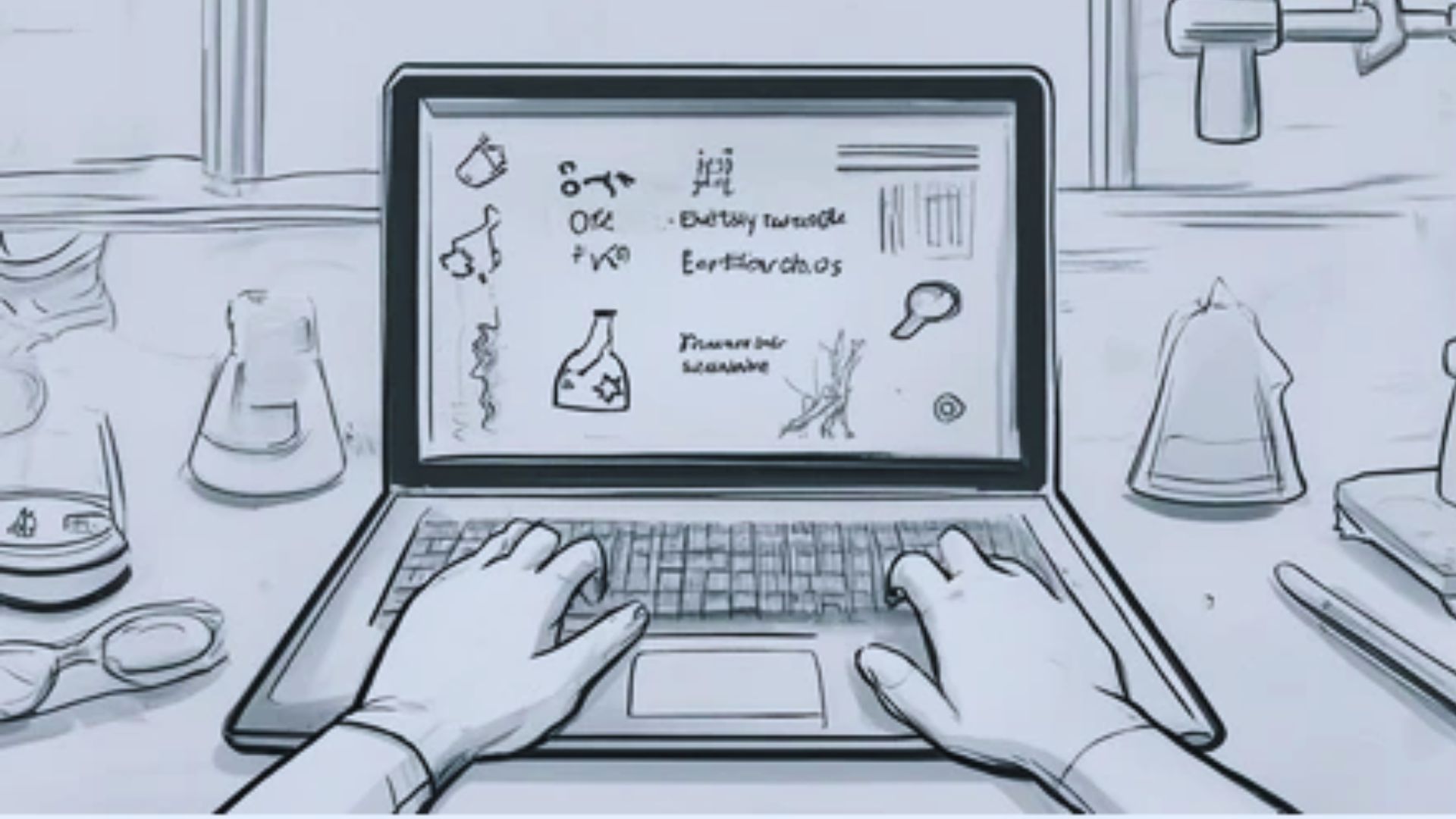
Draw a laptop with a science graph on the screen. Add a keyboard and a coffee cup on the side.
Show a bar graph or a DNA strand on the screen for a science feel.
Small square keys on the keyboard add a realistic touch. A sticky note on the side with a science formula is a fun detail.
6. Thermometer
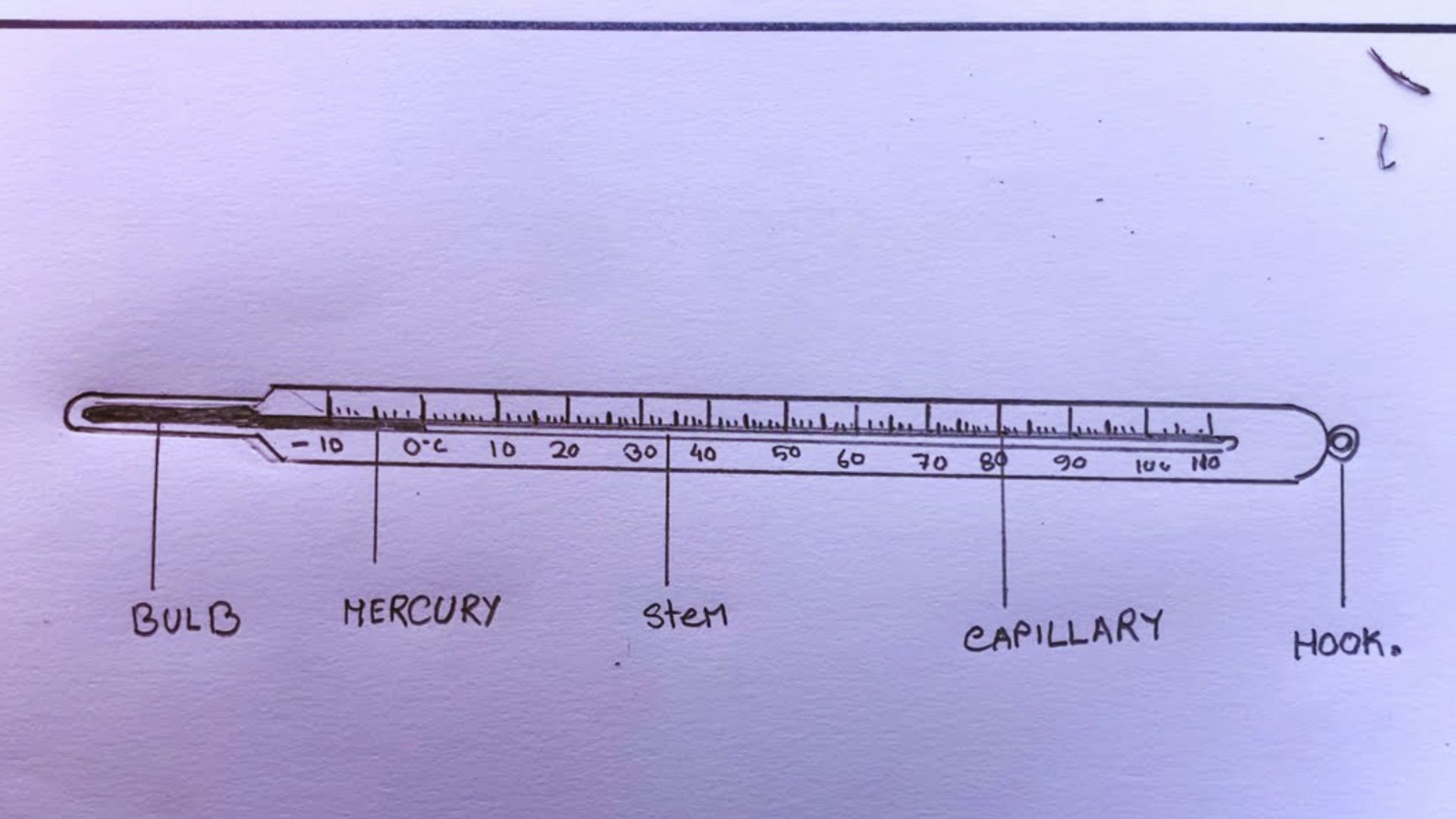
Sketch a large thermometer with temperature markings. Color the mercury red to show heat levels.
Add a sun on one side and snowflakes on the other to show hot and cold.
Label the Celsius and Fahrenheit scales side by side. A cracked thermometer with steam rising makes for a fun, dramatic version.
7. Microscope
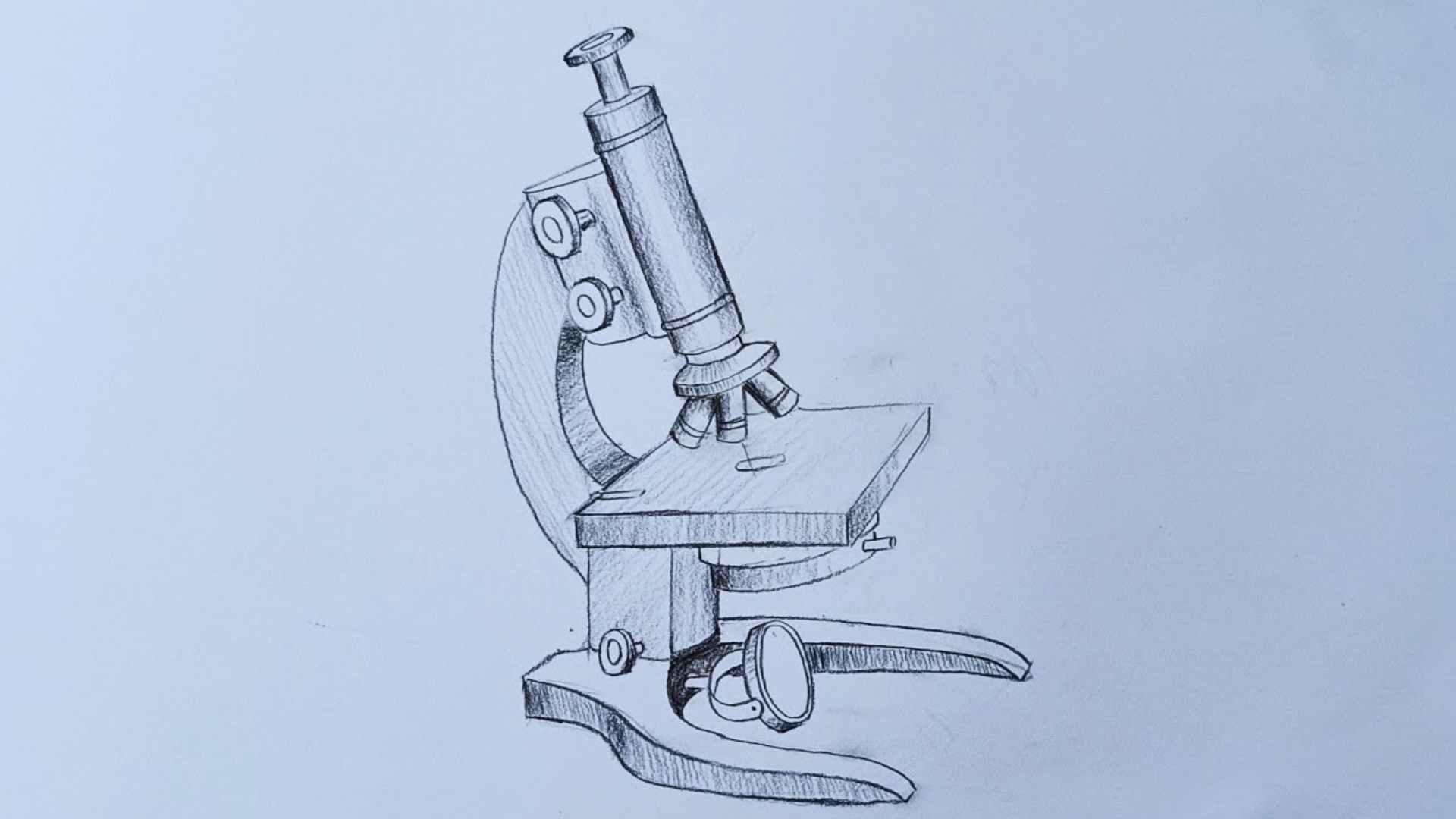
Draw a classic microscope with a slide underneath. Add small circles to show what’s being viewed.
Draw a tiny cell or bacteria inside the viewing circle for extra detail.
Label the eyepiece, arm, and base to turn it into a diagram. A hand adjusting the focus knob adds a nice human element.
8. Magnifying Glass
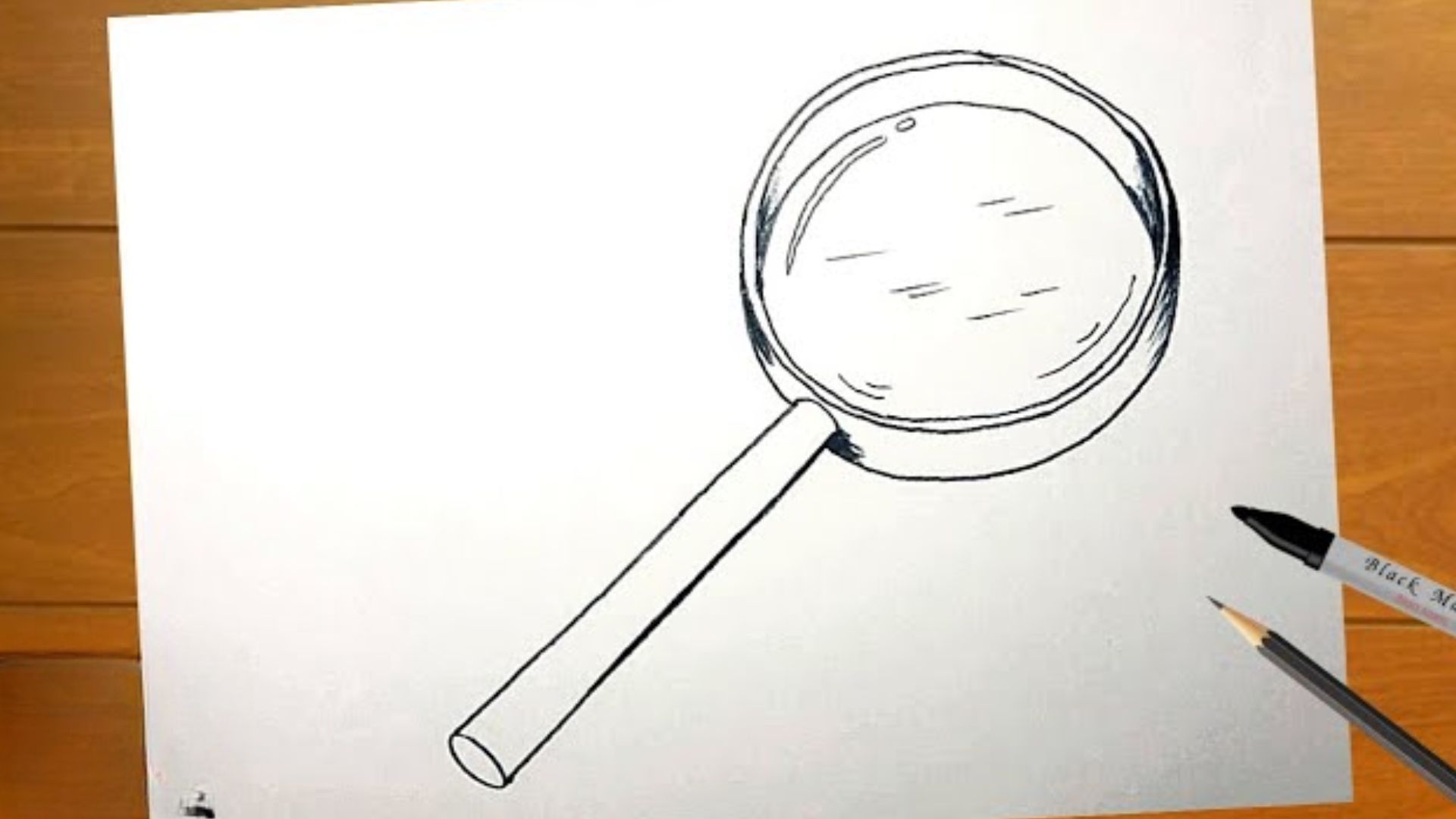
Sketch a magnifying glass hovering over a tiny bug or leaf. Add detail lines to show zoom and focus.
Draw the bug larger inside the glass than outside to show the magnifying effect.
Add tiny leg hairs or vein lines to the zoomed-in area. A dotted circle around the glass helps show the focus zone.
9. Battery Diagram

Draw a labeled battery diagram showing positive and negative ends. Use simple arrows to show current flow.
Add a light bulb connected by wires to show a simple circuit.
Label the voltage and use plus and minus signs clearly. Color the positive end red and the negative end black for easy reading.
10. Explosion / Chemical Reaction
Sketch two flasks connected by tubes with a big puff of smoke or color blast between them.Use bright colors like orange and yellow for the explosion cloud.
Add small star shapes and dots flying outward for drama. Label the flasks A and B to make it look like a real experiment.
Inside the World of Nature & Biology
Nature and biology drawings help kids see the science in living things. Perfect for curious, observational learners.
11. Leaf Sketch

Draw a single leaf with detailed veins running through it. Label the midrib, margin, and tip for a science twist.
Add a small water droplet on the surface of the leaf for a fresh look.
Show the underside of the leaf with lighter, thinner veins. A broken stem at the base adds a natural, realistic touch.
12. Flower / Petal Diagram

Sketch a flower cut in half to show its parts. Label the stamen, pistil, and petals clearly.
Use a ruler to draw clean label lines pointing to each part.
Color each section differently to make the diagram easy to read. Add a small bee hovering nearby to show pollination.
13. Animal Cell
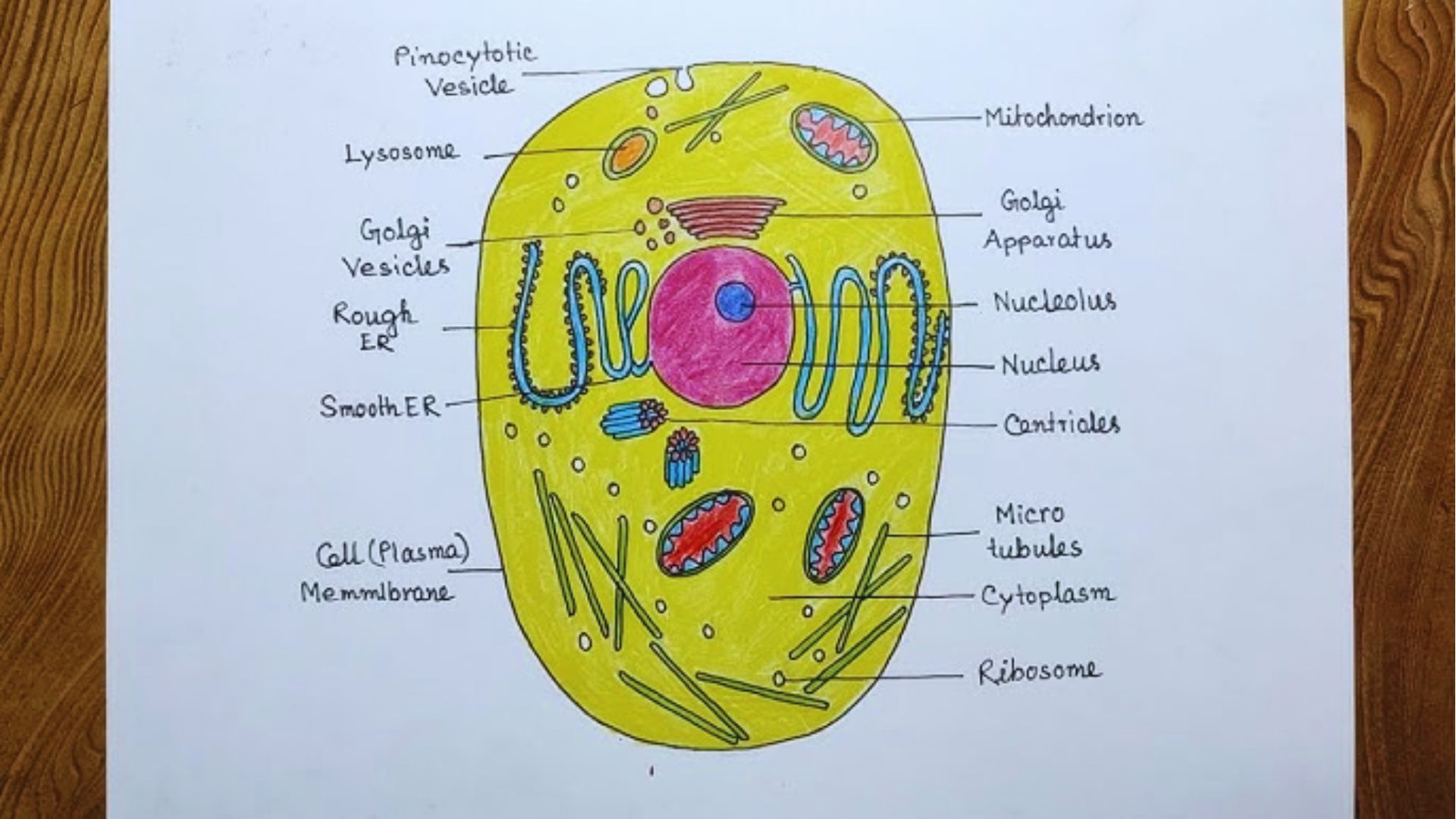
Draw a round animal cell with the nucleus, mitochondria, and cell membrane labeled. Use different colors for each part.
Add the endoplasmic reticulum as wavy lines inside the cell for extra detail.
Use a legend in the corner to match colors to organelle names. A zoomed-in circle showing the nucleus interior looks great.
14. Human Heart
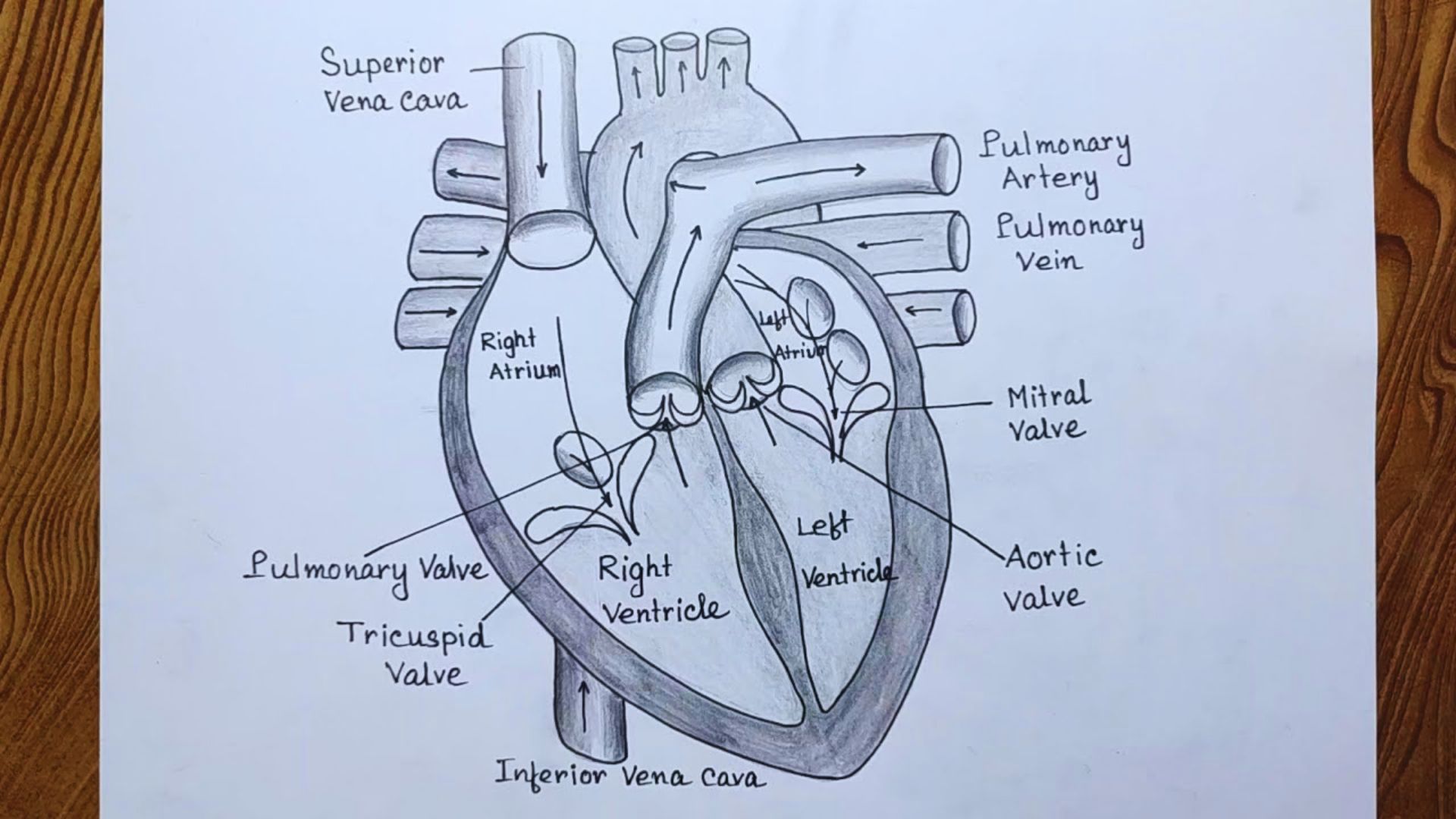
Sketch the four chambers of the heart. Add small arrows to show the direction blood flows.
Color the left side red for oxygenated blood and the right side blue for deoxygenated blood.
Label the aorta and pulmonary artery at the top. Adding veins and arteries going in and out makes it look complete.
15. Spine / Skeleton
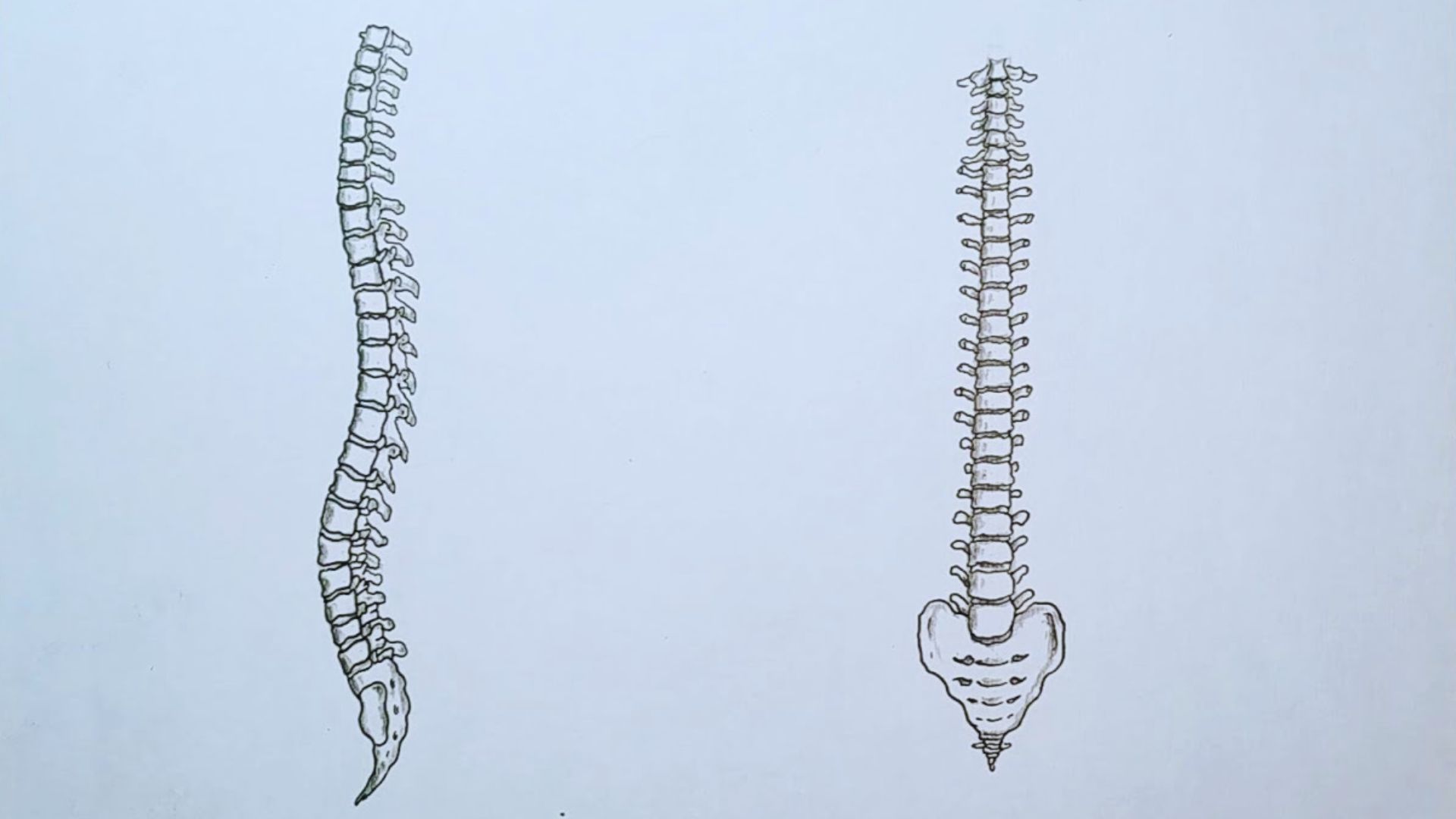
Draw a spine from the side or a full skeleton outline. Label a few key bones like the femur or ribcage.
Add small cushion shapes between the vertebrae to show the discs.
A side-by-side comparison of a healthy and curved spine is a great science add-on. Label the cervical, thoracic, and lumbar sections for accuracy.
16. Realistic Skull
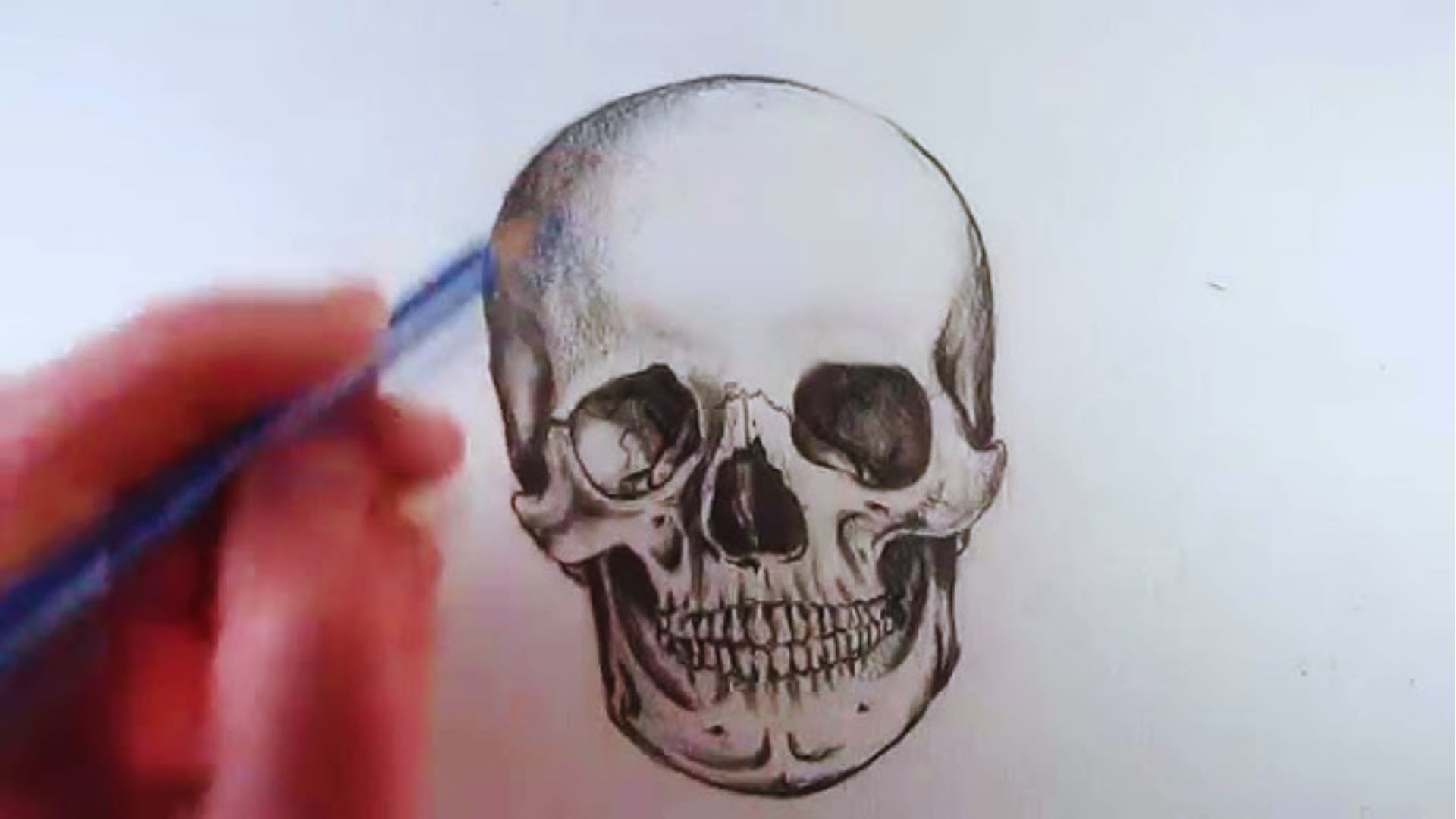
Sketch a human skull from the front. Focus on the eye sockets, cheekbones, and teeth for realism.
Add fine shading around the eye sockets to give the skull depth and shadow.
Draw small cracks or suture lines across the top of the skull for realism. A side label pointing to the temporal bone makes it educational.
17. Brain / Cortical Folds
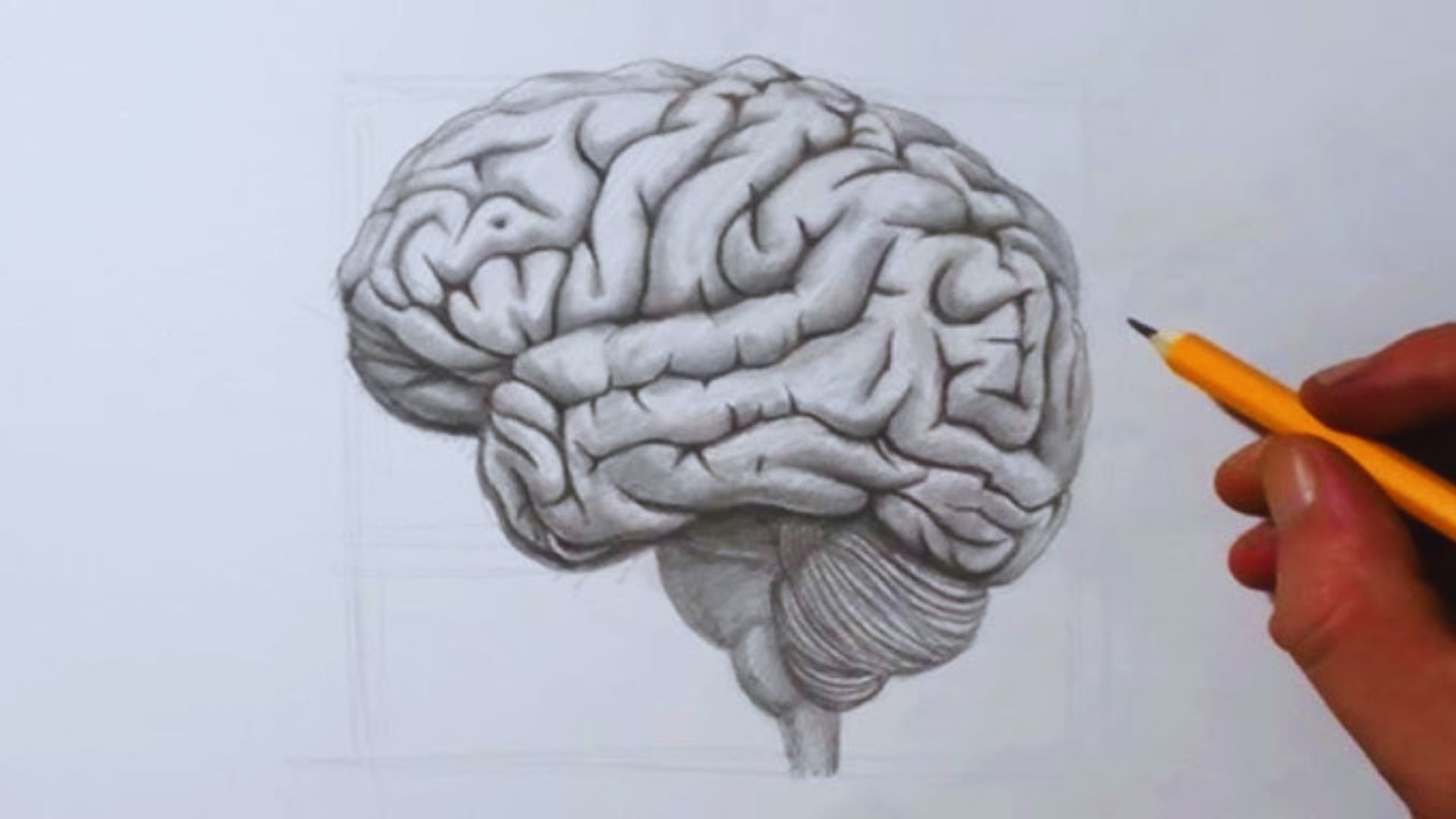
Sketch a brain with wavy folds covering the surface. Add labels for the frontal and occipital lobes.
Color each lobe a different shade to make the regions easy to identify.
Add a small brain stem at the base for a complete look. Draw a dotted line dividing the left and right hemispheres down the middle.
- Skull in Profile

Draw the skull from the side to show its curve and jaw structure. This is a great anatomy practice exercise.
Show the ear canal as a small circle on the side of the skull.
Add shading along the jaw line to give it a three-dimensional look. Label the mandible and maxilla to turn it into a science diagram.
19. Food Chain

Draw a simple food chain with arrows connecting sun, plant, herbivore, and carnivore. Keep each element small and labeled.
Use bold arrows to show the flow of energy from one level to the next.
Add a decomposer like a worm at the bottom to complete the cycle.A small title at the top like “Grassland Food Chain” makes it feel like a real diagram.
20. Water Cycle Diagram

Sketch clouds, rain, a river, and the sun in one scene. Add arrows and labels for evaporation, condensation, and precipitation.
Draw a mountain in the background with snow on top to show runoff.
Use wavy blue lines for the river flowing back to the ocean. A bright sun with rays pointing toward the water triggers the evaporation arrow nicely.
Inside the World of Space & Astronomy
Space drawings fire up the imagination and connect kids to the bigger world beyond Earth.
21. Astronaut Floating

Draw a full-body astronaut floating in space with a tether attached to a ship. Add stars and Earth in the background.
Show the astronaut’s visor reflecting a small image of Earth for a cool detail.
Add tool pouches on the spacesuit arms to make it look realistic. Small bubbles or oxygen particles floating nearby add a nice finishing touch.
22. Astronaut Helmet
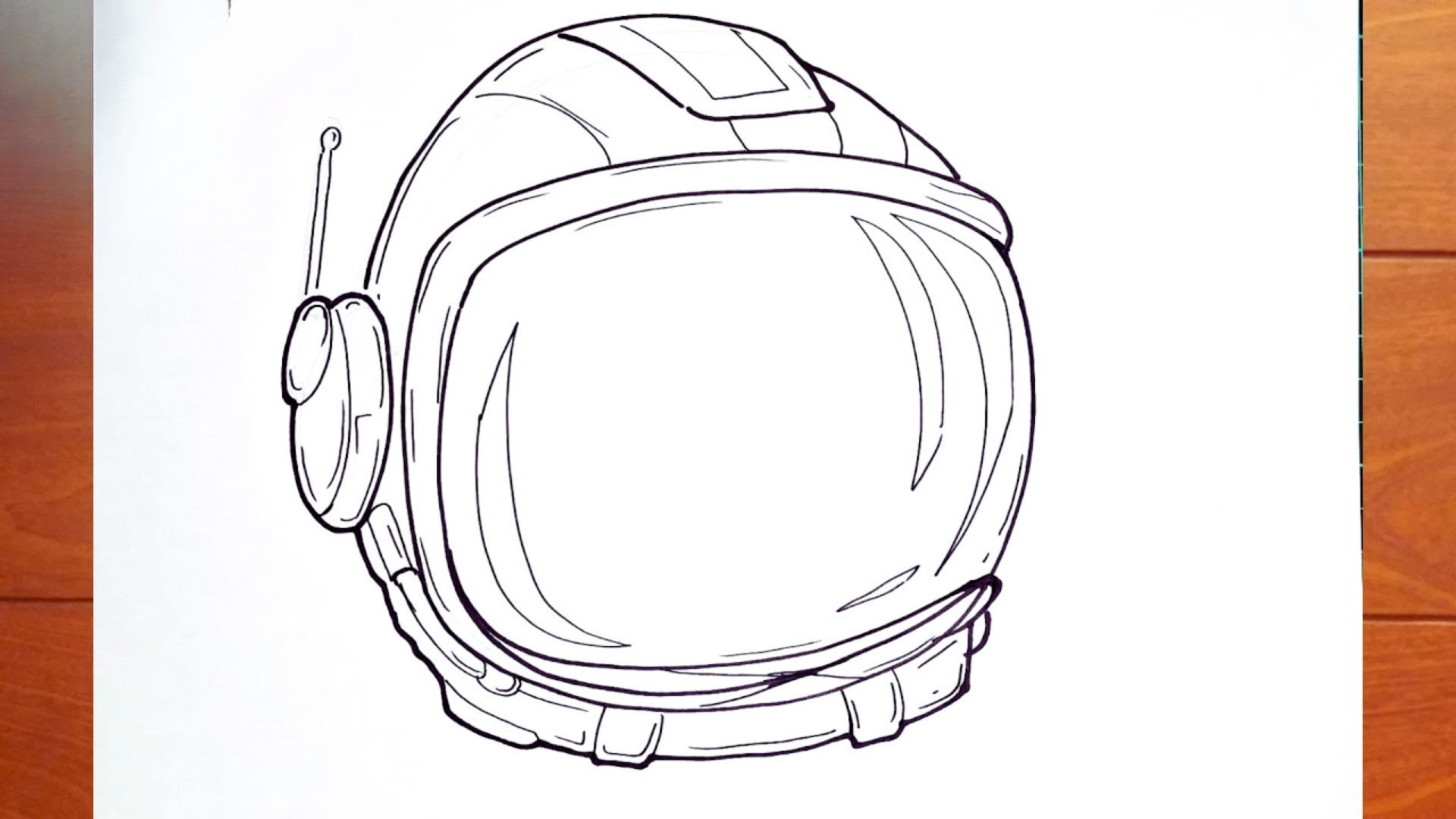
Sketch just the helmet close-up. Draw a reflection of space in the visor for a cool effect.
Add bolts and seam lines around the helmet edge to show its structure.
Draw a small NASA-style badge on the side of the helmet. Stars and a distant planet reflected in the visor make it feel real.
23. Easy Cartoon Space Rocket

Draw a simple rocket with a cone, body, and fins. Add flames at the bottom and stars all around.
Write a fun mission name on the side of the rocket body.
Add a small porthole window with a waving astronaut inside. Use orange and yellow for the flame trail to make it look like it’s blasting off.
24. Solar System Chart

Sketch all eight planets in size order with the sun on one side. Label each planet and draw orbital lines.
Add Saturn’s rings and Jupiter’s storm spot for easy identification.
Use curved dotted lines for the orbital paths around the sun. A small legend in the corner showing planet sizes to scale is a great addition.
25. Satellite / Space Probe
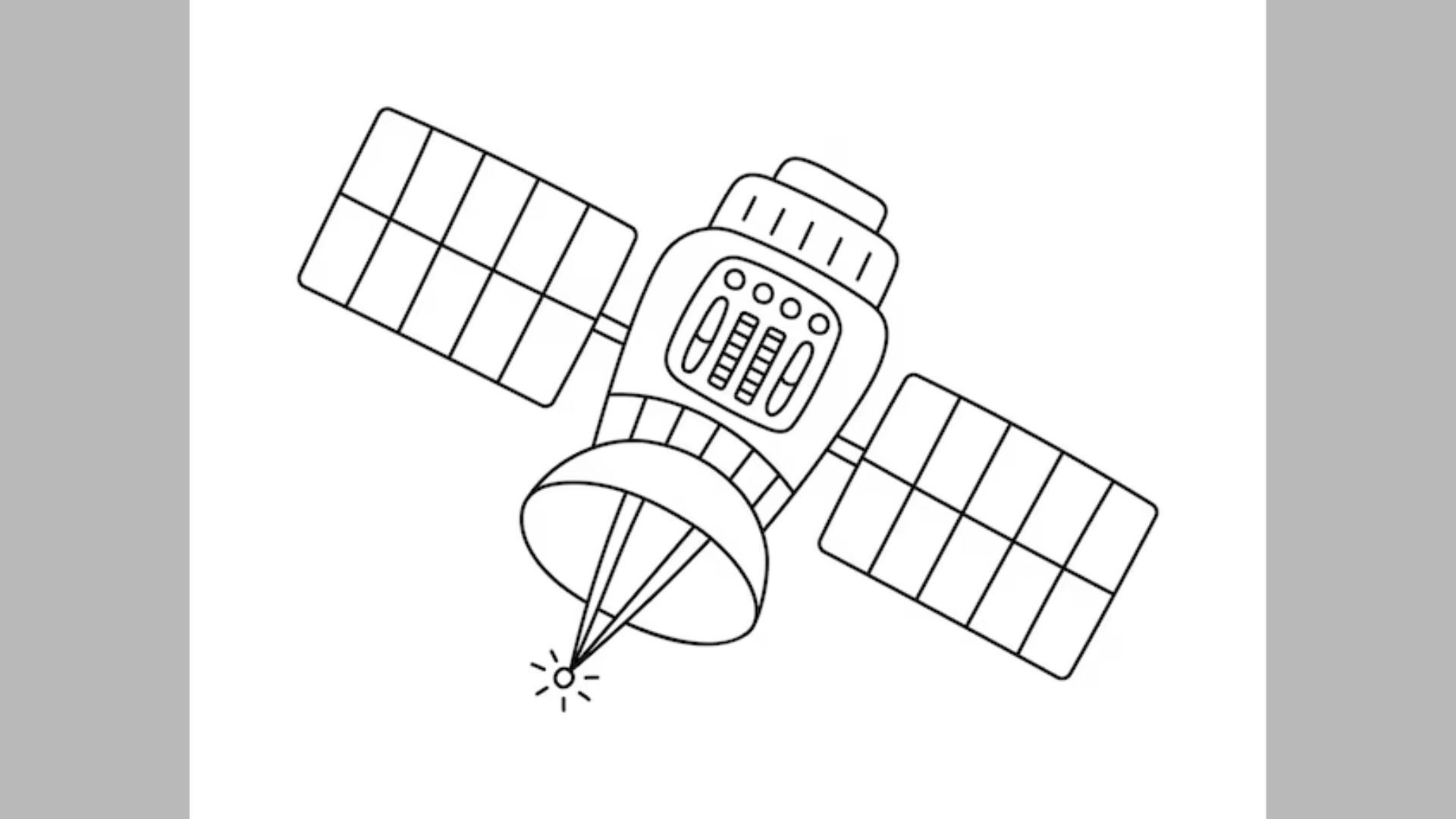
Draw a satellite with long solar panel wings and a dish antenna. Add a planet or moon in the background.
Show a signal beam coming from the dish pointing toward Earth below.
Add small thrusters on the sides to show how it stays in orbit. Label the solar panels and communication dish to make it educational.
26. Radar Antenna
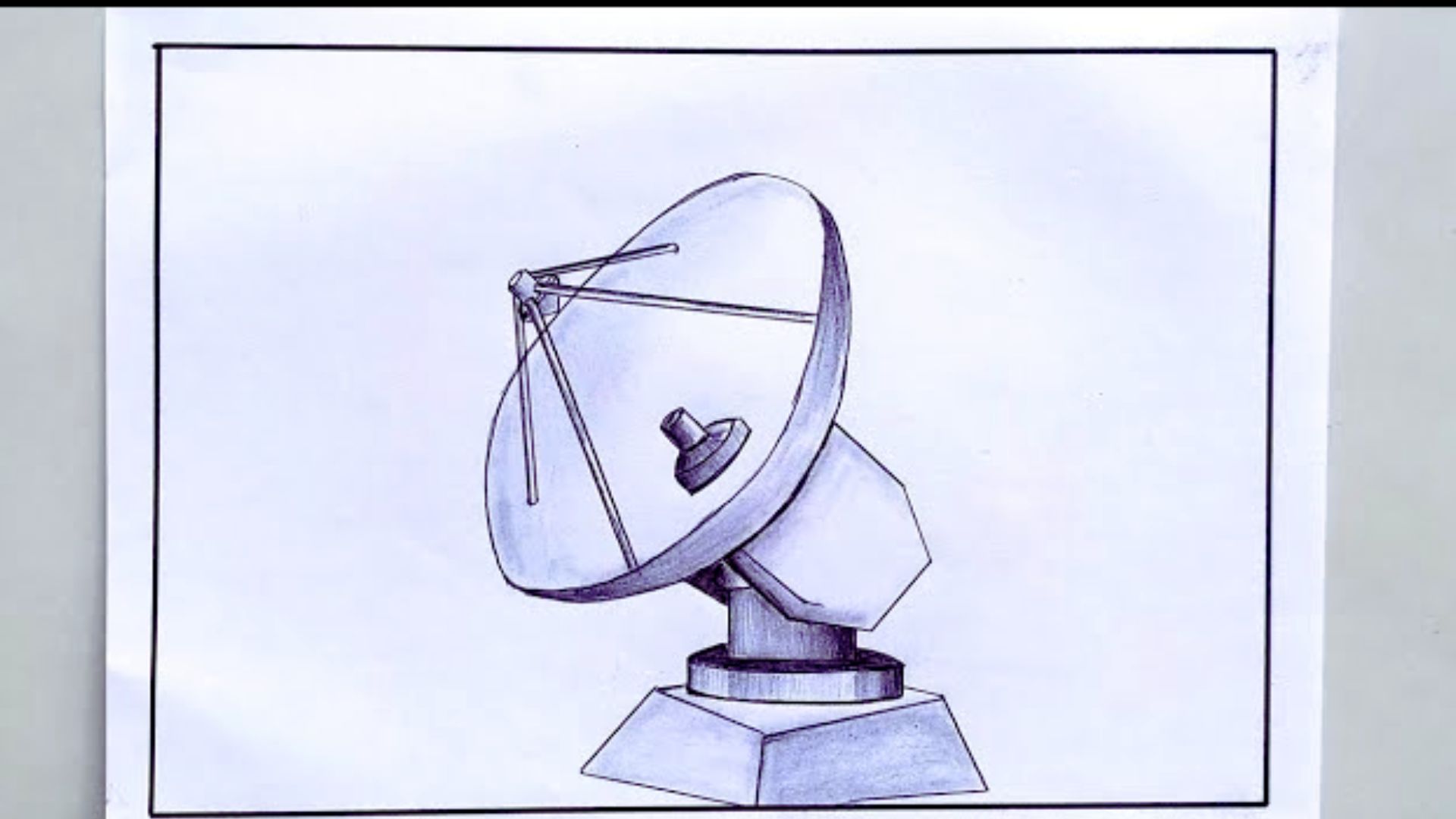
Sketch a large dish antenna on a swivel base. Add signal wave lines radiating outward from the dish.
Draw a control building in the background with blinking lights on the roof.
Add curved lines at different distances from the dish to show signal range. Label the dish diameter and point an arrow toward a distant star.
27. Night Sky / Stars & Moon

Draw a crescent moon surrounded by stars and constellations. Connect the stars with faint dotted lines.
Label one or two constellations like Orion or the Big Dipper for a science touch.
Add a shooting star with a long tail streaking across the sky. A silhouette of trees at the bottom makes the night sky feel grounded.
28. Solar Eclipse Diagram
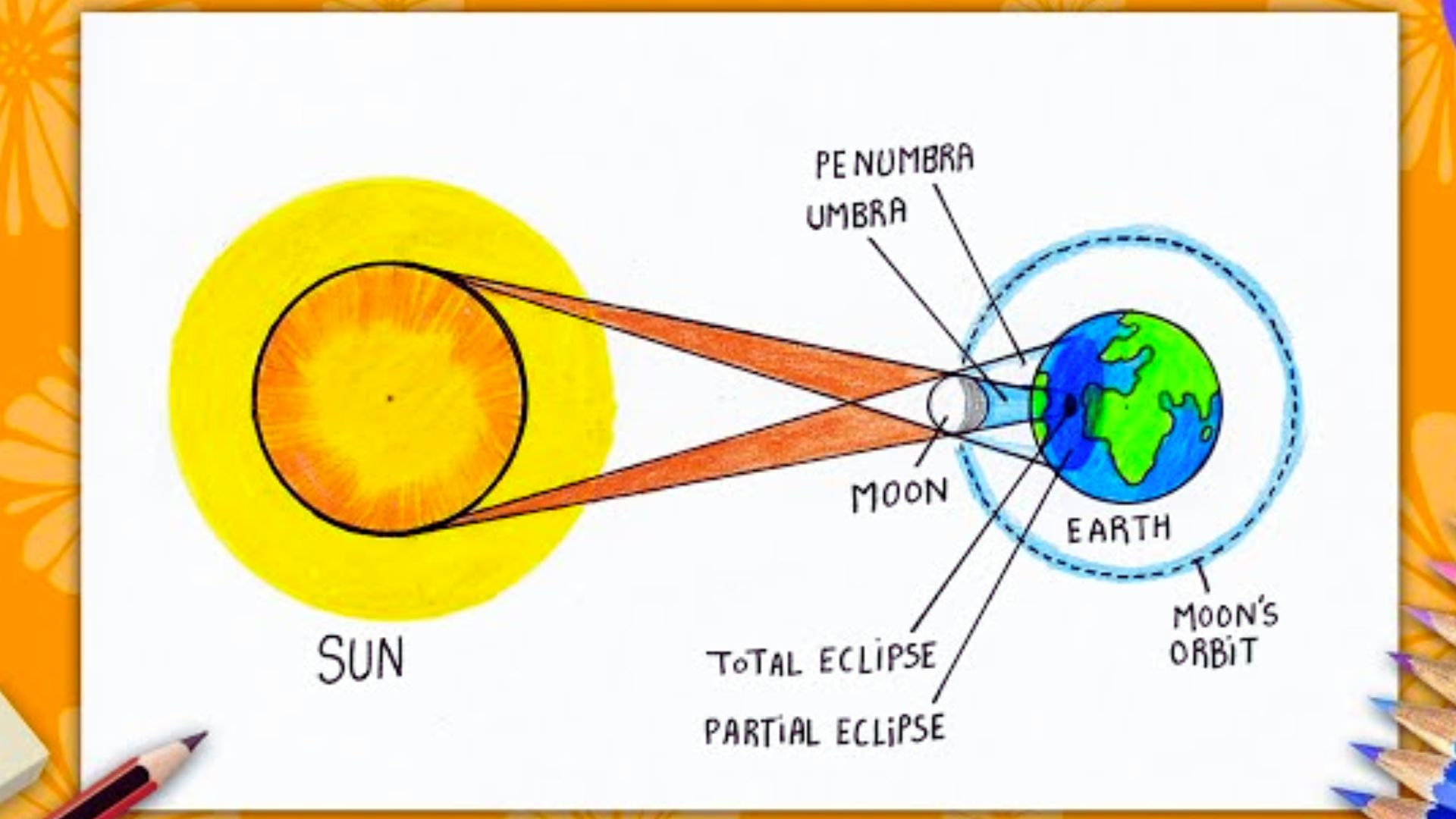
Sketch the sun, moon, and Earth aligned in a row. Add shadow cones to show the path of the eclipse.
Label the umbra and penumbra shadow zones clearly with arrows.
Add a small inset showing what the eclipse looks like from Earth’s surface. Use yellow for the sun’s corona peeking around the moon’s edge.
29. Planet Doodles
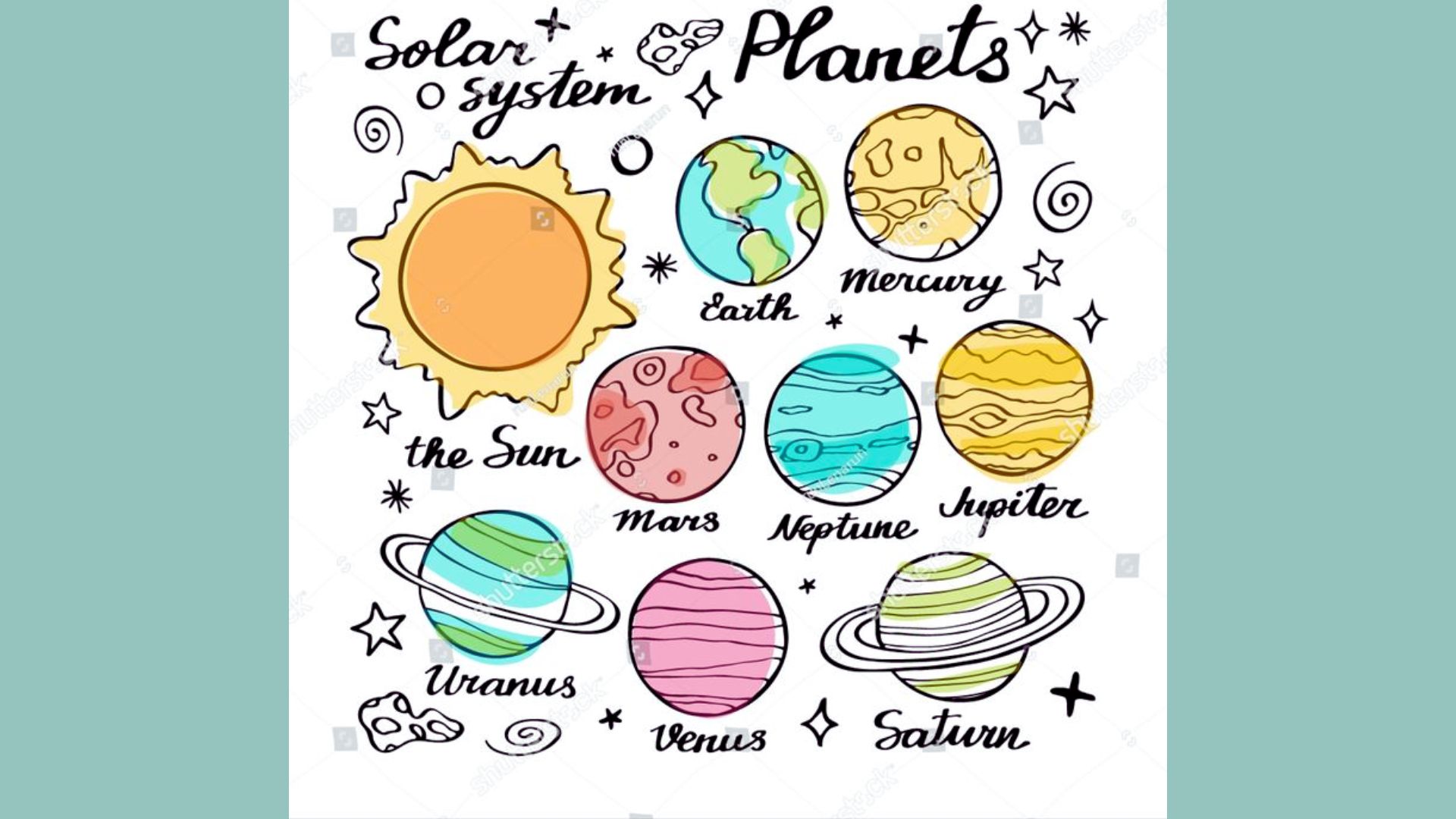
Draw a mix of planets in different sizes with rings, spots, and craters. Let kids go creative with colors and patterns.
Add a tiny rocket or astronaut floating between the planets for fun.
Mix realistic planets with made-up ones to spark creativity. Use bold outlines and bright fills to make each planet pop on the page.
30. Alien / UFO Fun Sketch

Draw a classic flying saucer with a beam of light below it. Add a small, friendly alien waving from the window.
Give the alien big round eyes and a wide grin to keep it fun and non-scary.
Add swirling light effects around the saucer to show it hovering. Draw a cow or a car caught in the beam for a funny touch.
Inside the world of Fun & Experimental Ideas
These ideas mix science with creativity. They’re perfect for kids who want something a little different.
31. Anemometer / Weather Tools

Draw a weather station with an anemometer, thermometer, and rain gauge. Label each tool and add wind lines.
Show the anemometer cups spinning with small motion lines around them.
Add a cloud and a sun in the background to set the weather scene. Label each tool with its function to turn it into a study diagram.
32. Globe / Geography

Sketch a globe on a stand with continents and oceans labeled. Add latitude and longitude lines for a science feel.
Show the globe tilted slightly on its axis for accuracy.
Color the oceans blue and the continents green or brown. Add a small compass rose near the bottom of the stand.
33. X-Ray Fun Drawing

Draw a hand or foot as if seen through an X-ray. Sketch the bones inside the outline of the skin.
Use a dark background with white or light grey bones to mimic a real X-ray.
Label the finger bones as phalanges for a science twist. Add a small corner label that reads “X-Ray” with a date for a realistic feel.
34. Colorful Chemistry Symbols
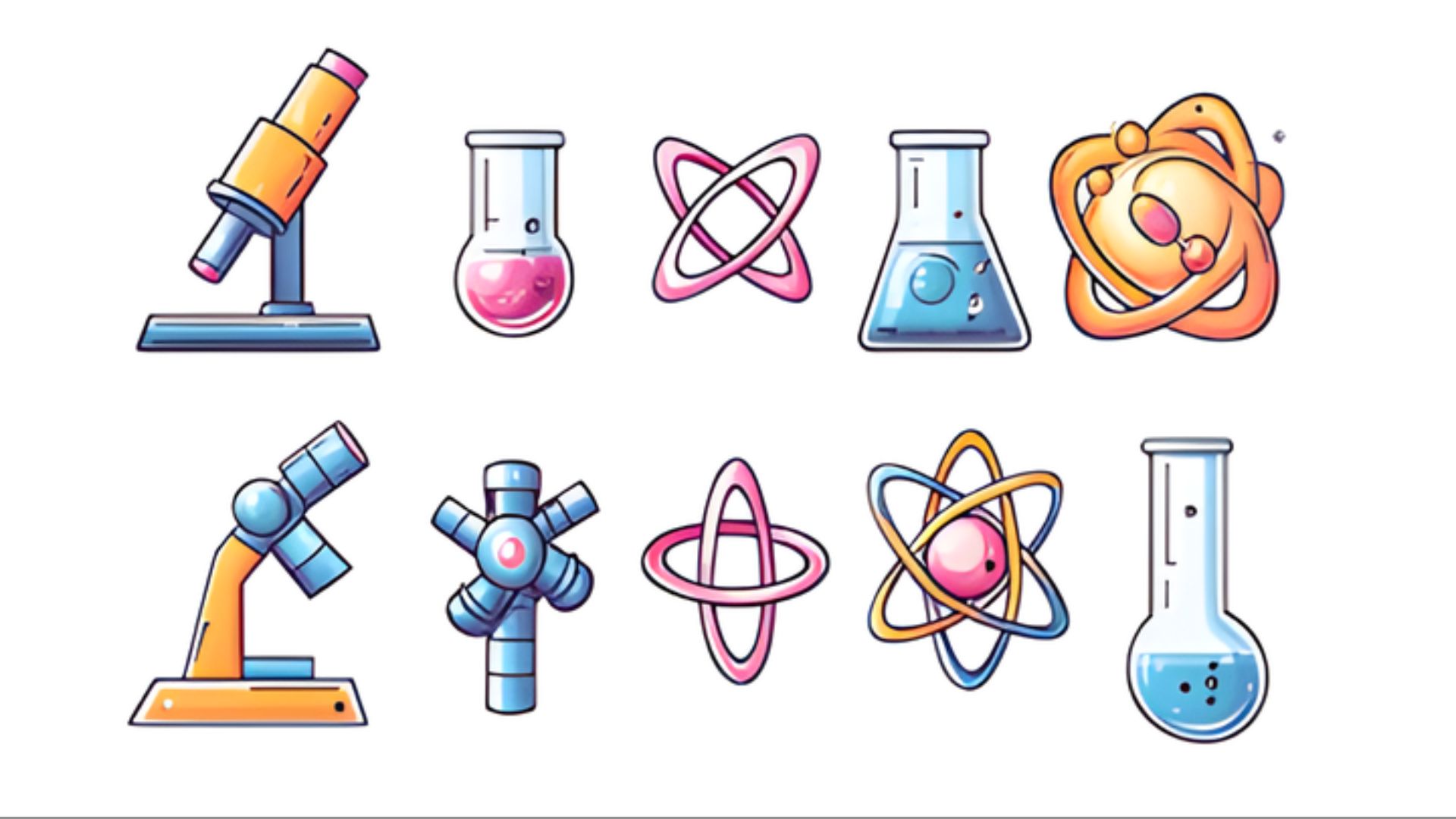
Draw element symbols from the periodic table in bold block letters. Add color and patterns to each symbol.
Pick elements that spell out a fun word like “FeSH” for a creative challenge.
Add the atomic number above each symbol in small print. Use metallic colors for metals and bright colors for non-metals.
35. Dinosaur Life

Sketch a T-Rex or Triceratops in a prehistoric scene. Add ferns, volcanoes, and a dramatic sky.
Show the T-Rex mid-roar with its mouth wide open for action and drama.
Add a distant herd of smaller dinosaurs in the background. A large full moon or erupting volcano in the sky sets the prehistoric mood.
36. Science Doodle Poster
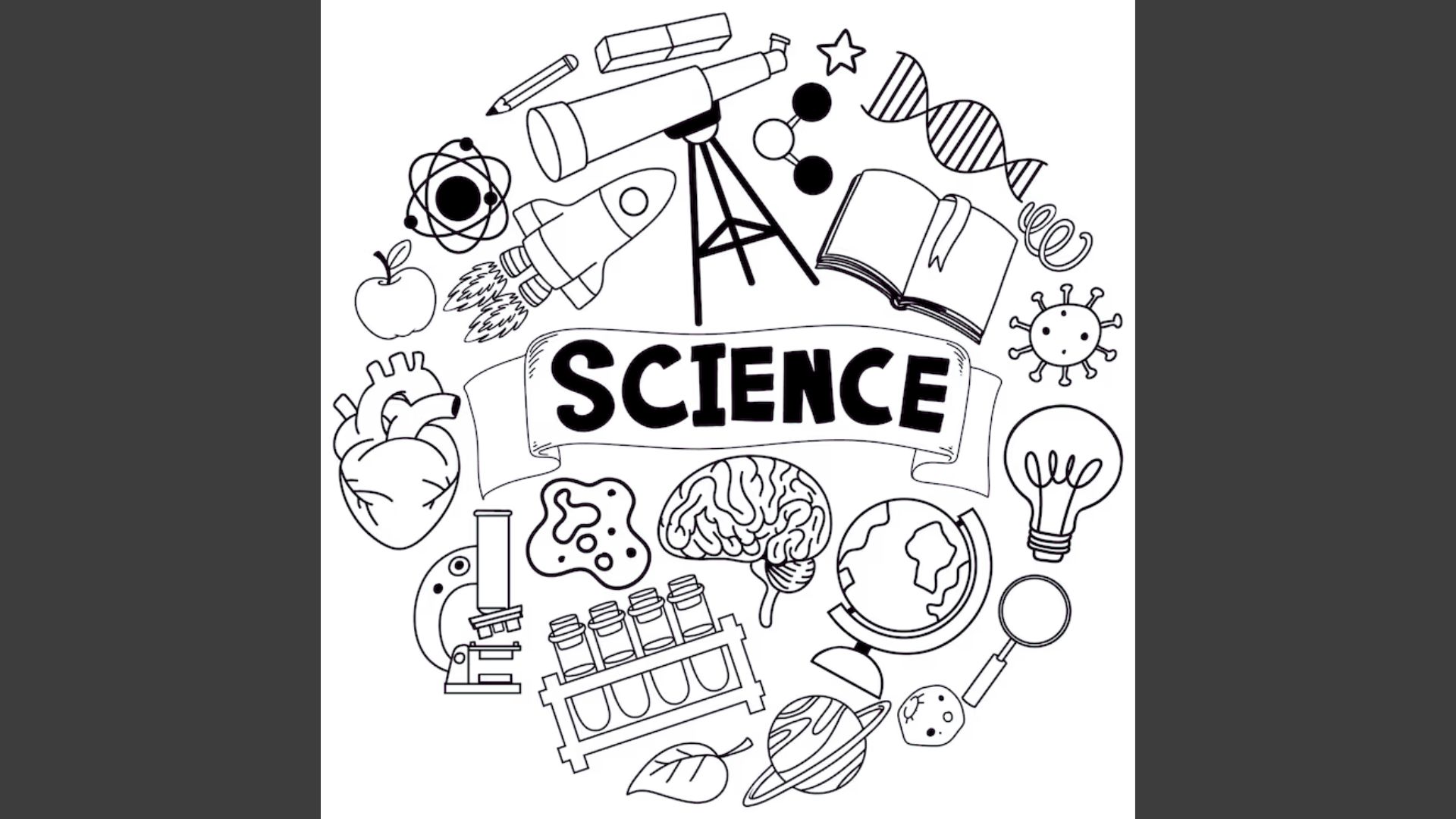
Fill an entire page with small science doodles like atoms, rockets, cells, and beakers. Make it a visual science map.
Connect each doodle with small arrows or lines to show how topics relate.
Add tiny labels under each doodle to make it educational as well as fun. Use bright colors to separate different science categories across the page.
37. Children Experimenting
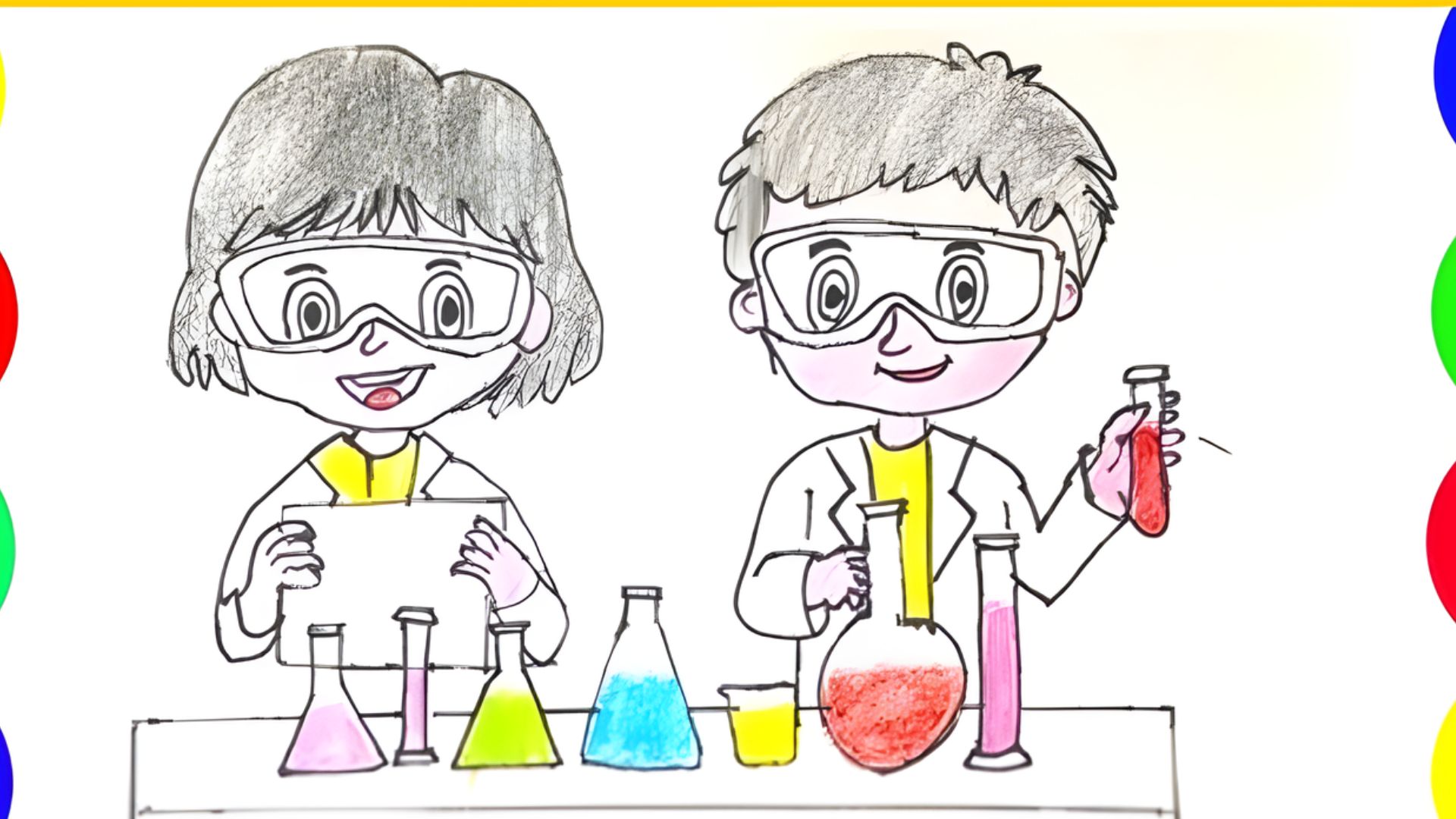
Draw two or three kids at a lab table with goggles and flasks. Show their expressions of surprise and excitement.
Give each child a different reaction, one excited, one confused, one taking notes.
Add a bubbling flask or color-changing liquid on the table between them. A whiteboard in the background with a hypothesis written on it adds a great detail.
Tips for Successful Science Drawing
Good drawings start with good habits. Here are five tips that make the process easier and more fun for kids.
- Use simple shapes. Break complex objects into circles, rectangles, and triangles first.
- Add labels and notes. A labeled drawing is a learning tool, not just art.
- Use color. Different colors help kids tell parts apart at a glance.
- Start easy, build up. Simple sketches first, then more detailed ones.
- Observe, don’t stress. Messy lines are fine. Curiosity matters more than perfection.
Science drawing is less about skill and more about curiosity. Any child who looks closely enough can draw what they see.
Conclusion
I still remember drawing my first labeled plant cell. It was messy, but I remembered every part of it for weeks.
That’s the power of science drawing ideas like these. Learning sticks when kids do it with their hands.
Pick one idea and try it today. All you need is a notebook and a pen.
Drop a comment below and tell me which one your kids loved. And if this helped, share it with a parent or teacher who needs it.
Frequently Asked Questions
What are the best science drawing ideas for young beginners?
Start with a thermometer, magnifying glass, or cartoon scientist. Simple shapes, easy wins.
How do science drawings help kids learn better?
Drawing makes kids look closely. You remember more when your hand is involved.
Do kids need art skills to do science drawing?
No. Observation matters more than talent.
Can science drawing be used as a school project?
Yes. Labeled diagrams and sketches make great projects.
How many drawing ideas should kids try per week?
One or two per week keeps it fun and stress-free.
