


I still remember staring at a blank page with a pen in my hand and no idea where to start. It is frustrating.
But the moment I just put pen to paper and drew something small, everything changed.
Pen drawing does not ask for much. No special tools, no art degree, nothing fancy. Just you and a pen.
In this post, I am sharing 25 pen drawing ideas that actually work for all skill levels. Whether you draw daily or have not picked up a pen in years, something on this list will get you going.
Why Pen Drawing is Perfect for Creative Inspiration

Pen drawing is one of the most freeing art forms out there. All you need is a pen and paper. No fancy setup, no expensive supplies. Anyone can start today.
Drawing with a pen pushes you to commit to every line. That builds confidence fast. You stop second-guessing and start trusting your instincts.
Skipping the eraser sounds scary at first. But it actually helps you grow as an artist. Mistakes become part of the drawing.
Over time, your hand gets steadier and your creativity flows more freely.
List of 25 Pen Drawing Ideas to Try
Not sure what to draw next? These 25 ideas will keep your pen moving and your creative mind busy.
1. Simple Doodle Patterns
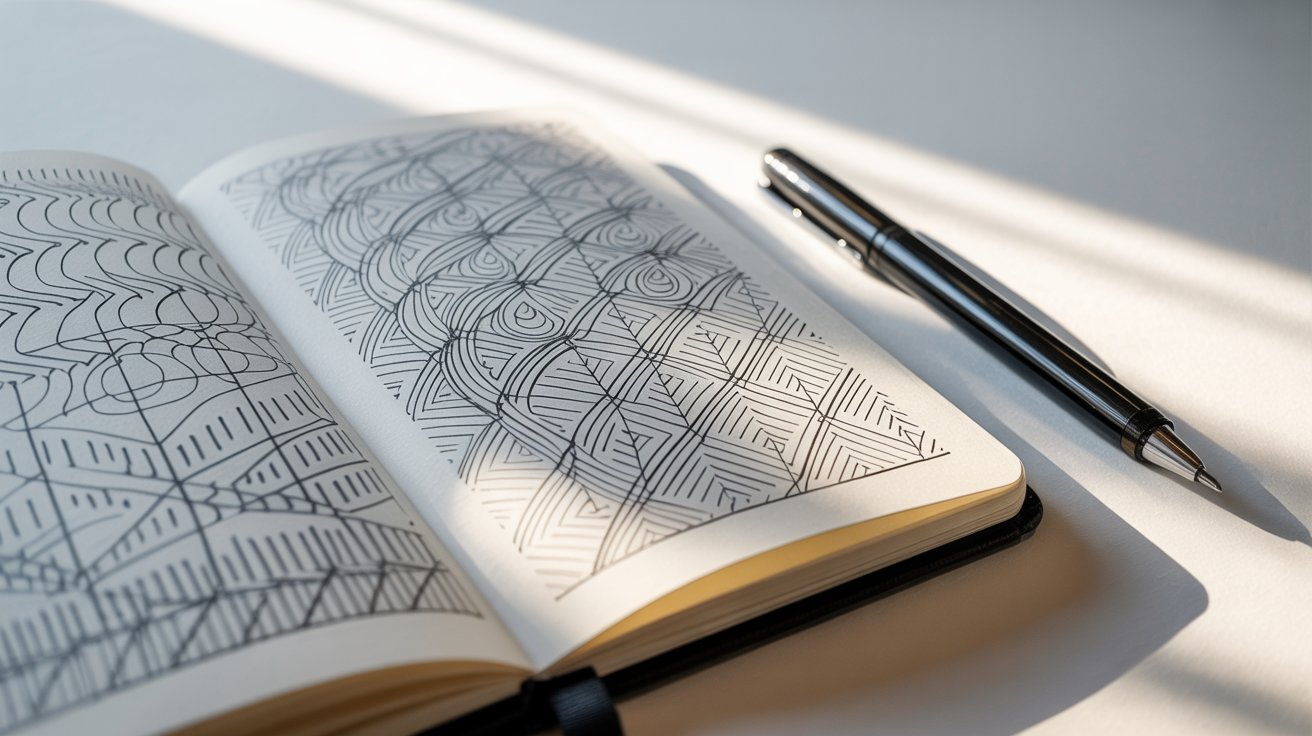
Doodle patterns are the best starting point for any pen artist. Fill a page with repeated shapes like circles, triangles, or zigzags. There are no rules here. Just let your hand move freely and see what comes out.
2. Minimalist Line Art Faces
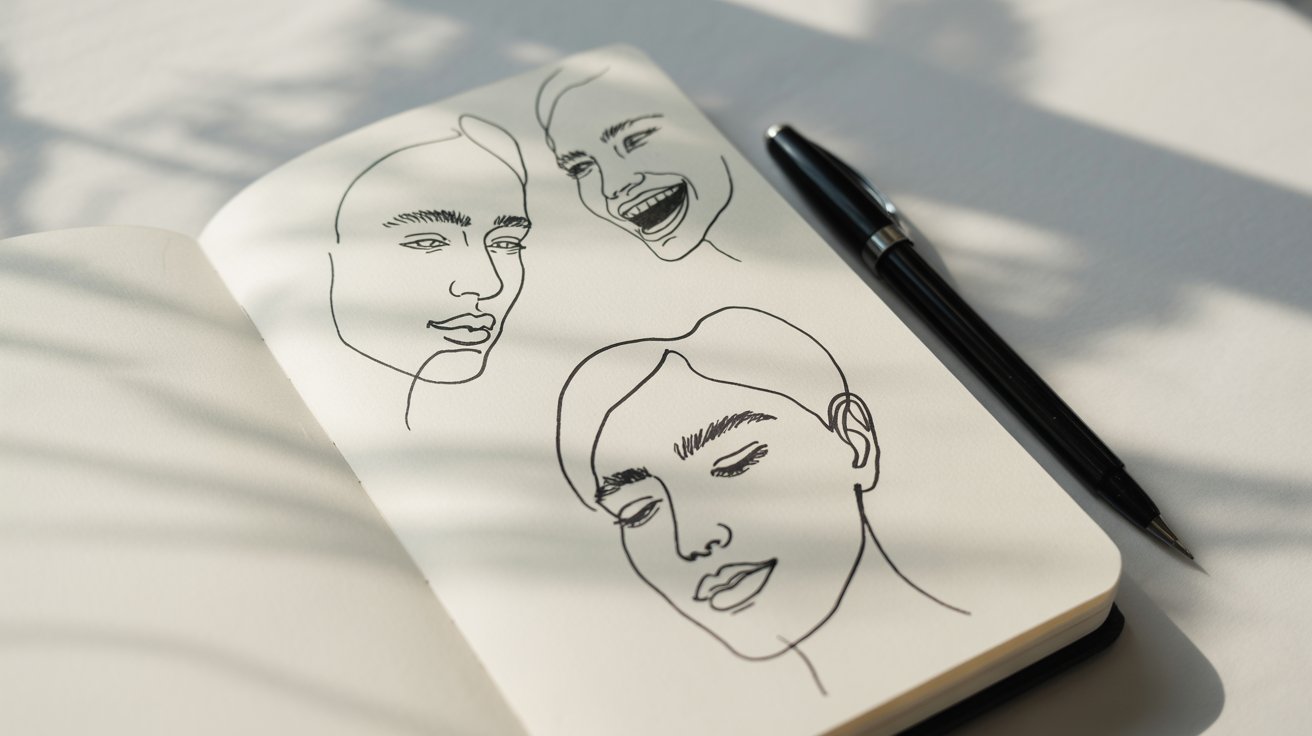
Use just a few clean lines to draw a face. No shading, no detail, just simple strokes. This style looks modern and is great for beginners. Focus on capturing the expression with as few lines as possible.
3. Leaves and Botanical Sketches
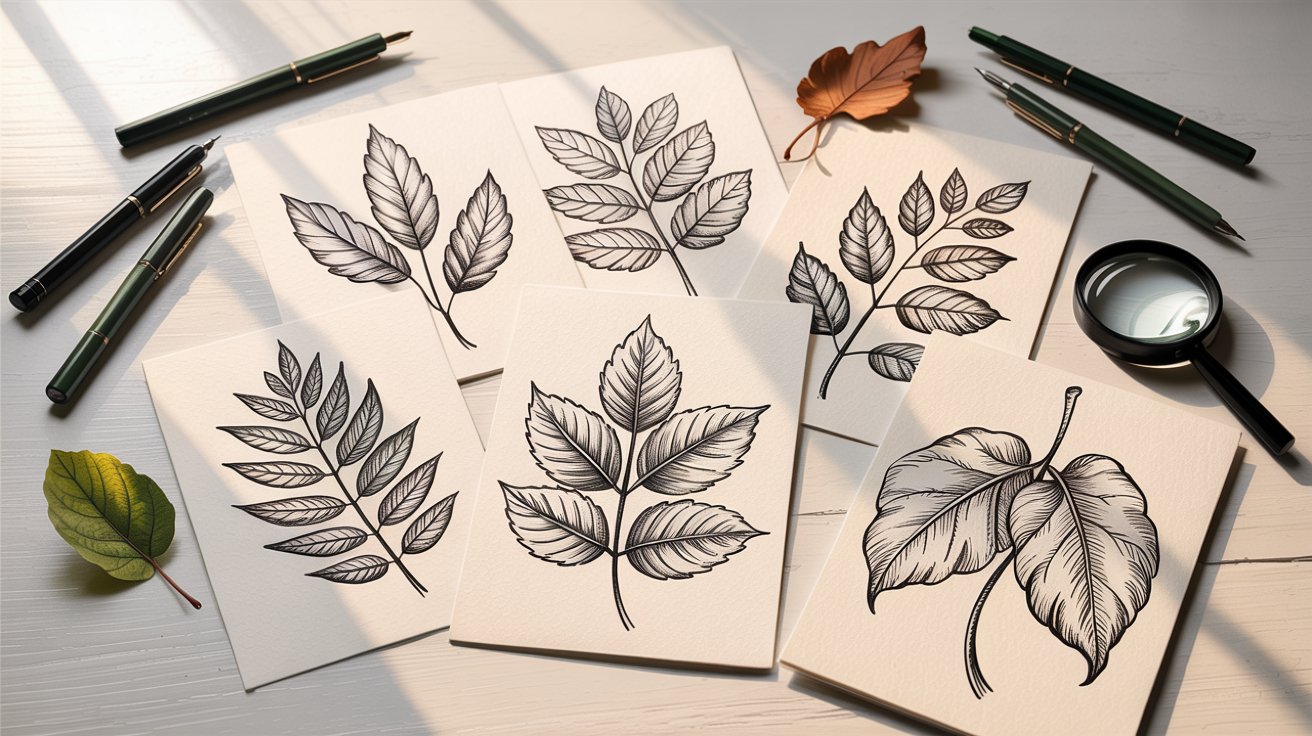
Leaves are perfect for pen practice. Draw different shapes, sizes, and vein patterns. Botanical sketches look beautiful even when kept simple. Pick a real leaf to study or go from memory for a looser, more natural feel.
4. Flower Arrangements
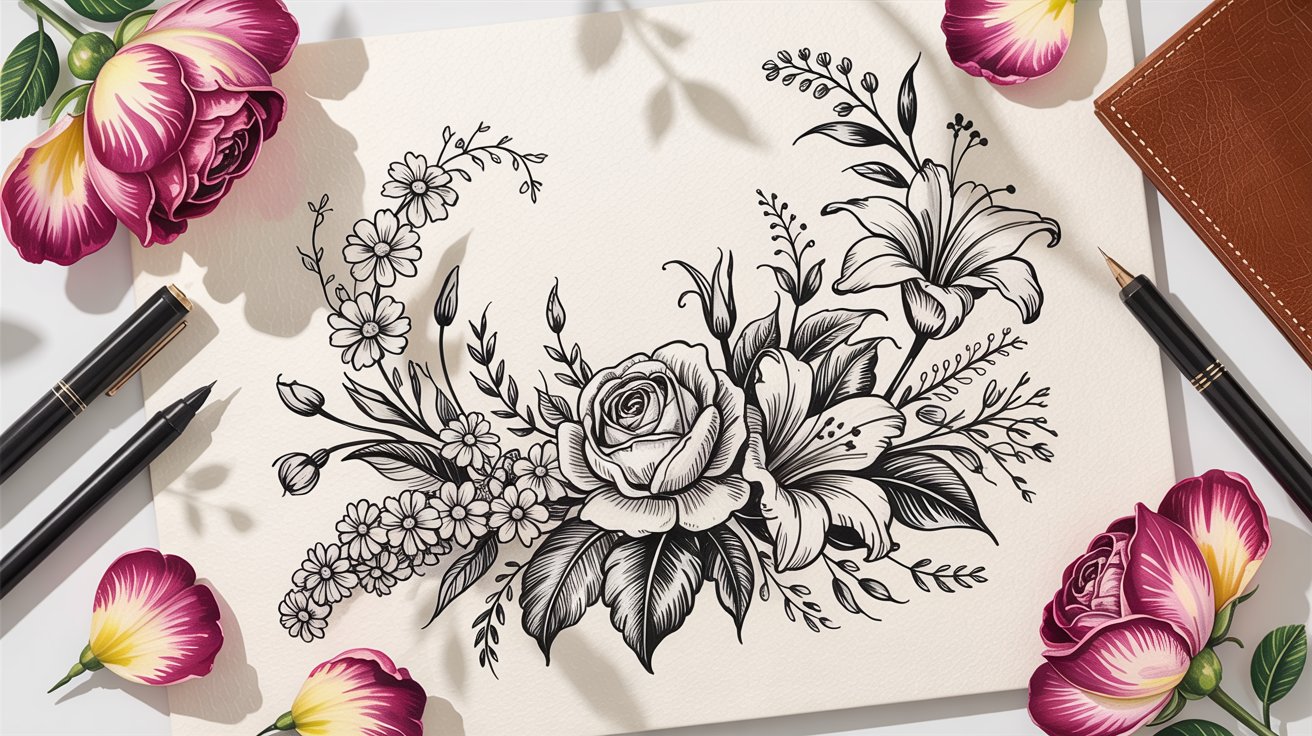
Flowers give you so much to work with. Try drawing a simple bouquet or a single bloom up close. Focus on the petals and how they overlap. You can keep it loose or add fine details for a fuller look.
5. Trees and Forest Scenes
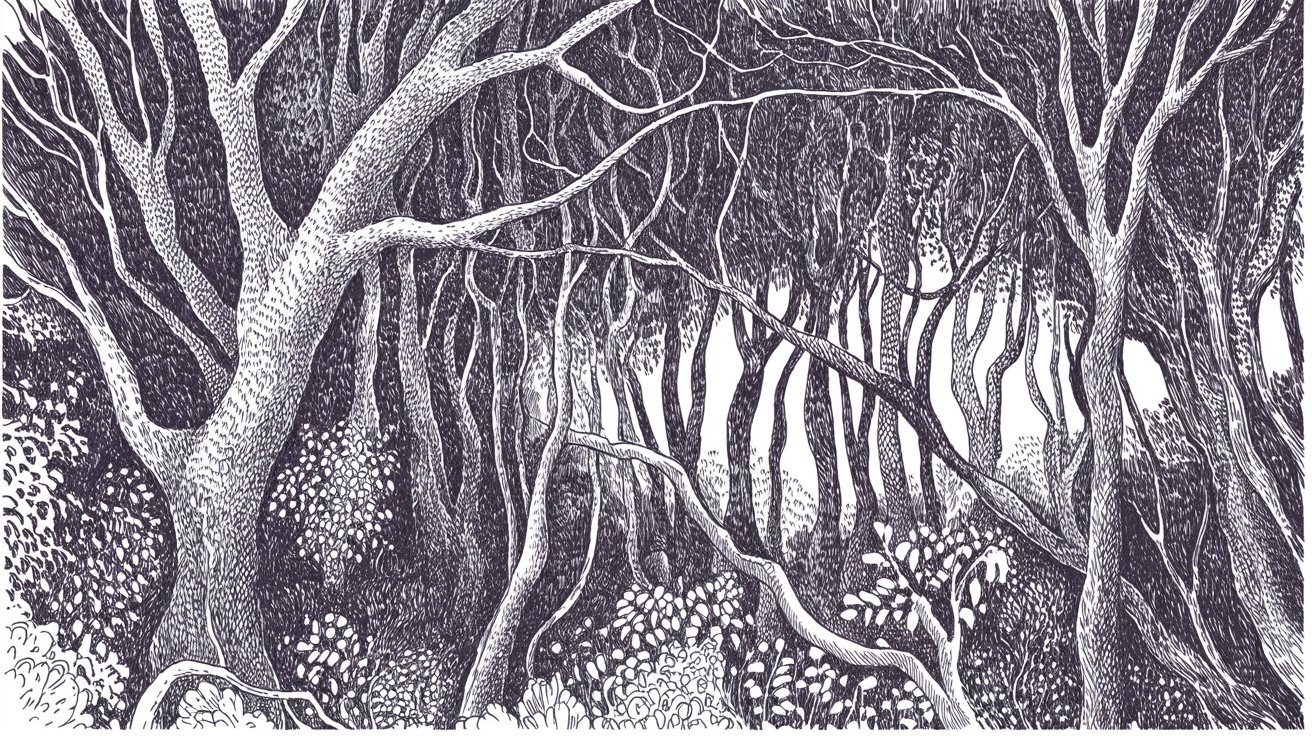
Start with a single tree and build from there. Add branches, bark texture, and a few background trees to create depth. Forest scenes look great with hatching and cross-hatching to show light and shadow.
6. Mountains and Landscapes
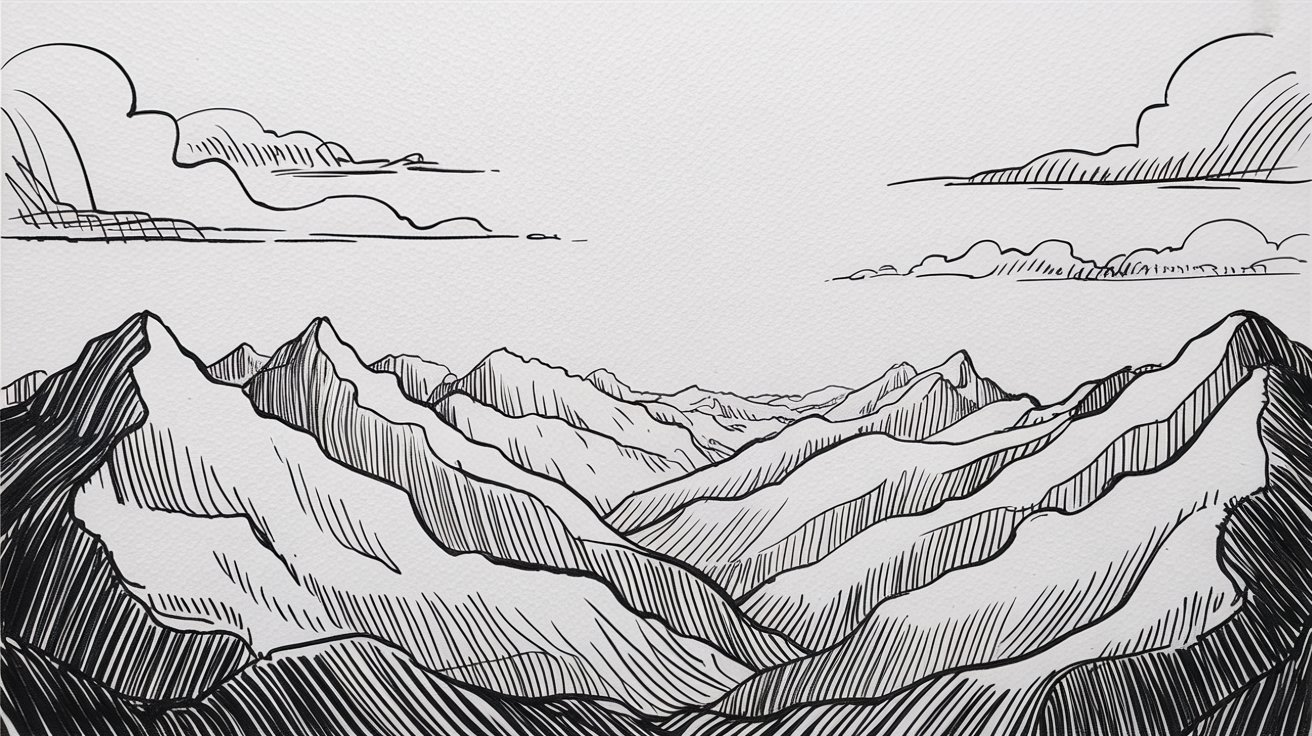
Mountains are great for practicing clean lines and perspective. Draw layered peaks with simple shading to show distance. Add a sky, some clouds, or a foreground to make the scene feel more complete and full.
7. Jellyfish or Ocean Creatures
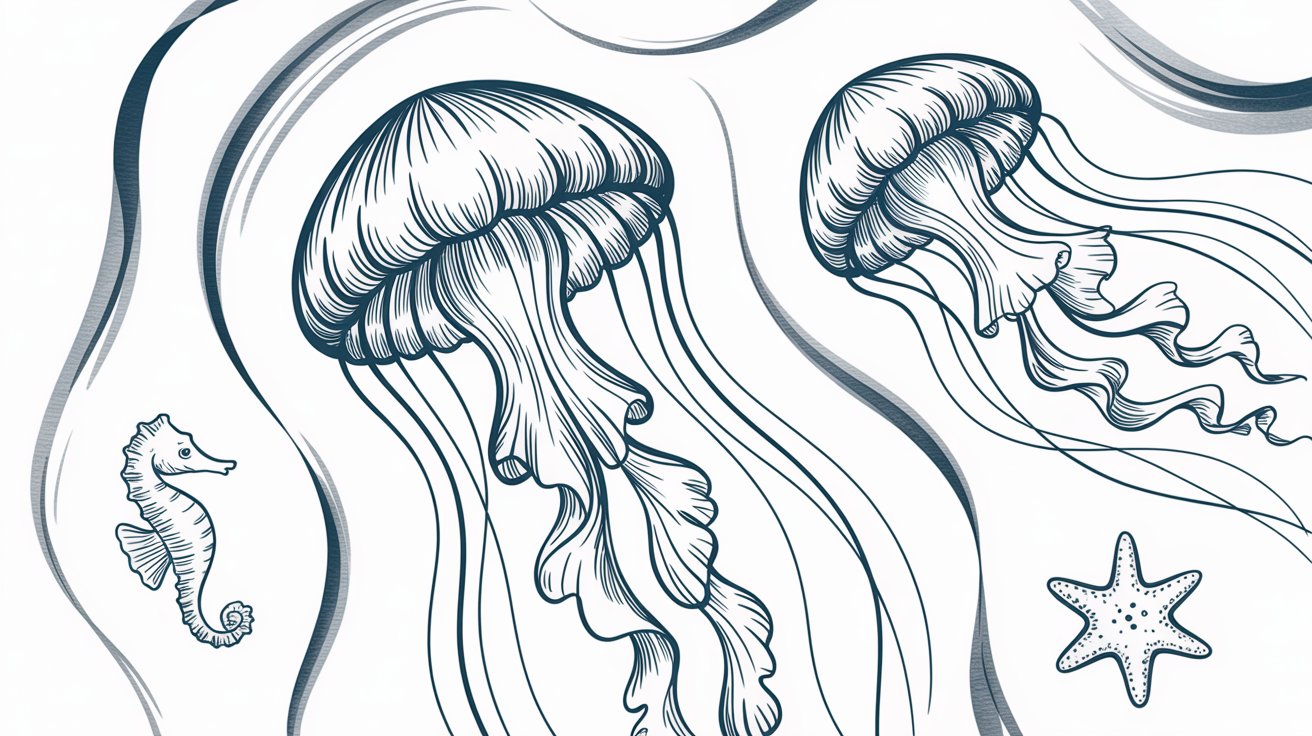
Jellyfish have flowing, free-form shapes that are fun to draw. Their tentacles give you a chance to practice loose, curved lines. Try other sea creatures too, like starfish or seahorses, for more variety in your sketchbook.
8. Birds with Detailed Feathers
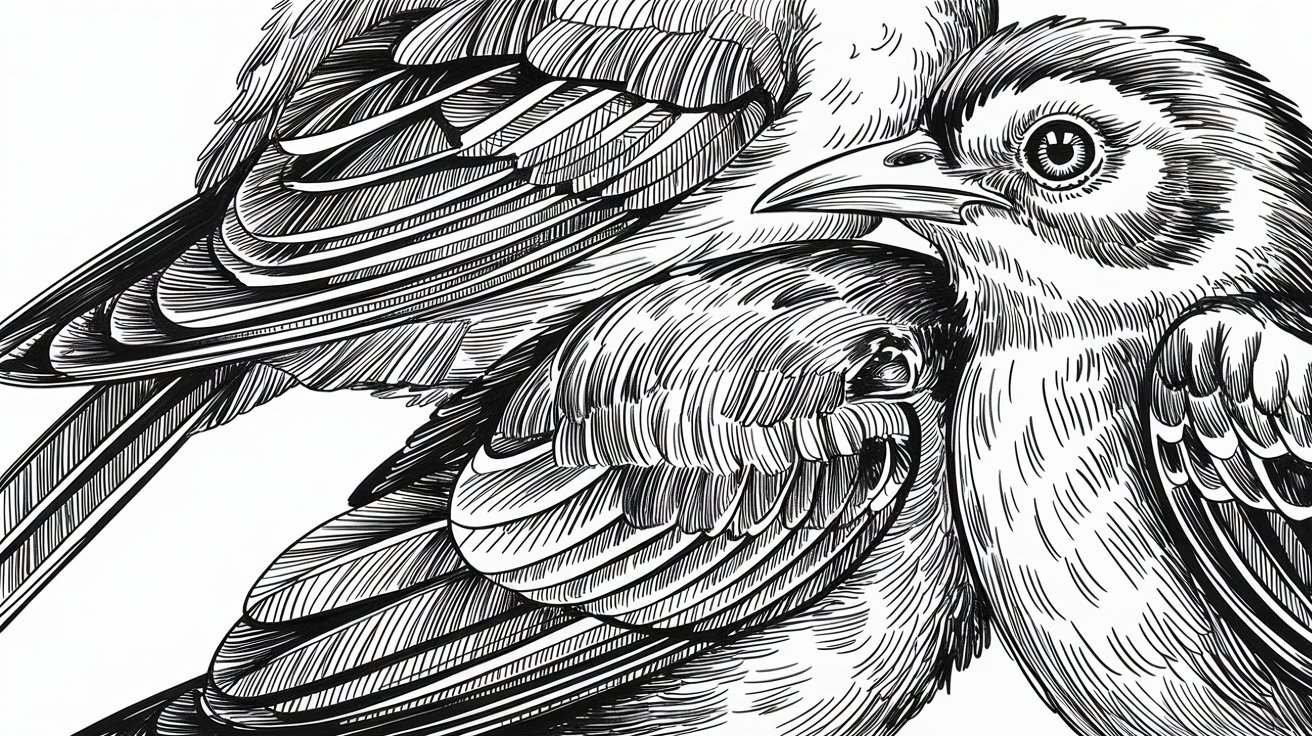
Birds are a great subject for pen work. Focus on the feather texture using short, overlapping strokes. Pick a simple bird like a sparrow or go bold with a peacock. Either way, the details will look impressive.
9. Snakes with Scale Textures
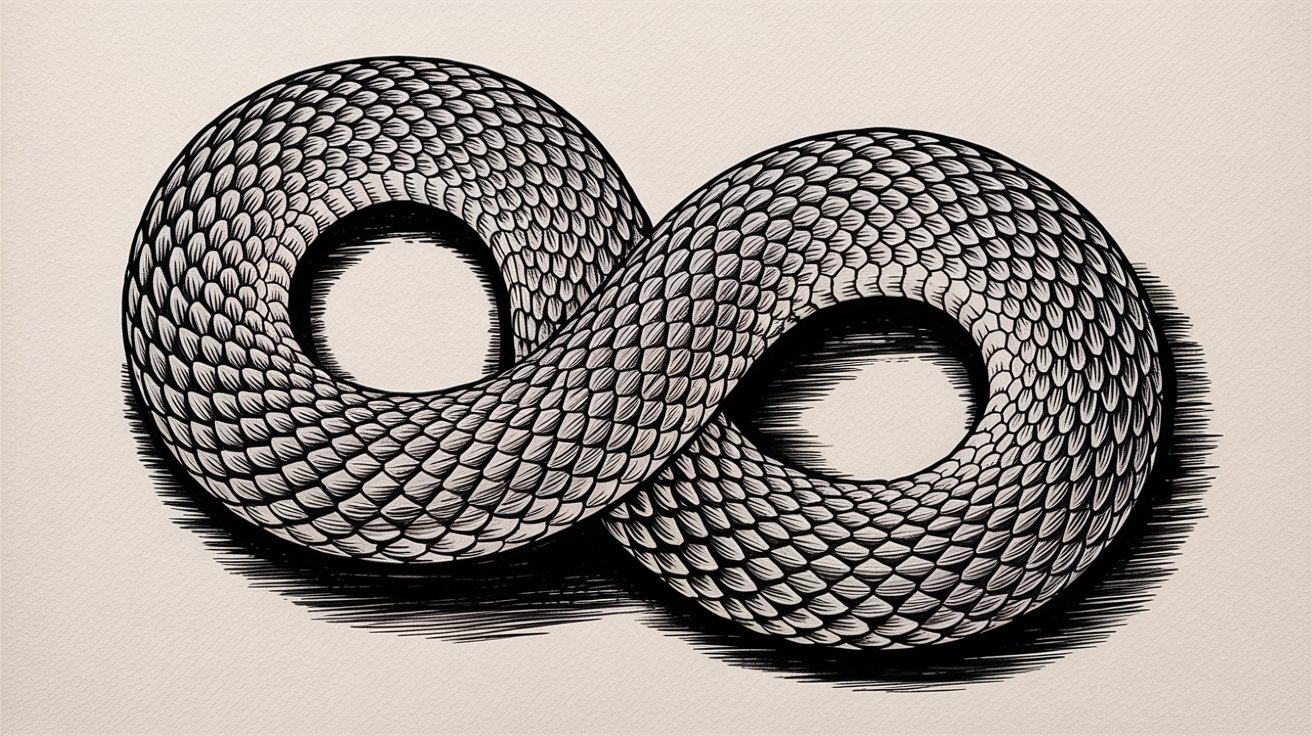
Snakes are all about pattern and repetition. Draw the coiled body first, then fill it with small scale shapes. This is a great way to practice controlled, repetitive mark-making. The finished result always looks striking on paper.
10. Dog or Pet Portraits
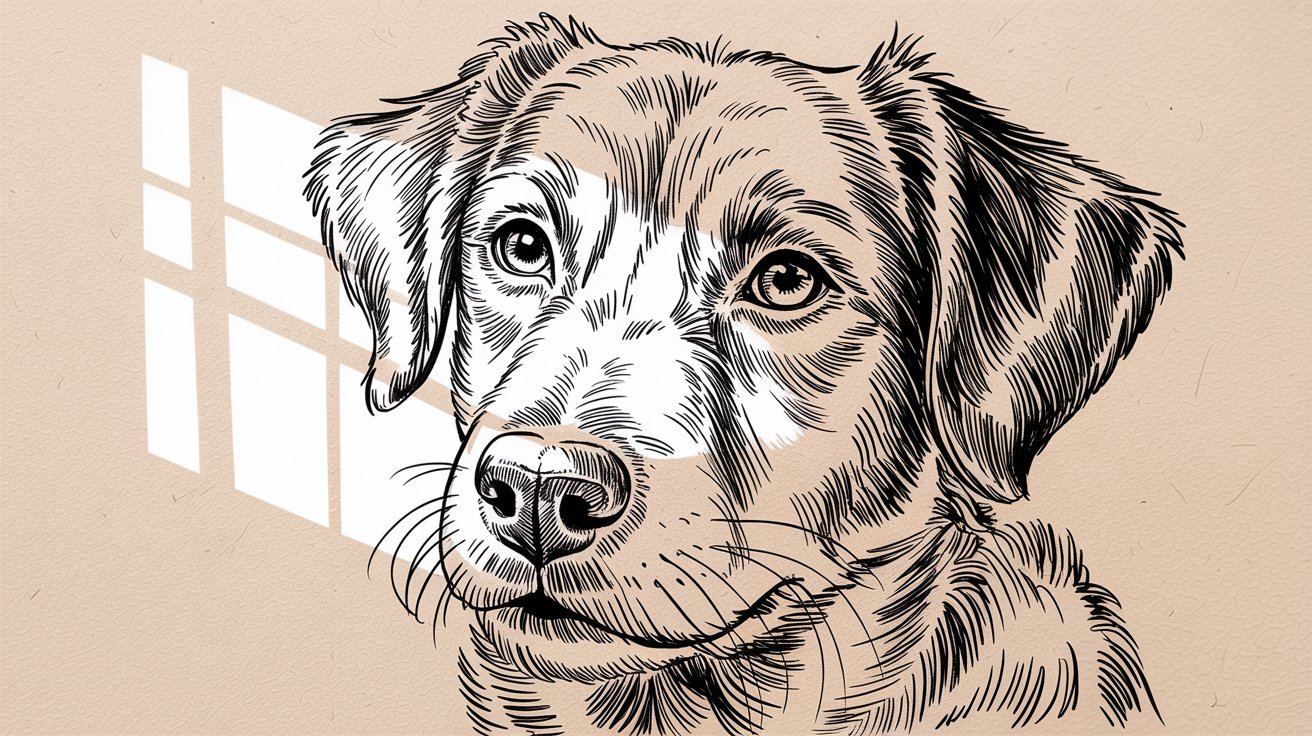
Drawing your pet is always a personal and rewarding idea. Focus on the eyes and fur texture first. Use short strokes to build up the coat. It does not have to be perfect to look like your favorite animal.
11. Wolves or Wild Animals
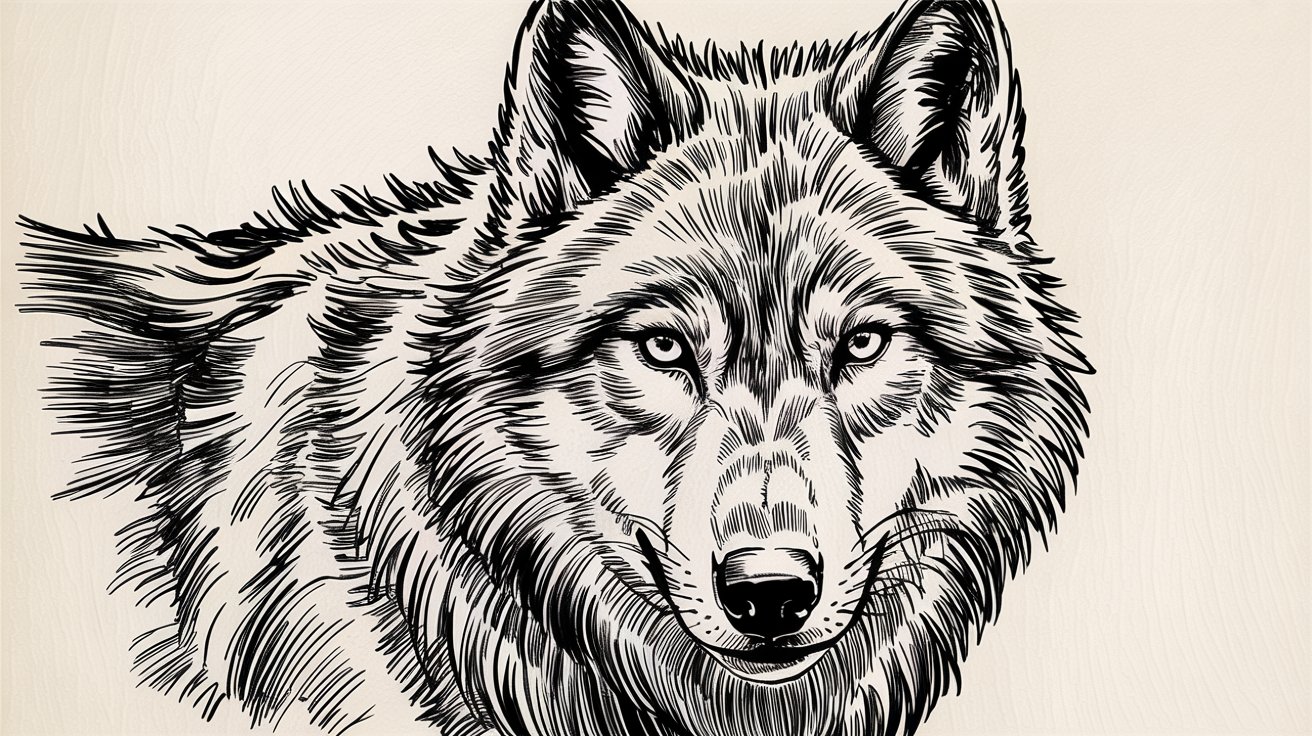
Wolves have strong features and thick fur that look great in pen. Capture the intensity of the eyes and the layered texture of the coat. Wild animals like foxes or bears work just as well for this style.
12. Insects and Butterflies
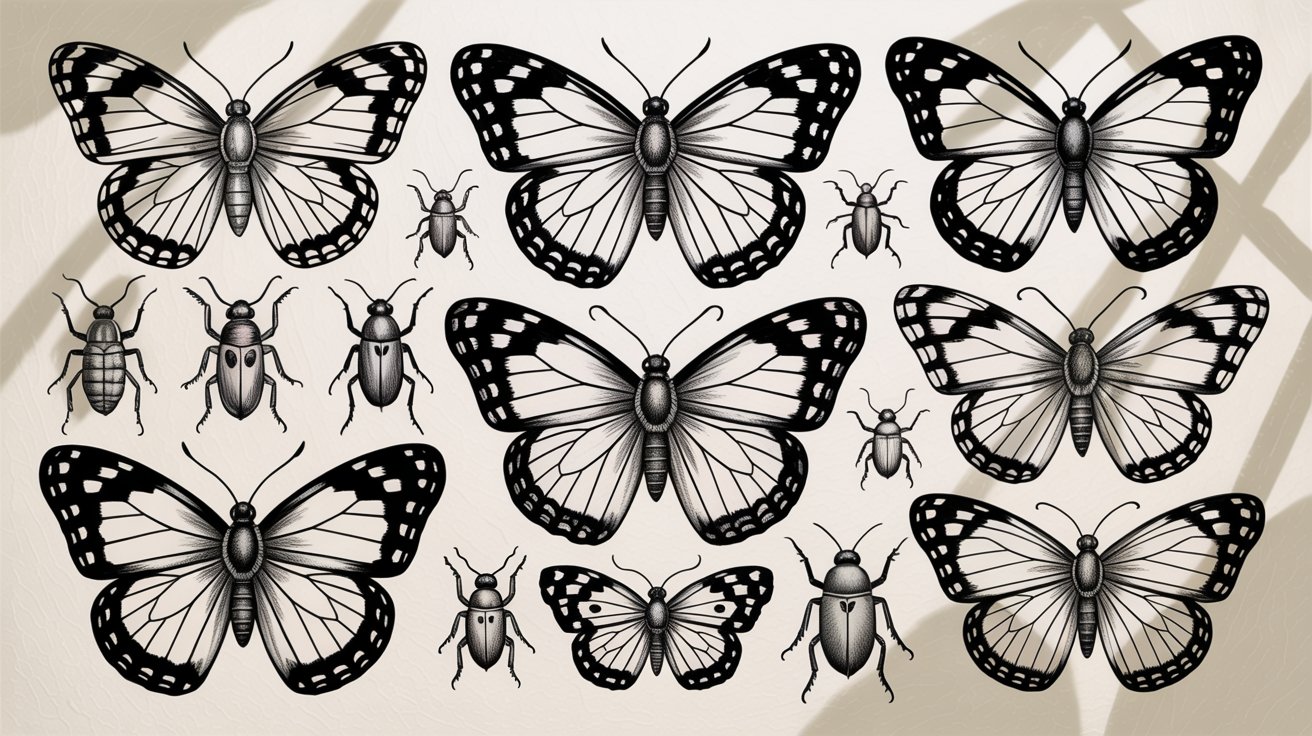
Butterflies are one of the most satisfying things to draw with a pen. The wing patterns are great for detail work. Insects like dragonflies or beetles are also fun. Try adding fine line textures to make the wings pop.
13. Dragons and Fantasy Creatures
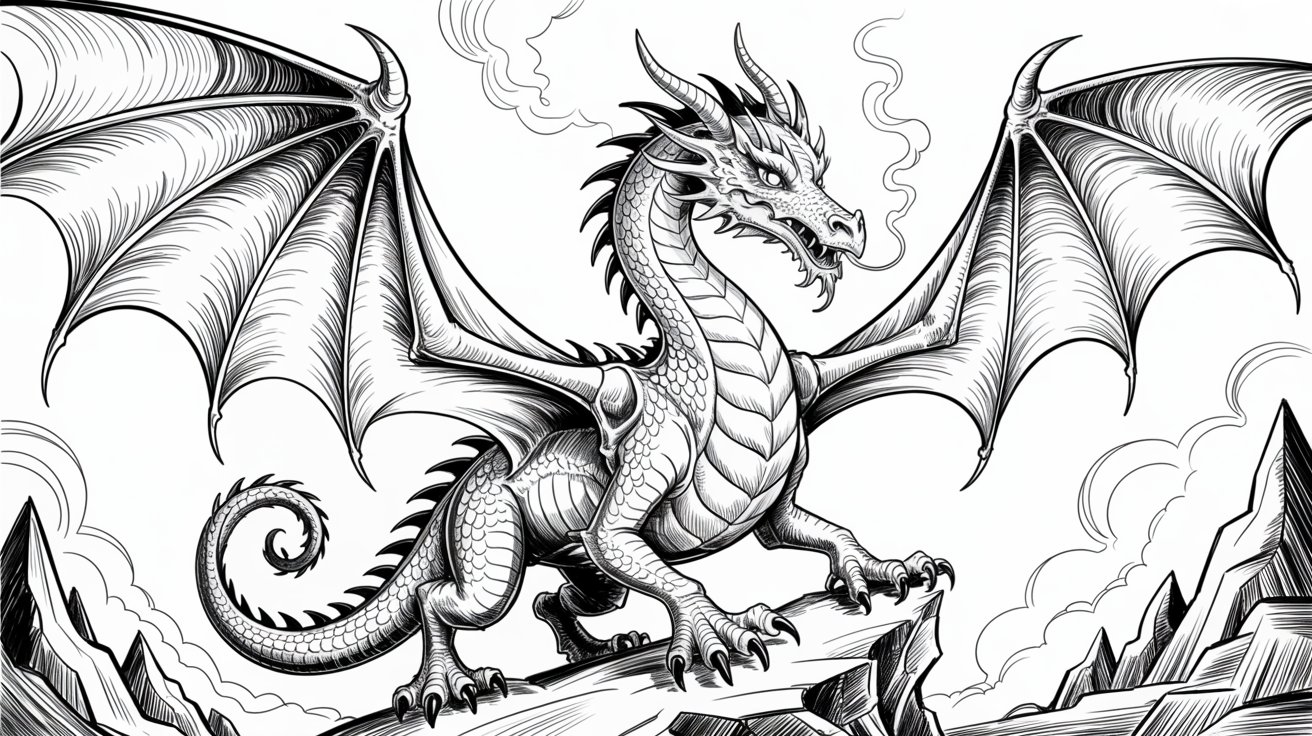
Let your imagination take over with fantasy art. Dragons give you wings, scales, claws, and fire to work with. There is no reference needed here. Build your creature however you like and have fun with every detail.
14. Abstract Doodle Art
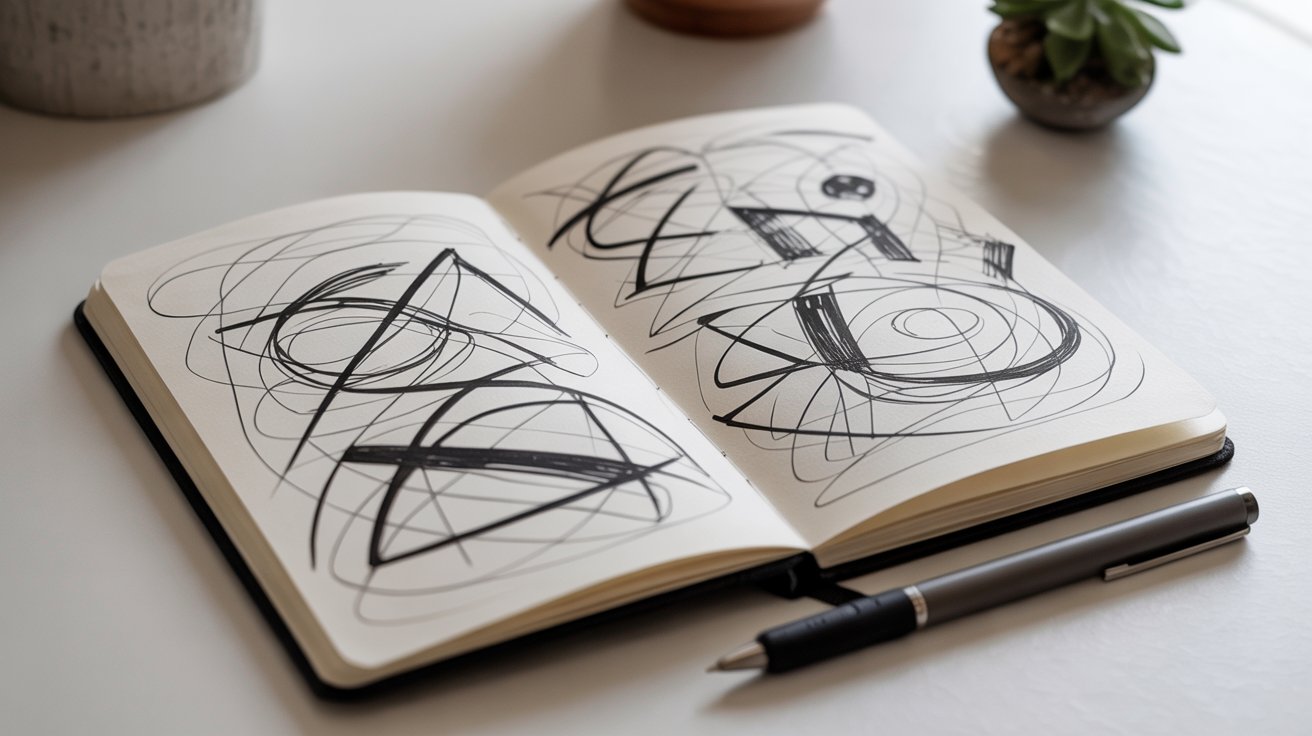
Abstract doodles are all about filling space with shapes and lines. There is no plan, no pressure, just your pen moving across the page. This is a great way to relax and still end up with something that looks really cool.
15. Surreal Dream-Inspired Scenes
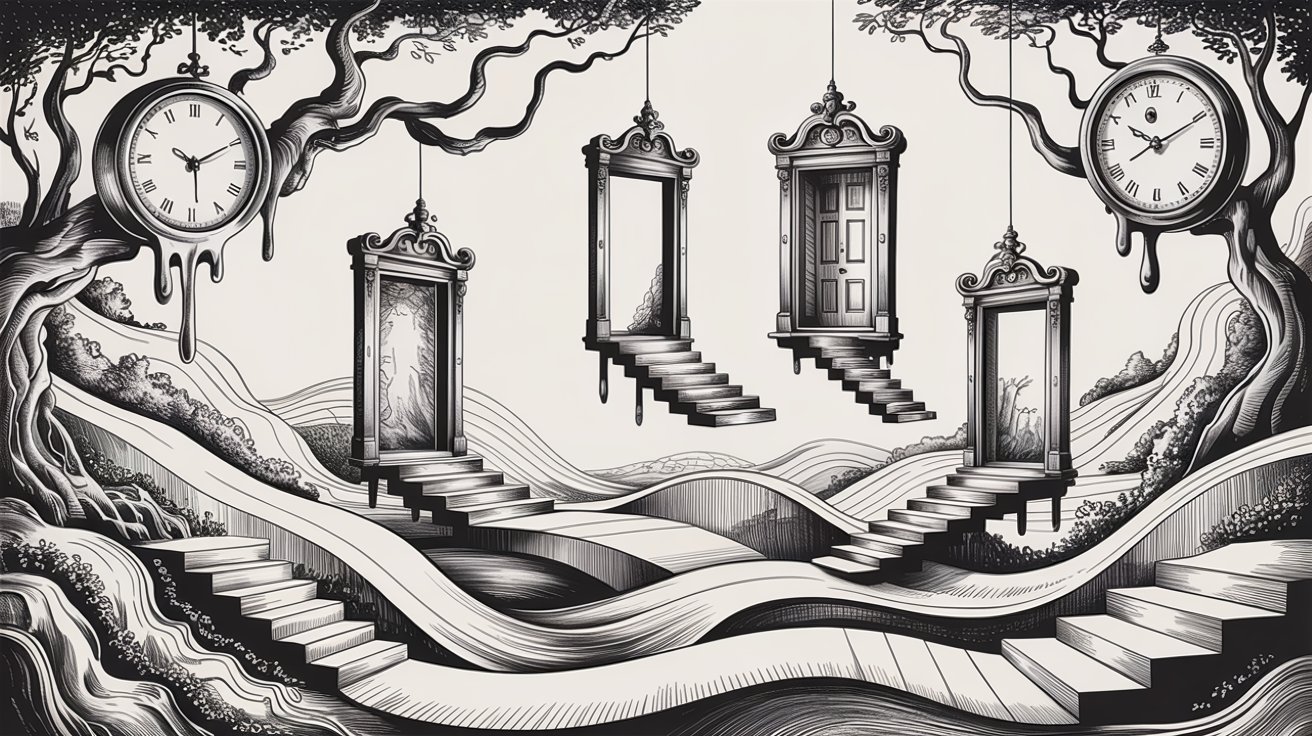
Draw things that do not belong together. A clock melting over a tree, a door opening into the sky. Surreal art has no limits. It is one of the most creative outlets for pen drawing and always sparks new ideas.
16. Small Houses or Cottages

Cottages and small houses are charming subjects for pen drawings. Focus on the roof, windows, and door details. Add some plants or a garden path to bring the scene to life. Even a simple sketch can feel warm and full.
17. Cityscapes and Skylines
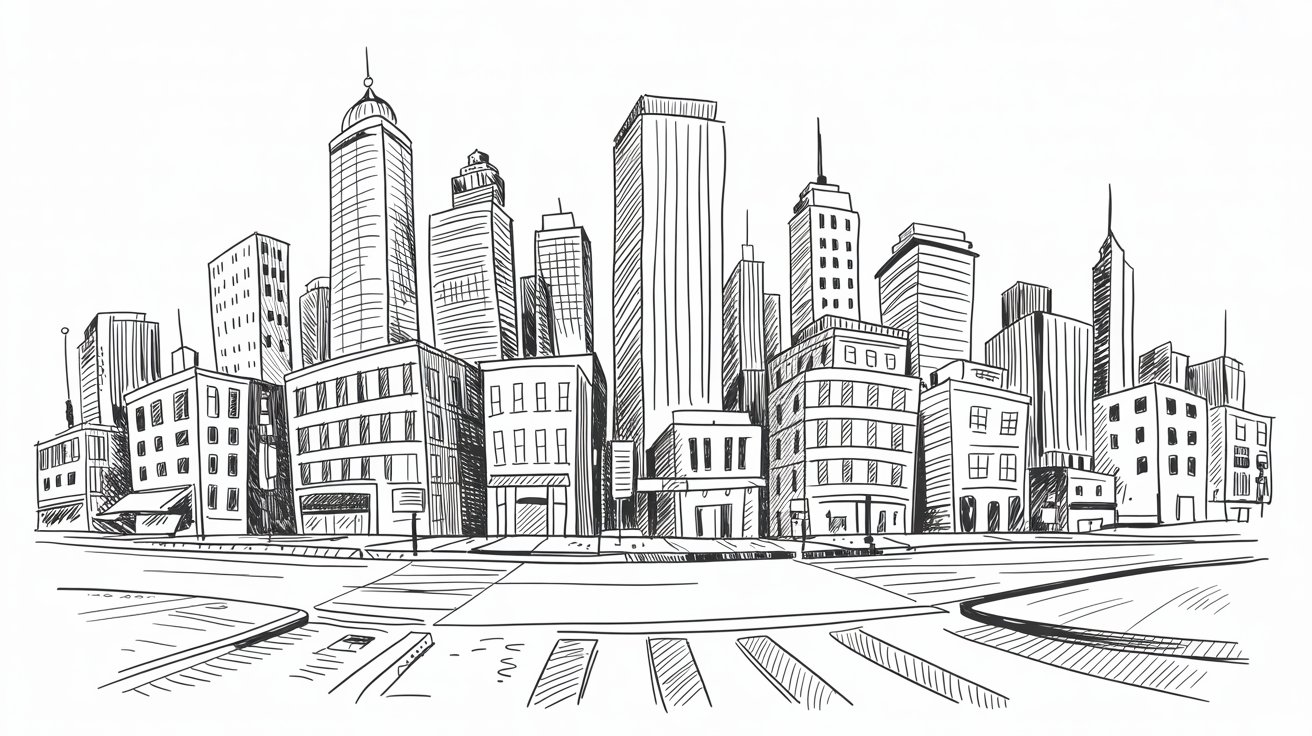
City skylines look sharp in pen art. Draw a row of buildings with varying heights and window patterns. Add some street-level details for depth. Ink works perfectly for capturing the clean, graphic look of an urban scene.
18. Windows and Architectural Details
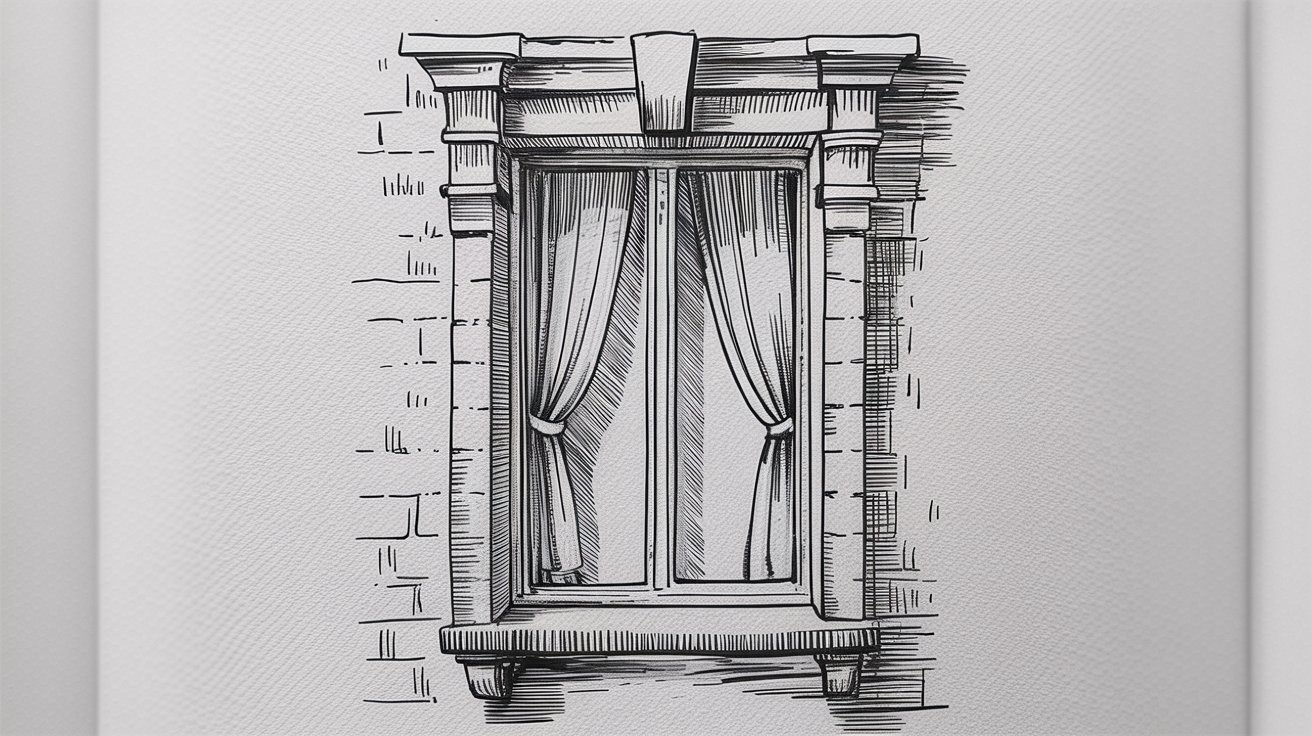
A single window with a windowsill and curtains can make a beautiful drawing. Focus on symmetry and small details like bricks or molding. Architectural details reward patience and make great practice for anyone who loves structure in their art.
19. Windmills or Landmarks
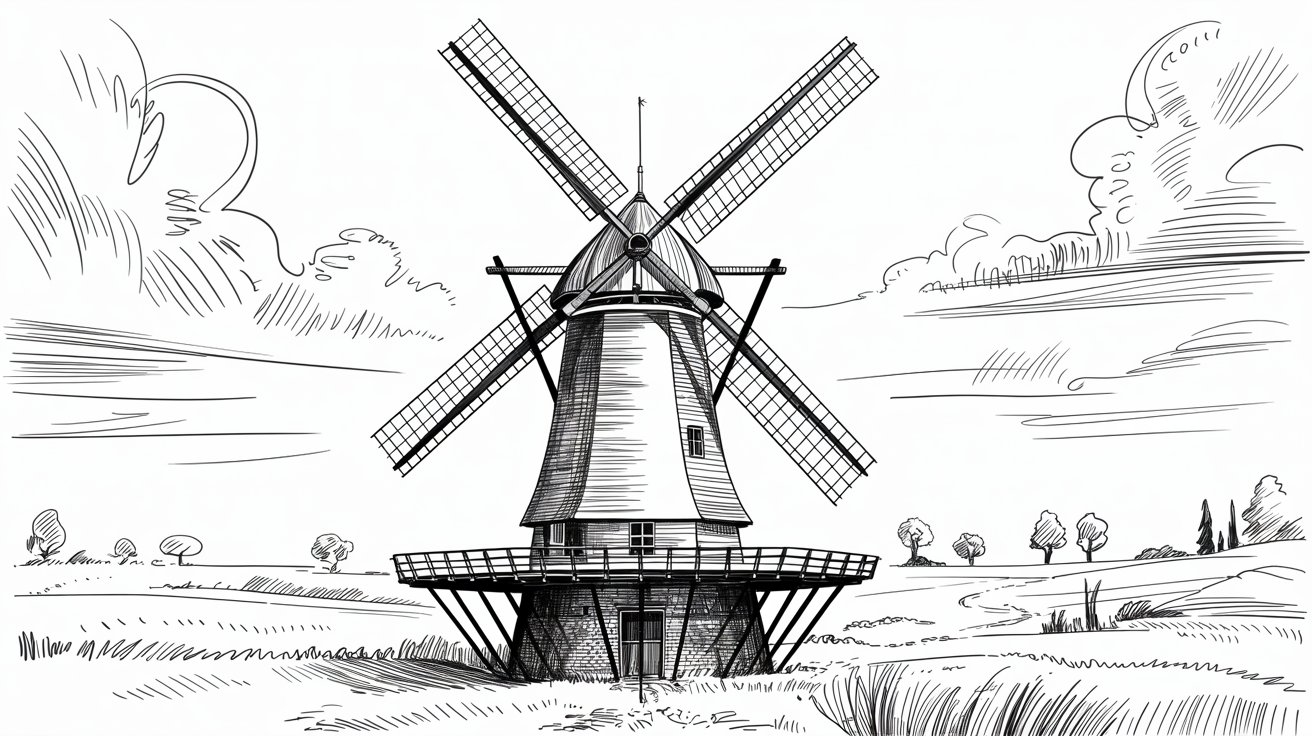
Windmills have a classic look that works well in pen. Their geometric shapes and spinning blades are satisfying to draw. You can also pick a landmark you love, like a lighthouse or a clock tower, and study its details closely.
20. Roads in One-Point Perspective
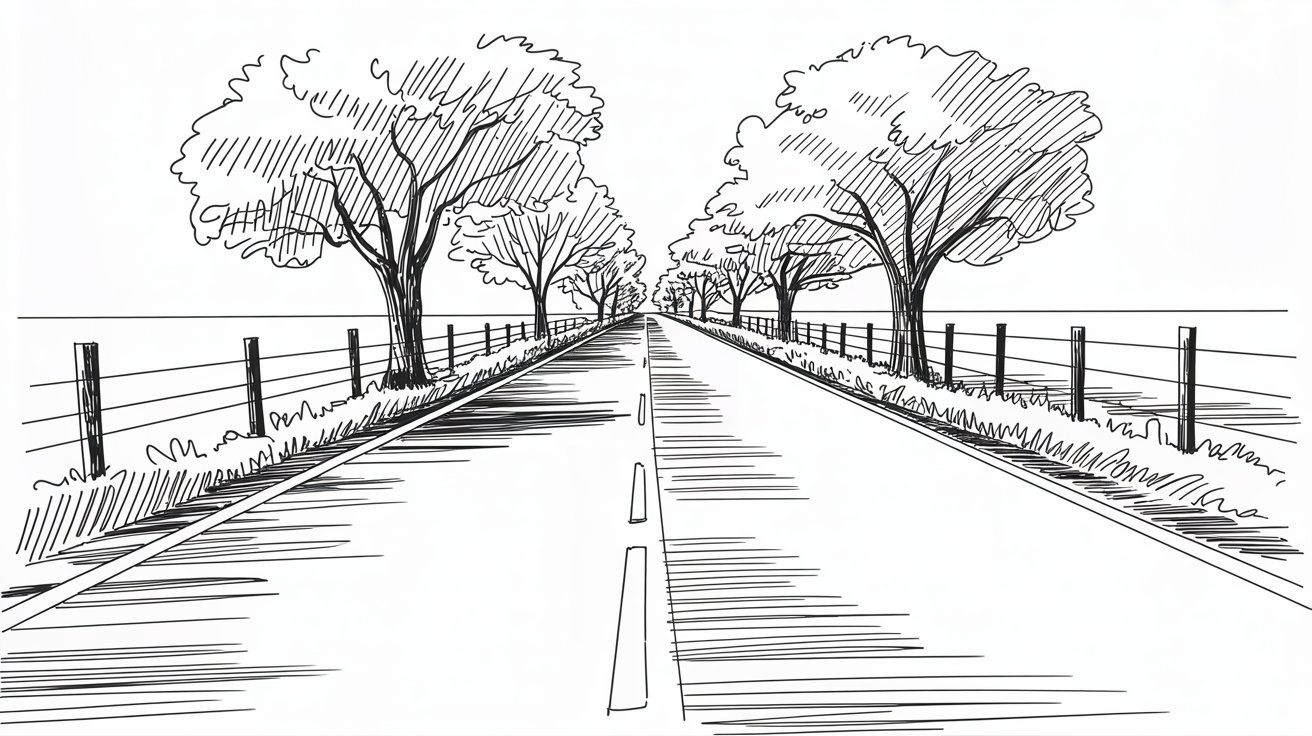
One-point perspective is a key drawing skill. A road stretching into the distance is one of the easiest ways to practice it. Add trees, fences, or fields on either side to build a full scene with a real sense of depth.
21. Desk or Study Setup
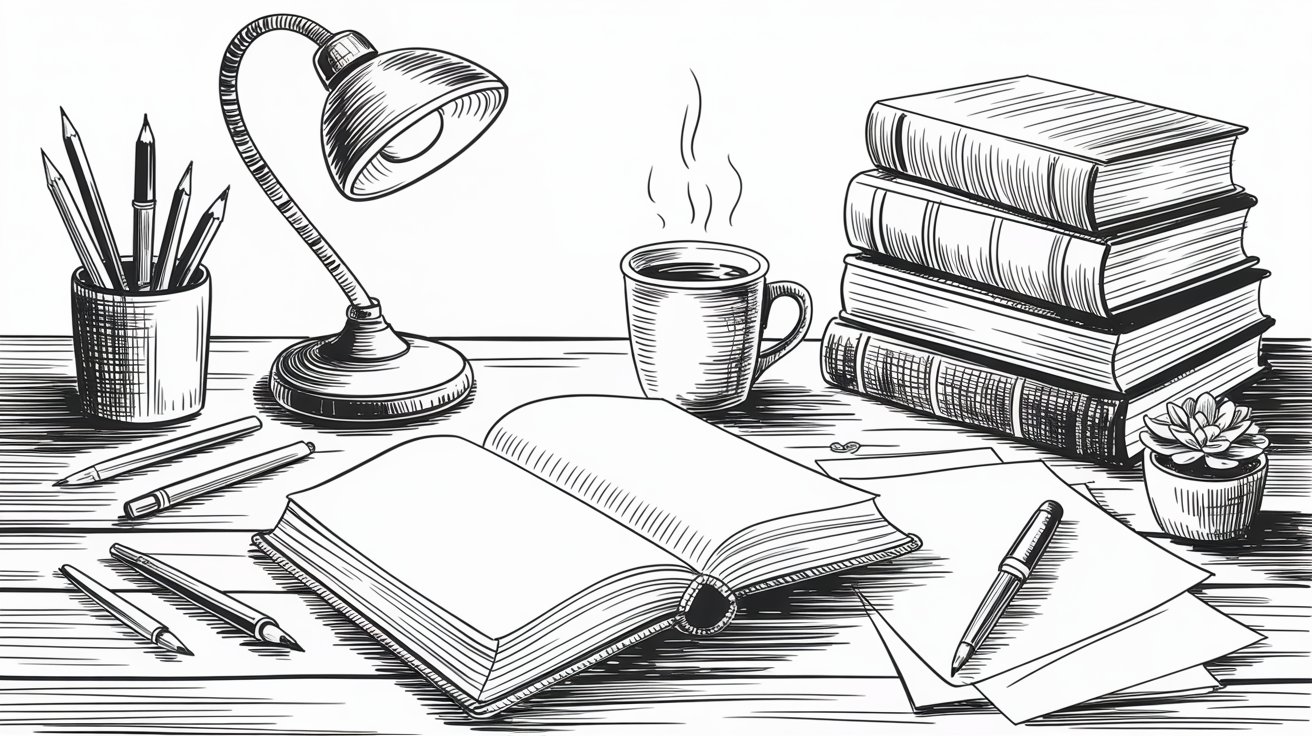
Draw your own desk from observation. Books, a lamp, a mug, a notebook. Everyday objects make great subjects and help you slow down and really look at things. This kind of drawing is calm, focused, and always turns out personal.
22. Living Room Interior
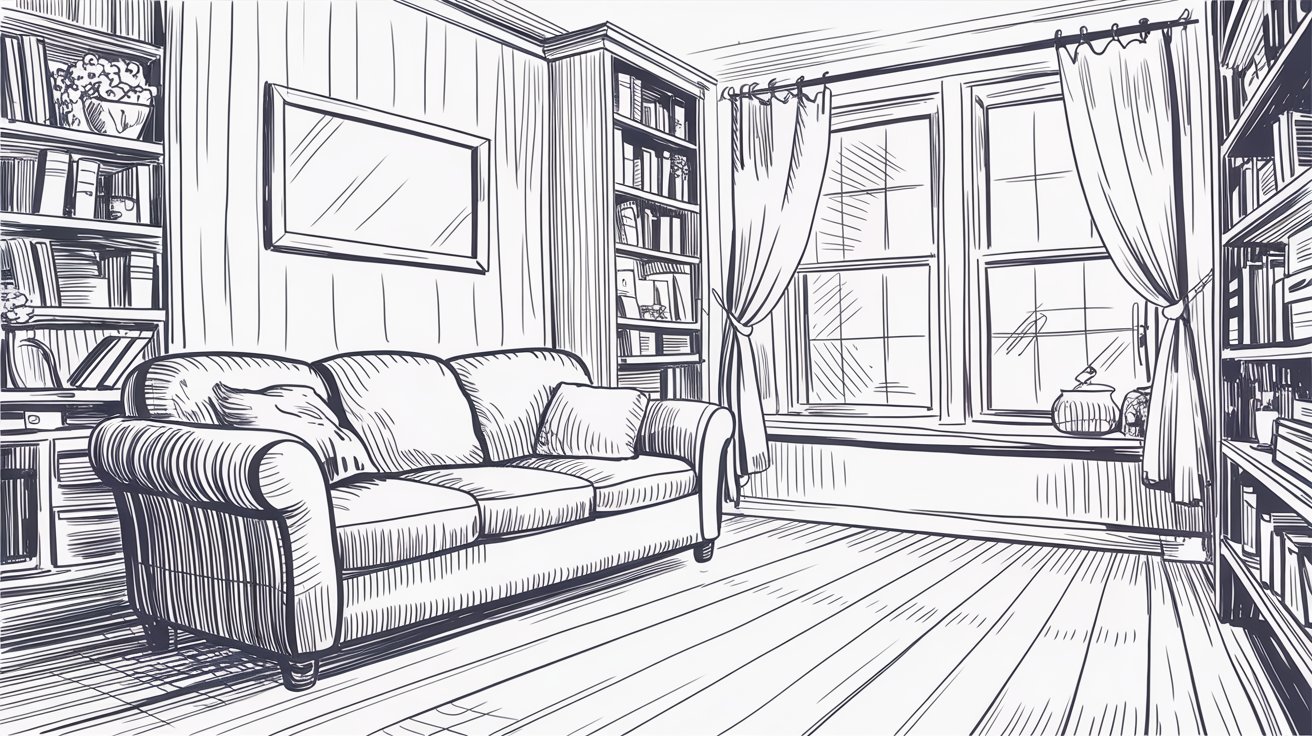
Interior drawings are a great way to practice perspective and proportion. Pick a corner of your living room and draw what you see. A couch, a shelf, a window. Simple scenes from real life always make for honest, interesting art.
23. Still Life (Books, Tea, Plants)
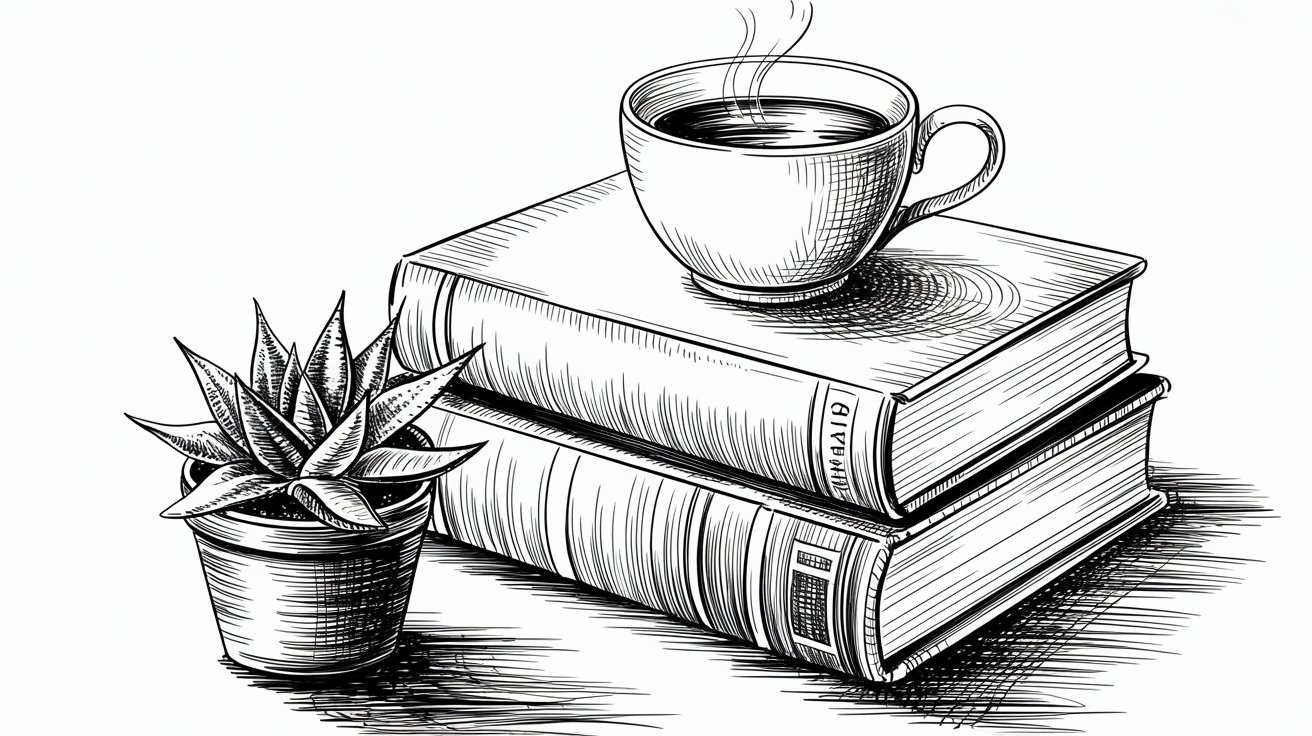
A stack of books next to a cup of tea and a small plant is a classic still life setup. Arrange the objects yourself and draw from life. This kind of practice builds observation skills faster than almost anything else.
24. Sailboats or Ships
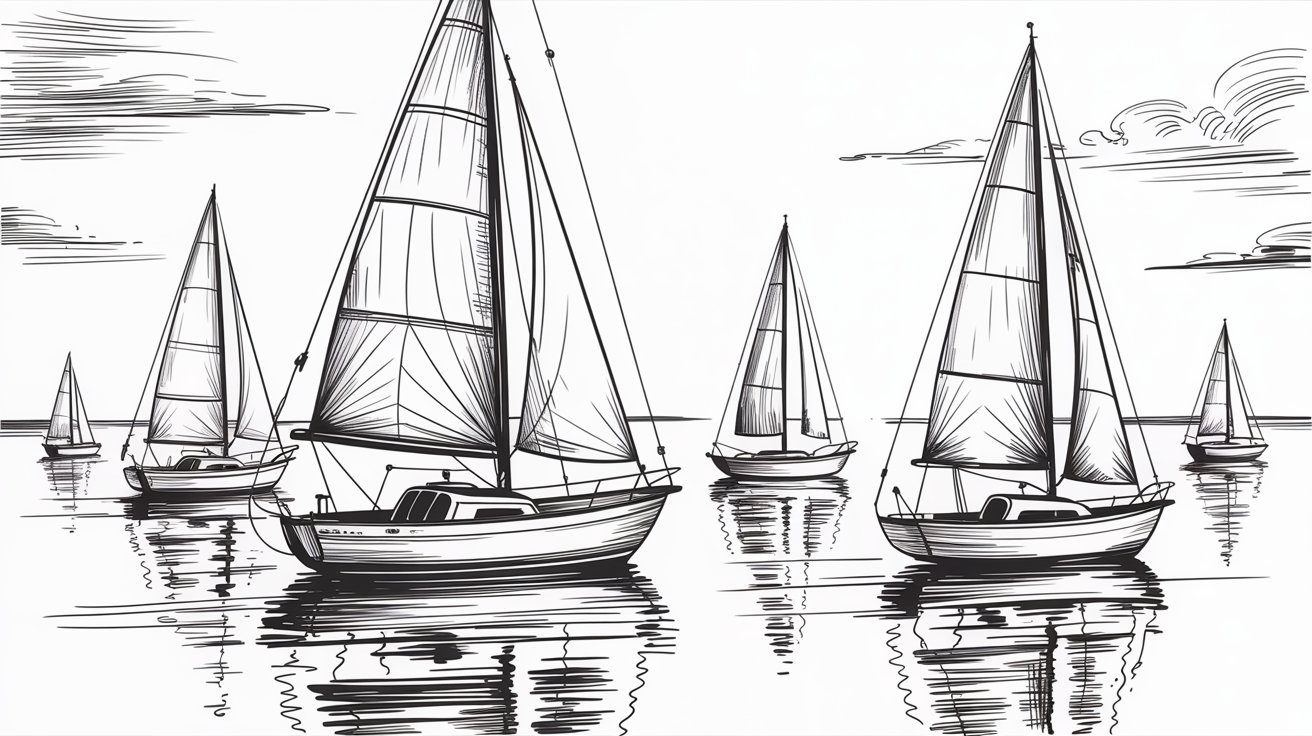
Boats have beautiful shapes and lots of interesting details. A sailboat on calm water is a great beginner subject. For something more complex, try a tall ship with rigging and sails. Water reflections done in pen can look really striking too.
25. Vintage Cars or Steam Trains
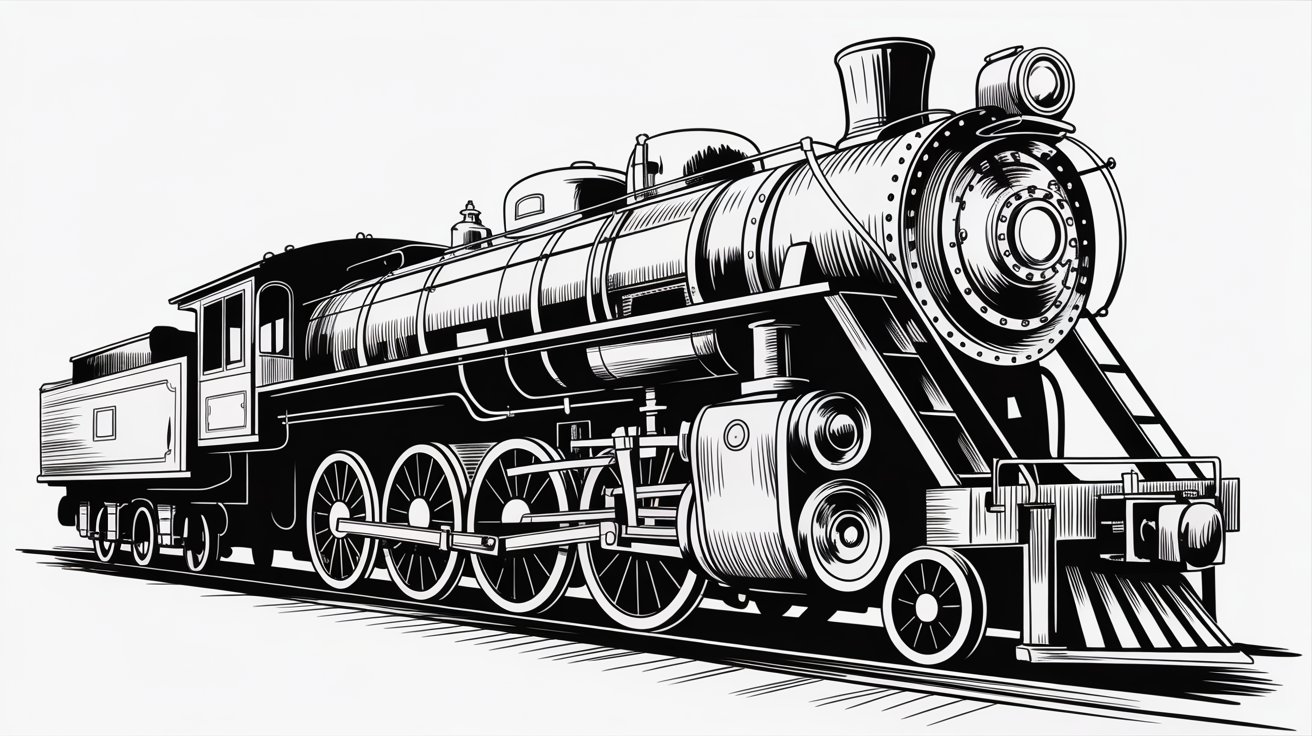
Vintage vehicles are full of curves, chrome, and character. Old cars and steam trains have a nostalgic feel that works perfectly in ink. Focus on the big shapes first, then layer in the mechanical details to bring the drawing to life.
Tips to Improve Your Pen Drawings
- Start with basic shapes and simple subjects. Add details only after you feel comfortable with the overall form.
- Practice drawing straight and curved lines every day. Even five minutes of line work will make a noticeable difference over time.
- Use a photo or real object as a reference when drawing. It trains your eye to see proportion, light, and detail more accurately.
- Try different pen types like fine liners, ballpoints, or brush pens. Each one gives a different feel and helps you find what works best for you.
- Vary your stroke weight by pressing harder or lighter as you draw. This small habit adds depth and makes your drawings look more polished.
Final Thoughts
I have tried many of these ideas myself, and the best advice I can give is to just start. Pick one idea from this list today. Do not wait for the perfect moment or the perfect pen.
Mix different techniques as you go. That is how you build your own style over time.
Stay consistent. Even one small drawing a day adds up fast.
Got a favorite idea from this list? Try it today and share what you create!
Frequently Asked Questions
What type of pen is best for beginners?
A fine liner or a simple ballpoint pen works great when you are just starting out. They are easy to control and give clean, consistent lines on any paper.
Do I need drawing experience to try these ideas?
Not at all. Most ideas on this list are beginner-friendly and need no prior skills. Just pick something simple, start drawing, and get better as you go.
How often should I practice pen drawing?
Even 10 to 15 minutes a day is enough to see real progress. Consistency matters more than long sessions, so make it a small daily habit.
Can I use any paper for pen drawing?
Yes, regular sketchbook paper or even printer paper works fine. Smoother paper gives cleaner lines, but you do not need anything fancy to get started.
How do I fix mistakes in pen drawing since there is no eraser?
You can turn mistakes into part of the drawing or use a white gel pen to cover small errors. Over time, you will make fewer mistakes as your hand gets more steady.
