


Learning how to draw a palm tree is easier than you think. I’ve been sketching palms for years, and trust me, they’re one of the most forgiving subjects for beginners.
This guide walks you through everything: understanding palm tree structure, gathering your materials, and following simple steps to create your own tropical art. We’ll cover cartoon styles, realistic techniques, and silhouettes.
You’ll learn how to draw the trunk, add those swooping leaves, and include coconuts for extra detail. I’m sharing the same methods I use in my own sketchbook.
By the end, you’ll have the skills to draw palm trees with confidence.
Understanding Palm Trees
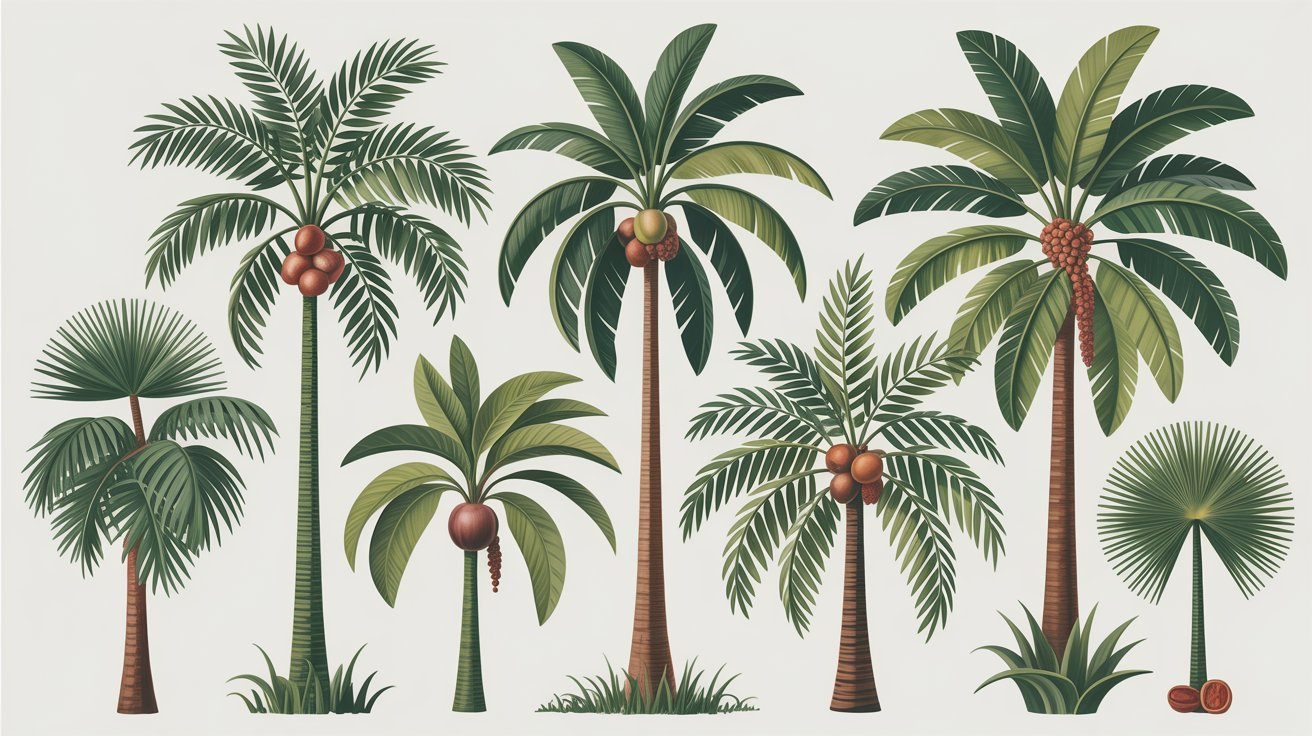
Most palms grow with one straight trunk shooting up from the ground. Some species have multiple trunks that branch out from the base. The trunk thickness changes depending on the palm type. Thicker trunks work well for coconut palms, while thinner ones suit date palms.
The leaves cluster at the very top in a crown formation. They spread outward in different directions. To make your drawing look real, think about how gravity affects the leaves. They naturally droop downward, especially the older ones at the bottom. The newer leaves at the top stand more upright.
Coconuts are the most common fruit you’ll see on palm trees. Dates grow on other palm species. Each type has its own shape and look. Some have wide, fan-shaped leaves, while others have long, feathery fronds. Looking at reference photos helps you see these differences.
Materials You’ll Need

You don’t need fancy supplies to start drawing palm trees.
A mechanical pencil gives you clean, consistent lines. A Sharpie fine point works great for darker outlines and finished drawings. If you want to try silhouettes, grab a Pitt artist pen with a brush tip.
For paper, use whatever you have. A basic sketchbook is perfect for practice. Plain photocopy paper works just as well and costs less. Don’t overthink the materials. The practice matters more than expensive supplies.
Step-by-Step Palm Tree Drawing
Follow these easy steps to create your first palm tree from start to finish.
Step 1: Draw the Basic Outline
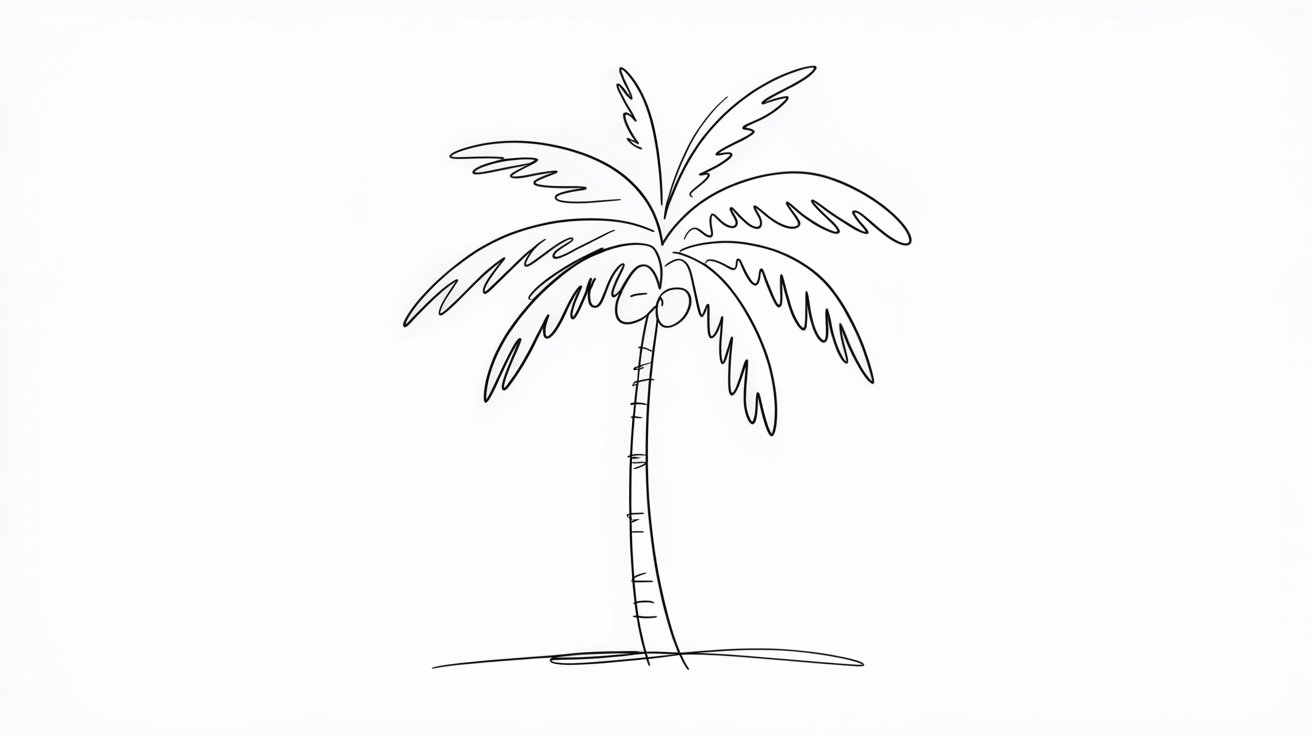
Start with a simple vertical line for the trunk. Add light guidelines at the top to show where your leaves will go. Keep these lines sparse and loose.
You’re just mapping out the basic proportions here. Don’t worry about details yet.
Step 2: Draw the Leaves
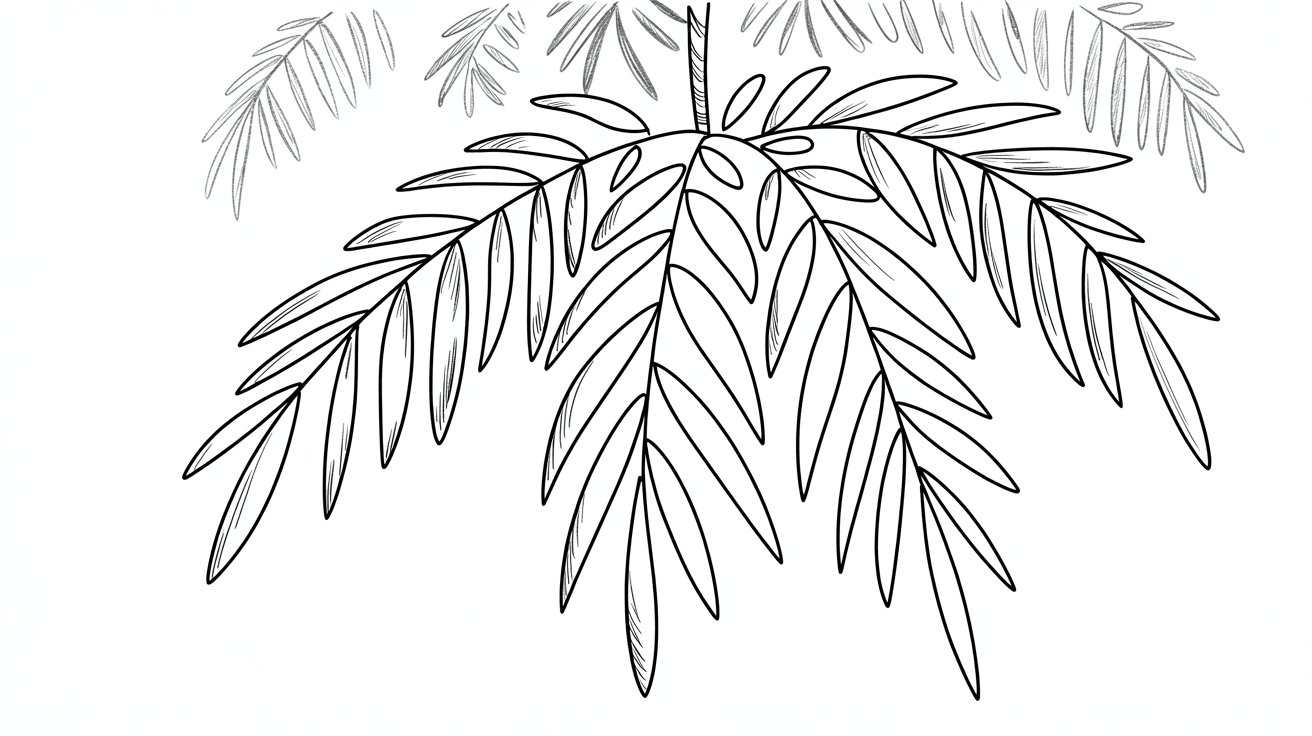
Begin with the leaves that hang down the most. Taper them so they get narrower toward the tips. Add some variation in length. Not all leaves should be the same size.
Cut small notches along the edges to show texture and natural wear. The upper leaves can be drawn more lightly to create depth. This makes some leaves look closer and others farther away.
Step 3: Draw the Trunk

Add a slight curve to your trunk line to make it look natural. Real palm trunks aren’t perfectly straight. Include some lumps and bumps along the length.
These irregular shapes give the trunk character. Draw curved horizontal lines across the trunk to show the bark texture. Space them unevenly for a more realistic effect.
Step 4: Add Fruits (Optional)
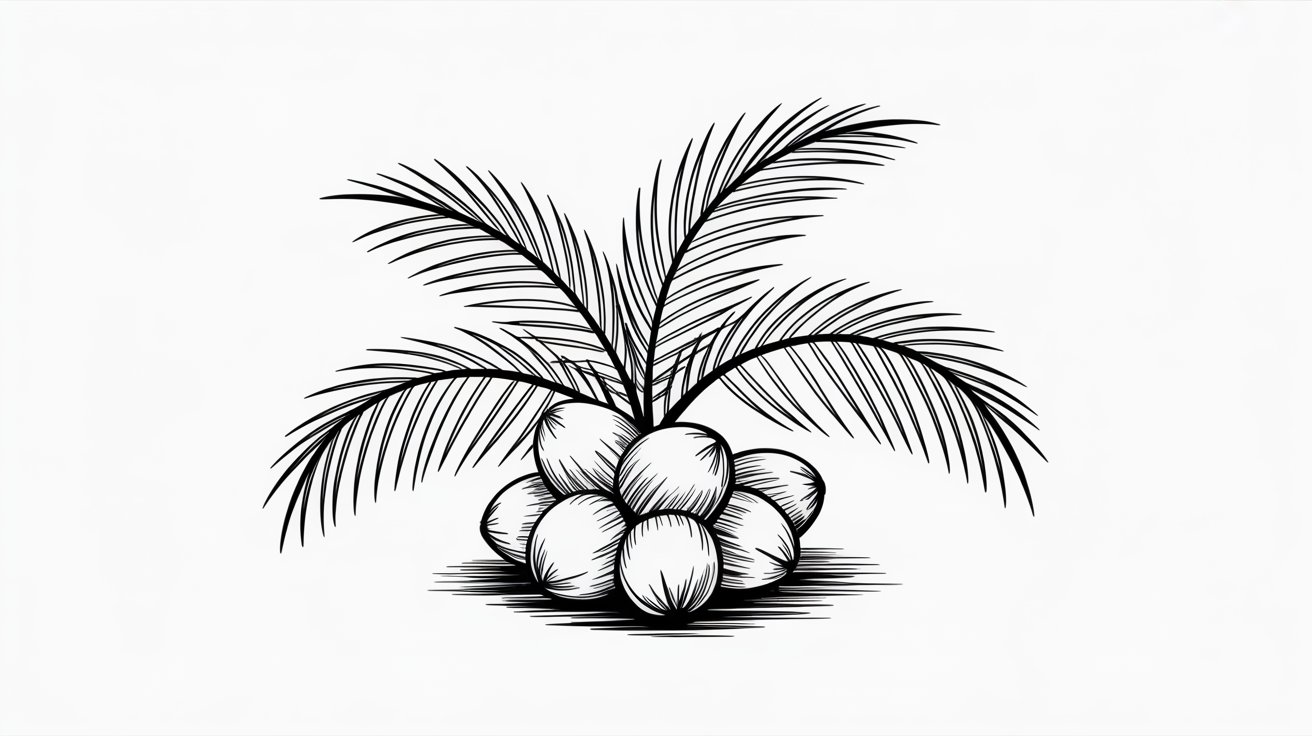
If you want to include coconuts, draw them clustered under the leaf crown. Use odd numbers like three or five coconuts. This looks better than even numbers.
Keep the coconuts in different sizes for a natural appearance. You can also add dates or other palm fruits depending on the species you’re drawing.
Drawing Variations
Try these different styles to find what works best for your artistic vision.
Cartoon vs. Realistic Leaves
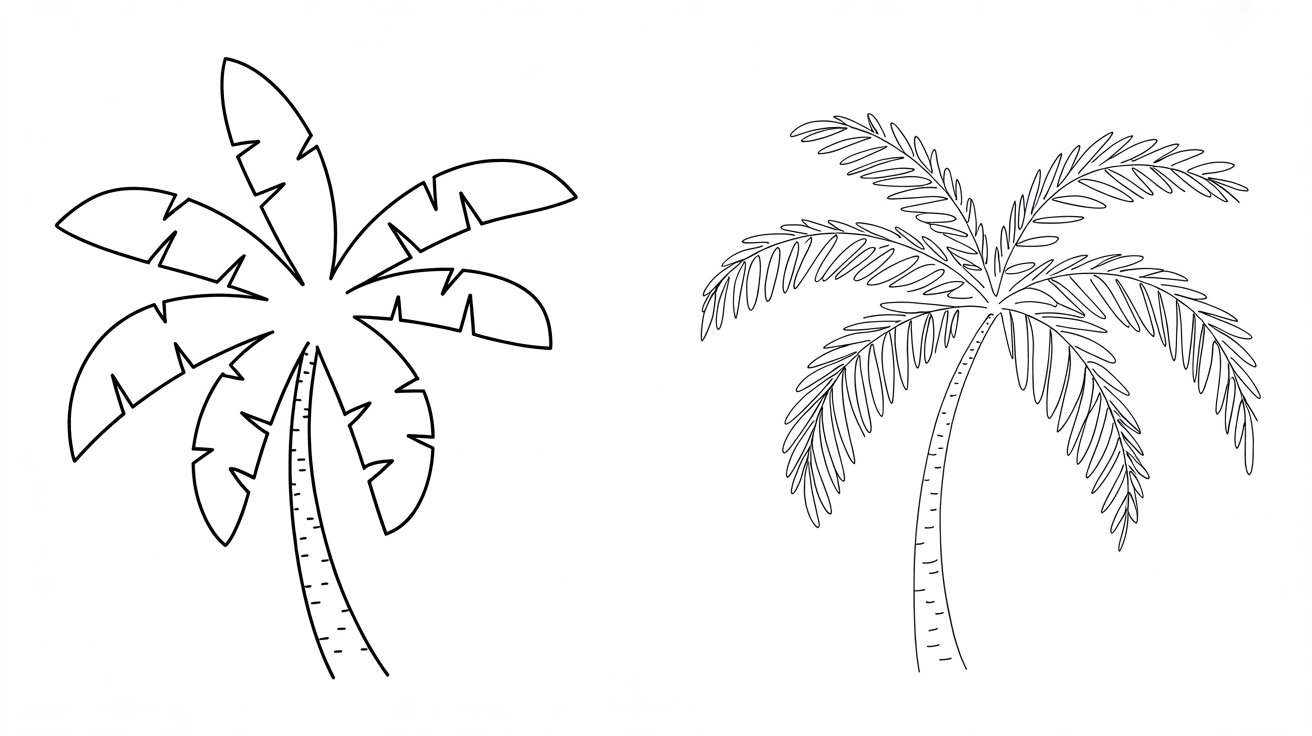
For a cartoon style, block in the leaves with solid shapes. Make them wider and simpler. This approach works great for quick sketches or illustrations.
For realistic leaves, use wispy, flowing lines. Show individual fronds breaking off from the main leaf stem. Let some fronds curl and bend. This takes more time but creates a lifelike result.
Palm Tree Silhouette

Grab a brush pen and fill in the entire trunk with solid black. Do the same with the leaves, creating dark shapes against white paper.
This quick method produces dramatic, realistic-looking palms without much detail work. Silhouettes are perfect when you want impact without spending hours on texture.
Drawing Palm Trees on the Beach
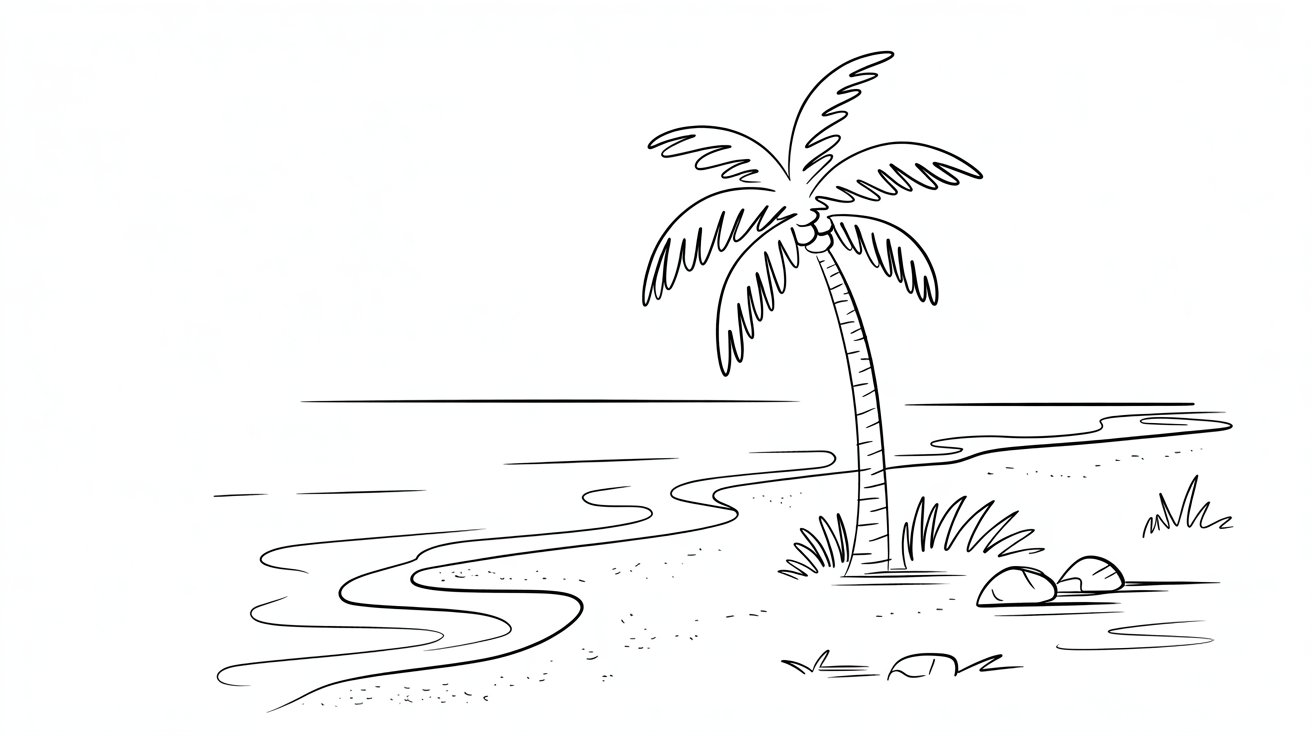
Add sand at the base of your palm tree. Draw a wavy line to show where the beach meets the water. Include some grass tufts or small rocks for extra detail.
You can expand this into a full beach scene with more palm trees, waves, and even a sunset. Keep the background elements simple so your palm tree stays the focus.
Inspiration and Motivation
Your personal style develops naturally over time. The more you draw, the more your hand moves in ways that feel right to you. Some artists love clean lines while others prefer sketchy, loose strokes. Both are great. Let your style grow without forcing it.
Drawing is a skill you build through practice, not something you’re born with. Anyone can learn to draw palm trees well. The people who draw well today simply spend more time practicing than others. Your hand gets better at what you ask it to do repeatedly.
Regular practice does more than improve your technical skills. It boosts your confidence every time you finish a drawing. You start trusting your hand more.
Creativity grows when you draw often because your brain gets comfortable thinking visually. Each palm tree you sketch makes the next one easier and more fun.
Tips for Beginners
These simple tricks will help you improve faster and enjoy the process more.
- Copy photos when you’re learning. Find palm tree images online or in books and sketch them. This builds your visual library and helps you understand how palms actually look.
- Don’t stress about perfection. Your drawing doesn’t need to match reality exactly. Artistic license means you can adjust shapes and details to fit your style.
- Experiment freely. Try different techniques until you find what works for you. Some artists prefer loose, sketchy lines, while others like clean, precise marks. Both approaches are valid.
- Date your drawings. Write the date on the back of each sketch. When you look back months later, you’ll see how much you’ve improved. This tracks your progress and keeps you motivated.
Conclusion
I still remember my first palm tree sketch. The trunk was wonky, and the leaves looked like sticks. But I kept practicing, and now drawing palms feels natural. You’ve got all the steps you need right here.
Start with simple shapes, add details gradually, and don’t worry if your first attempts look rough. That’s how we all begin. Grab your pencil and draw one palm tree today. Then draw another tomorrow.
Your skills will grow faster than you think. Share your palm tree drawings in the comments below. I’d love to see what you create.
Frequently Asked Questions
What’s the easiest way to draw palm tree leaves?
Start with curved guidelines from the trunk top. Add tapered shapes along each line, narrower at the tips. Keep it simple and add notches for texture.
Can I draw a palm tree without reference photos?
Yes, once you understand the basic structure. Practice with references first, then try drawing from memory to develop your own style.
How do I make my palm tree look realistic?
Add natural curves to the trunk and vary leaf lengths. Include texture with small notches and lumps on the trunk. Make sure leaves droop downward naturally.
What pencil should beginners use for palm tree drawings?
A mechanical pencil works great for beginners. It gives consistent lines without sharpening. A standard HB pencil also works fine.
How long does it take to draw a palm tree?
Simple palm trees take 10 to 15 minutes. Detailed drawings with texture and shading take 30 minutes to an hour. You’ll get faster with practice.
