

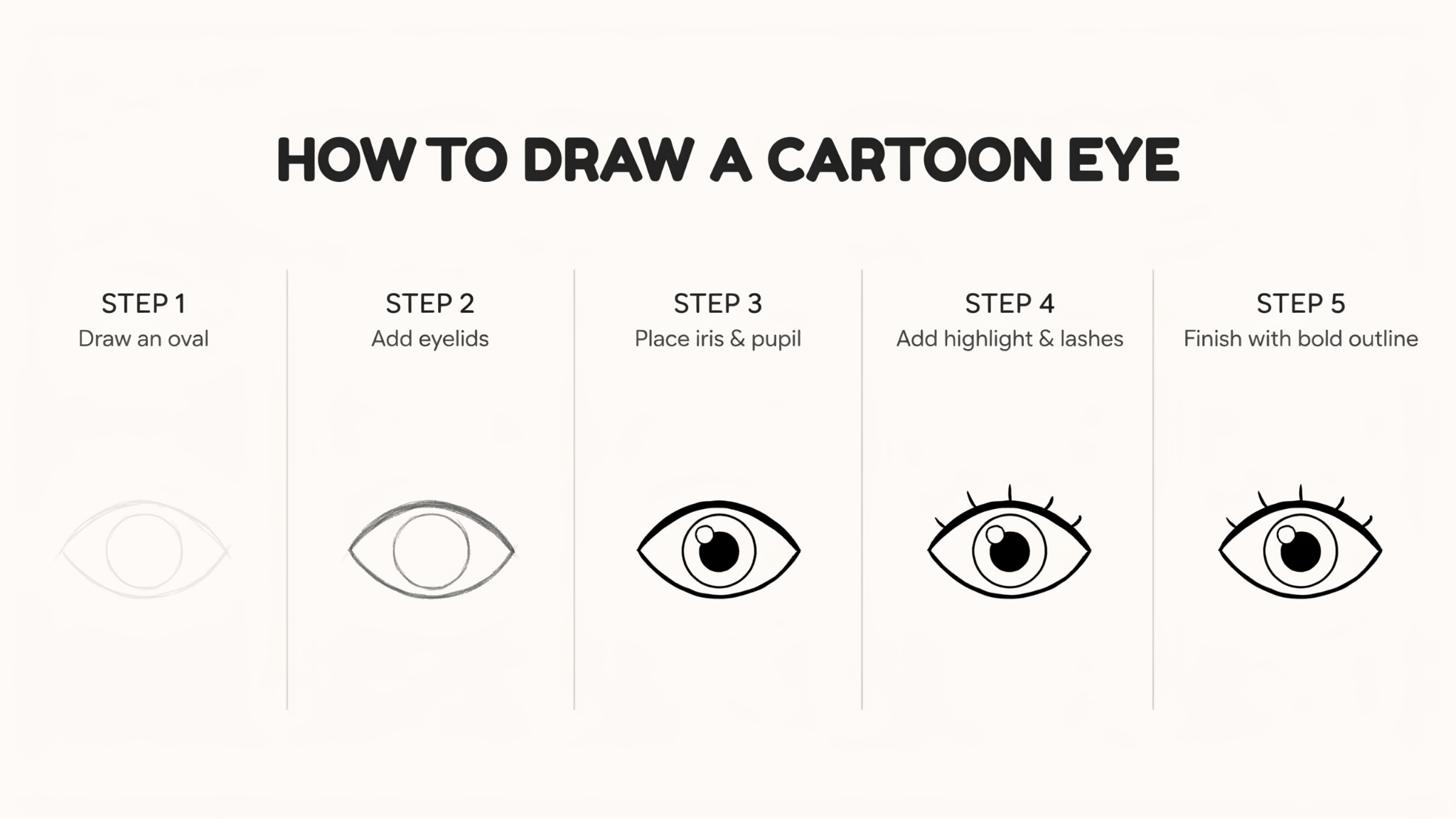
If you want to learn cartoon eyes drawing, this guide will help you step by step. Many beginners struggle with getting eye shapes, expressions, and details right.
This article is made to solve that problem in a simple way.
You’ll learn how to draw basic eye shapes, add pupils, and create expressions that bring characters to life.
This tutorial is written for beginners and follows a clear, easy flow. It is based on simple methods that artists often use when starting out.
I’ve broken everything down to make learning smooth and stress-free. By the end, you’ll feel more confident drawing cartoon eyes on your own.
Basic Shapes Used in Cartoon Eyes Drawing
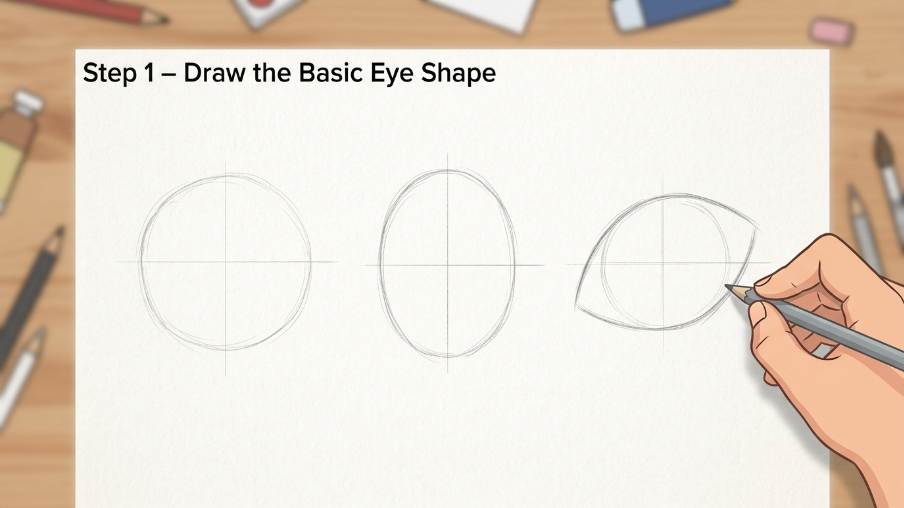
When learning cartoon eyes drawing, everything starts with simple shapes. Most cartoon eyes are built using circles, ovals, and almond shapes.
These basic forms make it easy to create different eye styles without stress. For beginners, simple shapes are important because they help you focus on proportions instead of details.
Once you understand the structure, you can easily change the eye style. For example, round eyes often look cute and innocent, while sharp almond shapes can look serious or angry.
Even small changes in shape can completely change a character’s personality and emotion. This is why mastering basic shapes is the first and most important step in cartoon eye drawing.
Tools You Need
You don’t need expensive tools to start cartoon eye drawing.
- Pencil and eraser
- Sketchbook or drawing app (for digital drawing)
- Pens or markers (optional for inking)
- Digital tablet (optional for advanced practice)
Step-by-Step Cartoon Eyes Drawing Guide
This section will help you learn cartoon eyes drawing in a simple, step-by-step way so you can build each part of the eye with ease and confidence.
Step 1 – Draw the Basic Eye Shape
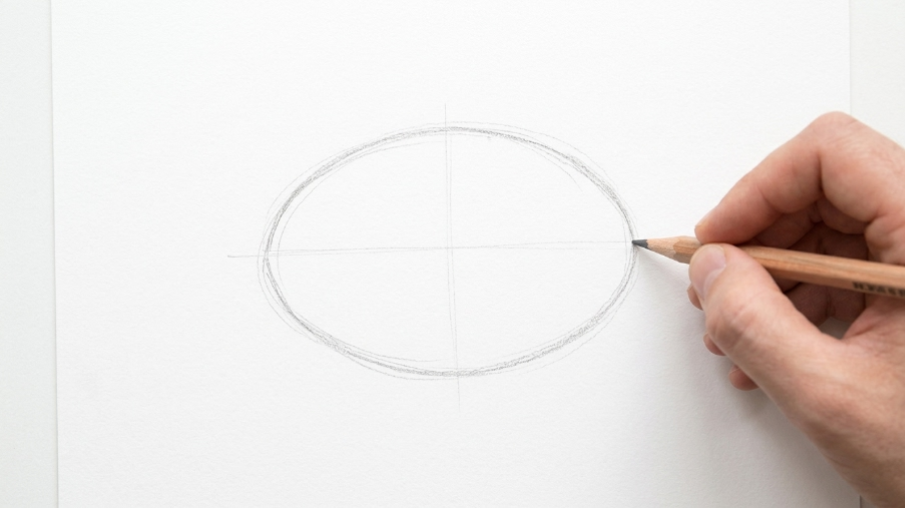
Start with a simple shape like a circle, oval, or almond form. Keep your lines light so you can adjust them later.
This base shape sets the direction of your cartoon eye and helps you maintain balance and proportion before adding any inner details.
Step 2 – Add Pupils and Iris
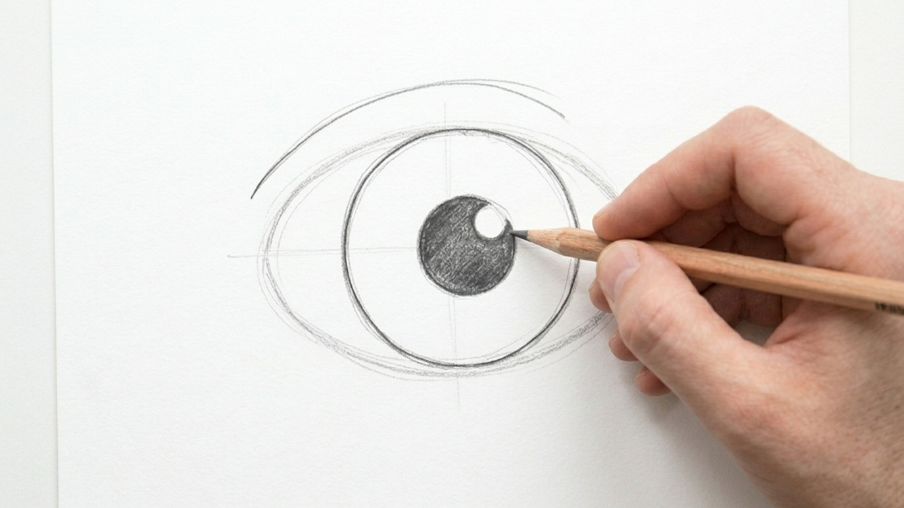
Inside the shape, draw a circle for the iris and a smaller one for the pupil. Place them slightly off-center to add life and expression.
The position of the pupil can change the emotion of your cartoon eye easily.
Step 3 – Create Highlights for Expression
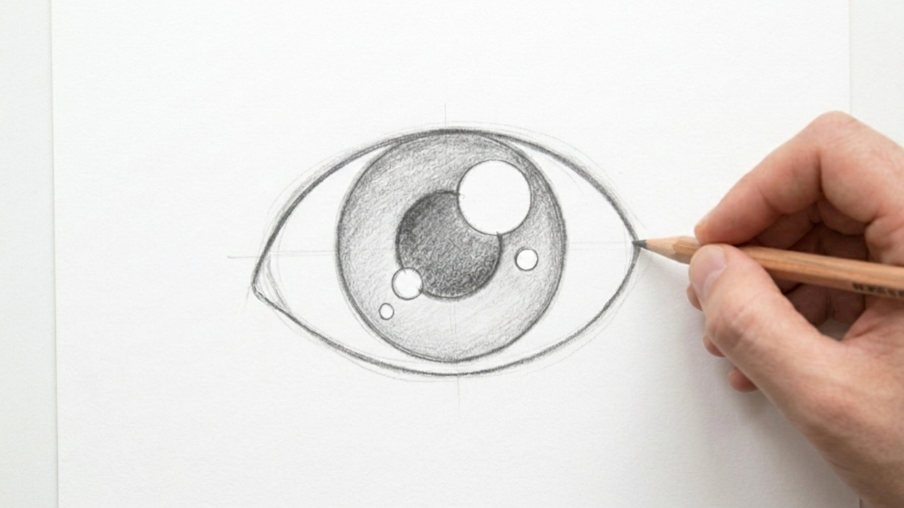
Add small white circles or shapes inside the pupil to create highlights. These tiny details make the eyes look shiny, lively, and more expressive.
Even one highlight can completely change the mood of your character.
Step 4 – Add Eyelashes and Eyelids
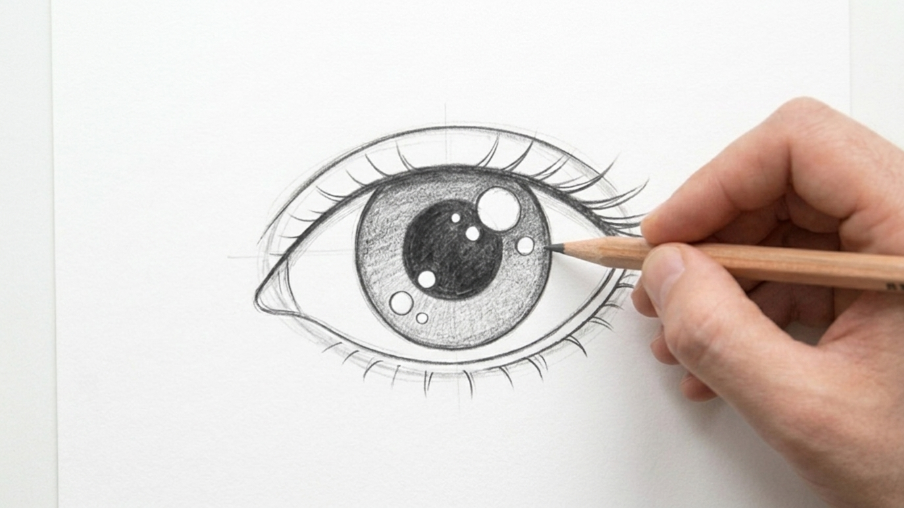
Draw light curved lines above and below the eye for eyelids. Add simple eyelashes if needed, depending on your style.
Keep it minimal for beginners so the eye doesn’t look too heavy or overdone.
Step 5 – Refine Lines and Clean Sketch

Go over your drawing with clearer lines and erase extra sketch marks. Smooth out the shape and adjust small details.
This final step makes your cartoon eye look clean, balanced, and ready for inking or coloring.
Different Cartoon Eye Styles You Can Try
Here are some popular styles in cartoon eyes drawing that help you try different emotions and character designs easily.
| Eye Style | Description | Emotion/Use |
| Cute anime-style eyes | Large, shiny eyes with strong highlights and soft curves | Innocent, cute, friendly characters |
| Simple round cartoon eyes | Basic circular eyes with minimal detail | Neutral or beginner-friendly characters |
| Angry or intense eyes | Sharp angles and narrow shapes | Serious, strong, or villain characters |
| Happy and smiling eyes | Curved lines or crescent shapes | Joyful, excited, or playful mood |
| Surprised expression eyes | Wide-open eyes with small pupils | Shock, surprise, or excitement |
Easy Video Tutorial Tips
If you prefer learning visually, these tips will help you follow cartoon eyes drawing tutorials more effectively and practice with confidence.
- Follow along with slow-step videos
- Pause and replicate each step carefully
- Practice multiple styles and variations
Watch a helpful video tutorial here:Cartoon Eyes Drawing Tutorial on YouTube
Common Mistakes Beginners Make
Here are some simple mistakes that often slow down progress in cartoon eyes drawing and how to avoid them early.
- Overcomplicating shapes instead of keeping them simple
- Misplacing pupils, which can ruin the expression
- Ignoring symmetry between both eyes
- Adding too much detail too early in the sketch
Tips to Improve Your Cartoon Eyes Drawing
These easy tips can help you improve faster and make your cartoon eyes look more natural and expressive.
- Practice using real references or sample drawings
- Start with very light sketching before final lines
- Focus more on expressions than perfect shapes
- Try different styles like cute, angry, or anime eyes
Conclusion
Learning cartoon eyes drawing gets easier when you break it into simple steps. I still remember how my early sketches looked uneven, but practicing basic shapes helped me improve slowly.
Try the same process and imagine your characters coming to life with each eye you draw. Keep it simple and steady.
If this guide helped you, feel free to leave a comment, share your progress, or try more drawing guides to keep improving your skills.
Frequently Asked Questions
How do I start cartoon eyes drawing as a beginner?
Start with simple shapes like circles or ovals to build the basic structure. Focus on getting proportions right before adding any details or shading.
Why are eye shapes important in cartoons?
Eye shapes control the character’s emotion and personality. Even small changes in curves or angles can make a character look cute, angry, or surprised.
How can I make cartoon eyes look more expressive?
Use highlights, adjust pupil placement, and change eyelid angles. These small tweaks can quickly bring more life and emotion to your drawing.
Do I need special tools for cartoon eyes drawing?
No special tools are needed to start. A simple pencil and eraser are enough, and you can always upgrade later if you move to digital or advanced sketching.
How can I improve my cartoon eyes drawing faster?
Practice regularly and study references from different styles. Focus on expressions instead of perfection, and try drawing multiple variations to build confidence and skill.
