


I’ve dealt with too many flimsy hoops that won’t hold fabric taut. Nothing ruins a beautiful embroidery project like a hoop that slips, warps, or leaves marks on your work.
The right embroidery hoop makes all the difference. It keeps your fabric stretched properly, protects delicate materials, and helps you create professional-looking stitches every time.
I’ve tested dozens of hoops to find the ones that actually work. No more wasted money on cheap options that fall apart after a few uses.
In this guide, I’m sharing my top 5 embroidery hoops that real stitchers love. I’ll show you what makes each one worth buying, compare their strengths and weaknesses, and help you pick the best hoop for your projects.
What to Look for in a Good Embroidery Hoop

Before jumping into the top picks, you need to know what makes an embroidery hoop worth buying. Not all hoops are created equal.
A good hoop holds fabric taut without constant tightening. Material matters too. Wood, plastic, and flexible hoops each work better for different fabrics.
Look for smooth edges and easy tension control, especially for long stitching sessions. Delicate silks need gentler pressure while denim needs a strong hold.
Some hoops double as frames, saving you extra finishing work. Keep these factors in mind when choosing your hoop.
Top 5 Best Embroidery Hoops
After testing countless hoops, I found these five that deliver. Each one solves a different problem you might face while stitching.
Let me break down what makes each hoop special.
1. Morgan No-Slip Hoop
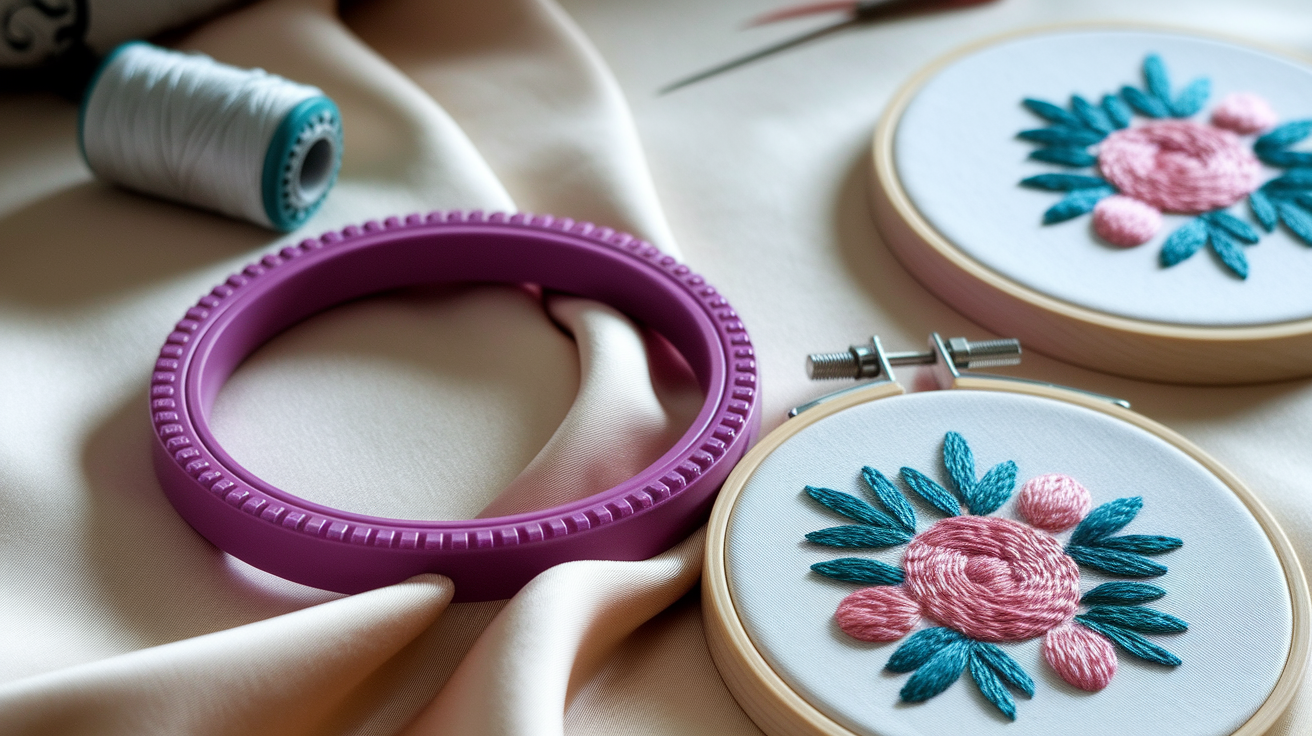
This hoop changed everything for me. The patented no-slip design grips fabric like nothing else.
A special textured inner ring that holds even slippery fabrics tightly. No more constant readjusting.
Pros:
- Fabric stays put during detailed work
- Works with thick materials like denim
- Smooth finish won’t snag threads
Cons:
- More expensive than basic hoops
- Limited size options
Best for: Dense embroidery and thick fabrics like canvas or heavy cotton.
2. Nurge Wooden Embroidery Hoop

Beautiful beechwood construction that feels solid in your hands. These hoops come from Finland and show real craftsmanship.
The wood grain is gorgeous. Your finished work looks elegant displayed in one of these.
Pros:
- Eco-friendly natural wood
- Perfect for a wall display
- Smooth brass hardware
- Gets better with age
Cons:
- Can leave slight marks on delicate fabric
- Needs gentle care
Best for: Projects you plan to frame or display. Also great for cotton and linen.
3. Dritz Plastic Embroidery Hoop
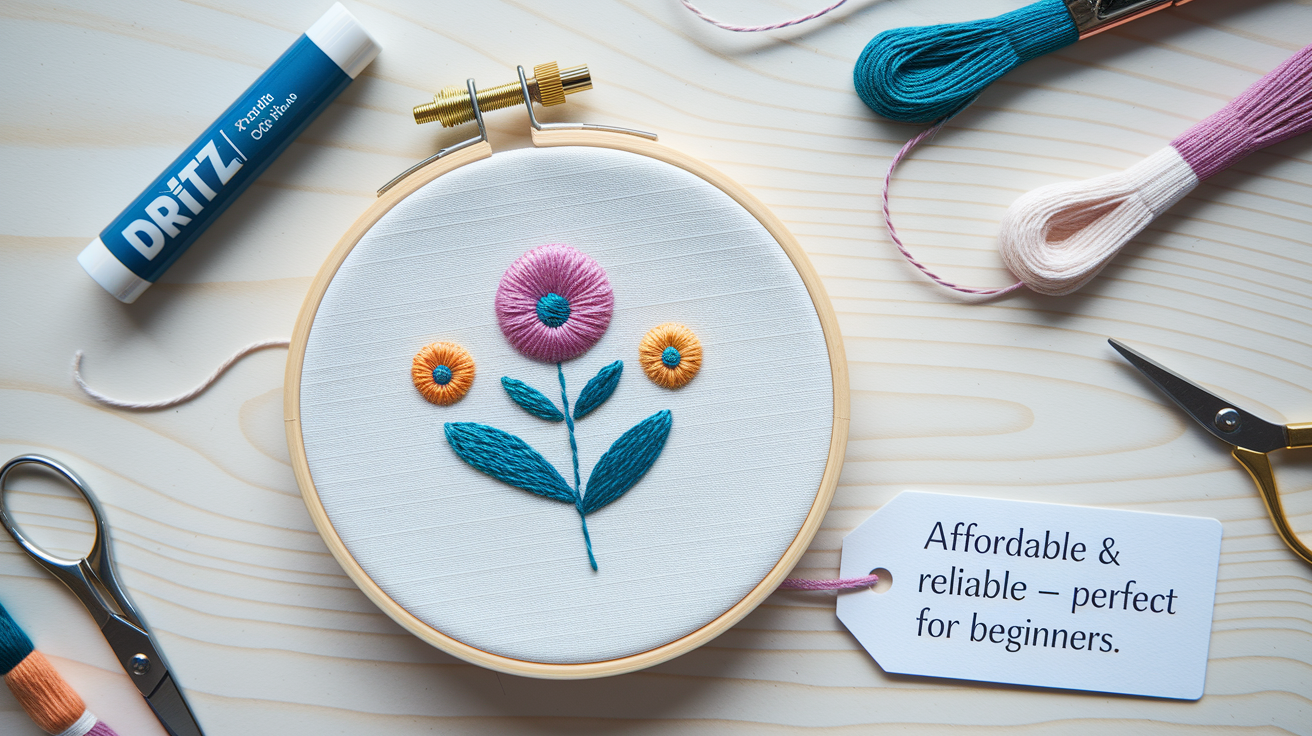
Your wallet will thank you. This basic plastic hoop does the job without breaking the bank. I recommend these to every beginner.
They’re nearly impossible to break and hold tension well.
Pros:
- Super affordable
- Available everywhere
- Won’t warp or crack
- Easy to clean
Cons:
- Not suitable for display
- Limited grip on very smooth fabrics
- Basic appearance
Best for: Learning embroidery, practice projects, and everyday stitching.
4. Clover Embroidery Hoop with Locking Screw
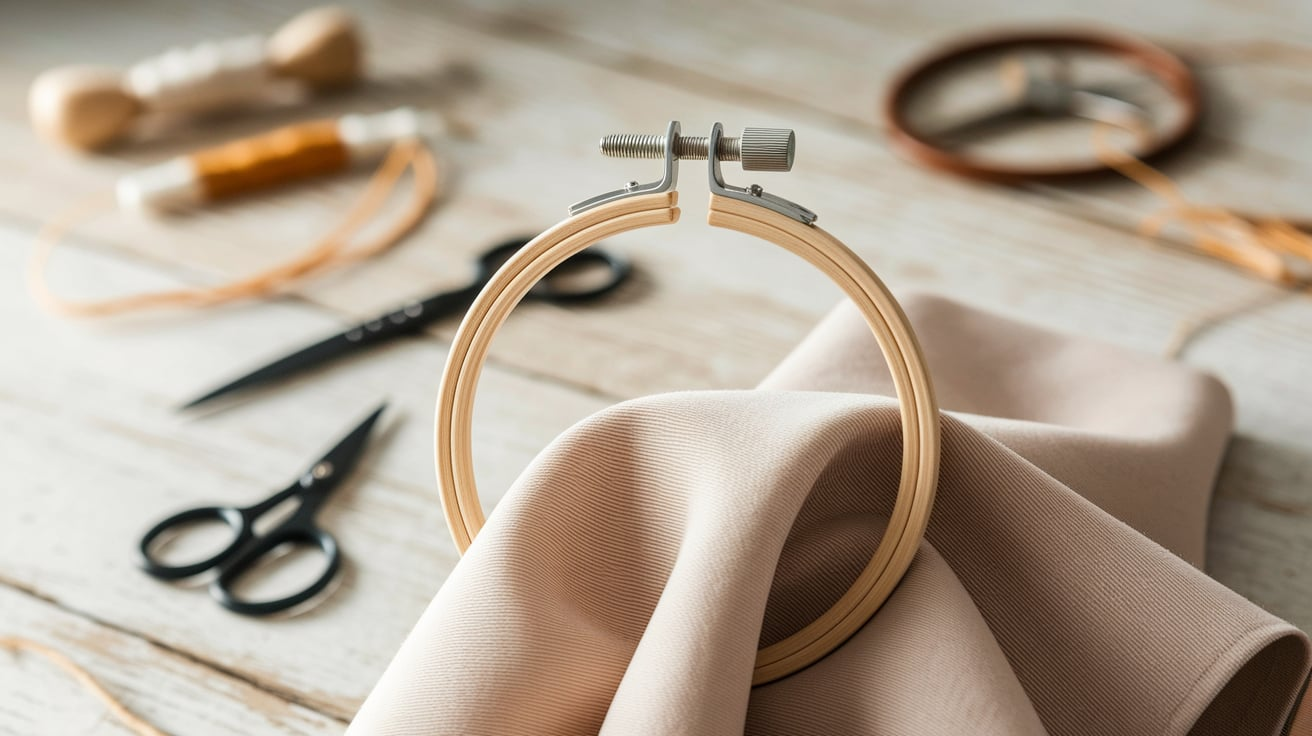
Clover knows precision tools. This hoop proves it with a smooth locking screw that gives perfect tension every time.
The mechanism is simple but effective. Turn the screw and your fabric locks in place.
Pros:
- Consistent tension control
- Comfortable for long sessions
- Reliable brand reputation
- Smooth edges protect fabric
Cons:
- Mid-range pricing
- Screw can loosen over time
Best for: Extended embroidery sessions and projects requiring steady tension.
5. Hoops and Frames Flexi Hoop
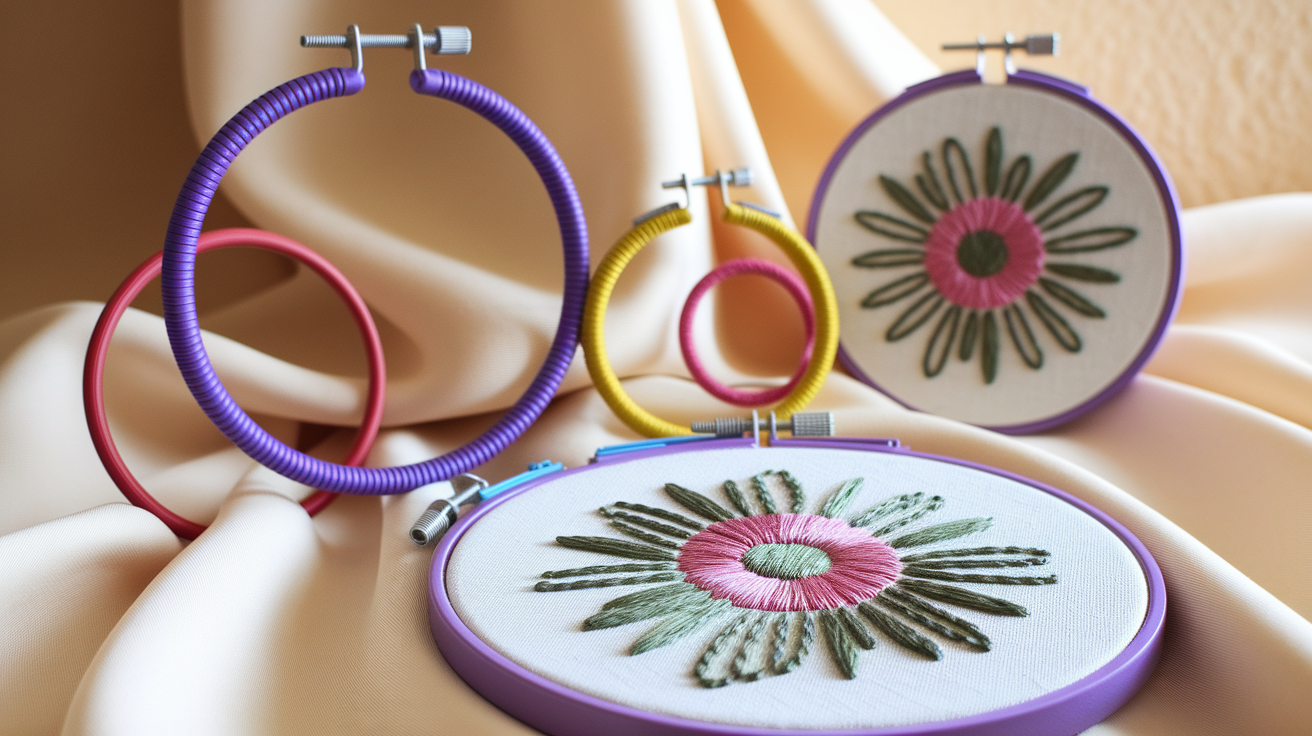
This flexible outer ring snaps over your fabric instead of clamping it. Genius design for delicate materials. Use it for stitching, then display your work in the same hoop. No transferring needed.
Pros:
- Gentle on delicate fabrics
- Great for display
- Easy fabric changes
- No pressure marks
Cons:
- Best with lighter fabrics only
- Less grip than traditional hoops
- Limited size range
Best for: Light cotton, silk, and display projects.
Tips for Using Embroidery Hoops Like a Pro
Even the best embroidery hoop won’t perform well if it’s used incorrectly. These simple tips will help you get cleaner stitches, better tension, and longer-lasting hoops.
- Tighten gradually by adjusting the screw little by little while pulling fabric evenly on all sides. Don’t over-tighten or you’ll stretch fabric and leave hoop marks, especially on delicate materials.
- Use fabric binding for slippery materials by wrapping the inner hoop with cotton twill tape. This improves grip on silk and satin that tend to slide around.
- Remove fabric from the hoop when you’re not stitching. This prevents permanent creases and keeps your fabric fibers strong over time.
- Choose the right size hoop for your design. Smaller hoops offer better tension control for detailed work, while larger hoops work for bigger pieces.
- Keep hoops clean by wiping plastic ones regularly and lightly conditioning wooden hoops. This prevents drying, warping, and buildup that affects performance.
Comparison Table of the Best Embroidery Hoops
Here’s a quick side-by-side look at our top picks. Compare sizes, materials, prices, and features to find your perfect match.
| Hoop | Material | Sizes Available | Closure Type | Best For | Price Range |
|---|---|---|---|---|---|
| Morgan No-Slip | Plastic with textured grip | 4″, 6″, 8″ | Traditional screw | Thick fabrics, detailed work, pros | $15-25 |
| Nurge Wooden | Beechwood with brass hardware | 3″-12″ | Traditional screw | Display, cotton/linen, intermediate+ | $20-35 |
| Dritz Plastic | Durable plastic | 4″, 6″, 8″, 10″ | Traditional screw | Beginners, practice, everyday use | $3-8 |
| Clover Locking | Plastic with metal screw | 5″, 7″, 9″ | Precision locking screw | Long sessions, consistent tension | $12-20 |
| Flexi Hoop | Flexible plastic outer ring | 5″, 7″, 9″ | Snap-on flexible ring | Light fabrics, display, quick changes | $10-18 |
Conclusion
Choosing the right embroidery hoop can change your stitching experience from frustrating to delightful.
Whether you prefer classic wooden hoops, modern plastic designs, or professional frames, each option offers something special.
The best hoop keeps your fabric perfectly taut and feels comfortable in your hands. Don’t be afraid to experiment with different sizes as your skills grow.
Many embroiderers use different hoops depending on the project. Start with one of these top-rated options and watch how the right tools unlock new levels of precision in every stitch.
Happy stitching!
Frequently Asked Questions
What size embroidery hoop should I start with?
A 6-8 inch hoop is perfect for beginners. It’s large enough to accommodate most starter projects but small enough to feel manageable and comfortable to hold for extended periods.
Are wooden or plastic hoops better?
Both have advantages. Wooden hoops provide excellent grip and durability, while plastic hoops are lighter and often have better tension mechanisms. Choose based on your comfort preference and project needs.
How tight should I make my embroidery hoop?
Your fabric should be taut like a drum but not stretched to the point of distortion. You should be able to gently bounce a finger off the surface without the fabric sagging or puckering.
Can I leave my fabric in the hoop between stitching sessions?
It’s best to remove fabric from the hoop when not actively stitching. Leaving it clamped can create permanent creases and weaken the fabric fibers over time.
Do I need different hoops for different fabrics?
While one good hoop can handle most fabrics, delicate materials like silk benefit from padded or spring-tension hoops, while heavy fabrics like canvas work better with sturdy wooden hoops that provide a strong grip.
