


I’ve been teaching art for years, and I know keeping students engaged isn’t always easy. That’s why I created this guide with 27 art class games that actually work in real classrooms.
These activities help students build skills while having fun, and most require minimal prep.
You’ll find quick 5-minute games, age-specific activities for elementary through high school, team challenges, and calming options for quiet days.
I’m sharing what I’ve tested and refined through countless art classes. These games teach observation, creativity, color theory, and collaboration without feeling like traditional lessons.
They’re practical solutions for busy teachers who want their students excited about art.
Let’s get started.
What Makes a Great Art Class Game?
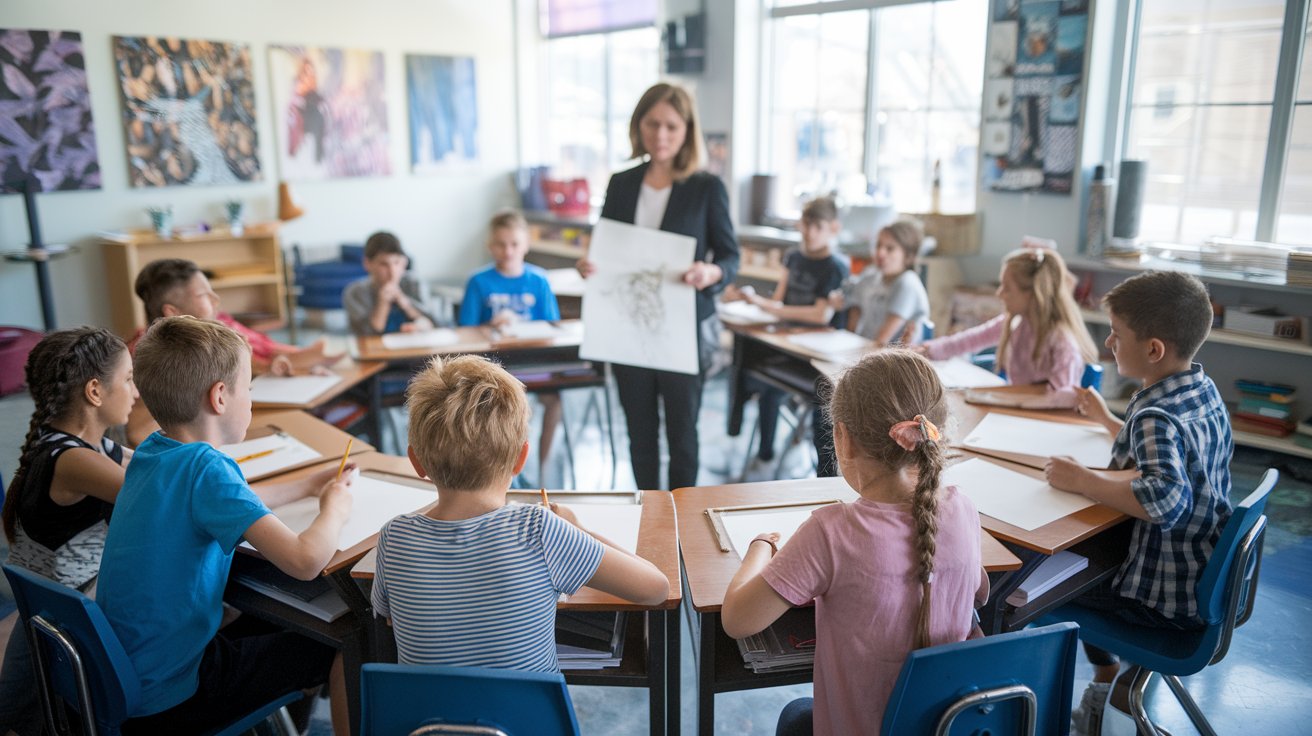
A good art class game teaches skills while keeping students engaged.
The best games have simple rules. If students can’t grasp it in under two minutes, it’s too complicated. Clear instructions mean more time creating.
Time flexibility matters. Good games adapt to five minutes or full periods.
Materials should be basic. Paper, pencils, and markers work for most games. You don’t need expensive supplies.
The activity should match student abilities. What works for second graders won’t work for sophomores.
Skills develop naturally through play. Students practice line control, composition, and observation without realizing they’re learning.
I rotate between competitive and collaborative games based on my class needs.
Quick-Start Art Games (No Prep, 5–10 Minutes)
These games start immediately with supplies you already have.
1. Squiggle Challenge
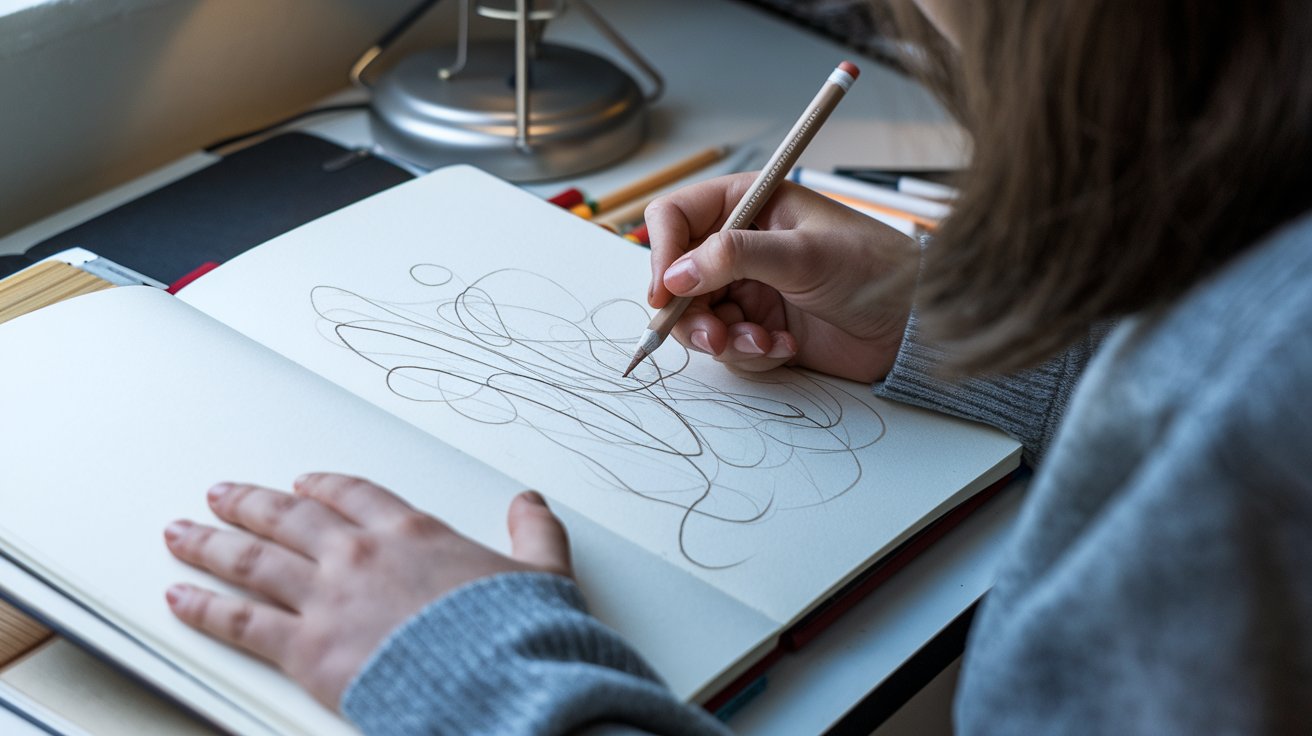
Quick tip: Make your squiggle weird and angular for more creative results.
Draw a random squiggle on the board. Students copy it and turn it into something recognizable within five minutes.
That same squiggle becomes a dragon, a tree, or a cityscape depending on who’s drawing. No two results look alike.
2. One-Line Drawing Game

Quick tip: Start with front-facing objects before trying profile views.
Students draw an object without lifting their pencil. The entire drawing must be one continuous line.
Start with simple subjects like a cup or apple. Move to harder objects like chairs or animals as skills improve. This teaches planning and hand control.
3. Mystery Shape Drawing

Quick tip: Use irregular shapes instead of basic circles and squares for older students.
Hold up a shape cut from paper for three seconds. Students glimpse it then draw what they remember.
Use basic shapes for young students. Try complex silhouettes for older classes. This builds visual memory and observation skills.
4. Finish the Doodle
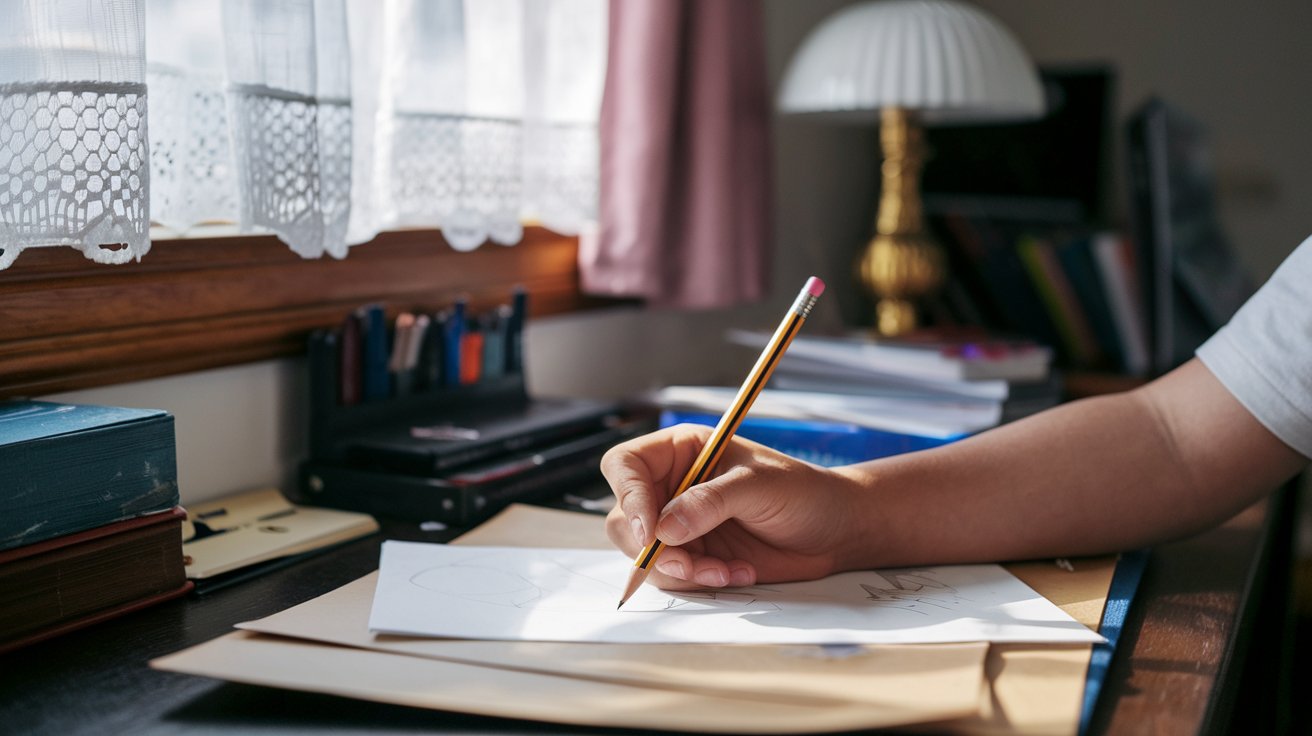
Quick tip: Stop your doodle at an ambiguous point so multiple endings work.
Start a simple doodle and stop halfway through. Students finish it however they want.
I might draw half a face or part of an animal. Students complete it based on their interpretation. This removes the pressure of starting from blank paper.
5. Speed Sketch Relay
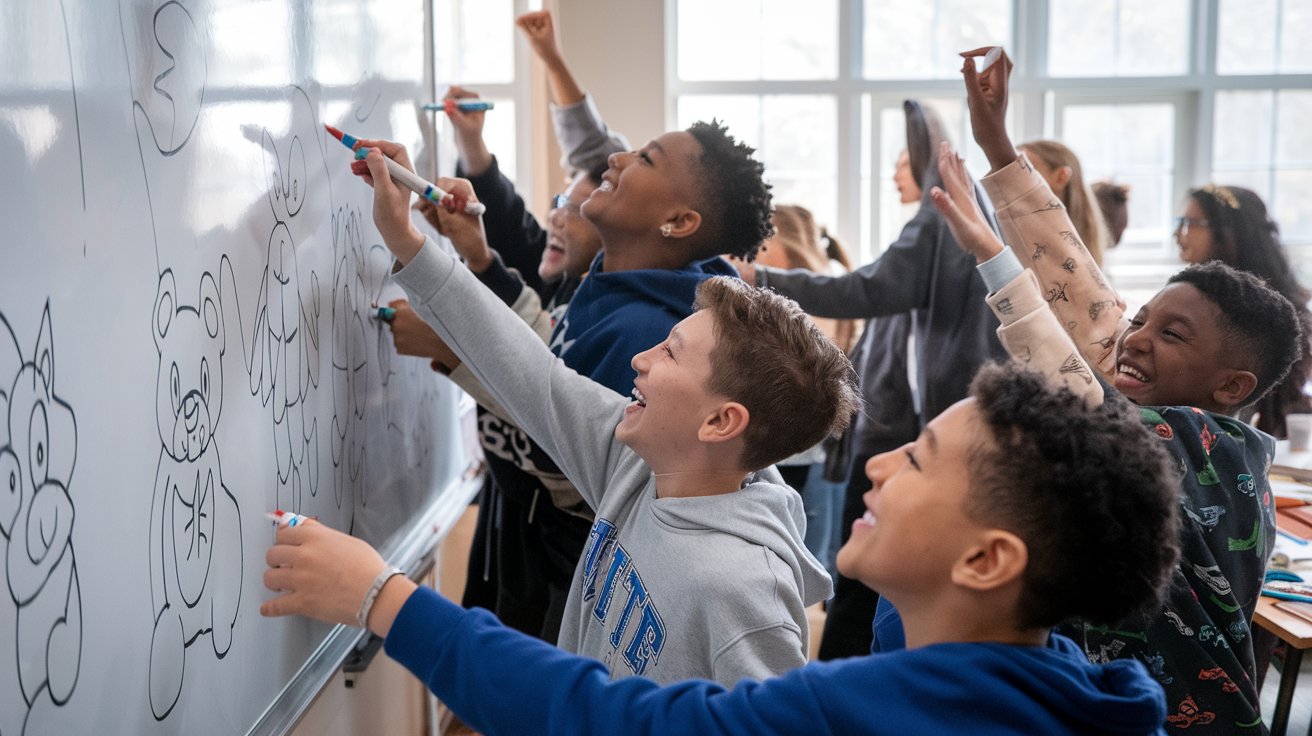
Quick tip: Keep objects simple so teams finish in similar times.
Divide the class into teams. Call out an object. One person from each team runs to the board and has ten seconds to draw it.
First team to complete five recognizable drawings wins. This gets energy levels up and makes drawing feel less serious.
Art Class Games for Elementary Students
Young students need games with clear goals and room for imagination.
6. Color Monster Game
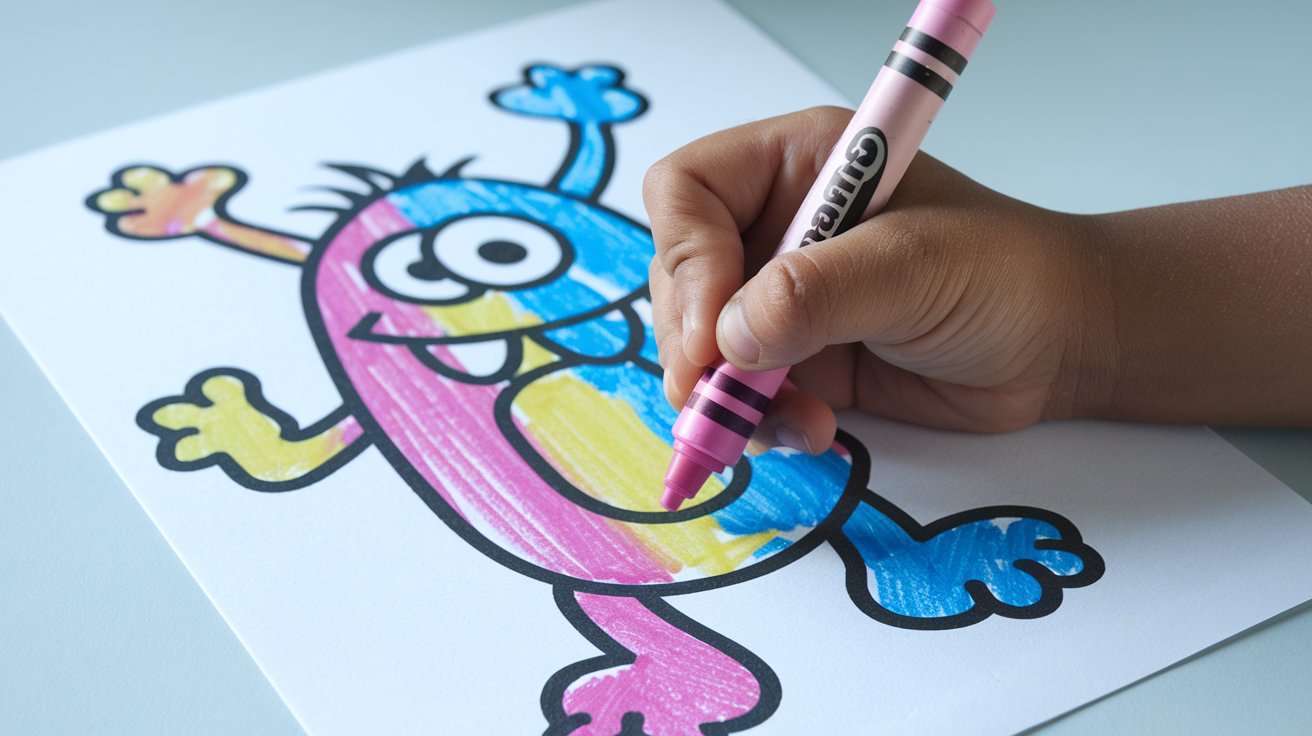
Quick tip: Show color mixing examples first so students create more shade variations.
Each student picks a color and creates a monster using only that color in different shades. A red monster might use pink, crimson, and burgundy.
This teaches color variation without formal color theory lessons. Students name their monsters and share them with the class.
7. Draw What You Hear
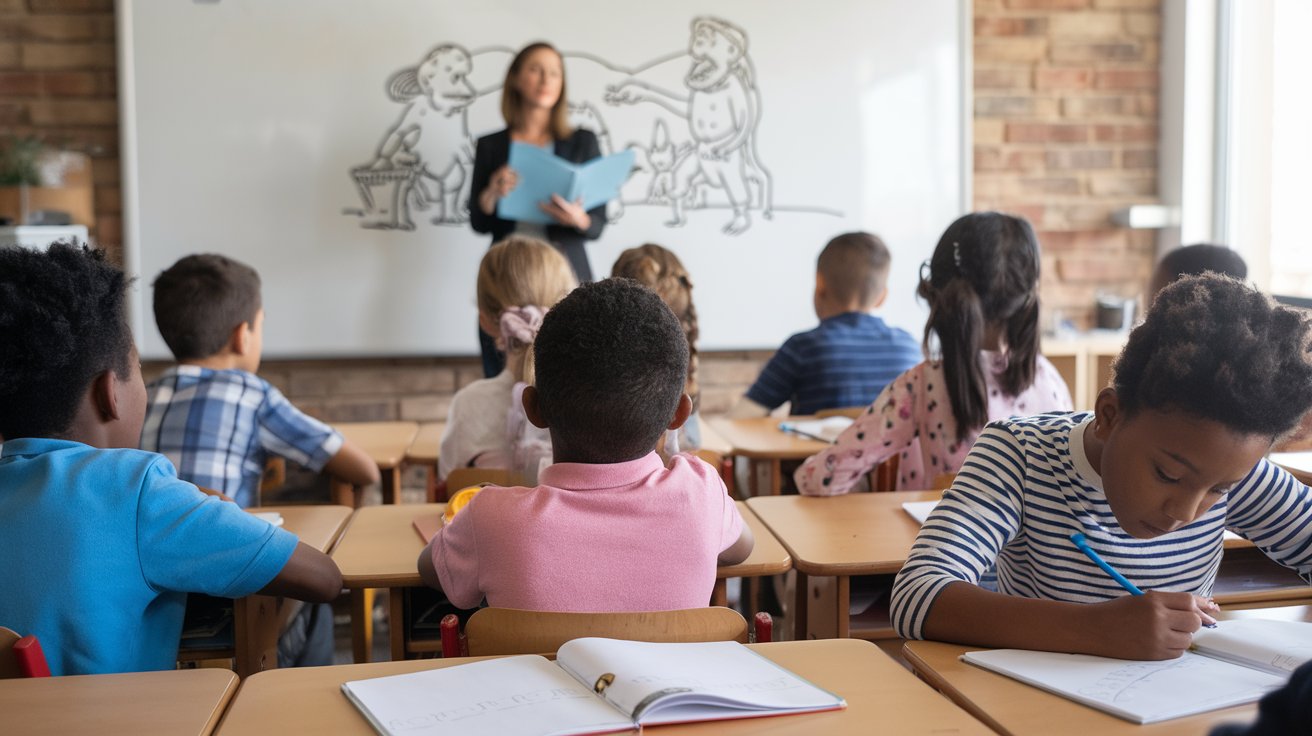
Quick tip: Pause for 20 seconds between sentences so students can finish each part.
Read a simple story aloud. Students draw what they hear as you read.
Use stories with clear visual elements like “The cat climbed the tall tree and saw three birds.” This connects listening skills with visual interpretation.
8. Roll-a-Art Dice Game
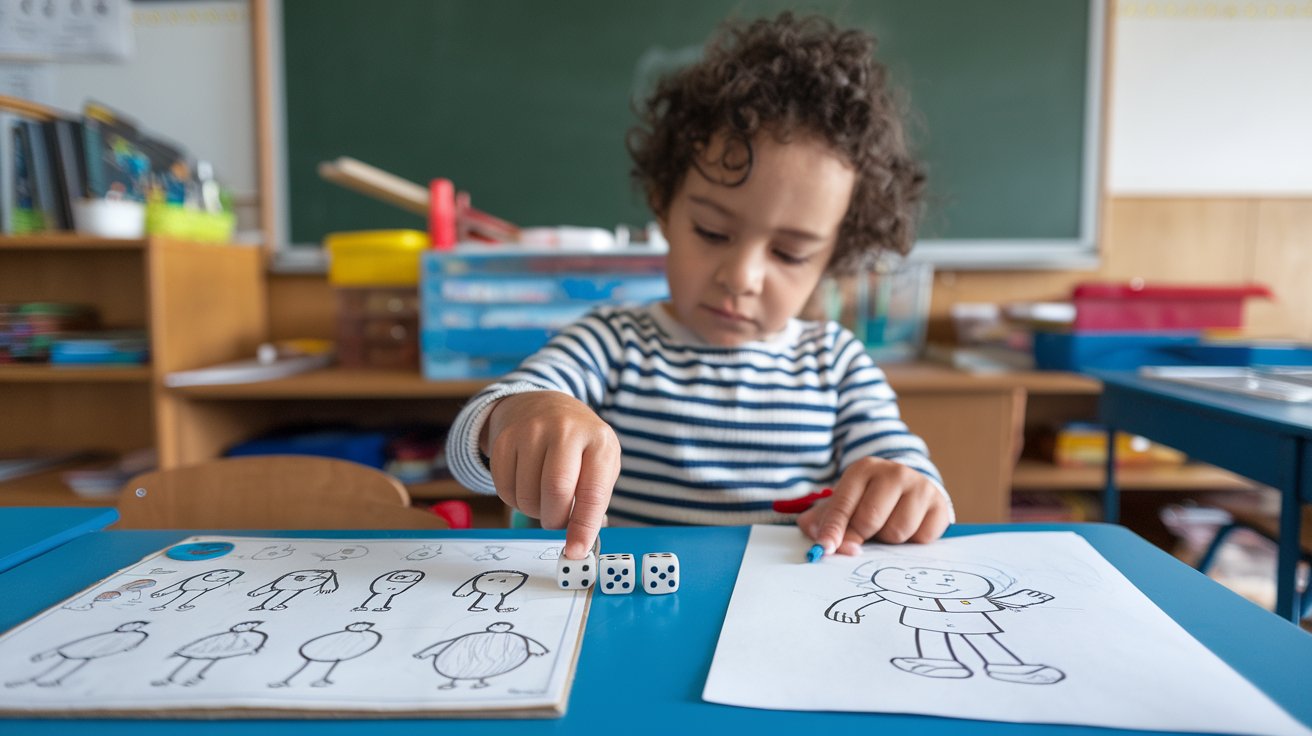
Quick tip: Laminate your chart so you can reuse it for different projects.
Create a chart where each number represents something to draw. Students roll a die and draw what they land on.
For example: 1 = circle face, 2 = triangle hat, 3 = square body. After six rolls, they have a complete character. This removes decision paralysis.
9. Emotion Faces Challenge
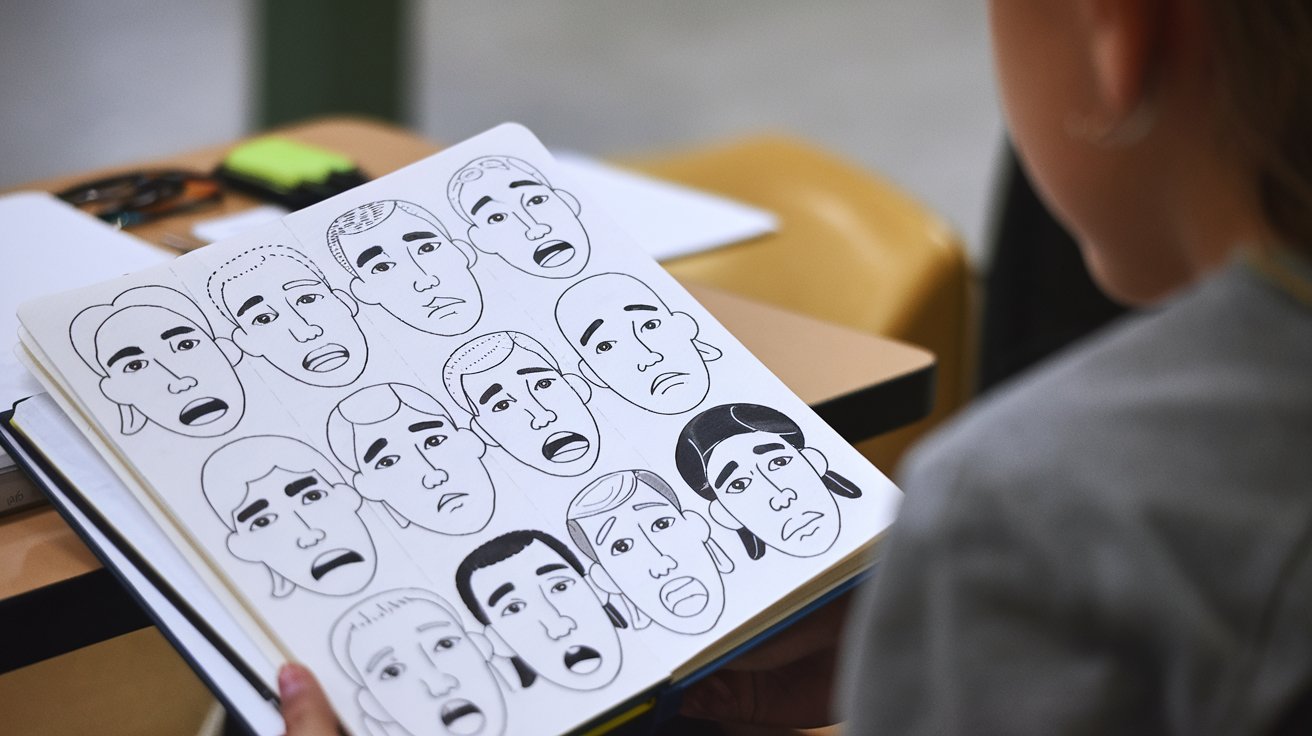
Quick tip: Act out each emotion yourself so students see real facial movements.
Call out an emotion. Students draw a face showing that feeling using just circles, lines, and dots.
Try happy, sad, angry, surprised, or scared. Discuss how small changes in eyebrow angles completely change expressions.
This builds emotional intelligence alongside art skills.
10. Shape-to-Picture Game
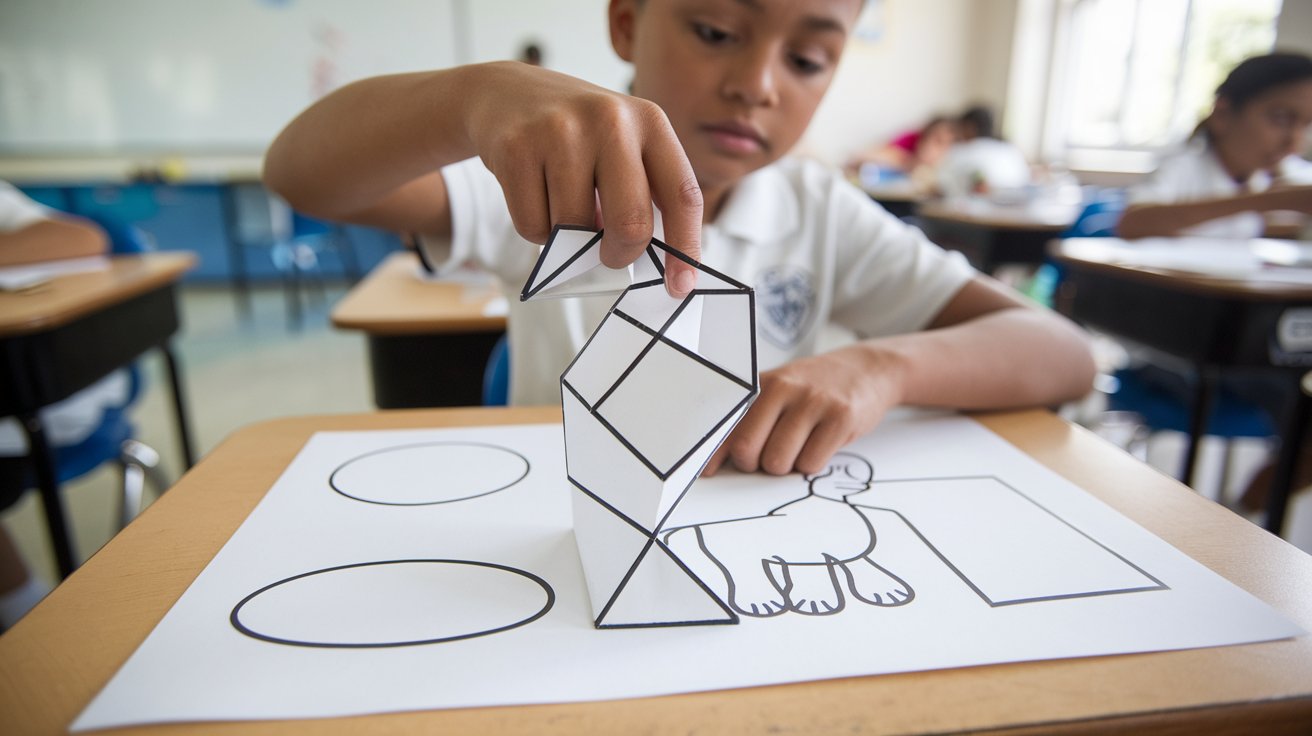
Quick tip: Give shapes that don’t obviously fit together for more creative solutions.
Give students three random shapes to include in one drawing. They must incorporate all three somehow.
A circle, triangle, and rectangle might become a house, a robot, or an ice cream cone. This teaches students to see potential in basic forms.
Art Games for Middle School Students
Middle schoolers need challenges that feel mature but remain approachable.
11. Blind Contour Drawing Battle
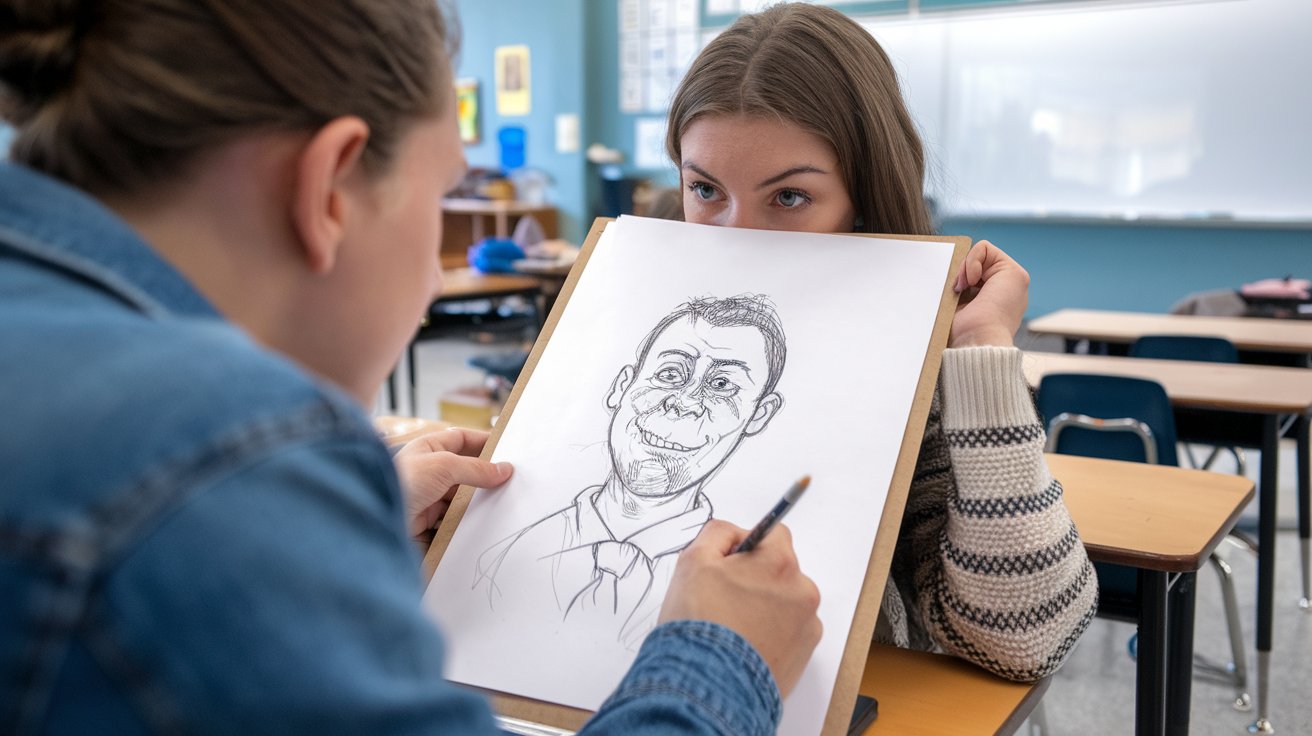
Quick tip: Tape paper down so it doesn’t shift during drawing.
Students pair up. They draw their partner’s face while looking only at their partner, never at their paper.
The results are always hilariously distorted. But this teaches hand-eye coordination and observation. Display the drawings anonymously and guess who each one depicts.
12. Style Swap Challenge
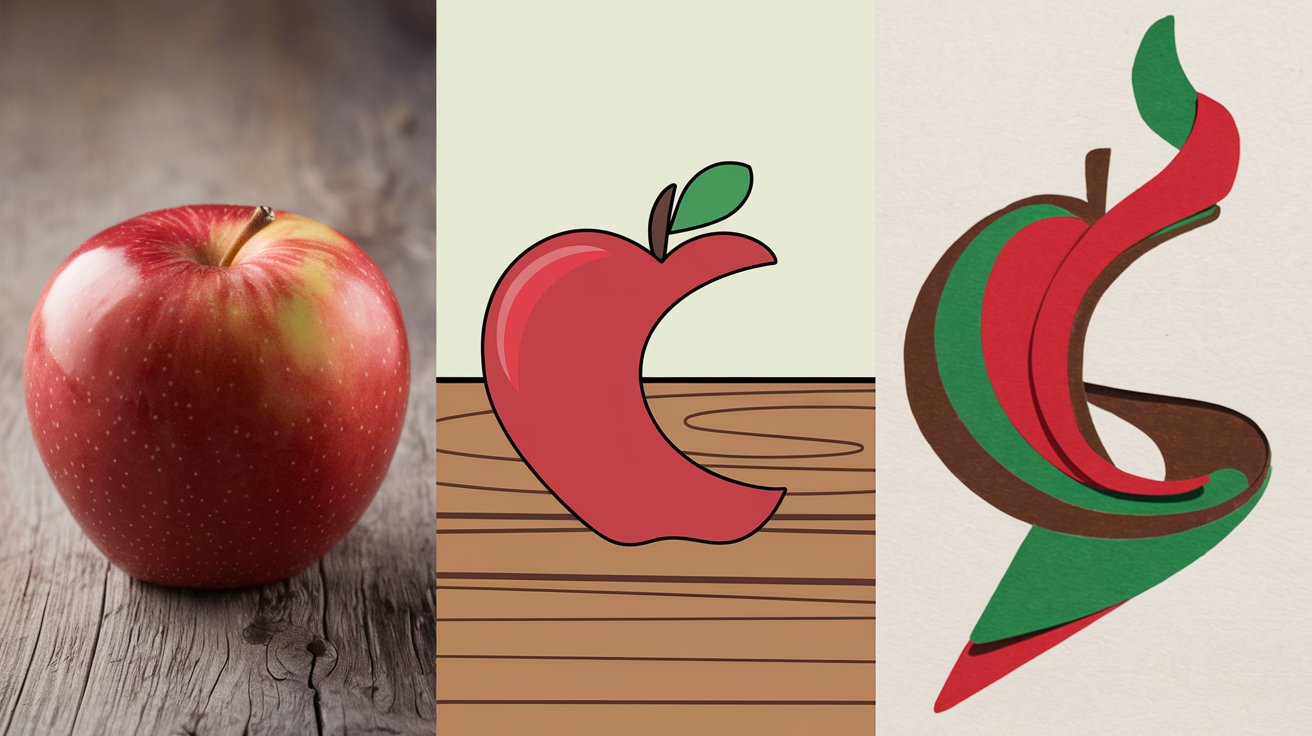
Quick tip: Show three clear style examples before students begin.
Show images of different art styles like cartoon, realistic, and abstract. Students draw the same object in three different styles.
A flower becomes a cartoon, then a realistic drawing, then an abstract color study. Students see that changing style changes meaning and mood.
13. Collaborative Mural Game

Quick tip: Set a theme beforehand to keep the mural cohesive.
Tape large paper to the wall. Students take turns adding to a class mural with one rule: everything must connect.
After everyone contributes, you have a connected artwork showing the class working together. This teaches composition and collaboration.
14. Limited Color Palette Game
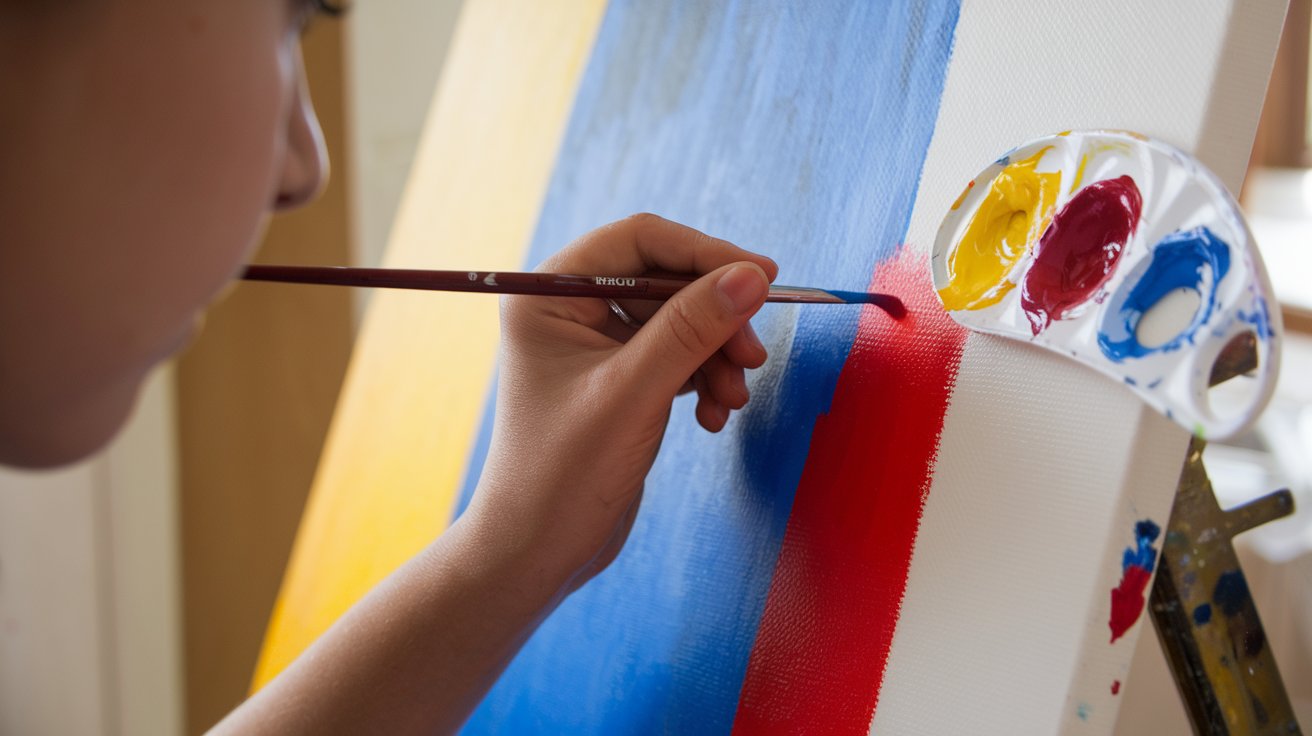
Quick tip: Assign complementary colors to create natural mixing opportunities.
Students can only use three colors for their entire drawing or painting.
I assign the colors randomly: purple, orange, and yellow, or green, red, and brown. This teaches color relationships and problem-solving.
15. Draw It Backwards
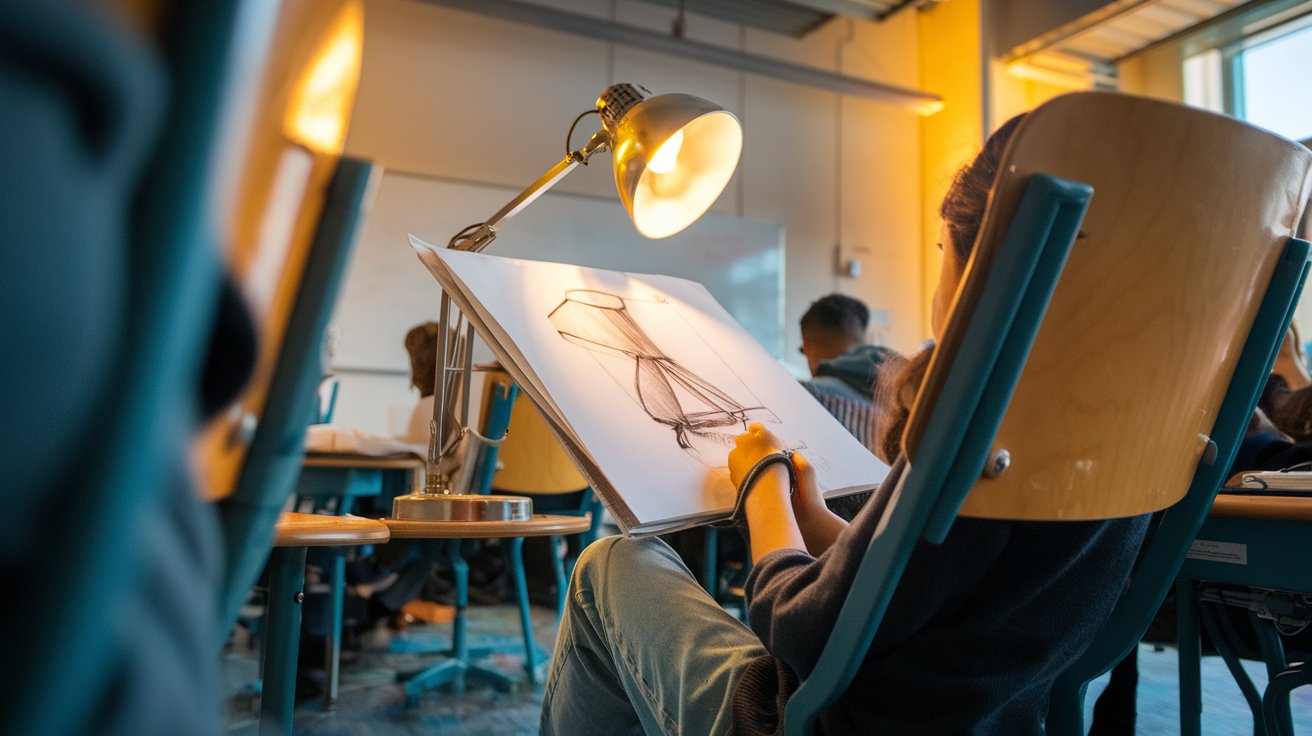
Quick tip: Pick objects with clear ending points like animals with tails or cars with bumpers.
Students draw a familiar object starting from an unusual point. Draw a car starting with the back wheel. Draw a person starting with their feet.
This breaks the habit of always starting the same way.
Art Class Games for High School & Teens
Older students appreciate intellectual challenges mixed with creative freedom.
16. Concept-to-Art Challenge
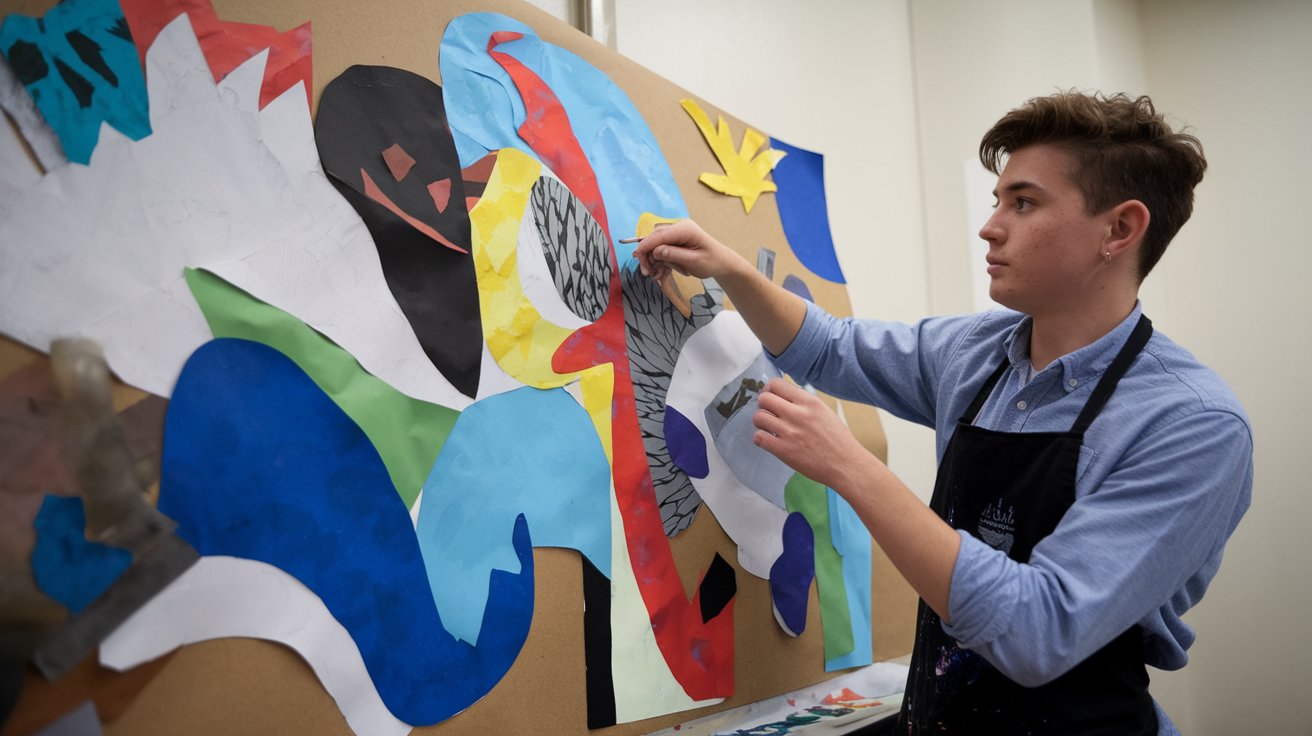
Quick tip: Give concepts with multiple interpretations like “time” or “growth.”
Give students an abstract concept like “freedom” or “chaos.” They have fifteen minutes to create a visual representation.
No rules about style or medium. Share and discuss why each student made their choices. This builds critical thinking about symbolism.
17. Art Telephone Game
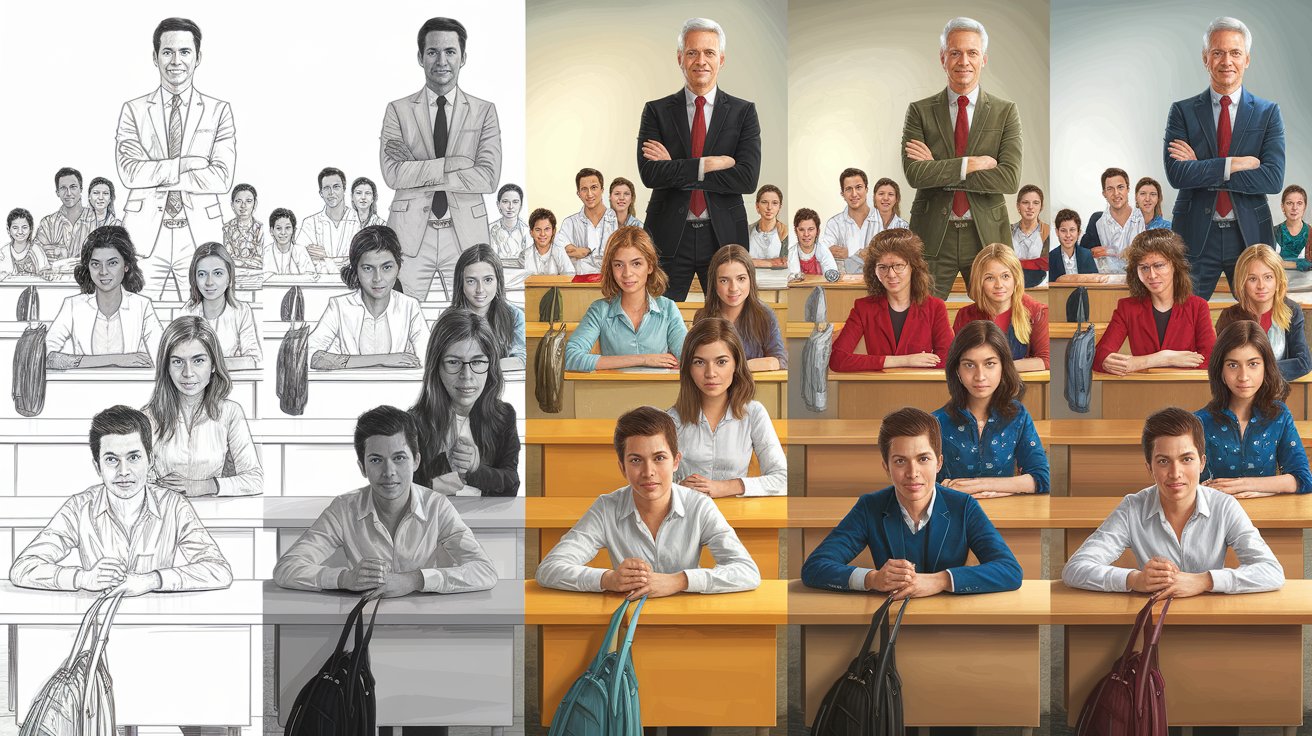
Quick tip: Start with something detailed enough to show degradation but simple enough to remember.
The first student draws something simple. The next student looks at it for ten seconds, then draws it from memory.
By the end, the image has morphed completely. Students see how interpretation changes with each person.
18. Timed Theme Illustration
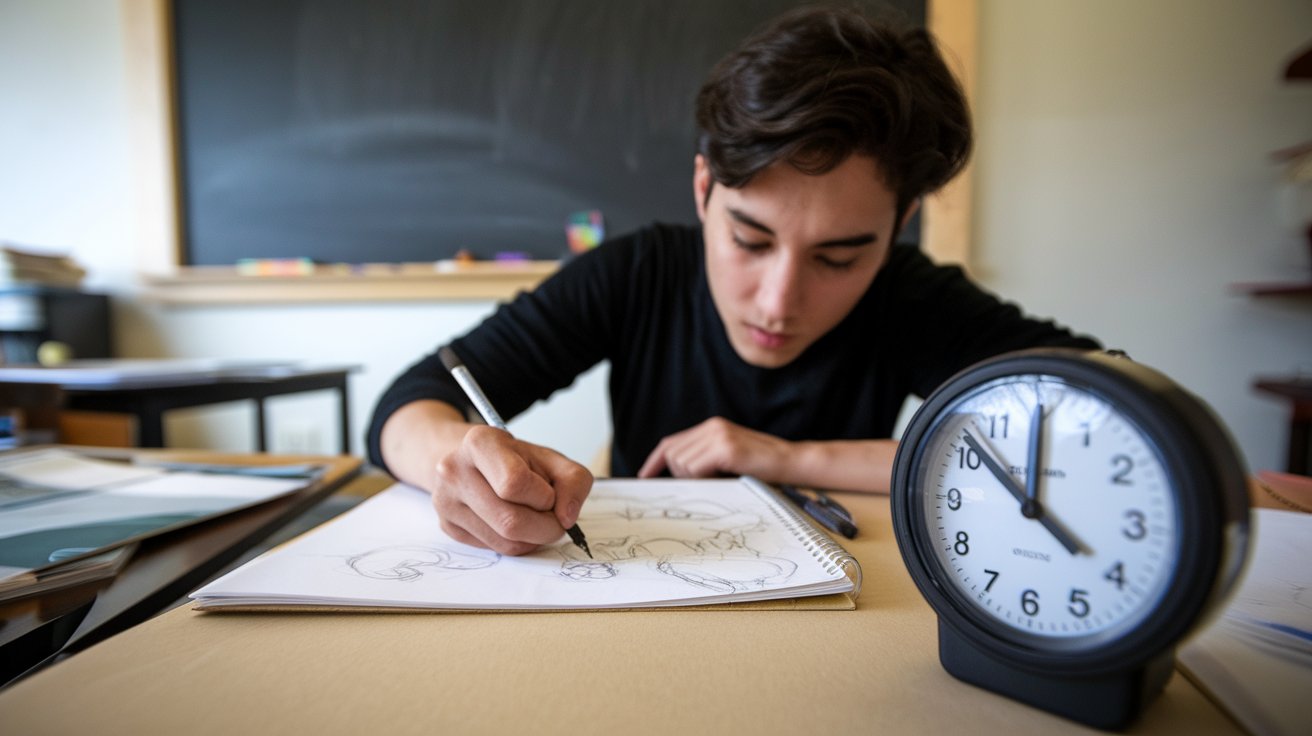
Quick tip: Keep themes broad so every student finds an entry point.
Give a specific theme and time limit. “Illustrate ‘summer’ in five minutes” or “Show ‘technology’ in eight minutes.”
Students work quickly without overthinking. The time pressure pushes them past perfectionism.
19. Abstract Emotion Game
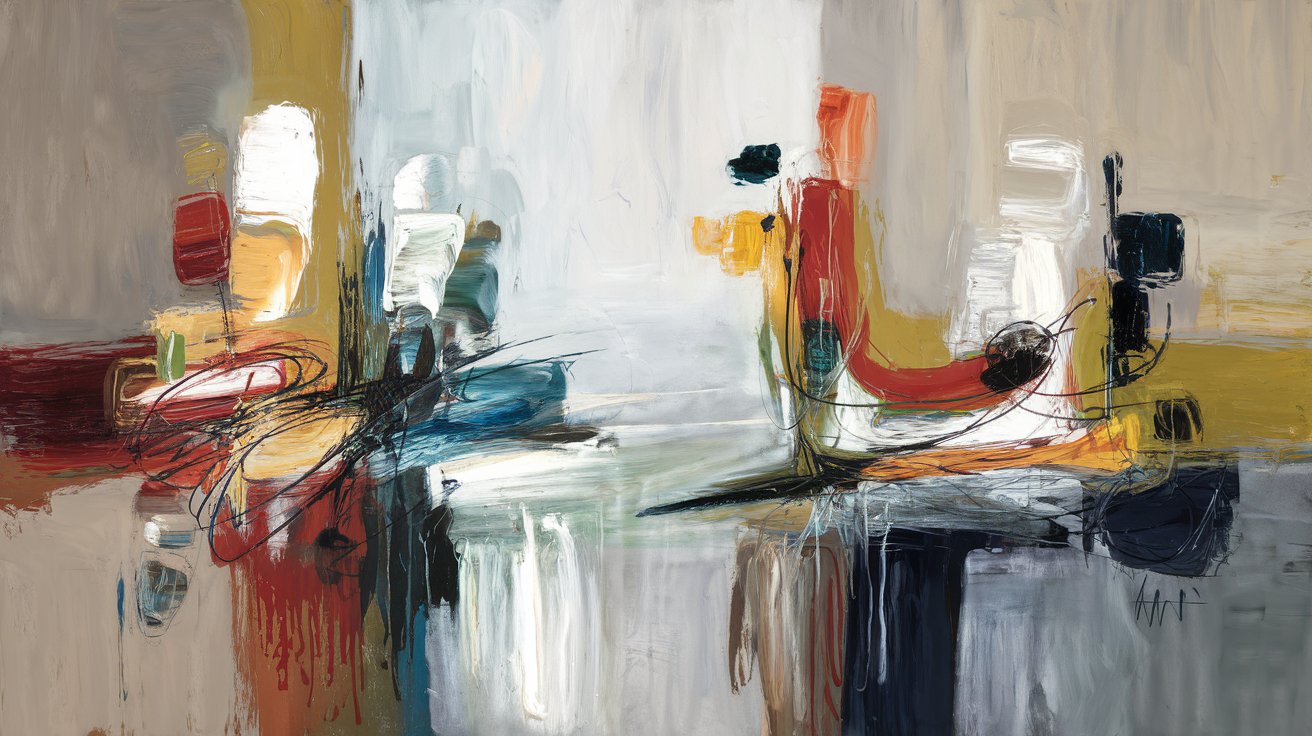
Quick tip: Ban recognizable symbols like hearts or lightning bolts to force true abstraction.
Students create abstract art that represents an emotion without using faces or recognizable objects.
How do you show anger with just colors, lines, and shapes? This challenges students to think beyond literal representation.
20. Famous Artist Remix
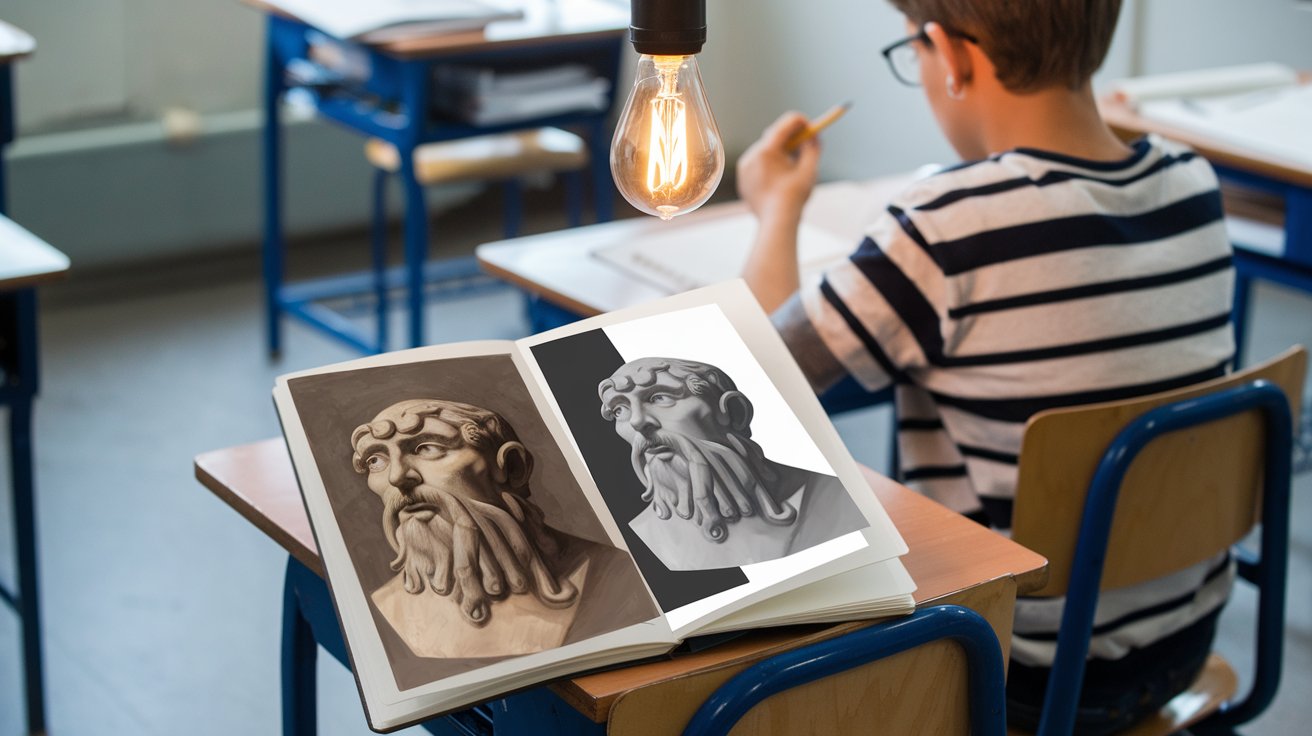
Quick tip: Pick well-known artworks so students don’t spend time researching obscure pieces.
Show a famous artwork. Students recreate it in a completely different style or time period.
Van Gogh’s Starry Night becomes a futuristic scene. Mona Lisa becomes a cartoon character. This teaches art history while encouraging creative interpretation.
Team-Based Art Class Games (Perfect for Large Classes)
These games work well when you have twenty or more students.
21. Pass-the-Drawing Game

Quick tip: Set a two-minute timer so everyone passes at the same time.
Students start a drawing and work on it for two minutes. Then pass it to the person on their right who adds to it.
Everyone contributes to multiple artworks. The collaborative results often surprise the creators.
22. Group Storyboard Challenge
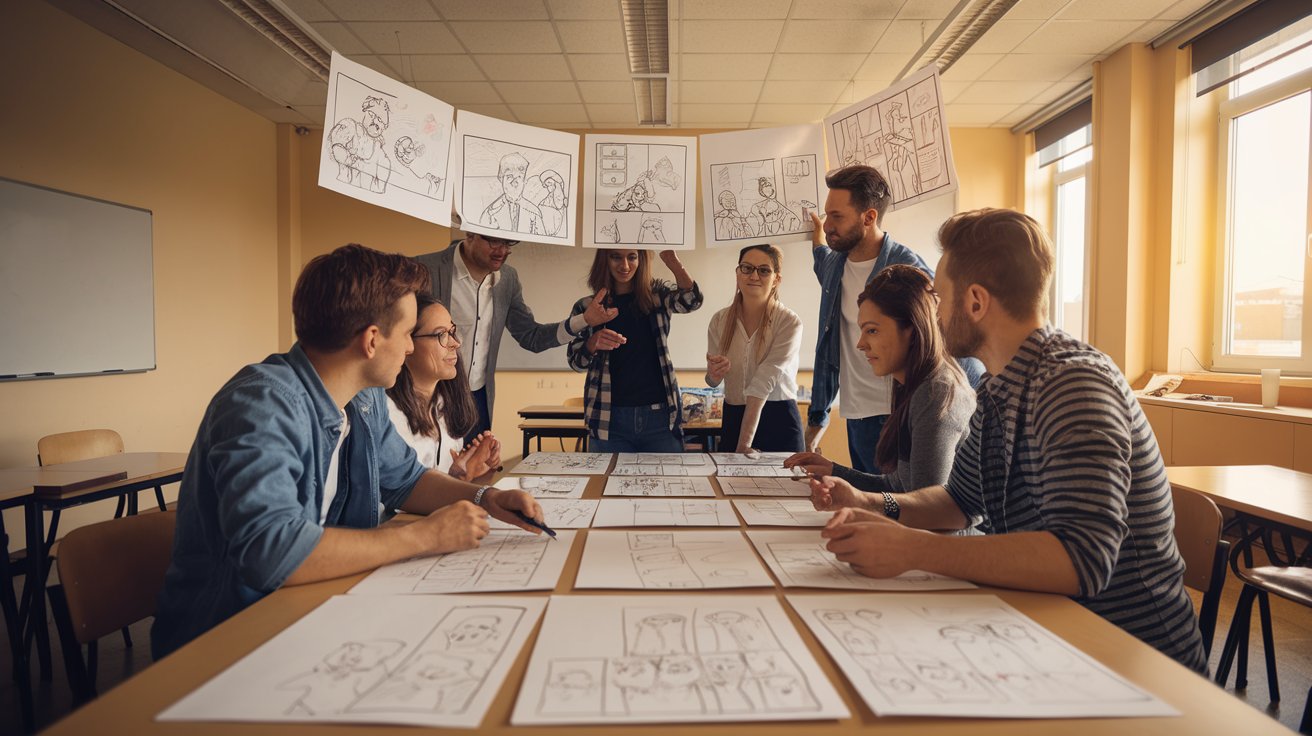
Quick tip: Give teams five minutes to plan before anyone starts drawing.
Divide into teams of four or five. Each team creates a six-panel storyboard for a given prompt.
Teams decide together what happens in each panel, then divide up the drawing. This teaches visual storytelling and teamwork.
23. Art Pictionary

Quick tip: Write art terms on cards beforehand to keep the game moving quickly.
Just like a regular Pictionary but focused on art terms and concepts. Draw “composition,” “perspective,” or “contrast” while teammates guess.
This reviews vocabulary in a fun way. I use it before tests.
24. Classroom Art Escape Game

Quick tip: Create a simple three-clue version first before planning elaborate escapes.
Hide clues around the room that students must find by completing small art challenges.
For example: “Draw a self-portrait to reveal the first number.” This takes more setup but students love it.
Calm Art Games for Quiet or Low-Energy Days
Some days your class needs settling activities instead of energetic ones.
25. Mindful Pattern Drawing
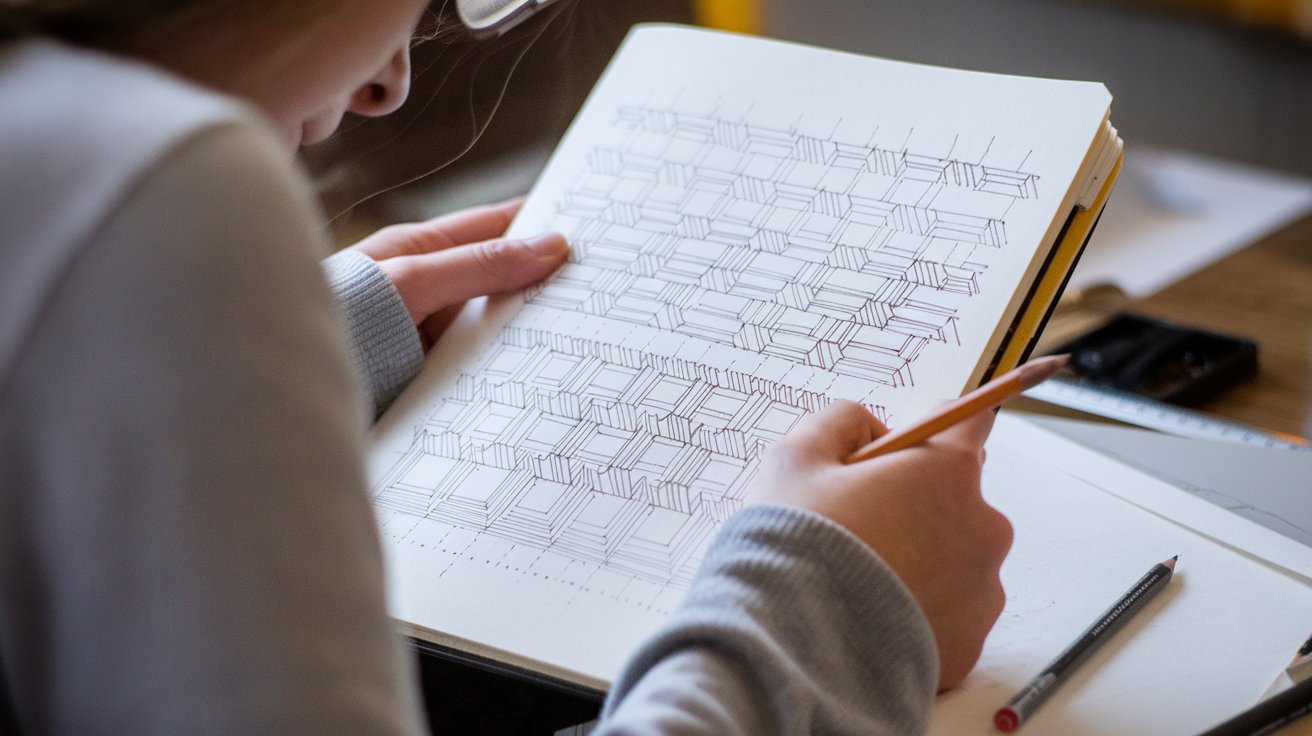
Quick tip: Play soft instrumental music to set a calming atmosphere.
Students create repetitive patterns with simple shapes and lines. Circles, dots, waves, and spirals work well.
This is meditative and calming. There’s no pressure to create something specific. I use this after stressful testing periods.
26. Art Meditation Cards
Quick tip: Keep prompts open-ended so students interpret them personally.
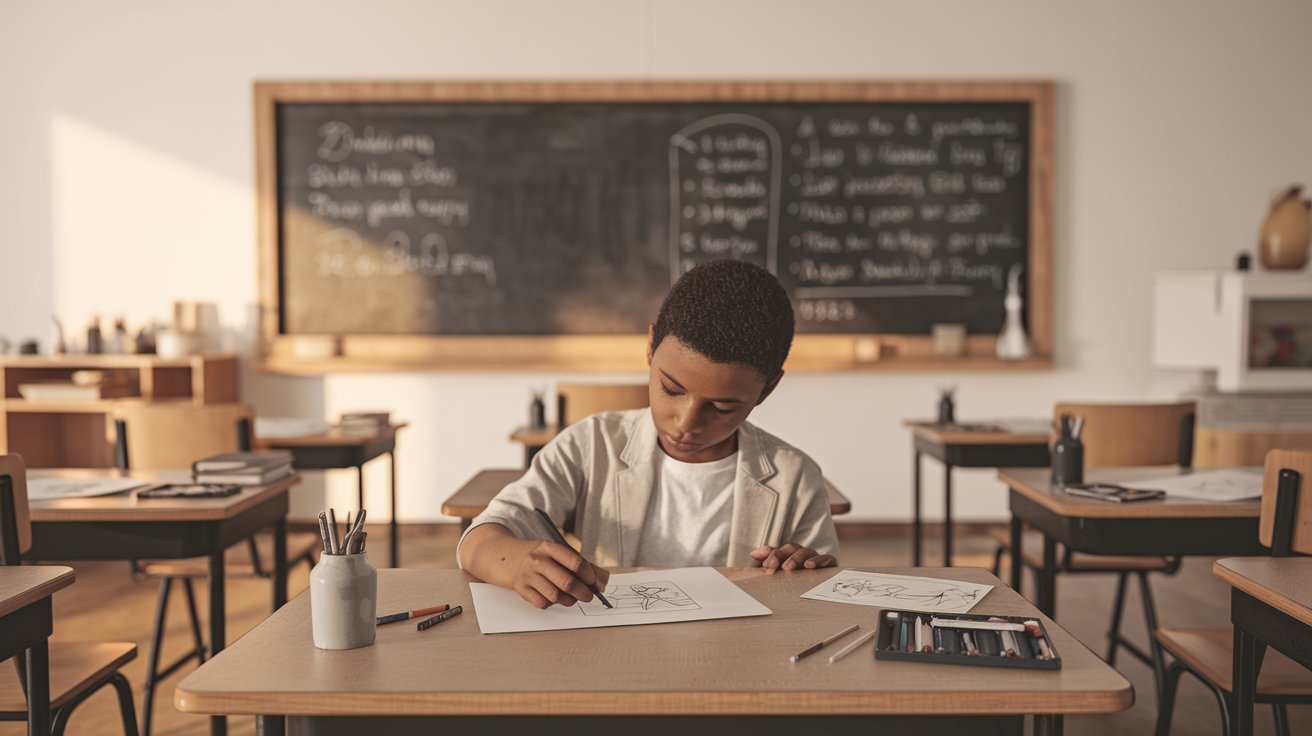
Create cards with simple prompts: “Draw something soft” or “Draw your favorite place.”
Students pick a card randomly and spend ten minutes on that prompt. This combines mindfulness with creativity.
27. Music-Inspired Color Flow
Quick tip: Choose music without lyrics so students focus on mood and rhythm.
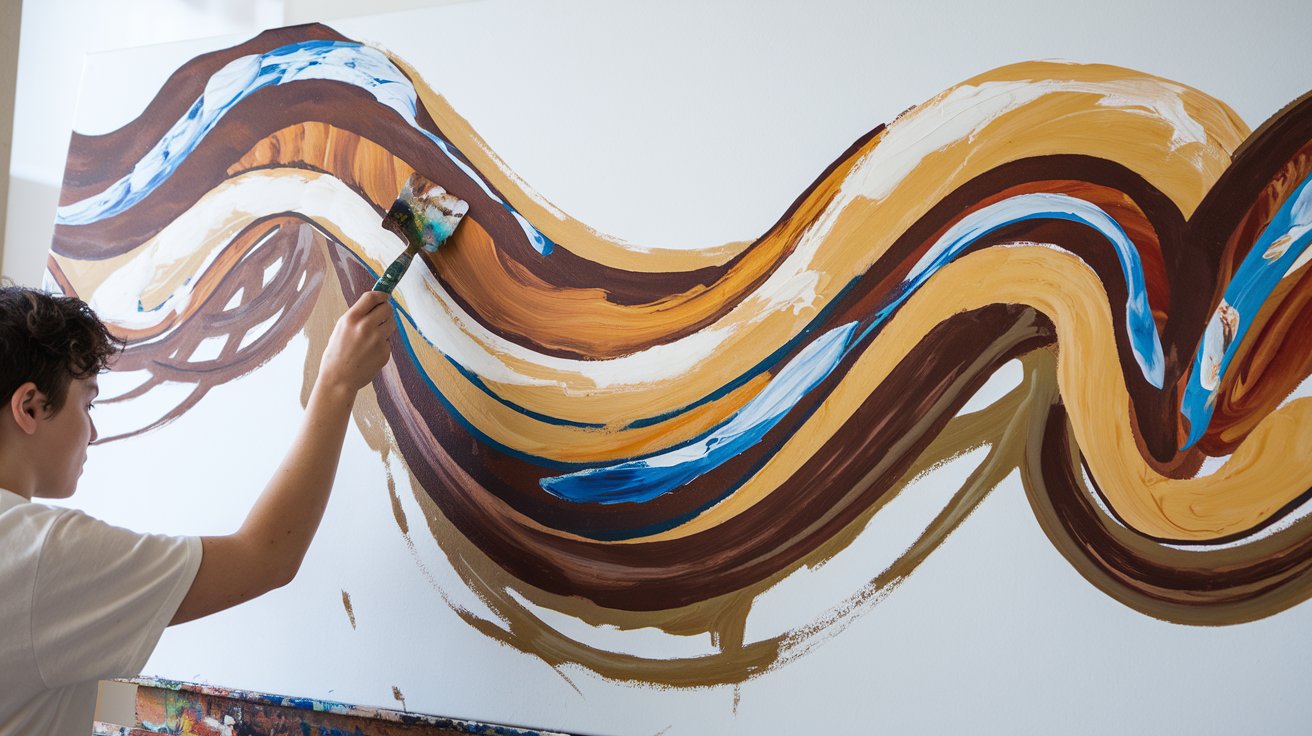
Play instrumental music. Students move their pencils or brushes to match the music’s feeling and rhythm.
Fast music creates quick, energetic marks. Slow music produces gentle, flowing lines. This connects different senses and shows how art and music relate.
How to Adapt Art Games for Any Age Group
Most games work for multiple ages with small changes. Simplify rules for younger students. Keep instructions to one or two steps.
Add complexity for older students. Include time limits, specific requirements, or multiple steps.
Adjust materials based on skill level. Give elementary students crayons and markers. High schoolers might use paint or digital tools.
Change the subject matter. Young kids draw animals and toys. Older students tackle portraits and abstract concepts.
Watch your students. They’ll show you what works. If they’re frustrated, simplify. If they’re bored, add challenges.
Materials Checklist for Art Class Games

You don’t need much to run these games successfully.
Keep these basics on hand:
- Drawing paper in various sizes
- Pencils and erasers
- Markers in assorted colors
- Crayons for younger students
- Colored pencils
- Basic paint and brushes
- Large paper or poster board for group activities
Optional items that expand possibilities:
- Dice for random selection games
- Timer or stopwatch
- Music player for sound-based activities
- Magazines for collage games
- Tape and glue
I store everything in labeled bins so students can grab what they need quickly. Organization makes setup faster.
Buy supplies in bulk at the start of the year. It’s cheaper and you won’t run out mid-game.
Most games work with just paper and pencils if that’s all you have. Don’t let limited supplies stop you.
Conclusion
Art class games make learning feel like playing while building real skills.
I’ve used these activities in my own classroom, and they work to keep students engaged and excited about creating.
Start with the quick games that need no prep, then try age-specific activities that match your students’ abilities.
The best part is that most games need only basic supplies you already have. Students remember these activities long after the class ends because they were fun and meaningful.
Try one game this week and see how your students respond. You can adjust any activity to fit your specific class needs and available time.
Frequently Asked Questions
How long should art class games last?
Quick games run five to ten minutes and work well as warmups or transition activities. Full period games last thirty to forty minutes when you want the game to be the main lesson. Match game length to your available time and learning goals.
Can art games teach real skills or are they just for fun?
Art games teach observation, color theory, composition, hand control, and creative thinking while students play. The learning happens naturally without formal instruction. Games build the same skills as traditional lessons but feel less intimidating to struggling students.
What if students don’t take art games seriously?
Set clear expectations before starting that games have learning purposes even though they’re fun. Give specific criteria for success and check completed work. When students see you treating games as real learning activities, they follow your lead and engage more seriously.
How do I manage competitive games with different skill levels?
Focus on personal improvement rather than comparing students to each other. Celebrate effort and creativity alongside technical skill. You can also create teams with mixed abilities so stronger artists help others, or judge on criteria like originality where everyone has equal chances.
Which art class games work best for large groups?
Pass-the-drawing, group storyboards, art Pictionary, and relay races handle large classes well because multiple students participate simultaneously. Avoid games where students wait in long lines for individual turns. Team-based activities keep everyone involved and reduce classroom management issues.
