

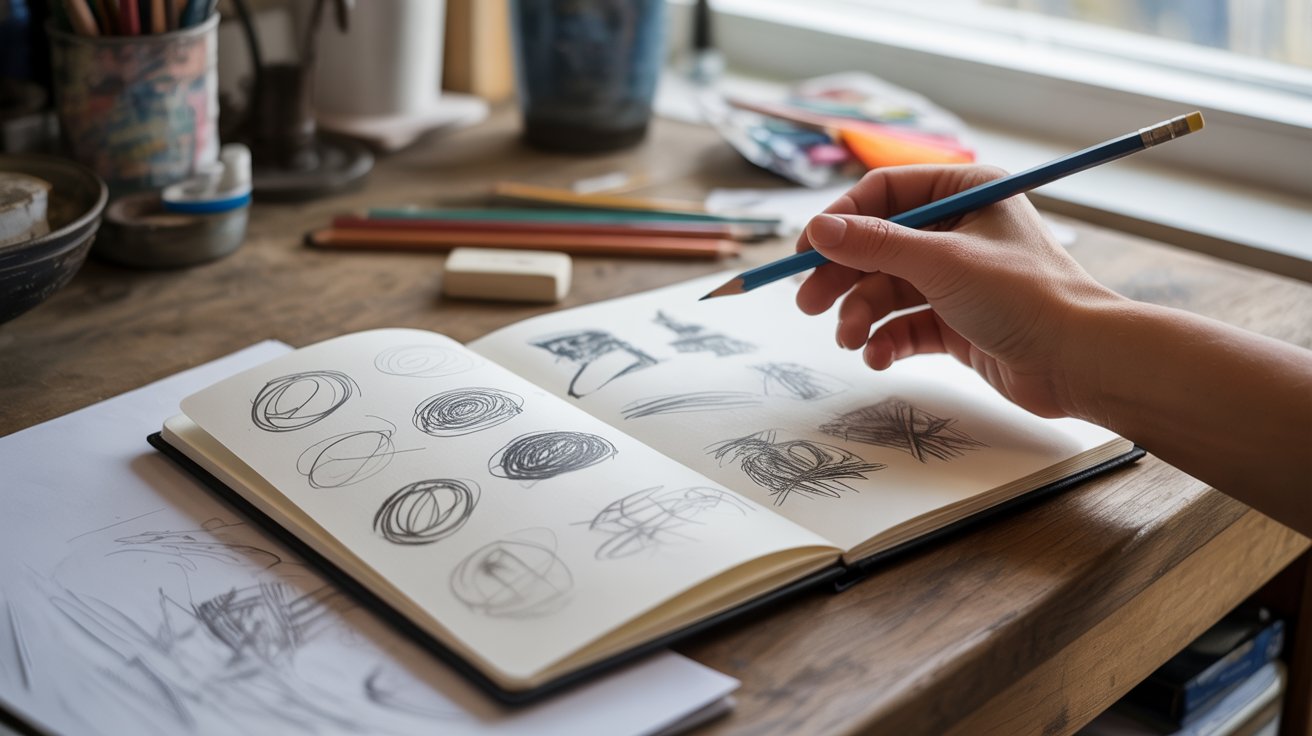
I used to wonder why my drawings looked stiff no matter how much I practiced. Turns out, I was skipping the one thing every experienced artist swears by.
Drawing warm ups changed how my hand moves, how confident my lines feel, and how fast I get into a creative flow.
They work for beginners, seasoned artists, and even drawing warm ups for kids show real results early on.
Curious what 13 simple exercises can do for your sketching? Keep reading.
Why Drawing Warm Ups Matter for Every Artist

Your hand is like any other muscle. It needs preparation before it performs well. Skipping warm ups is like running a race without stretching first.
Muscle memory is built through repetition. The more you practice controlled strokes before drawing, the more natural those movements feel later. Your brain starts remembering what good line quality feels like.
Warm ups reduce hesitation. When your hand is already moving, you feel less nervous about making mistakes. That mental shift matters more than most people realize.
They work for everyone. A beginner gains basic control. A professional artist sharpens consistency. No matter where you are in your skills, a few warm up minutes pay off in every session.
13 Best Drawing Warm Up Exercises for Better Control and Creativity
These exercises are simple, fast, and genuinely effective. You do not need fancy supplies. Just grab a pencil and some paper, and you are ready.
1. Straight Line Practice

Draw rows of straight lines from left to right, then top to bottom. Keep them parallel and evenly spaced. This sounds boring. But it builds serious control.
Focus on keeping the pressure consistent. Do not rush. Speed comes later, once your hand gets comfortable with the movement.
Try drawing the same lines with just your wrist, then with your whole arm. Notice the difference. Arm movement usually gives cleaner, longer strokes.
2. Curved Lines Flow Exercise

Draw smooth waves and loops across your page. Let them flow freely without stopping. This exercise is less about precision and more about loosening up your wrist.
Stiff wrists create stiff drawings. Curved line practice teaches your hand to move with more ease.
Try varying the size of your curves. Big sweeping waves, then tight small loops. Both train different parts of your wrist movement.
3. Circles and Ovals Drill
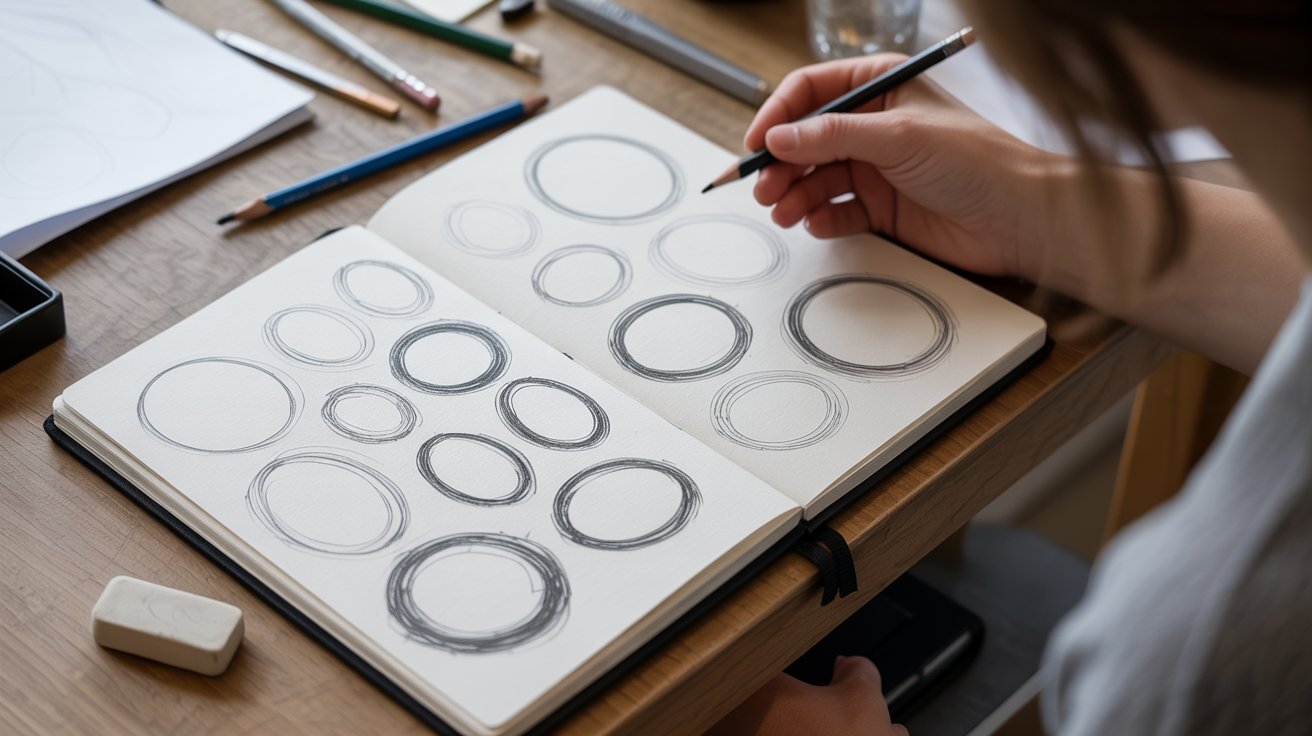
Draw circles of different sizes without using a compass or guide. This is harder than it sounds, and that is exactly the point.
Most beginners struggle to close a circle cleanly. The goal is not perfection right away. It is about training your hand to follow a rounded path consistently.
Practice ovals too. Flat ones, tall ones, tilted ones. This drill directly helps with drawing heads, eyes, and rounded objects later.
4. Zig-Zag Lines
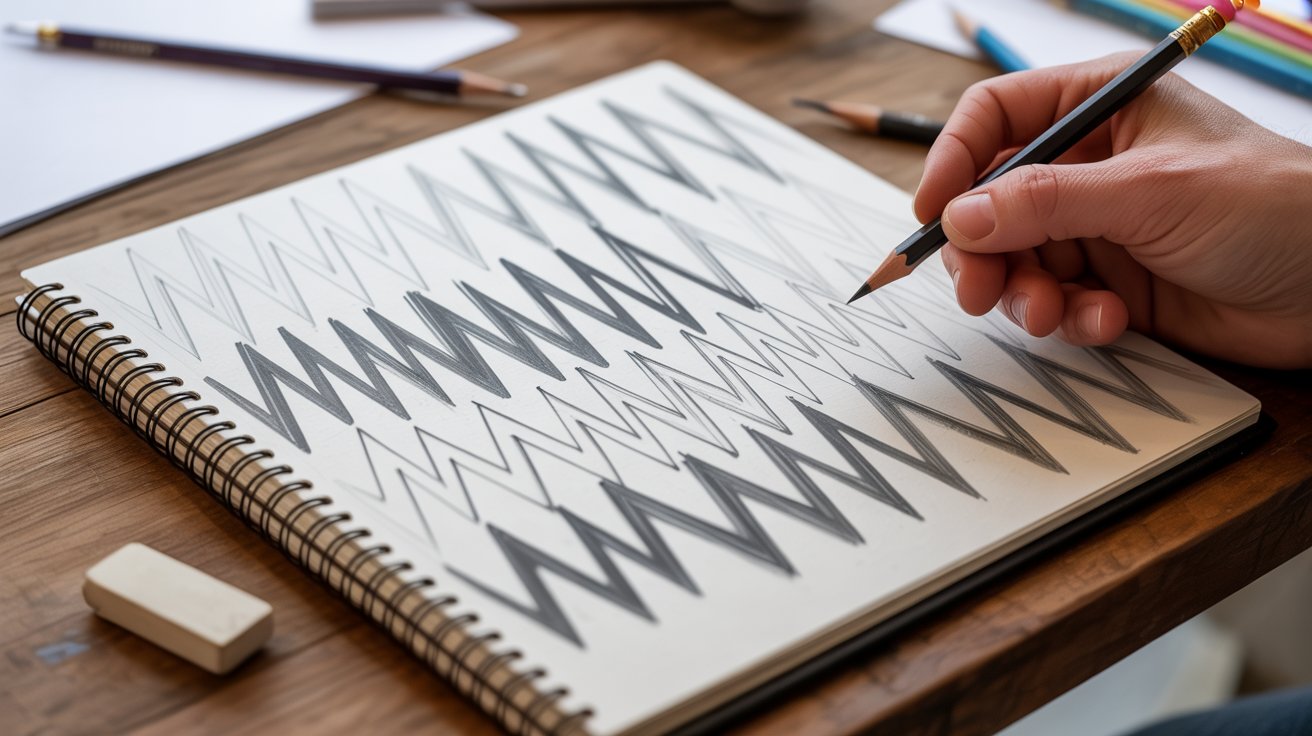
Draw sharp zig-zag lines across the page at different angles. Make the peaks pointy and controlled. This is all about quick directional shifts.
Your hand needs to stop and reverse fast. That kind of control takes practice. Zig-zag drills train exactly that.
Mix slow zig-zags with fast ones. The contrast helps you understand how much pressure and speed you are naturally applying.
5. Cross-Hatching Warm Up
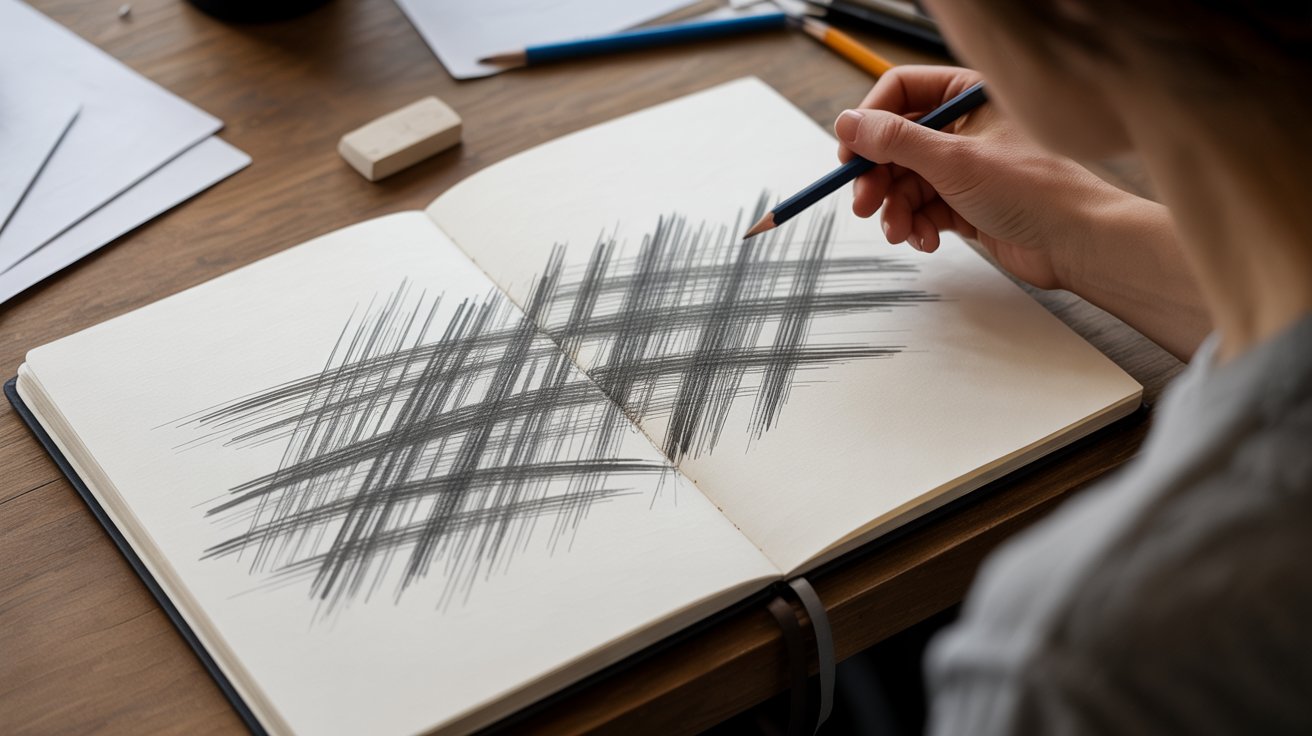
Draw a set of parallel lines. Then layer another set on top at a different angle. This is called cross-hatching, and it is a core shading technique.
As a warm up, it is perfect for building rhythm. Your lines need to stay evenly spaced without looking messy.
Start with just two directions. Add a third as your hand gets comfortable. You will notice your shading improve almost immediately in real drawings.
6. Scribble to Shape Exercise
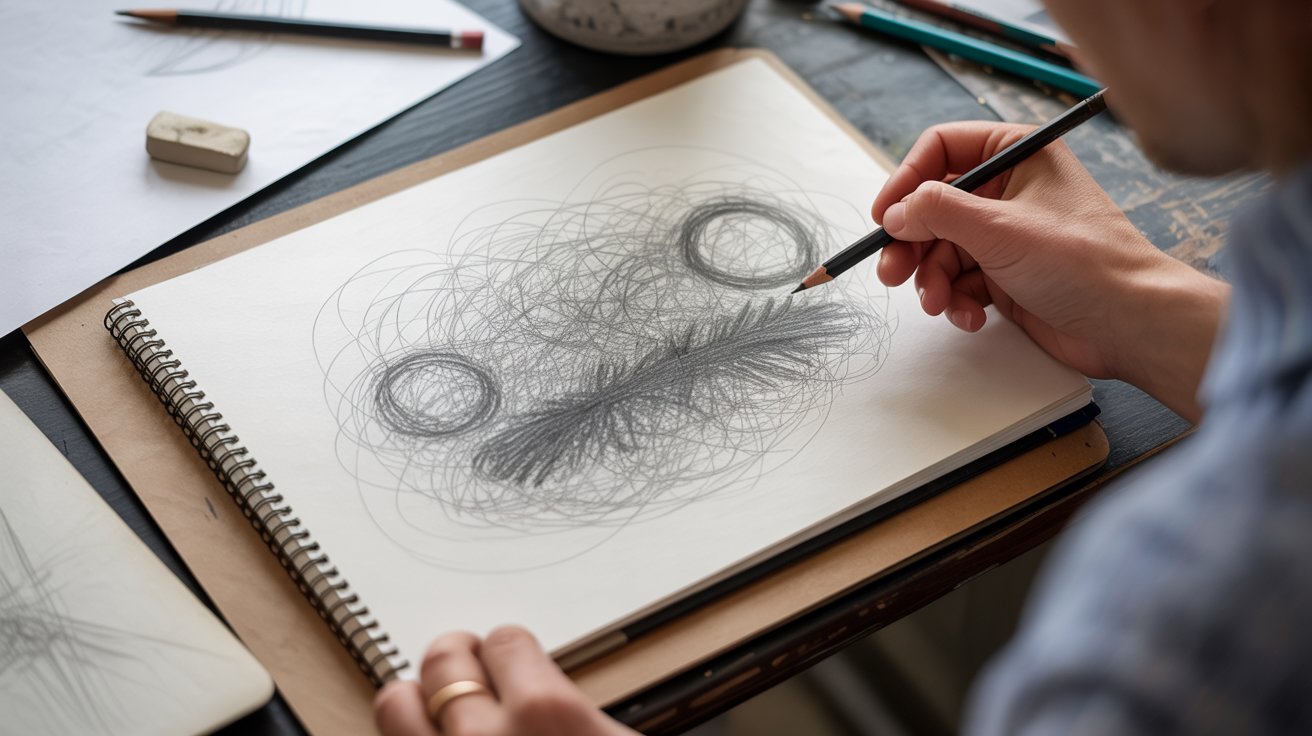
Start with random scribbles on the page. No plan, no goal. Just let your hand move freely for 20 seconds.
Then look at what you drew. Pick a section and try to turn it into a recognizable shape. A cloud, a rock, an animal, anything.
This exercise is great for creative thinking. It teaches your brain to find structure inside chaos, which is a skill every artist needs.
7. Ellipse Repetition Drill
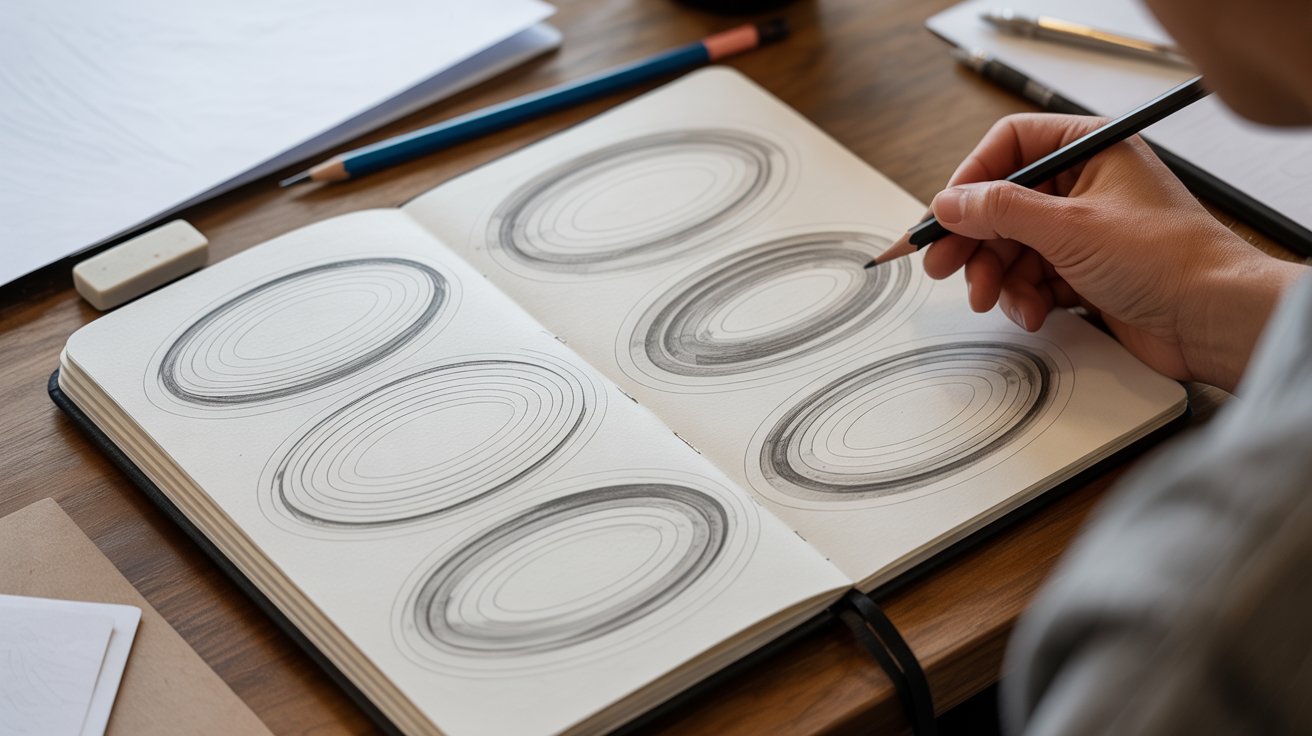
Draw a small ellipse. Then draw a slightly bigger one around it. Keep going until you have five or six ellipses nested inside each other.
This exercise is directly connected to perspective drawing. Cylinders, bottles, wheels, and tubes all rely on ellipses.
Do this at different angles too. A flat ellipse, a tilted one, a nearly-circular one. Each angle trains a slightly different hand position.
8. Box and Cube Sketching

Draw simple 3D boxes repeatedly. Start with the front face, then add depth lines going back. Finish with the back edges.
Boxes seem simple, but they train spatial thinking. You are telling your brain to see flat paper as a three-dimensional space.
Try drawing boxes from different viewpoints. Looking up at one. Looking down at another. This directly strengthens your perspective drawing skills.
9. Pressure Control Lines
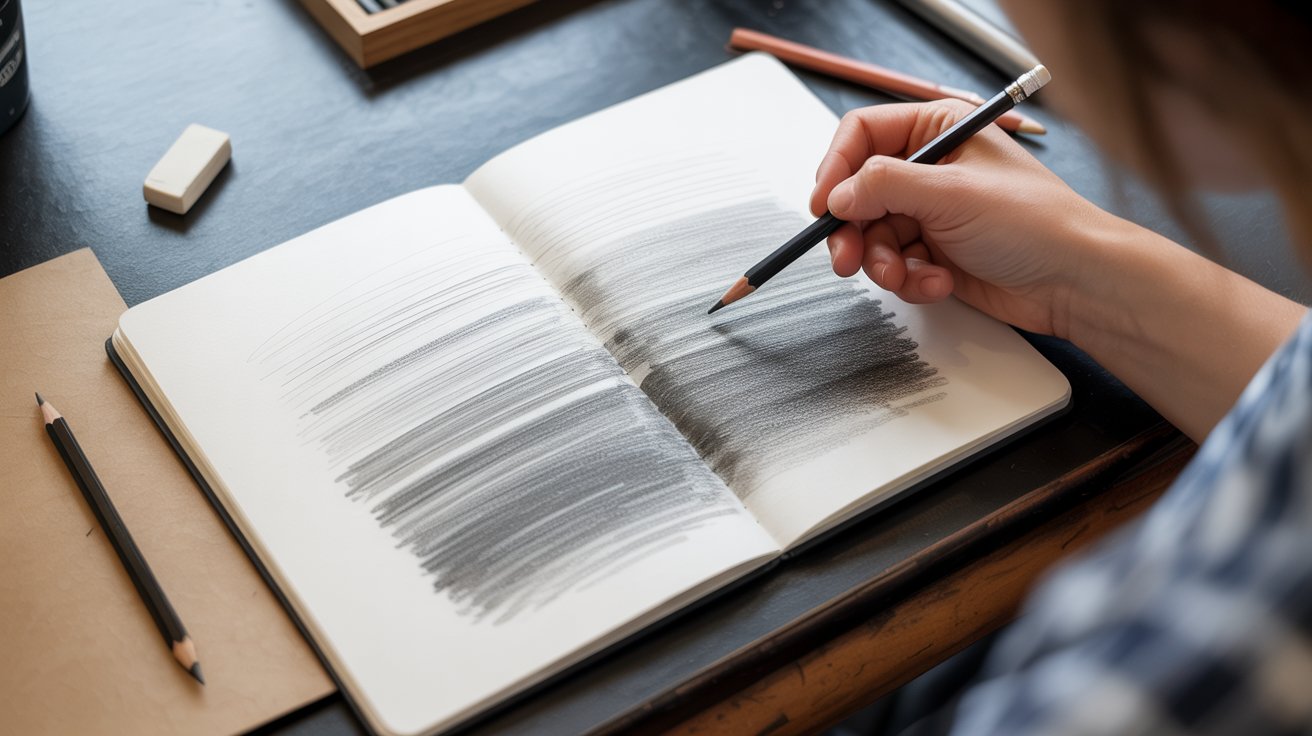
Draw a line that starts very light and gradually gets darker as you move across the page. Then reverse it. This is a pressure control drill.
Most beginners press too hard or too soft without realizing it. This exercise makes you aware of what your pencil is doing.
Good pressure control gives your drawings depth and range. Light areas feel airy. Dark areas feel bold. That contrast is what makes a drawing look finished.
10. Spiral Drawing Exercise
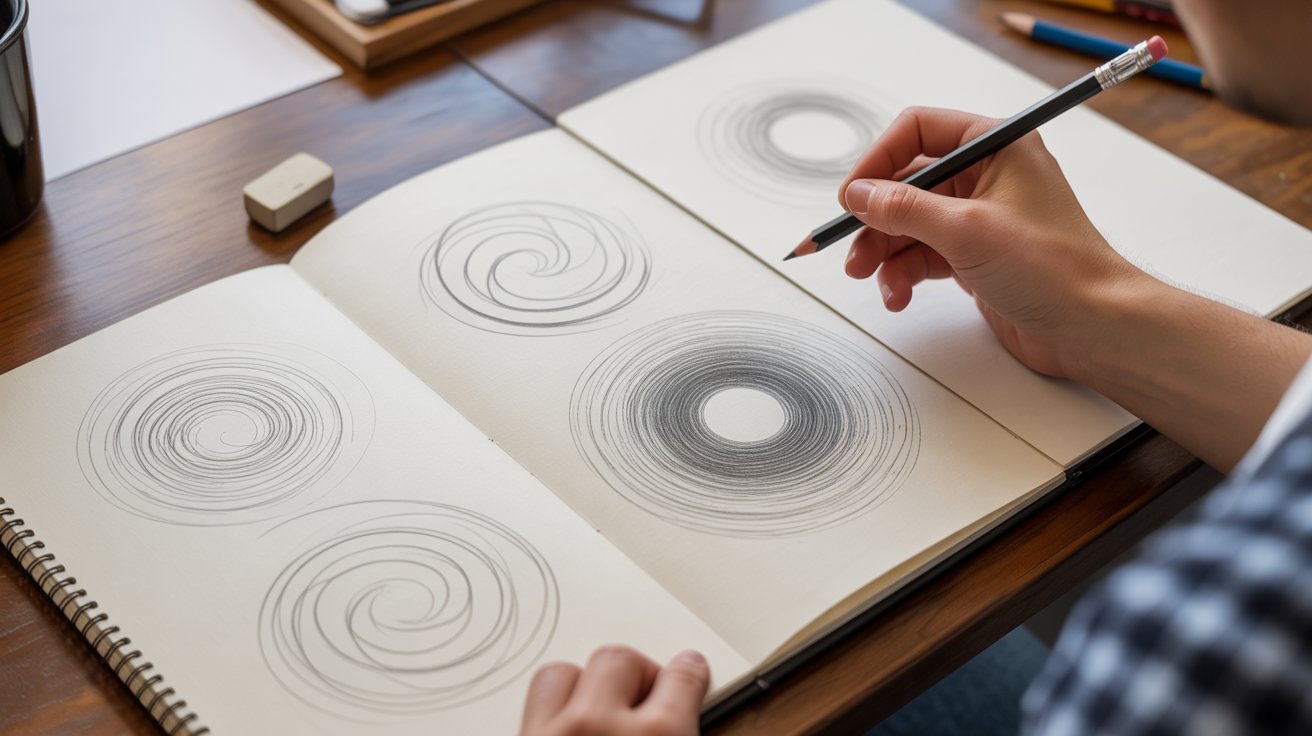
Draw a spiral starting from the center and moving outward. Then try starting from the outside and moving inward. Both directions matter.
Spirals require continuous, smooth wrist movement. If your wrist is tense, the spiral will look jagged or uneven.
This warm up is one of my personal favorites. It is calming, and it genuinely loosens up my hand before any detailed session.
11. Dot-to-Dot Free Form
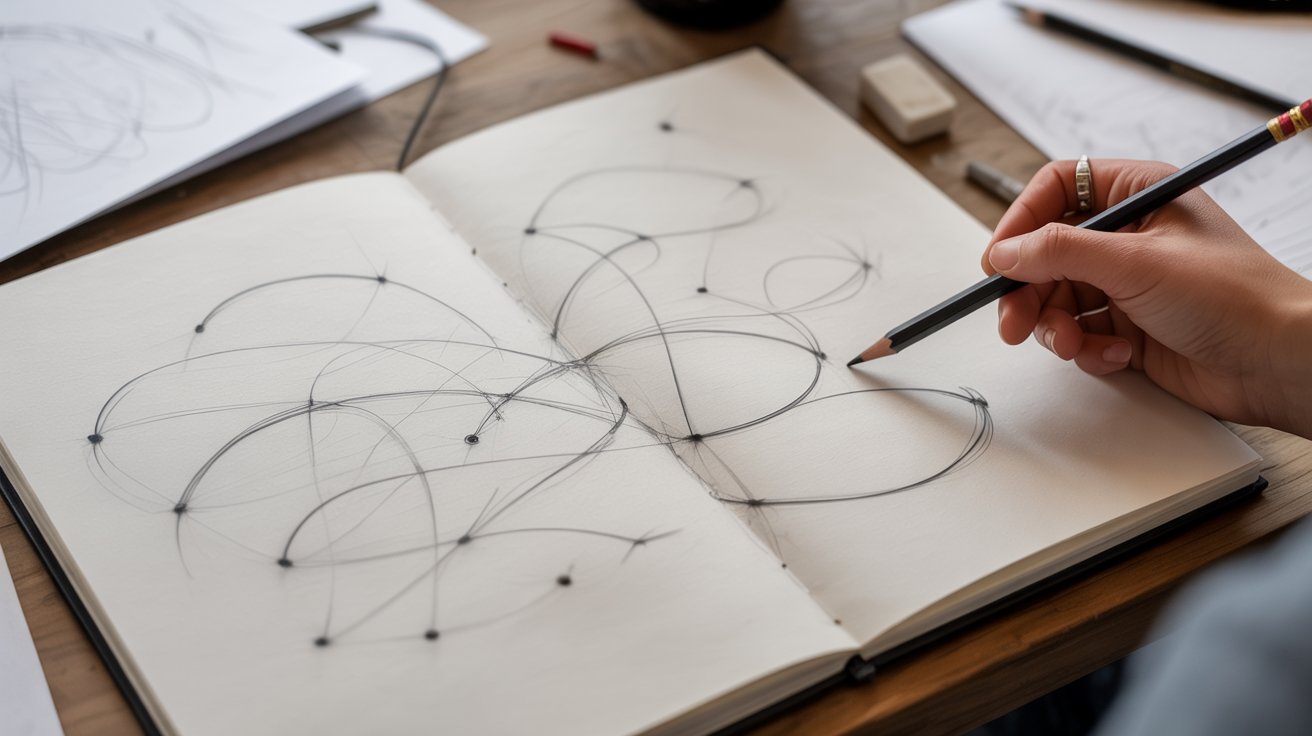
Place random dots across your page. Then connect them with smooth, confident lines. Do not plan too much. Just connect as you go.
This trains your eye to predict where your hand needs to move. It is a visual planning skill that improves with repetition.
Try connecting dots with curves instead of straight lines for a bonus challenge. Your hand will have to adapt constantly, which keeps the warm up fresh.
12. Blind Contour Drawing
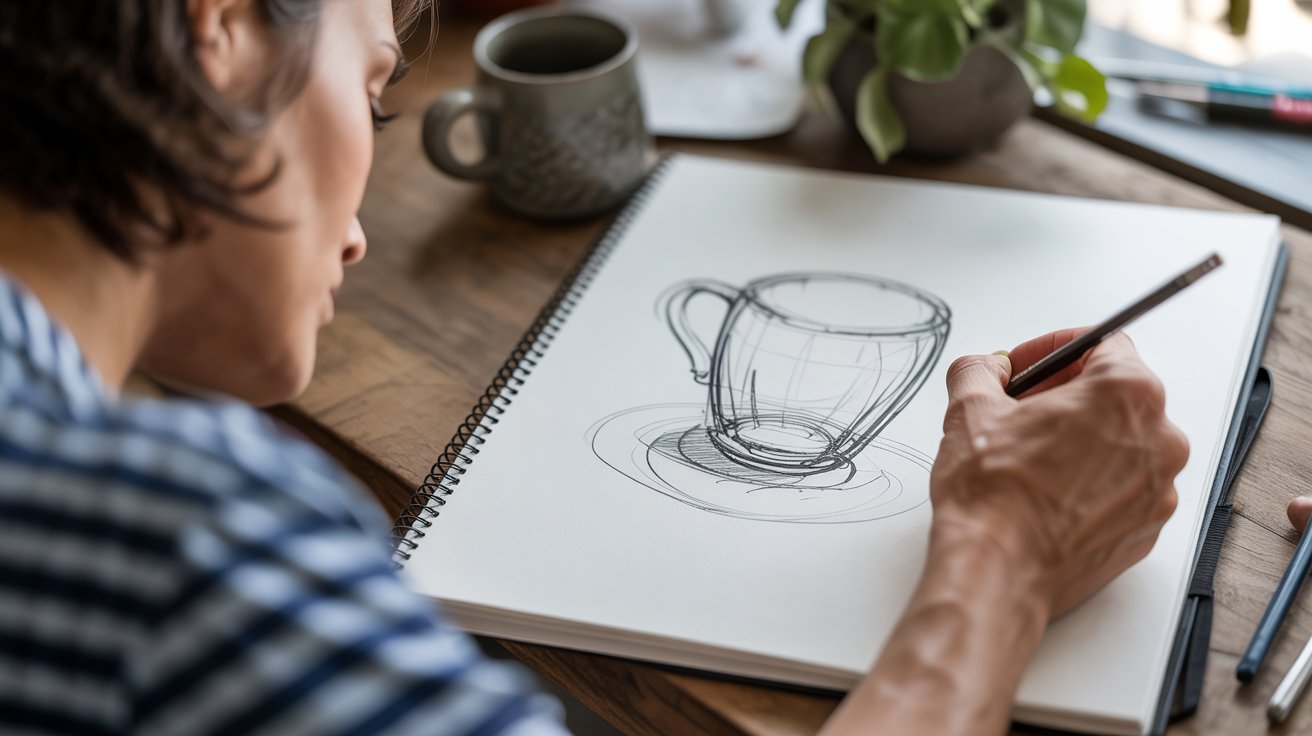
Pick any object near you. Start drawing its outline, but do not look at your paper. Keep your eyes on the object the entire time.
The result will look imperfect. That is fine. The goal is to train your eyes to observe carefully while your hand follows along.
Blind contour drawing is one of the best exercises for improving observation. Over time, your hand and eye start to coordinate much better.
13. Timed Sketch Warm Up
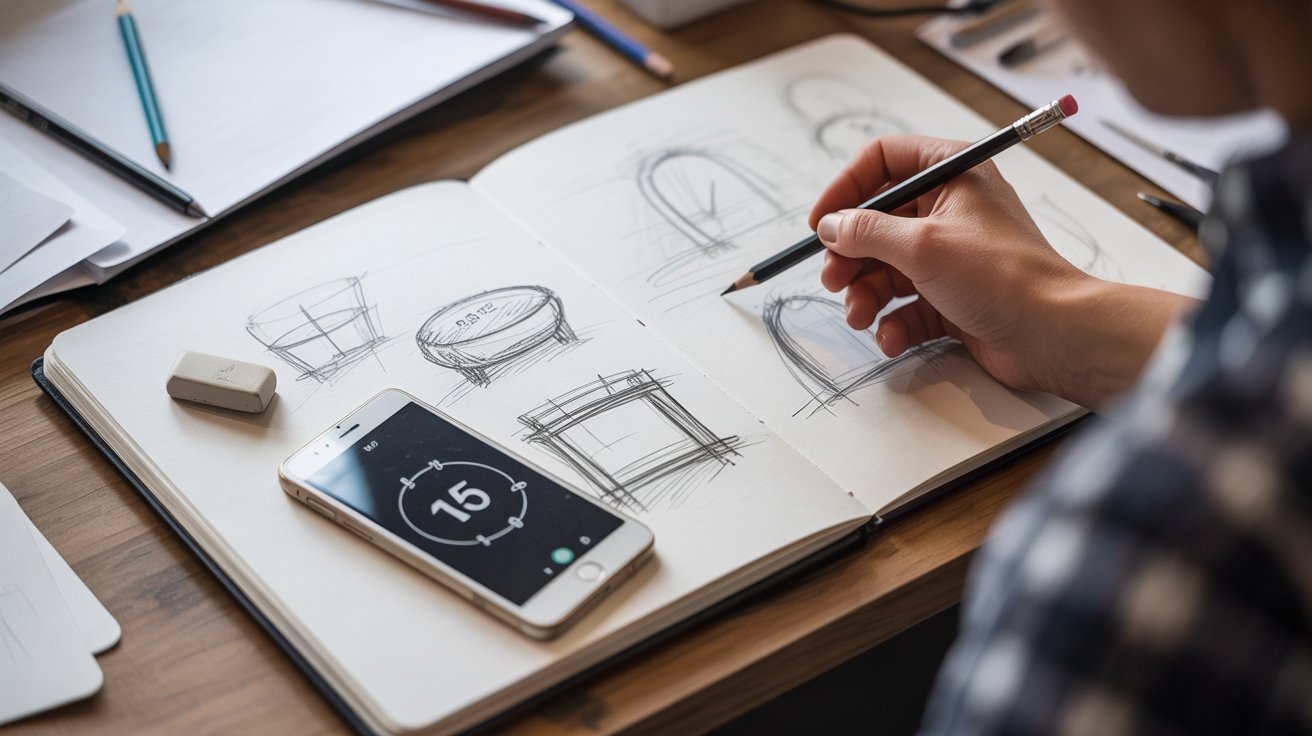
Set a timer for 30 to 60 seconds. Pick a simple subject and sketch as much as you can before the timer goes off.
This drill teaches you to make fast decisions. You cannot overthink when you only have a minute. Your hand learns to commit quickly.
Do three or four timed sketches in a row. You will notice your lines getting faster and more confident with each round.
How Often Should You Practice Drawing Warm Ups?
Short answer: daily. Even five to ten minutes before you start a drawing session makes a real difference.
If you are a beginner, give yourself more time. Ten to fifteen minutes of structured drawing warm ups helps your hand build control faster. You are still training basic motor skills, so longer sessions pay off.
If you are more experienced, keep it short and focused. Pick two or three drills that target what you are working on. Five minutes is enough when you know what you are doing.
The key is consistency. Doing warm ups three times a week beats doing an hour once a month. Small daily habits compound over time.
Tips to Maximize Your Drawing Warm Up Routine
Warm ups only work if you do them right. A few small adjustments can make your routine twice as effective.
Here is what actually helps:
- Always start slow, then gradually pick up your speed
- Use your whole arm for long lines, not just your wrist
- Switch between different exercises each day to avoid repetition
- Keep a separate sketchbook just for warm up practice
- Take photos of your warm up pages so you can track progress over time
Looking back at old warm up pages is one of the most motivating things you can do.
When you see how far your line quality has come, it pushes you to keep going. That visual proof of progress is worth more than any tip I can give you.
Conclusion
Your next drawing session is a great place to start. Pick two or three exercises from this list and spend ten minutes before you draw. That is it.
No pressure, no big commitment. Just show up and let your hand get moving.
I would love to know which warm up clicked for you the most. Drop it in the comments below.
And if you found this helpful, share it with a friend who draws. Sometimes the smallest habits lead to the biggest creative breakthroughs.
Frequently Asked Questions
What Are Drawing Warm Ups?
Drawing warm ups are short exercises done before a drawing session to loosen your hand and sharpen focus. They help improve line control and reduce stiffness so you can draw with more confidence.
How Long Should Drawing Warm Ups Take?
Most warm up sessions take anywhere from five to fifteen minutes depending on your experience level. Beginners may benefit from longer sessions while experienced artists can keep it quick.
Are Drawing Warm Ups Necessary for Beginners?
Yes, they are especially helpful for beginners who are still building basic hand control. Warm ups reduce stiffness and help new artists get comfortable with their tools faster.
Can Kids Do Drawing Warm Ups?
Absolutely. Simple drawing warm ups for kids help build coordination, focus, and creative confidence. Exercises like circle drills and curved line flow are great starting points for young learners.
Do Professional Artists Use Warm Ups?
Yes, most professional artists include some form of warm up before detailed work. It keeps their strokes sharp and their mind focused before they commit to a final piece.
