


Getting kids into art doesn’t have to be complicated or expensive. You probably have everything you need at home right now. This guide showcases simple art projects that utilize basic supplies, such as paper, crayons, and items from your kitchen.
I’ve tested these activities with real kids, and they actually keep children busy without creating huge messes. You’ll find projects for different ages and skill levels. Each one uses supplies you can grab from around your house or pick up at any store for just a few dollars.
No fancy art degrees needed. No running to specialty stores. Just straightforward instructions that help your kids make something they’ll be proud of.
If it’s a rainy afternoon or you need a quick activity, these projects get results. Let’s get your kids creating without the stress or the big spending.
13 Easy Art Activities for Kids Using Simple Supplies
I’ve tried dozens of art projects with kids over the years. Some flopped. Some created huge messes. But these 13 actually work with stuff you already have at home.
Bubble Painting
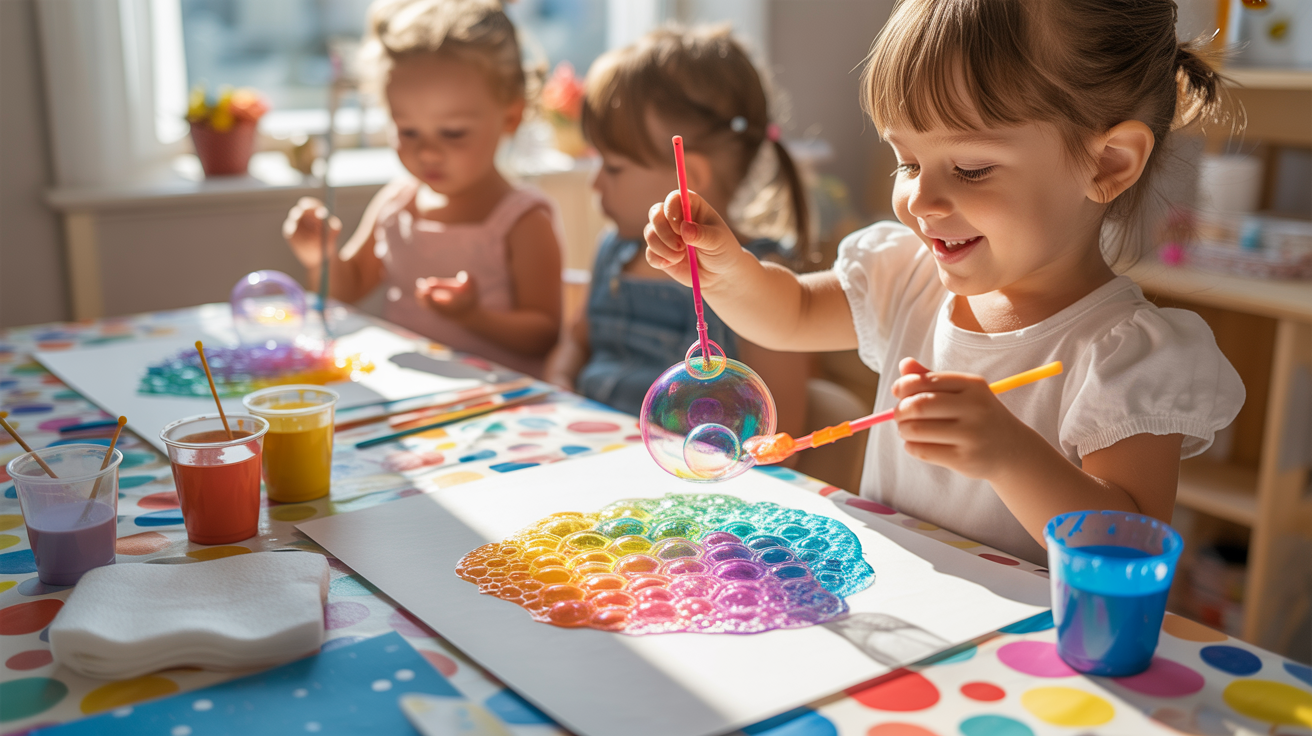
You need dish soap, water, washable paint, and paper. That’s it.
Kids blow bubbles mixed with paint and press paper on top. The bubbles pop and leave cool abstract patterns. It teaches color mixing without any pressure.
Paper Plate Spin Art
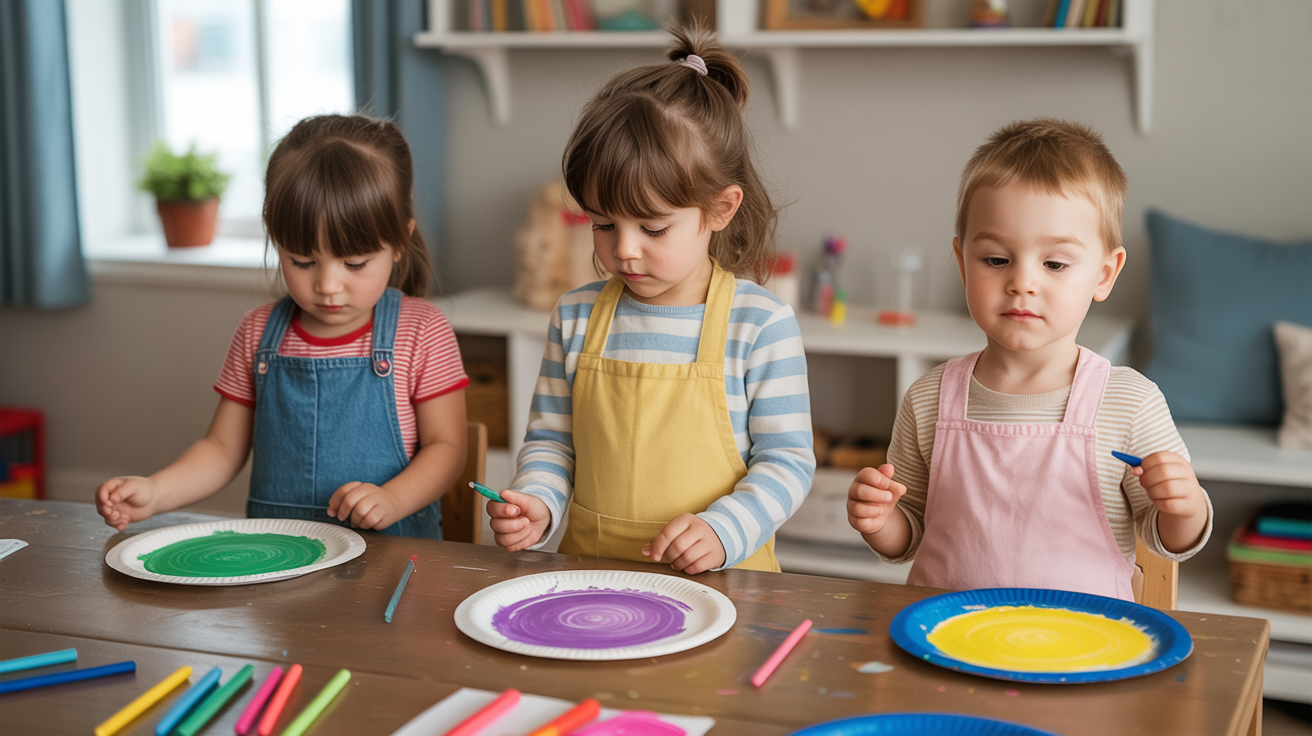
Grab paper plates and paint. Spin the plate while dripping paint on it.
The spinning motion creates wild patterns every time. Kids learn about movement and what happens when things move fast. No two designs ever look the same.
Homemade Finger Paint
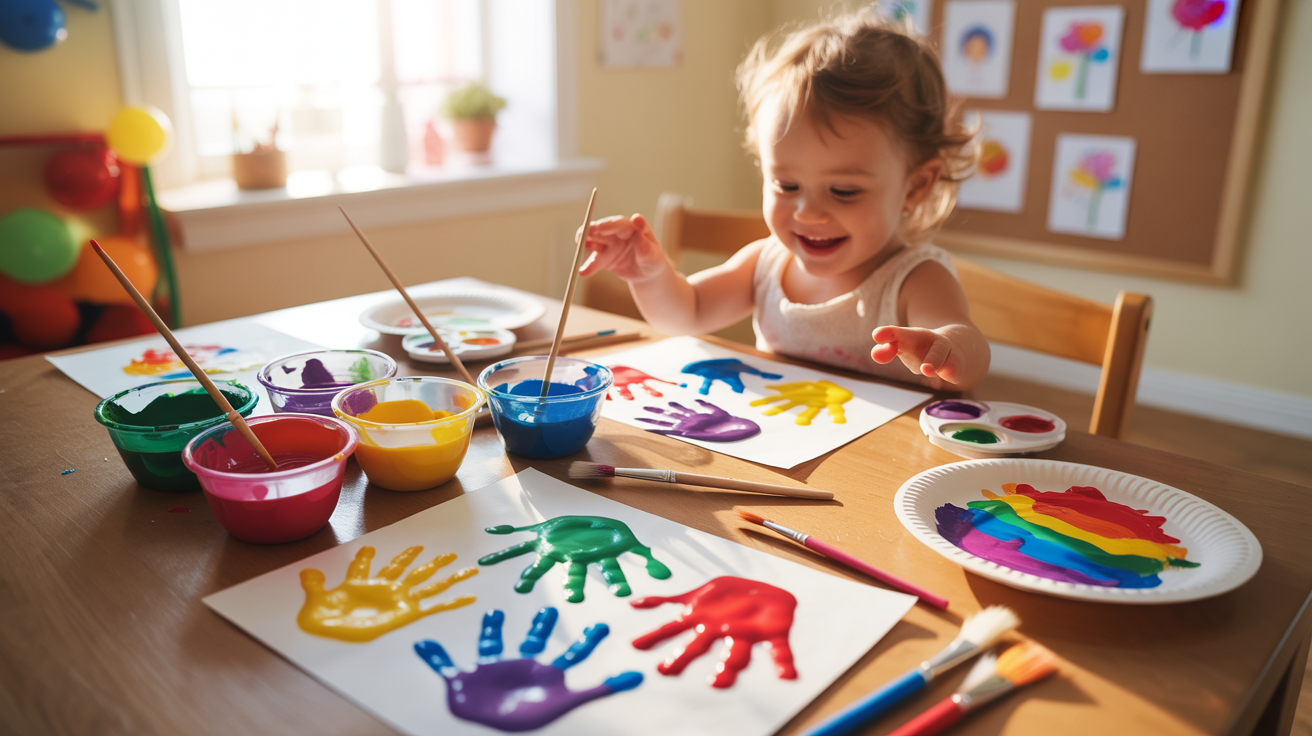
Mix cornstarch, water, and food coloring in a bowl. Now you have safe finger paint.
This works great for toddlers who put everything in their mouths. The texture helps them build hand strength. Plus, it washes off easily.
Coffee Filter Flowers
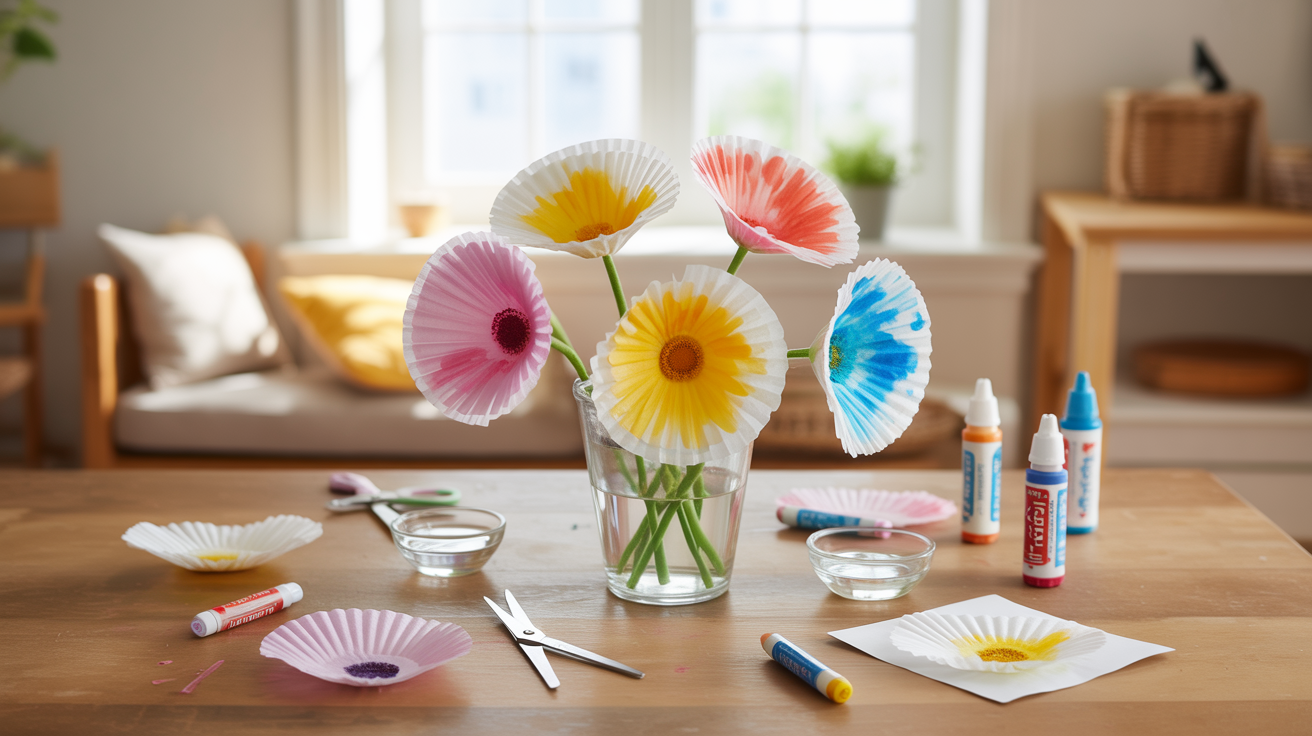
You need coffee filters, markers or food coloring, and water. Simple stuff.
Kids collectors, then spray or dip them in water. The colors spread and blend. Hang them up as decorations when they dry.
Cardboard Tube Telescope
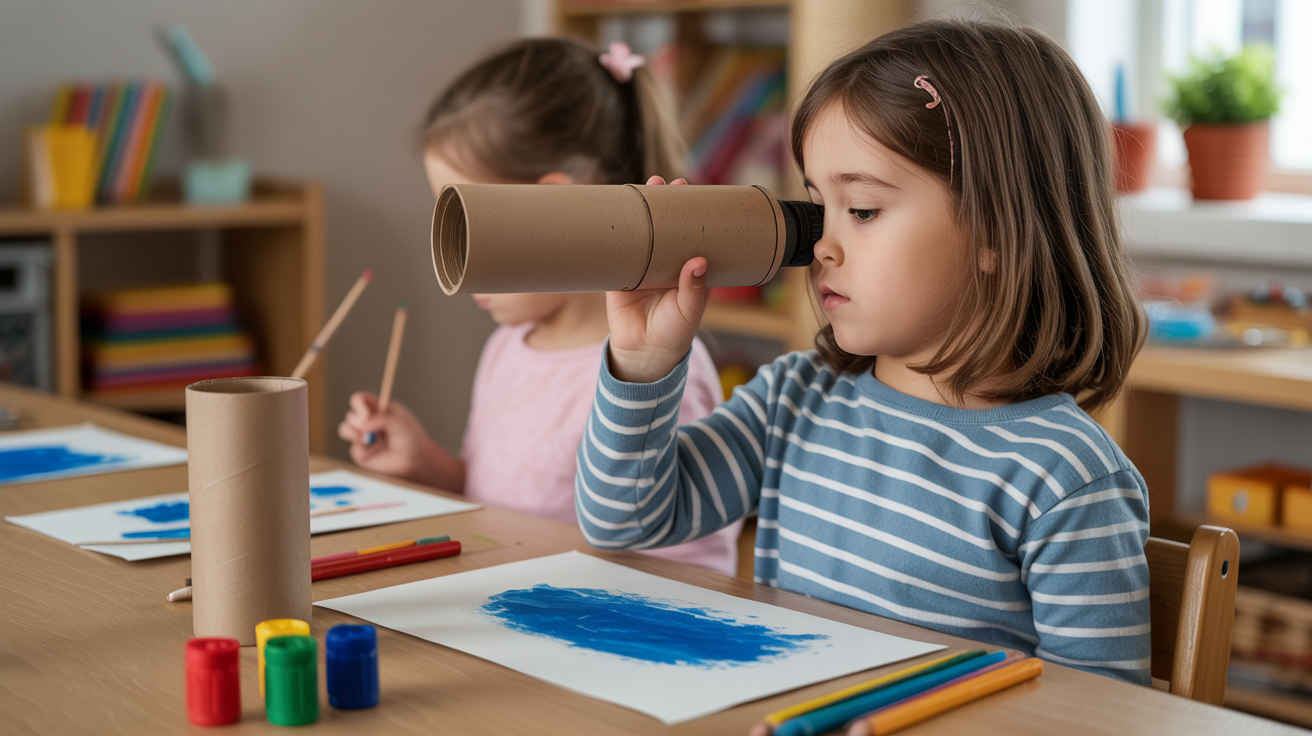
Save your paper towel rolls. Add paint and stickers.
Kids can pretend they’re searchers or pirates. It gets them moving and looking at things differently. And you’re reusing trash instead of throwing it away.
Sock Monster Puppets
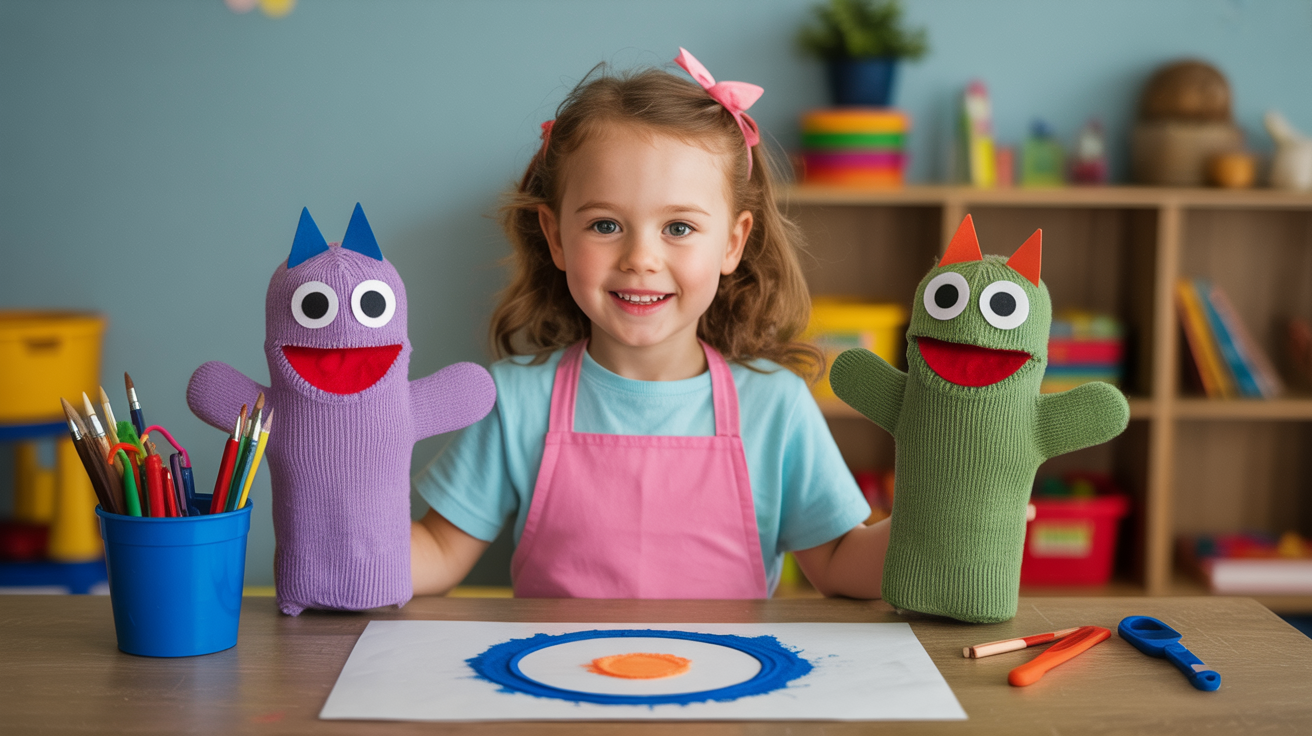
Dig out old socks. Add googly eyes, yarn, and glue.
These puppets help kids tell stories and work through feelings. They can make the monster happy, sad, or silly. Great for shy kids who need a character to speak through.
Sidewalk Chalk Art
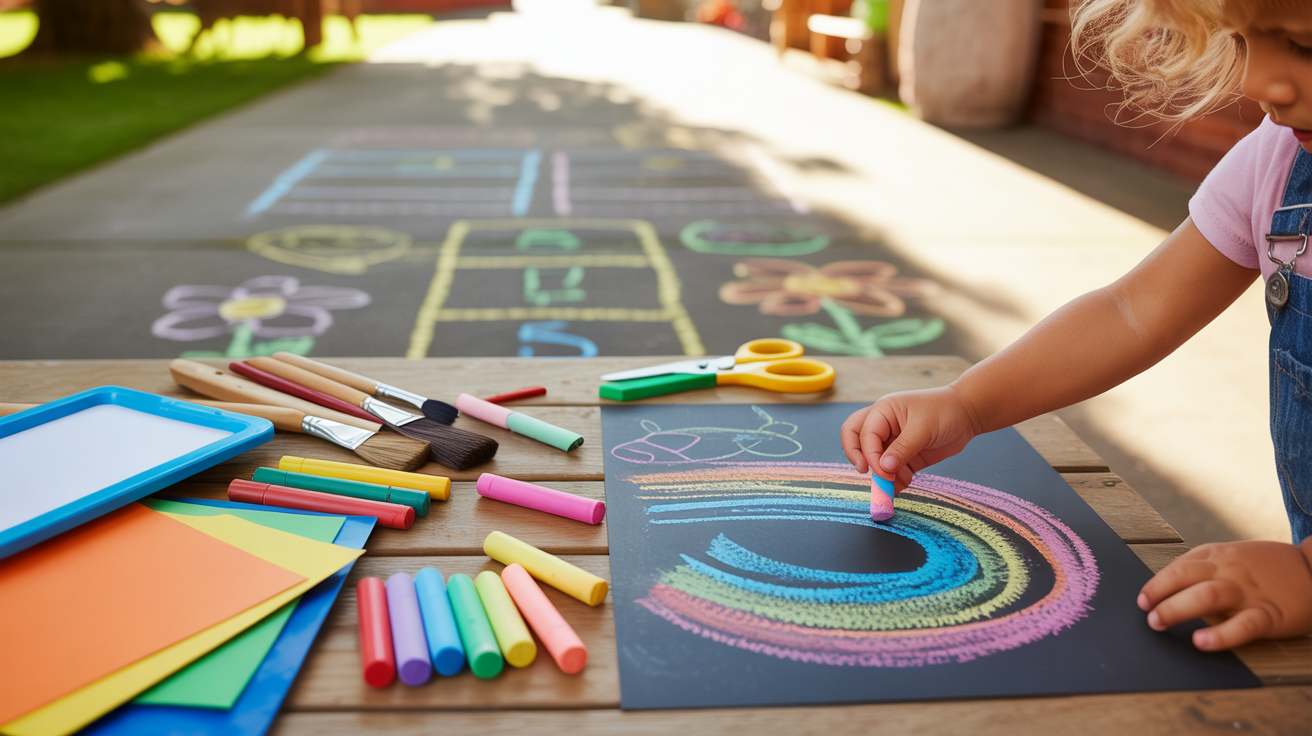
Buy chalk or make chalk paint with cornstarch and water. Head outside.
The driveway becomes a giant canvas. Kids can draw huge pictures and move their whole bodies. Rain washes it away, so they can start fresh next time.
Dictionary Drawing
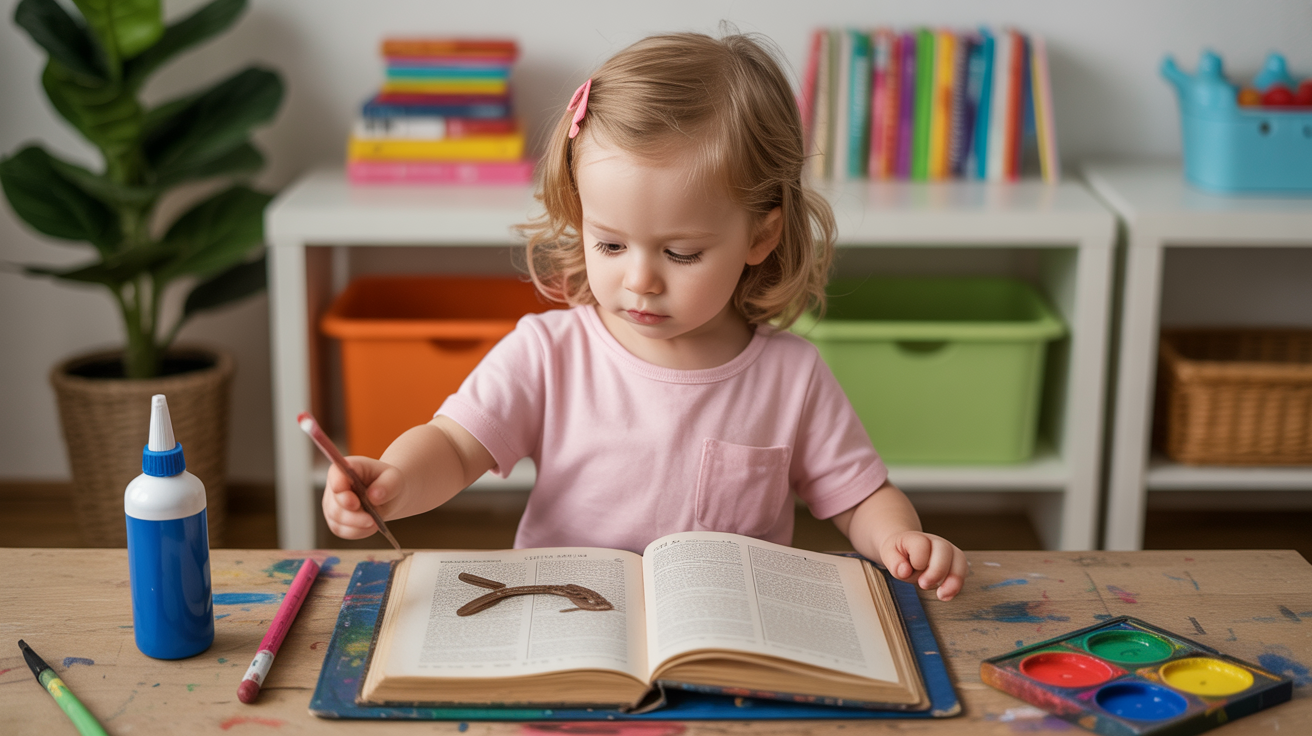
Open a dictionary to any random page. Pick a word.
Kids draw whatever that word makes them think of. It builds their vocabulary while they create. A word like “thunder” might become a storm scene or a superhero.
Recycled Robot Craft
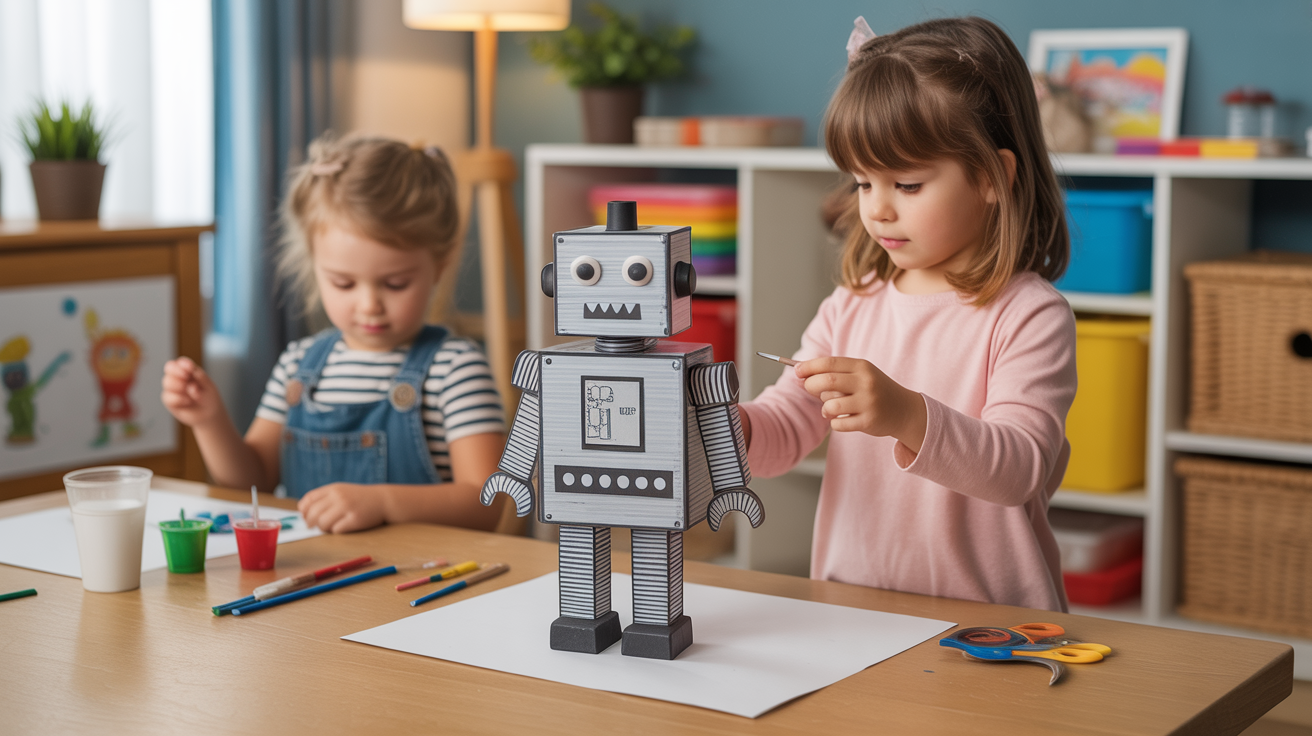
Collect cardboard boxes, foil, and bottle caps. Lay them all out.
Kids build robots however they want. They figure out how to connect pieces and make things stand up. This one works great when multiple kids build together.
Marble Paper Art
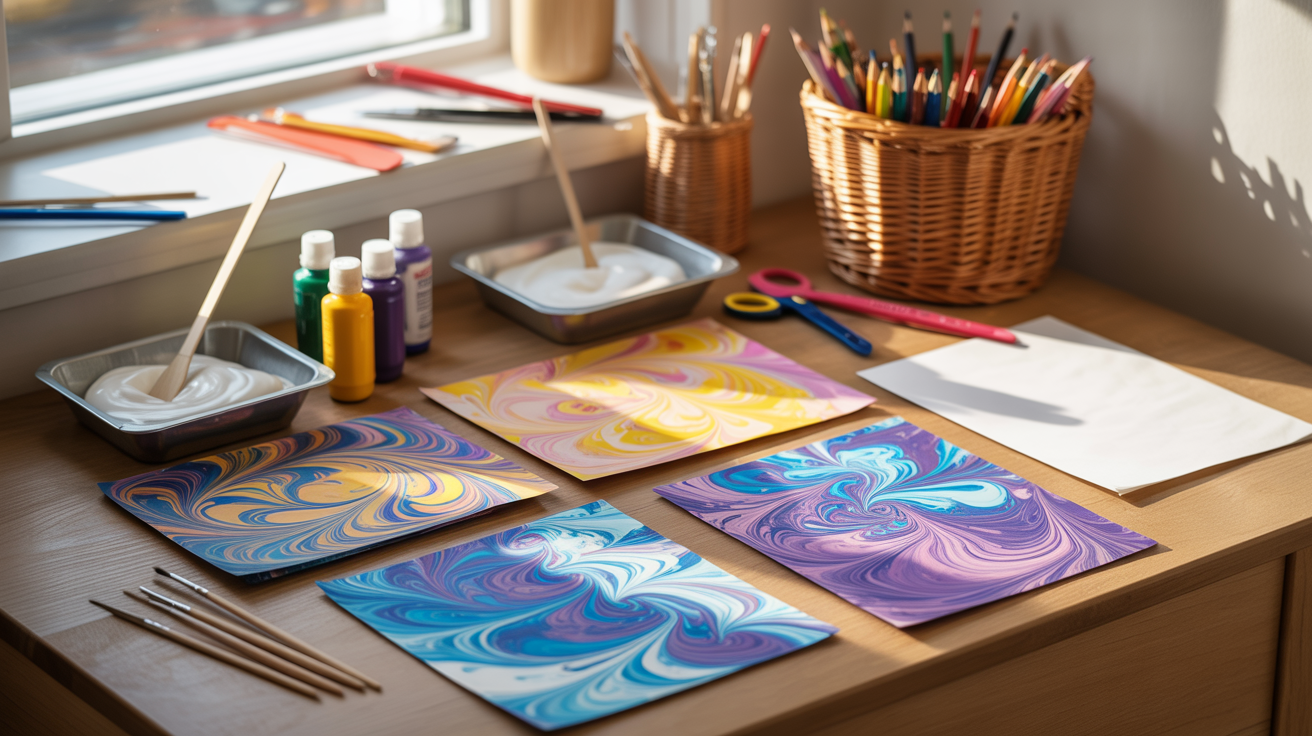
Spray shaving cream on a tray. Add drops of liquid watercolors.
Kids swirl the colors with a stick, then press paper on top. When you scrape off the shaving cream, marbled art remains. It’s messy but worth it.
Mail-a-Hug theft
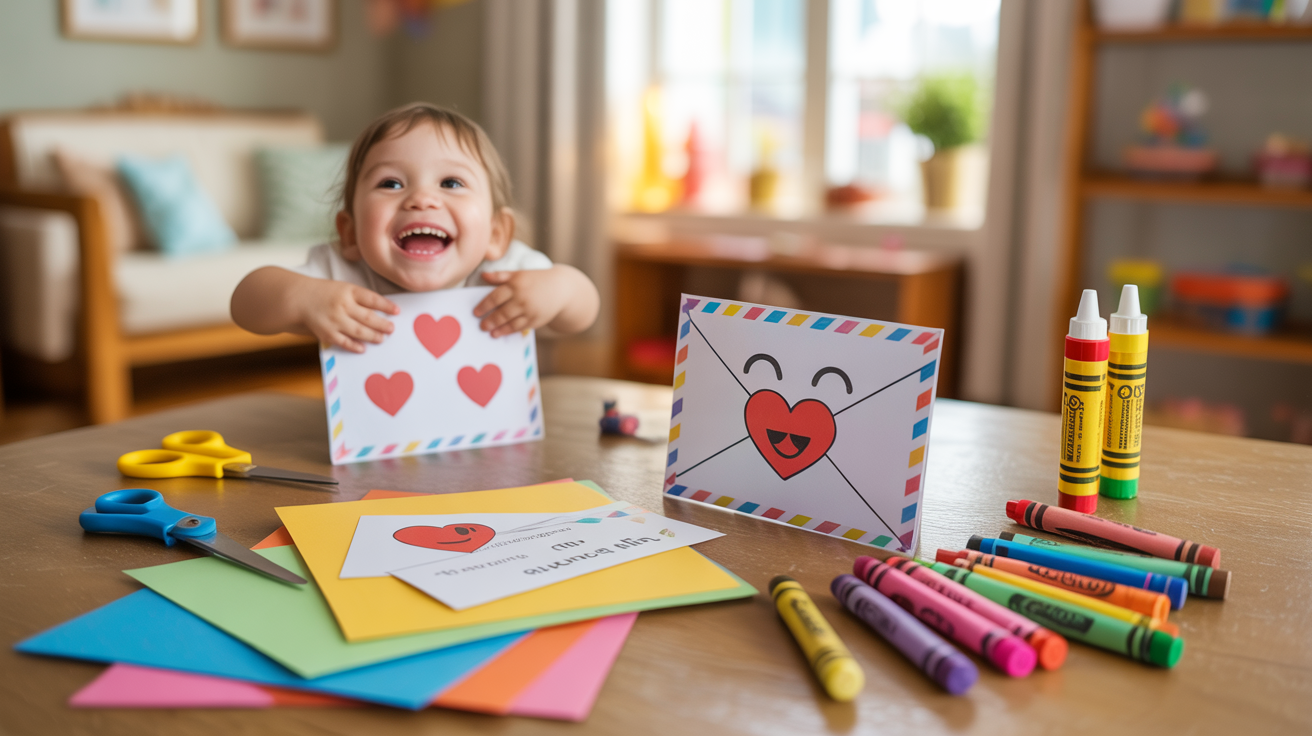
Cut out paper arms and hands. Decorate them with markers.
Kids fold their arms to create a hug shape. They can mail these to grandparents or friends who live far away. It teaches them about showing love from a distance.
Found Object Drawing
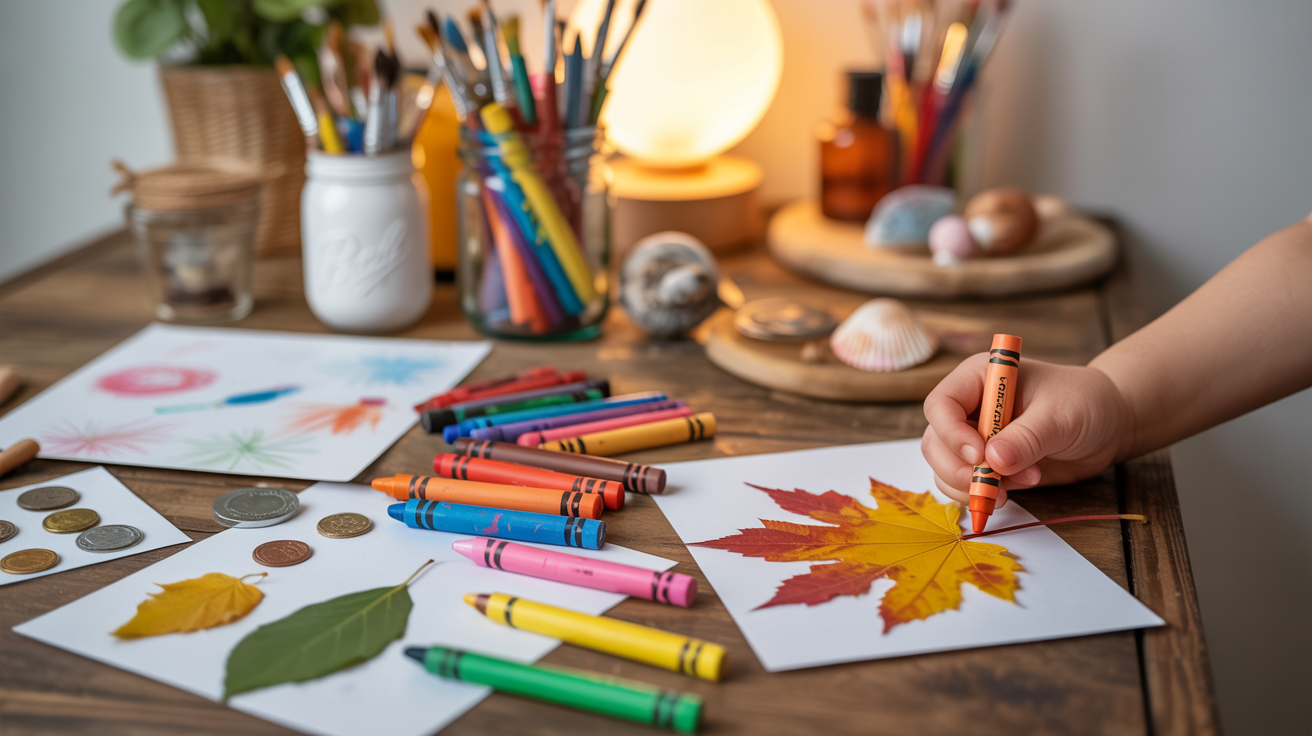
Walk around the house. Grab random objects like keys, spoons, or toys.
Kids trace around them or add them to their drawings. A cup becomes a robot’s body. A fork becomes a tree. They start seeing art everywhere.
Paper Bag Village
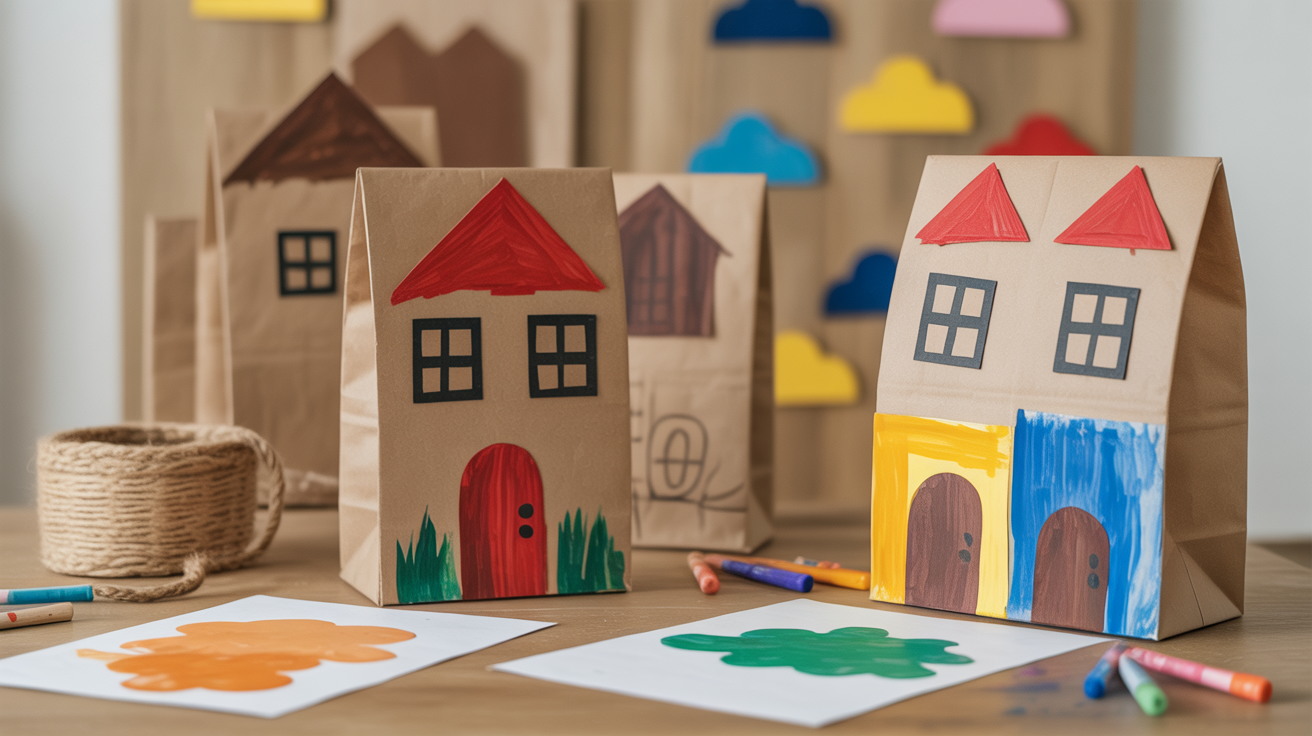
Save brown paper bags from the grocery store. Add markers and tape.
Kids design houses, shops, and roads. They can create whole neighborhoods and play with them afterward. It combines art with pretend play and storytelling.
Tips for Making Art Time Easy and Fun
I know how chaotic art projects can get. Paint spills, glitter everywhere. Art kids who lose interest halfway through.
But here’s what I’ve learned: Art time doesn’t have to be stressful.
- Keep Your Supplies Simple: Store paper, glue, markers, and recycled boxes in one container. Pick washable, kid-safe products.
- Focus on the Process: Let your kids experiment without worrying about how it looks. Celebrate their ideas and effort, not the end product.
- Match Their Age: Break down steps for younger children. Give older kids themes or challenges to solve.
- Make Cleanup Quick: Cover tables with newspaper or old sheets. Turn cleaning up into a quick game with a timer.
- Set Up a Space: Designate one corner or table for art. Keep it ready so you can start anytime without hassle.
Conclusion
Art activities for kids don’t need to be complicated or costly. With the supplies you already have at home, you can set up creative projects that keep children engaged and happy. These simple ideas give you options for different ages and moods without the stress of complicated prep work.
You now have a list of tested activities that actually work. No more scrambling for last-minute entertainment or spending money on expensive kits. Just grab some paper, markers, or kitchen items and let your kids create.
Try one of these projects this week and see how it goes. If you found this helpful, share it with other parents who might need some fresh ideas. Got a favorite simple art activity we missed? Drop it in the comments below. We’d love to hear what works in your house.
Frequently Asked Questions
What supplies do I need for art activities for kids at home?
You likely have everything already. Basic supplies include paper, crayons, markers, glue, scissors, and tape. Kitchen items like flour, salt, and food coloring work great too. Old magazines, cardboard boxes, and egg cartons are also useful. You don’t need special art supplies to get started.
What are good art activities for kids with no mess?
Dry activities work best for mess-free fun. Try coloring books, drawing with pencils or crayons, collage making with magazines, or sticker art. You can also use washable markers on paper or create rubbing art with coins and leaves. These keep cleanup simple.
How long should art activities for kids last?
It depends on age. Toddlers usually focus for 10-15 minutes. Preschoolers can go 20-30 minutes. School-age kids might work for an hour or more. Let your child lead. If they’re done early, that’s fine. The goal is fun, not finishing.
What art activities work for different age groups?
Toddlers enjoy finger painting and simple coloring. Preschoolers like cutting, gluing, and stamping. Elementary kids can handle more detailed projects like drawing, painting scenes, or crafts. Choose activities based on your child’s fine motor skills and attention span.
Can art activities for kids be educational, too?
Absolutely. Art teaches colors, shapes, and patterns. It builds fine motor skills and hand-eye coordination. Kids learn to follow directions and solve problems. Drawing and painting also help with creativity and self-expression. Learning happens naturally while they create.
