

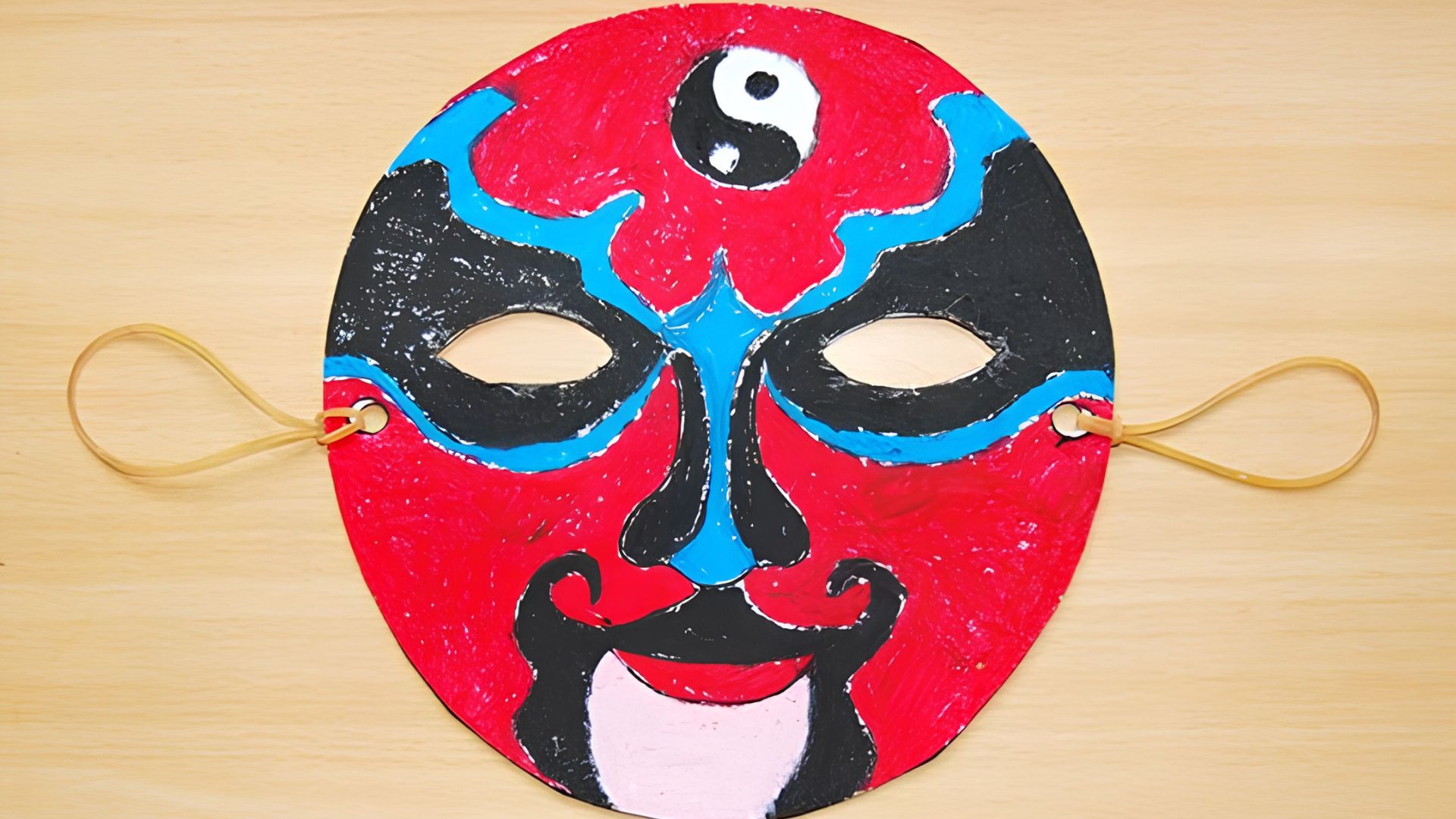
I'll be honest. The first time I looked up African mask drawing, I had no idea where to even start. The patterns looked complex.
The meaning behind them felt even harder to understand. But here's the thing. It's more approachable than it looks.
In this blog, I'll cover the cultural meaning behind these masks, 11 drawing ideas you can try right now, and tips to help you improve.
You'll leave with real direction and zero confusion.
Let's get into it.
Understanding African Mask Drawing and Its Cultural Meaning
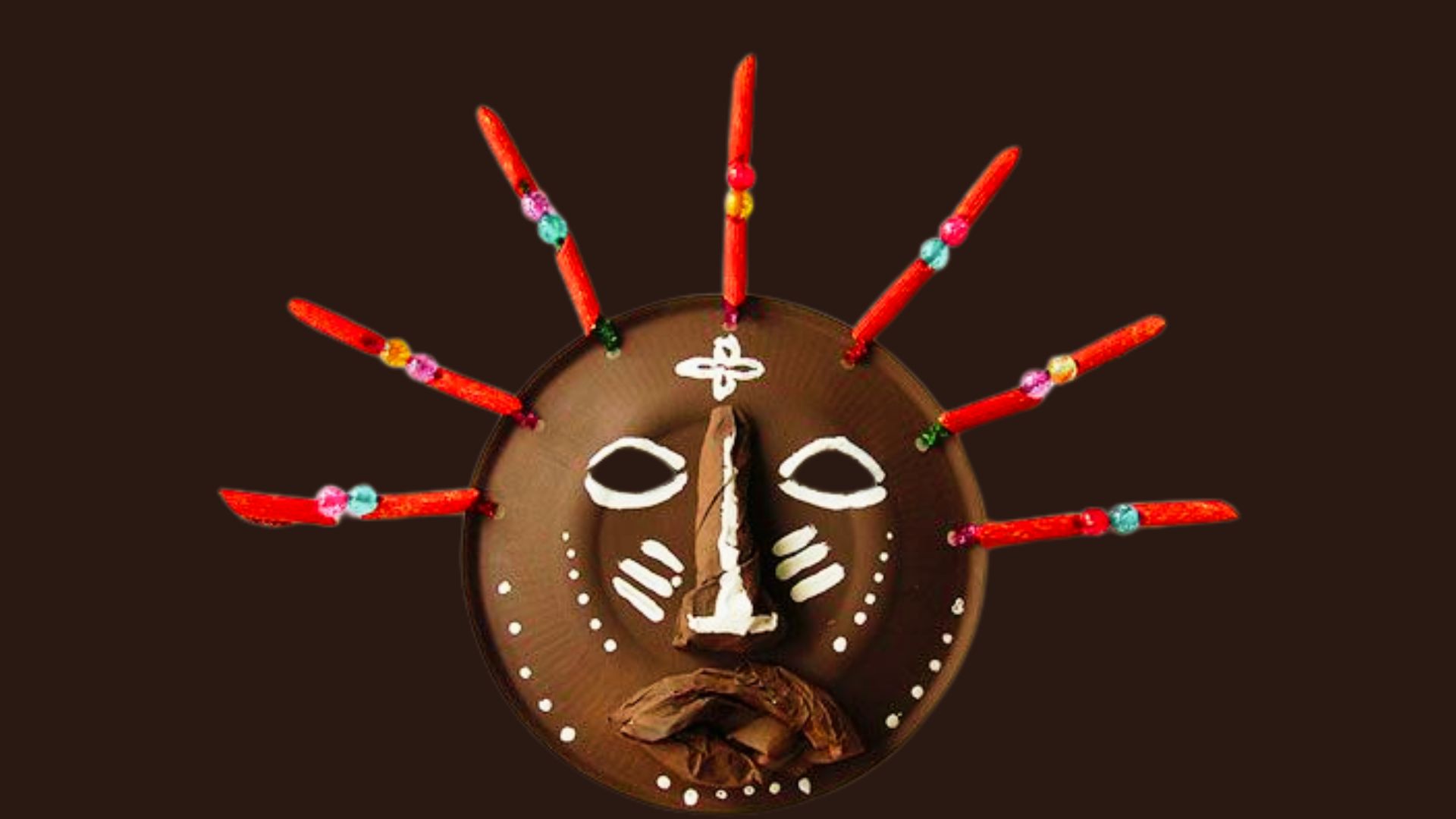
African masks are not just art. They carry deep meaning rooted in history, community, and belief. Different African cultures used masks in ceremonies, rituals, and celebrations.
Each mask told a story. Some represented spirits. Others honored ancestors or marked important life events.
The shapes, symbols, and colors all had purpose. When you draw an African mask, you are not just sketching lines. You are connecting with centuries of cultural expression.
Understanding that context makes your drawing more meaningful and your creative choices more intentional from the very first line you put on paper.
List of 11 African Mask Drawing Ideas
Here are eleven African mask drawing ideas, each rooted in cultural meaning and ready for you to try at your own pace.
1. The Guardian Spirit Mask
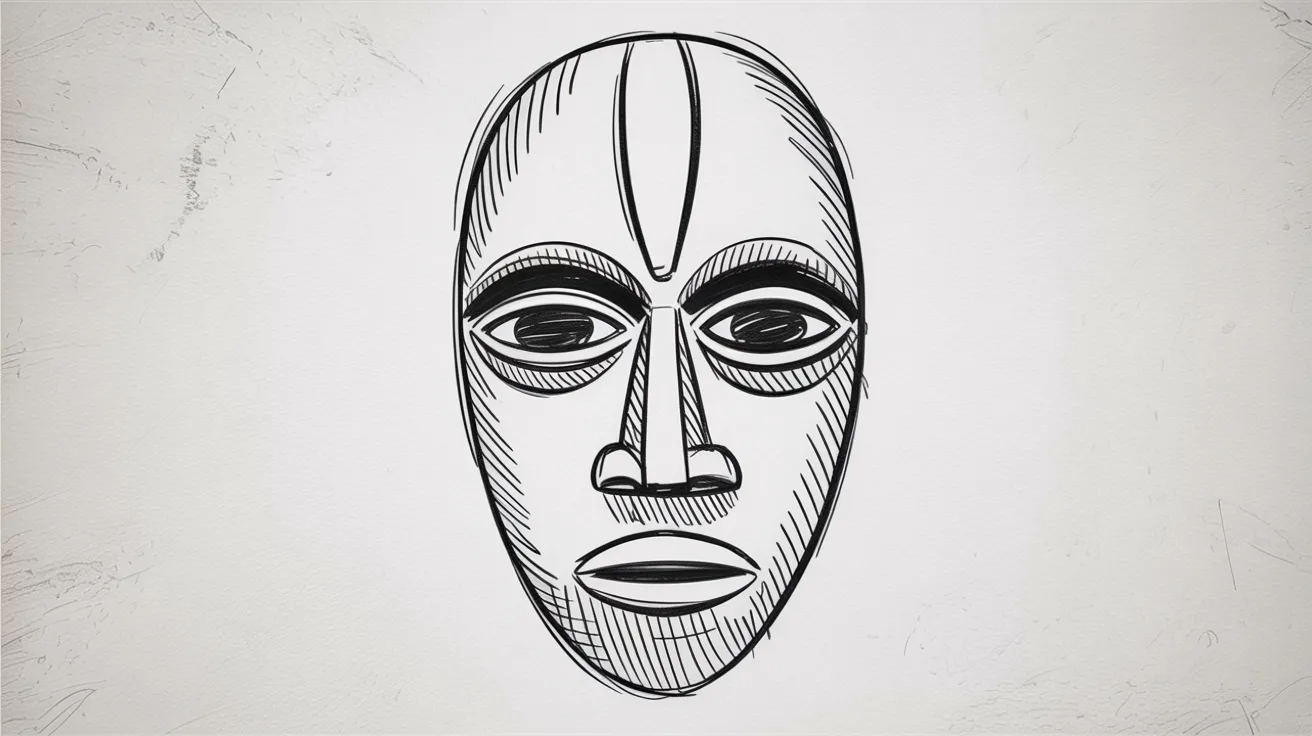
The Guardian Spirit Mask is drawn with strong, bold features. Wide eyes, a firm jaw, and thick brow lines give it a powerful presence.
This mask was used in many African cultures to call on protective spirits during rituals. When drawing it, focus on making the face look authoritative and alert.
Use heavy outlines and strong shapes. Keep the expression serious. Add geometric patterns on the forehead or cheeks to bring that spiritual energy into the design.
2. The Ancestral Echo Mask
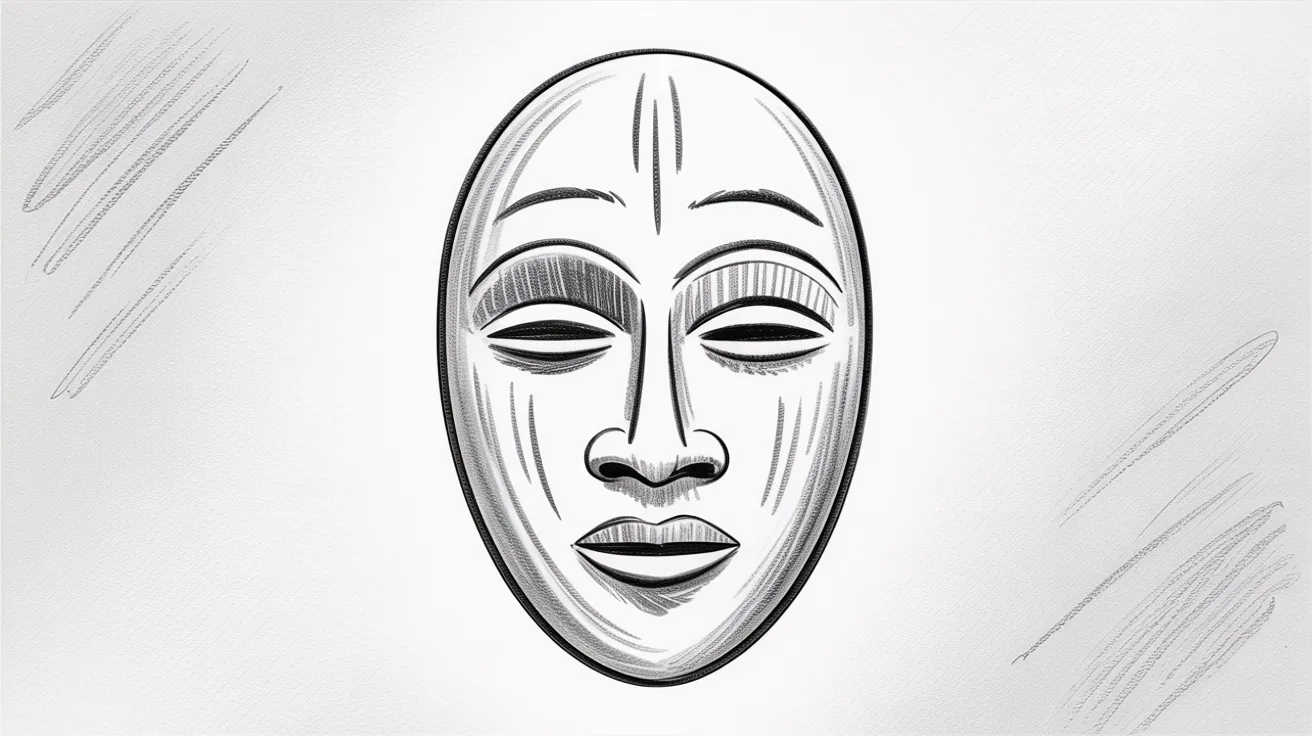
This mask honors those who came before. It often has aged, worn-looking features with deep-set eyes and a calm, still expression.
Many African communities believed ancestors watched over the living. Drawing this mask means focusing on depth and quiet strength. Use soft shading around the eyes and a slightly downward mouth.
Add lines across the face that suggest age and wisdom. The overall feel should be peaceful but deeply serious. Let the face tell a story without needing words.
3. The Rhythm of the Drum Mask
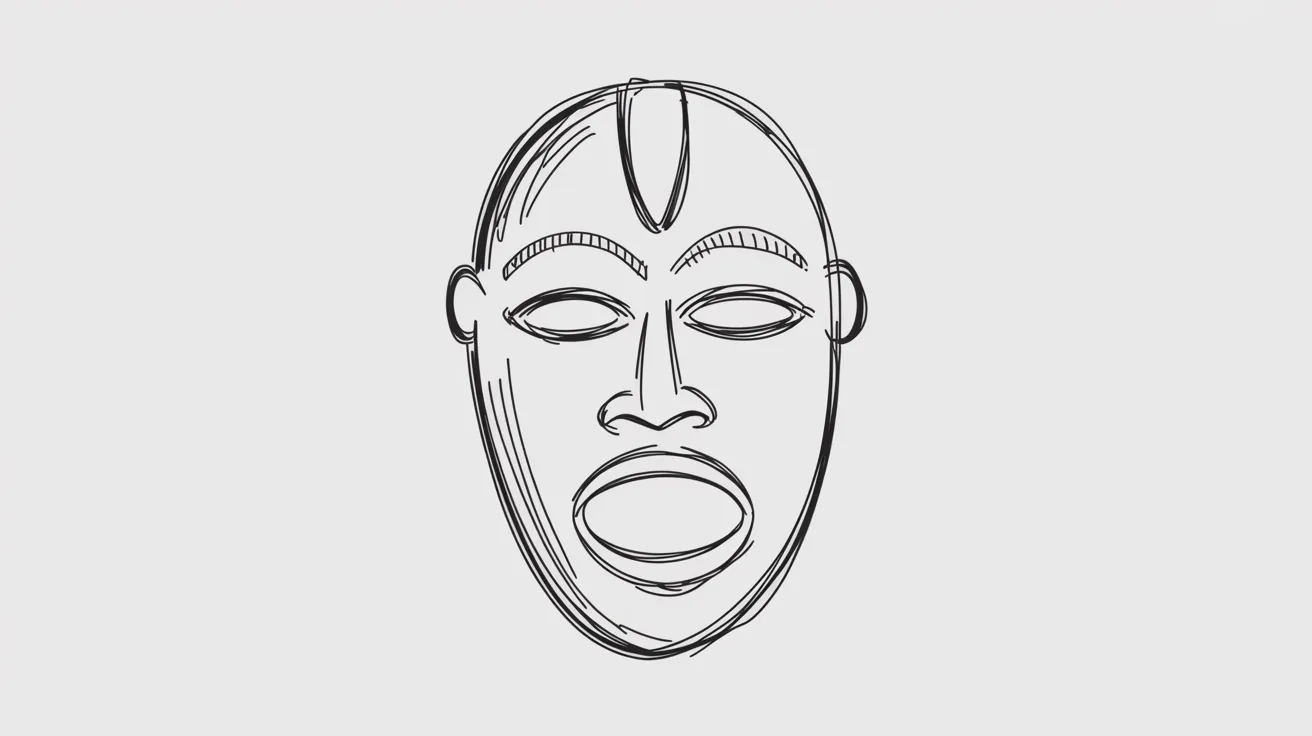
Music and rhythm run deep in African culture. This mask celebrates that connection. Draw it with an open mouth as if mid-song or chant.
Add curved lines flowing outward from the face to suggest sound and movement. The features should feel lively and energetic.
Bold cheekbones, wide nostrils, and expressive eyes work well here. Use repeating circular or wave patterns around the border of the mask to reflect the beat and pulse of traditional drumming ceremonies.
4. The Dual Identity Mask
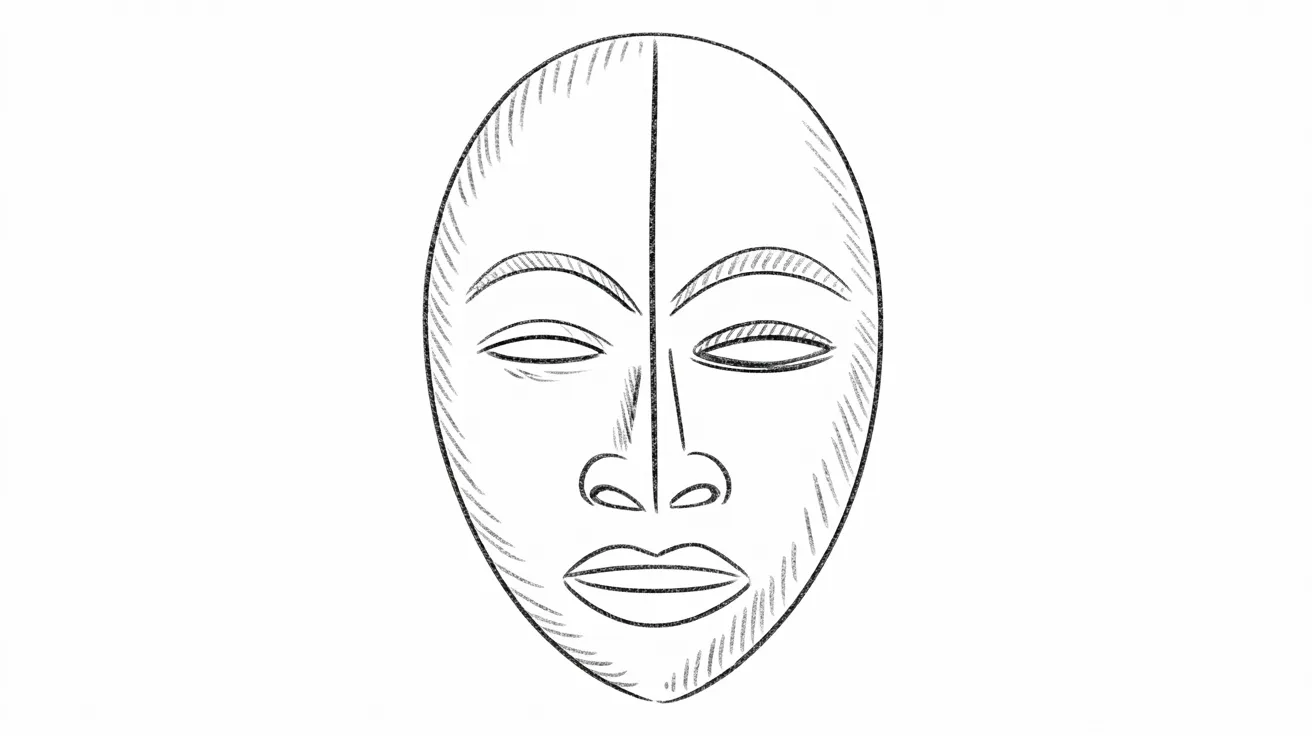
This is one of the more interesting mask types to draw. It shows two faces in one, often split right down the center. One side may look calm while the other looks intense.
This design reflects the idea that people and spirits carry more than one side to their nature. Draw a clean vertical line down the middle.
Give each half its own expression and pattern style. Keep both halves balanced in size. The contrast between the two sides is what makes this mask stand out.
5. The Nature Spirit Mask
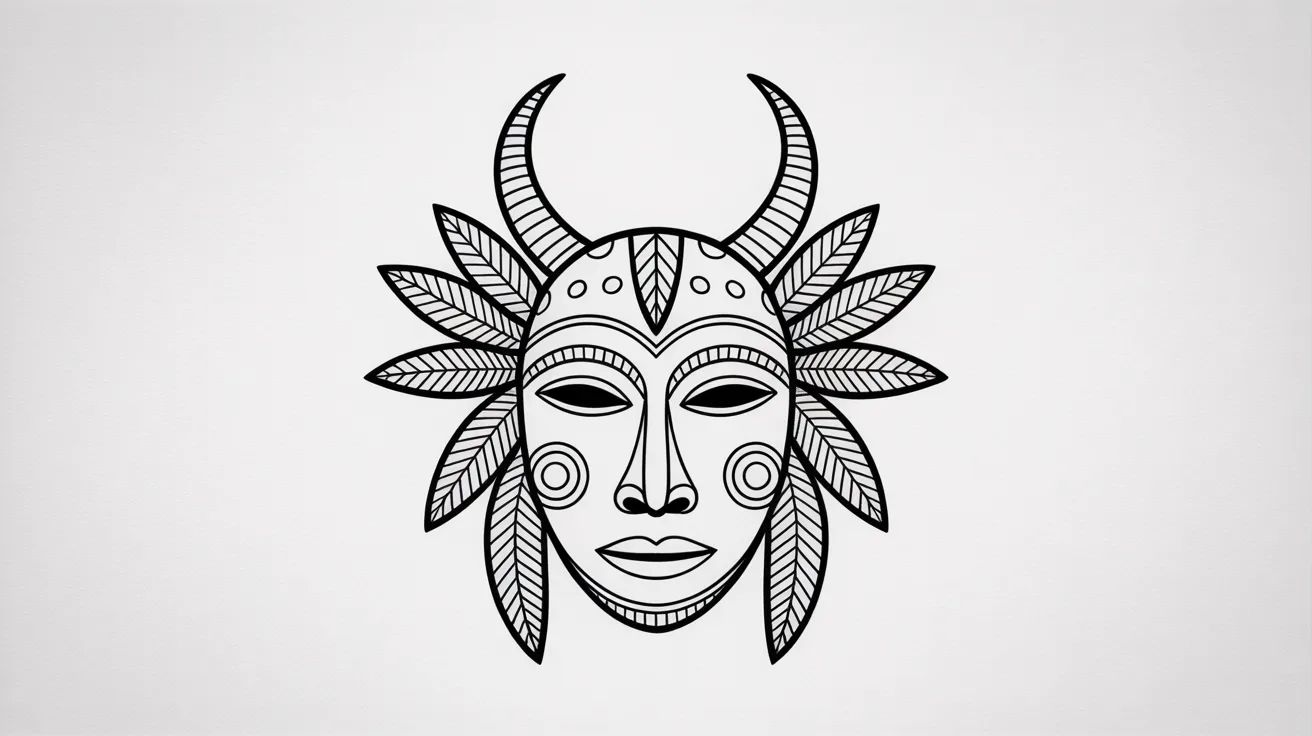
Nature plays a big role in African spiritual traditions. This mask connects the human world with the natural one. Draw it with animal features blended into a human face.
Think curved horns, feather-like patterns around the edges, or leaf shapes worked into the design. The eyes can be wide and round like an owl's.
Use organic shapes throughout. Avoid anything too rigid or geometric. The whole mask should feel like it belongs in a forest or open plain under a wide sky.
6. The Royal Authority Mask
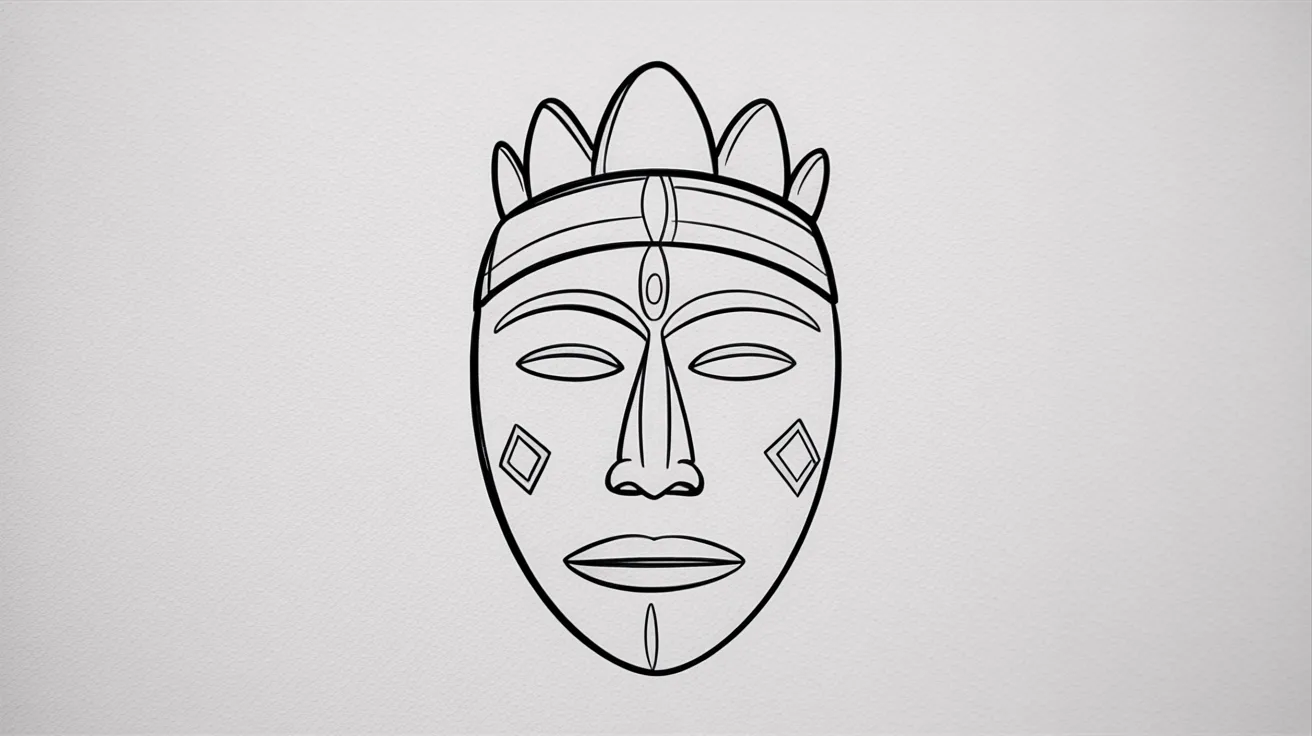
This mask was worn by leaders and royalty in ceremonial settings. It should look commanding and well put together.
Draw a tall, elongated face with high cheekbones and a straight, firm mouth. Add a crown-like shape at the top of the mask. Use clean, precise patterns on the cheeks and forehead.
The lines should be sharp and deliberate. Nothing about this mask should look rushed or casual. Every detail should signal power, order, and respect within the community it represents.
7. The Tribal Storyteller Mask
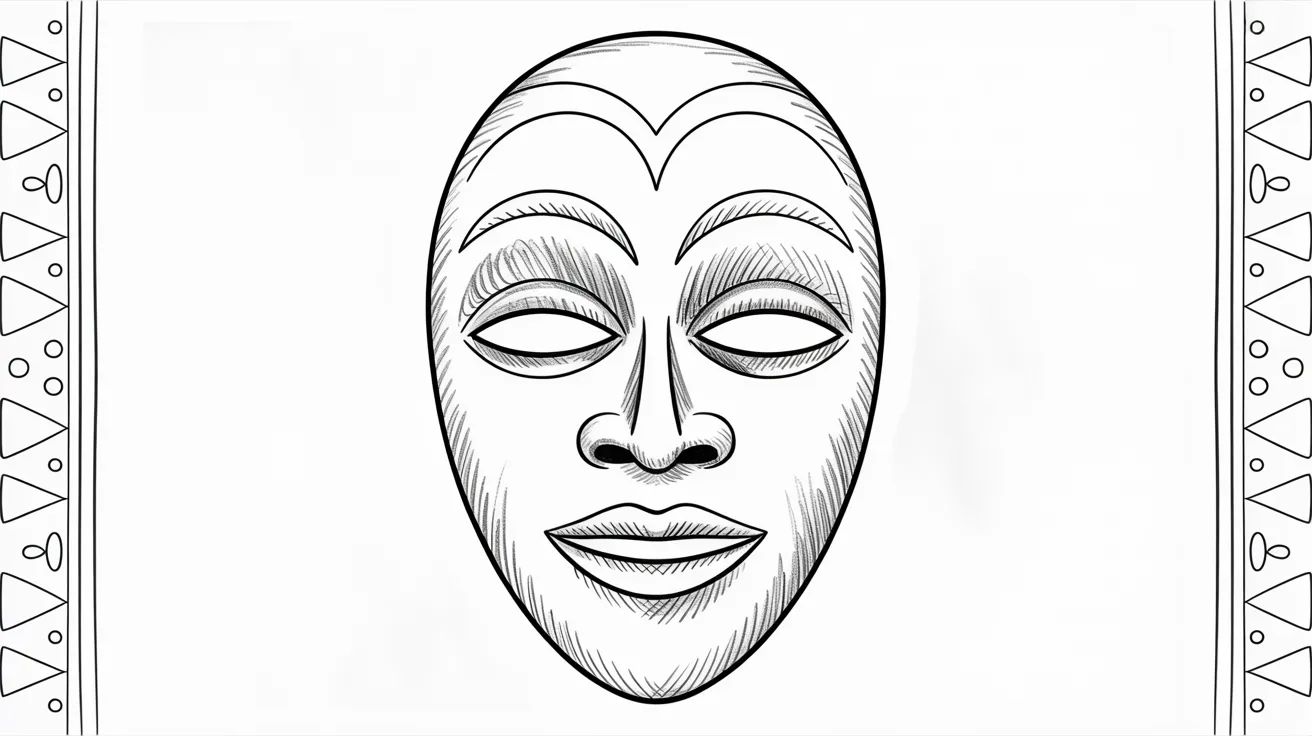
Storytelling kept African history alive for generations. This mask honors that tradition. Draw it with an expressive, open face. Large eyes and a slightly open mouth work well here.
Add symbols or small scene-like patterns around the border that hint at a narrative. The face should feel warm and inviting, like someone mid-story around a fire.
Use curved lines and soft shapes throughout. This mask is less about power and more about connection, community, and passing down what matters most.
8. The Transformation Mask
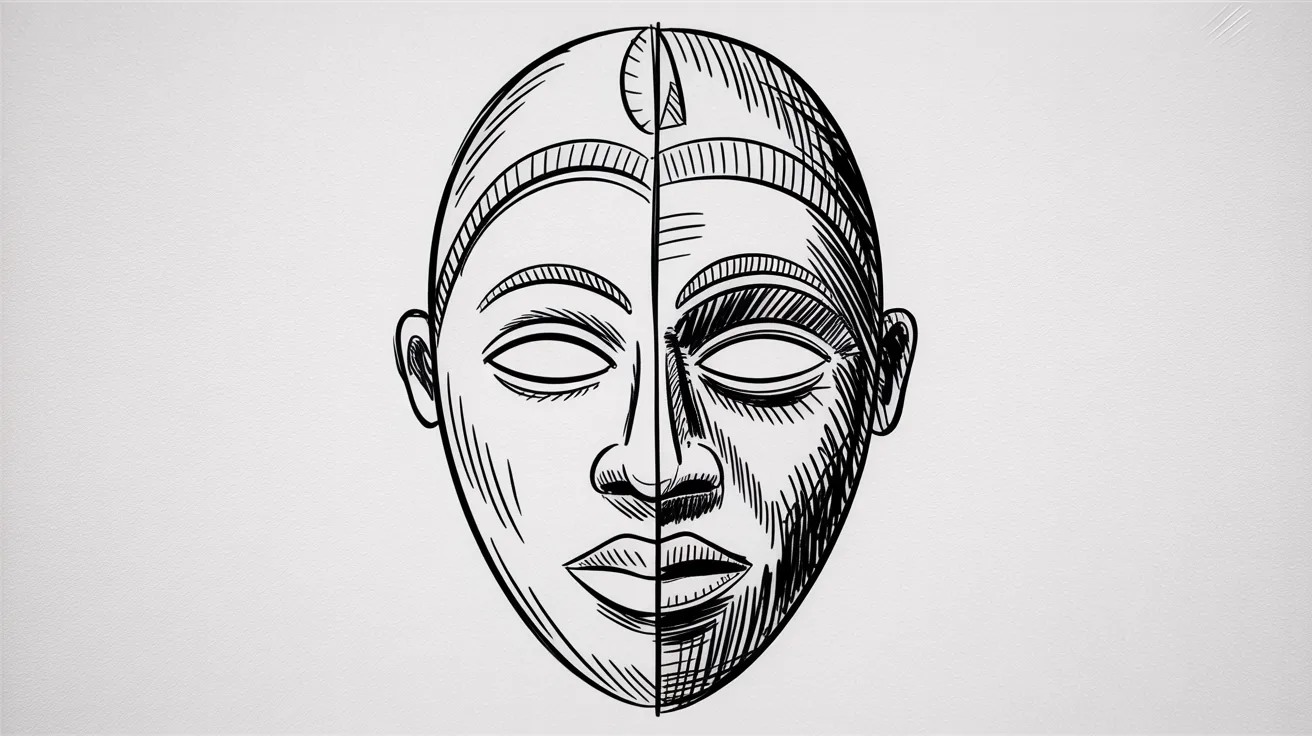
This mask represents change. Many African ceremonies marked major life shifts, like moving from childhood to adulthood. The drawing should show a face that looks like it is mid-change.
You can do this by making one half of the face younger and smoother and the other half older and more defined. Use contrasting patterns on each side.
The eyes can be slightly asymmetrical. The overall effect should feel like the mask is caught between two states. It is a powerful concept and a really interesting drawing to create.
9. The Visionary Dream Mask
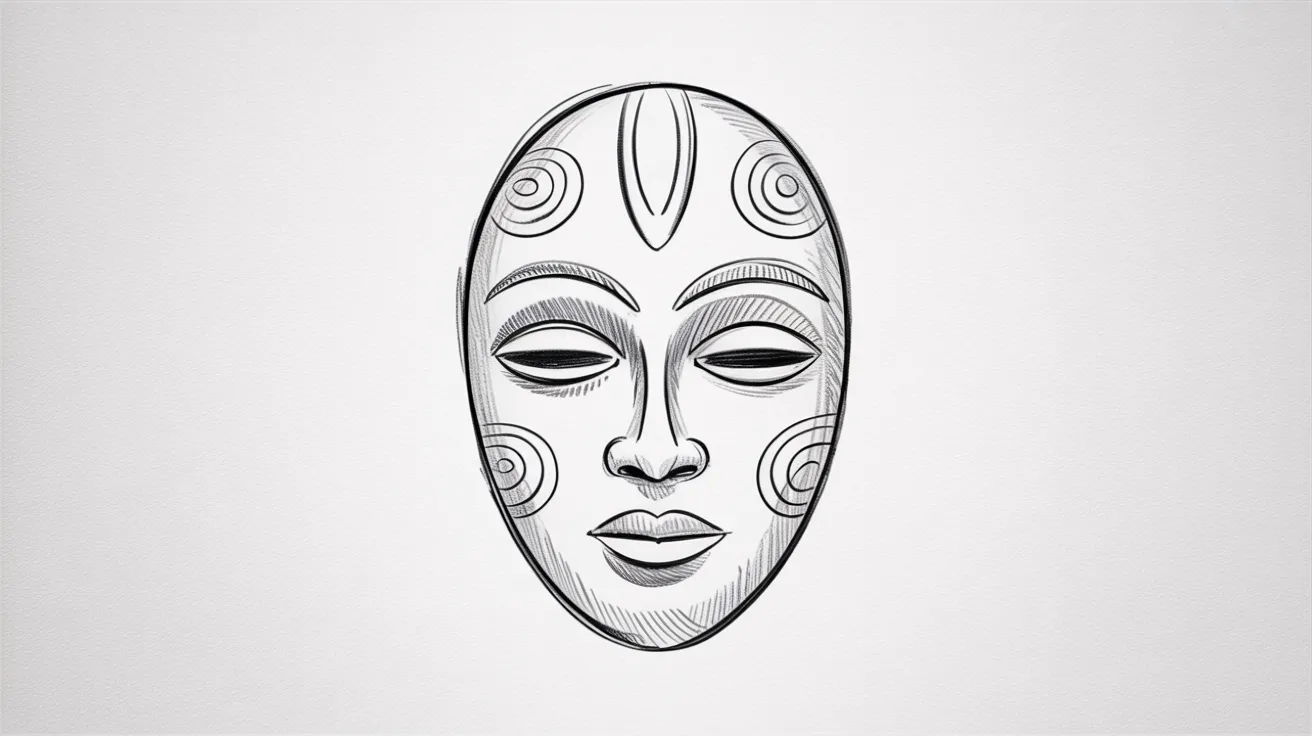
This mask represents the inner world. Visions, dreams, and spiritual sight were taken seriously in many African cultures.
Draw this mask with closed or half-open eyes to suggest looking inward rather than outward. Add swirling patterns around the eyes and across the forehead. Use soft, flowing lines throughout the face.
The expression should be still and peaceful. This is not a mask about strength or authority. It is about quiet awareness and seeing things that others cannot. Keep the whole design calm and flowing.
10. The Warrior Strength Mask
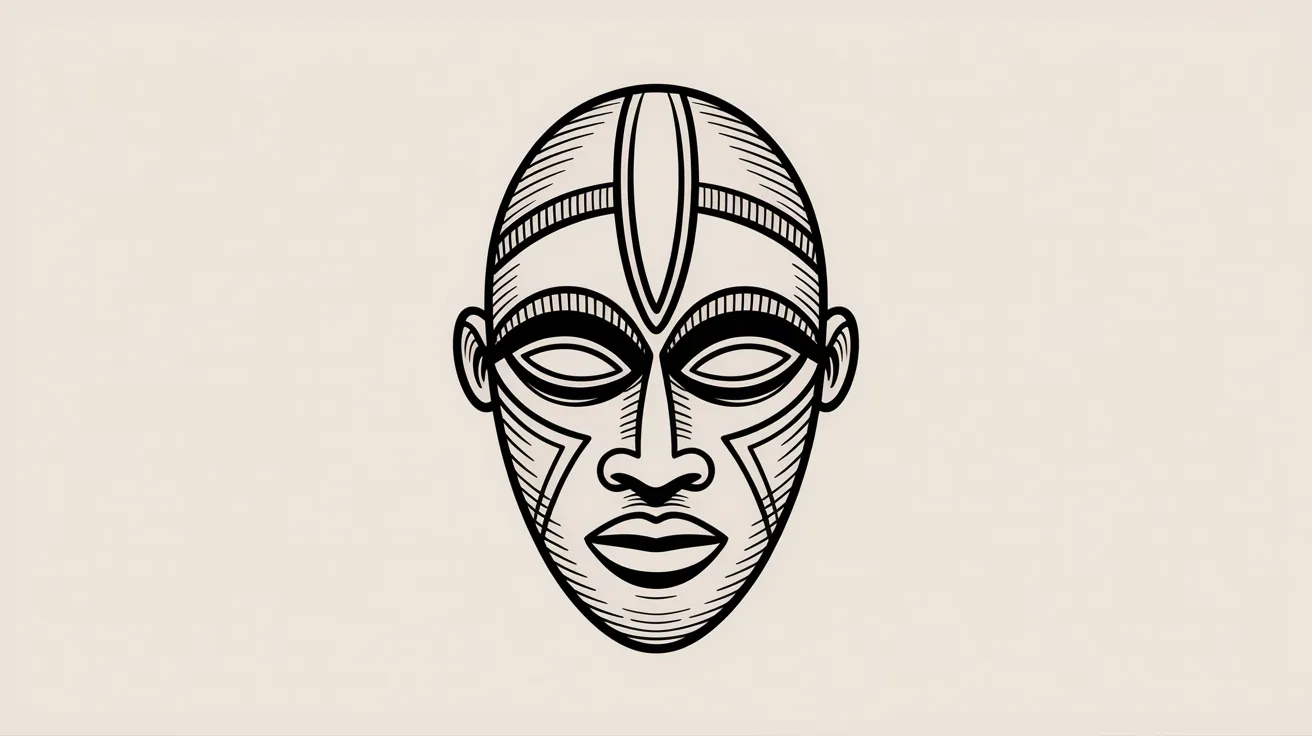
This mask is bold. It was used to prepare warriors mentally before battle or to honor their courage afterward. Draw sharp, angular features.
A strong brow, firm jaw, and intense eyes give it the right energy. Add bold geometric patterns across the cheeks and forehead. Use thick, confident lines throughout.
Nothing should look soft or hesitant here. The mask should feel like it means business from the very first glance. Strong contrast between light and dark areas in your shading will really make this one stand out.
11. The Festival Celebration Mask
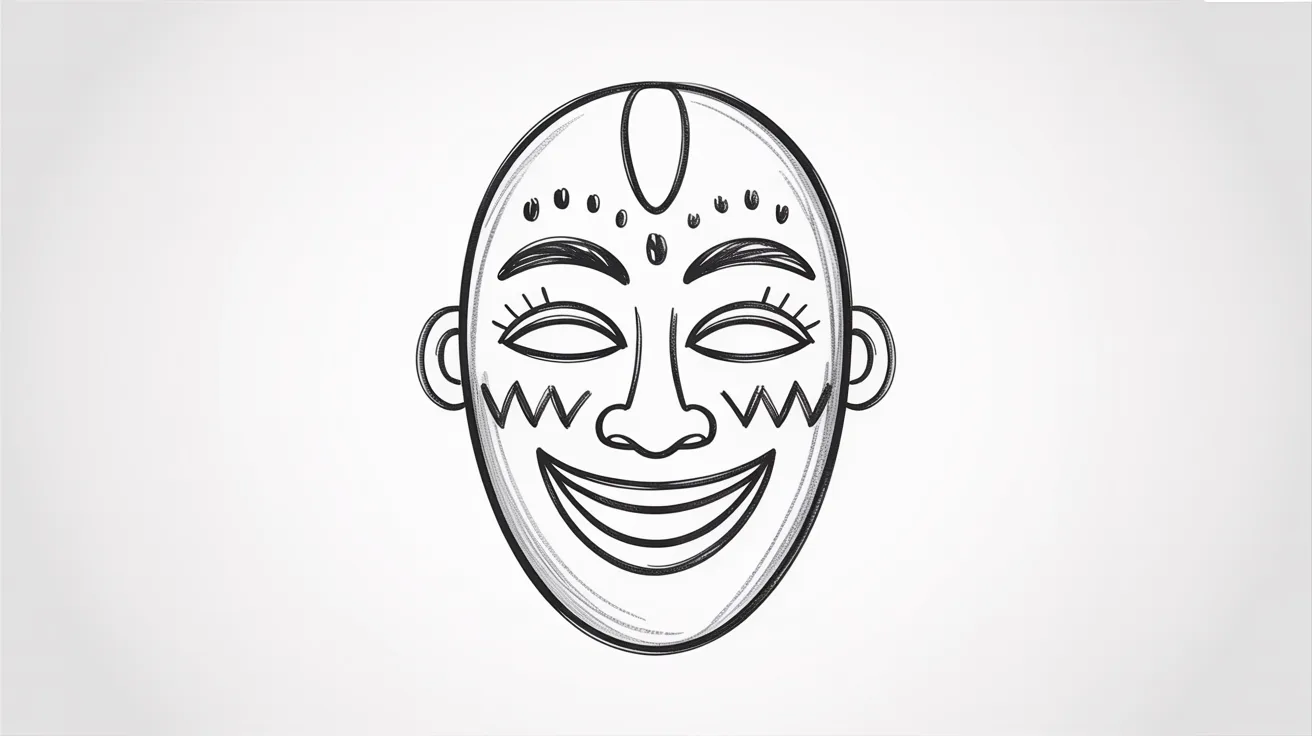
Not every African mask was serious. Many were made purely for celebration, music, and community joy. Draw this one with bright energy in mind.
Use a wide smile, expressive eyes, and playful patterns around the border. Add dots, zigzags, and spirals freely. The face should look lively and open.
Compared to the other masks on this list, this one gives you the most freedom. Let the design feel festive and fun.
Tips to Improve Your African Mask Drawing Skills
A few simple habits will make a big difference in your drawings.
- Study real African masks first: Look at photos from different regions and notice the shapes and patterns used.
- Start with the face shape: Sketch the outer shape before adding any details.
- Use geometric patterns with purpose: Each line should feel like it belongs, not random.
- Keep your lines confident: One smooth stroke beats sketching back and forth every time.
- Reference cultural context: Knowing what a mask means helps you draw it better.
These five habits will sharpen your skills faster than practice alone.
Conclusion
My first African mask drawing looked more like a Halloween prop than actual cultural art. Honestly, I laughed at it.
But I kept going, and each attempt taught me something new. These masks carry real history, and drawing them is one of the most rewarding art practices I've tried.
Pick one mask from this list today and just start. Don't overthink it.
Once you're done, drop a comment below and tell me which one you chose. I'd genuinely love to hear from you.
Frequently Asked Questions
What materials do I need to draw an African mask?
A pencil, eraser, black pen, and plain paper are all you need to get started right away.
Do I need art experience to draw African masks?
No. Beginners can start with simpler designs like the Festival Celebration Mask and build from there.
How do I make my African mask drawing look more authentic?
Study real masks from different African regions and focus on their patterns and proportions.
Can kids draw African masks?
Yes. Many designs use simple shapes and bold lines, making them great for younger artists.
How long does it take to draw a detailed African mask?
A basic mask takes 20 to 30 minutes. Detailed ones can take an hour or more.
