


I still remember the first time I grabbed the wrong medium for a project. The results were not pretty. Choosing between acrylic paint vs watercolor is not just a beginner’s dilemma.
It changes everything: how you plan, how you fix errors, and what your finished piece looks and feels like.
And when you compare acrylic paint vs watercolor paint, the differences go much deeper than water solubility.
So which one actually fits the way you think and create? That is exactly what I am going to show you.
Acrylic Paint vs Watercolor: Why One Mistake Feels Permanent and the Other Doesn’t
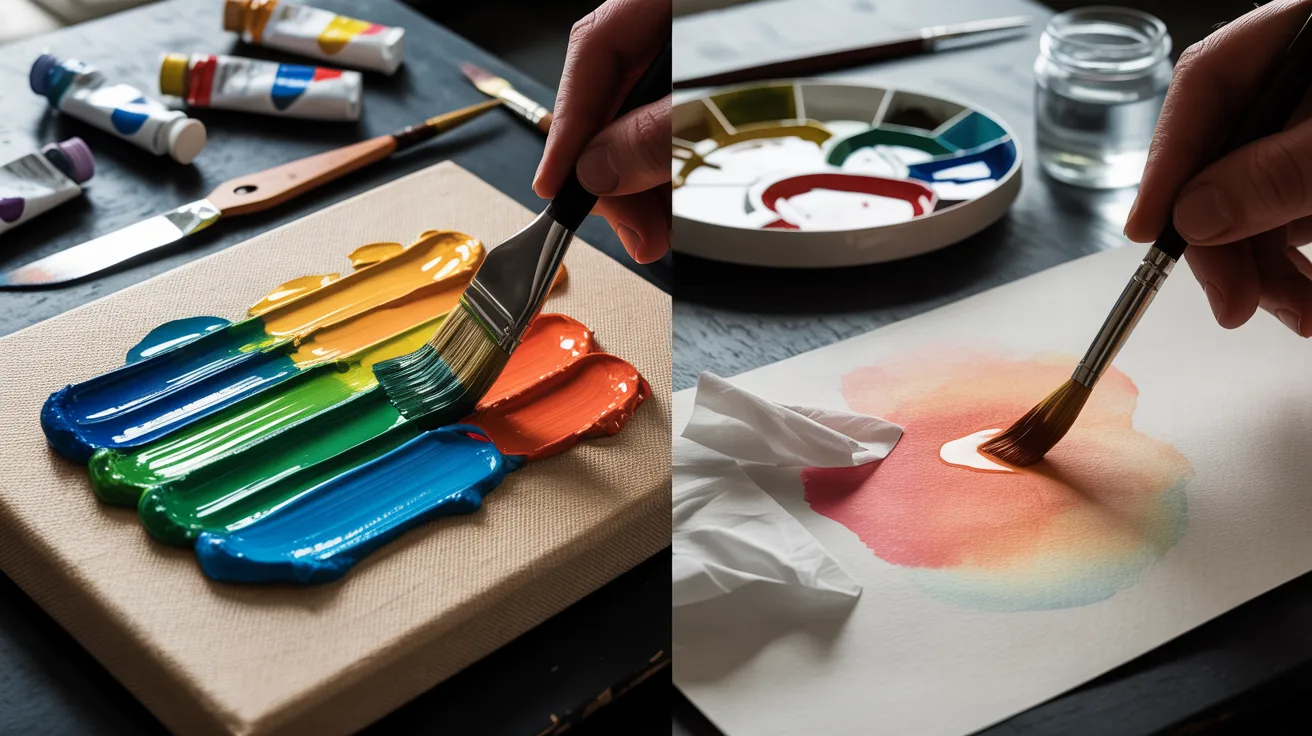
With acrylics, a mistake is just a stepping stone. You let it dry and paint right over it. Simple as that.
Watercolor works the opposite way. Once that pigment soaks into the paper, it is mostly there to stay. Lifting it back out takes effort, and even then, traces remain.
This is the biggest mental shift between the two. Acrylics give you room to correct. Watercolor teaches you to commit.
Neither approach is wrong. But knowing this upfront saves a lot of frustration later on.
What Is Acrylic Paint?
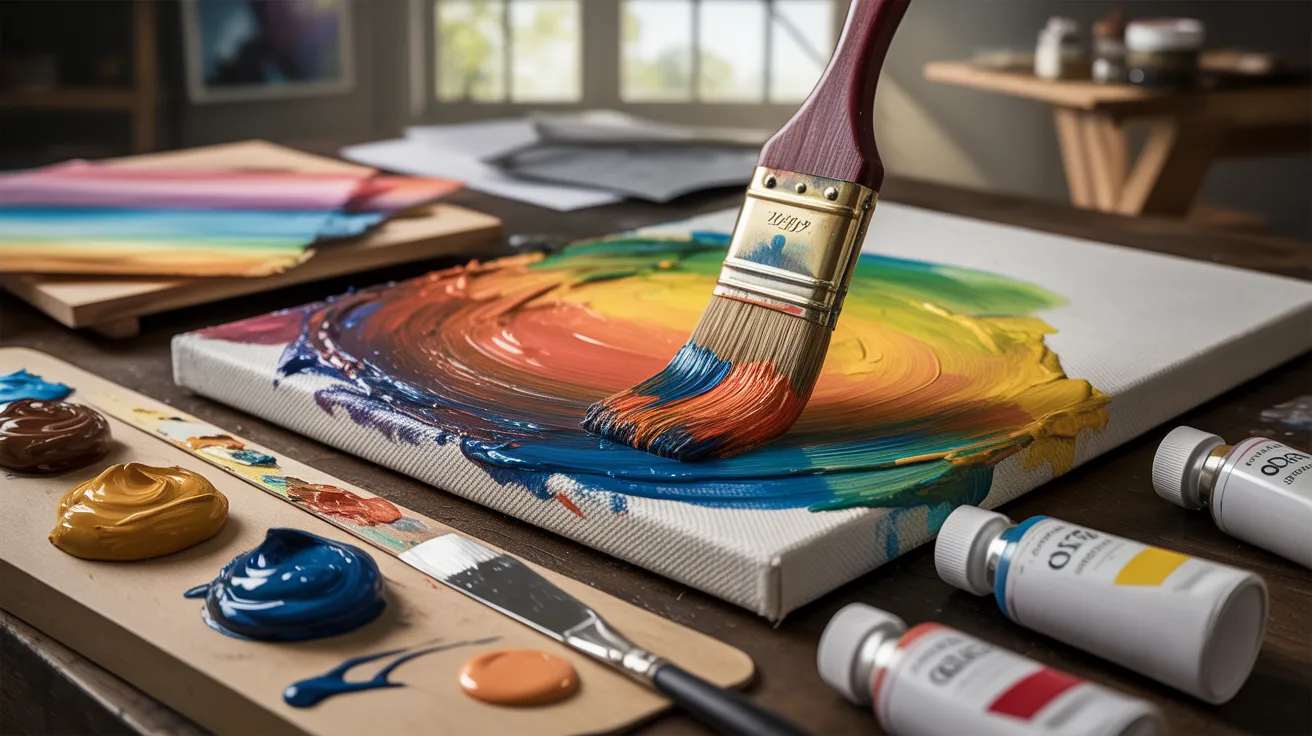
Acrylic paint is a water-based paint that dries into a flexible, water-resistant film. It was developed in the mid-20th century and quickly became a favorite for artists who wanted versatility without the slow dry times of oil paint.
Composition of Acrylic Paint
Pigment and binder: Acrylic paint is made of finely ground pigment suspended in an acrylic polymer emulsion. That emulsion is the synthetic binder that holds everything together.
When wet, it mixes easily with water. When dry, it forms a tough, plastic-like layer that water can no longer break down.
The consistency is naturally thicker than watercolor. You can thin it with water or thicken it further with gels and pastes.
It is a modern paint, first widely used in the 1950s and 1960s. Since then, it has been made in student, artist, and heavy body grades.
Usage of Acrylic Paint
Acrylics are one of the most flexible paints I have used. You can work on almost any surface and switch techniques mid-project without starting over.
- Apply on canvas, wood, paper, fabric, walls, and more
- Thin with water for a wash effect or thicken with mediums for texture
- Layer colors quickly since dry time is short, often just minutes
- Use for impasto, mixed media, pouring, or detailed illustration
- Paint over mistakes easily once the layer dries
Whether you are working on a large mural or a small canvas study, acrylics adapt to the task. That flexibility is a big reason so many beginners reach for them first.
Outcome and Finish of Acrylic Paint
Coverage and color: Acrylics produce opaque, vibrant colors with strong coverage. One or two coats can block out what is underneath completely.
The finish depends on the medium used. Without any additive, most acrylics dry to a slight sheen. Add a matte medium and it goes flat. Add a gloss medium and it shines.
Colors tend to dry slightly darker than they appear wet. This takes some getting used to, especially when mixing.
The final result is durable. Once cured, acrylic paintings hold up well to humidity, light, and handling over time.
What Is Watercolor Paint?
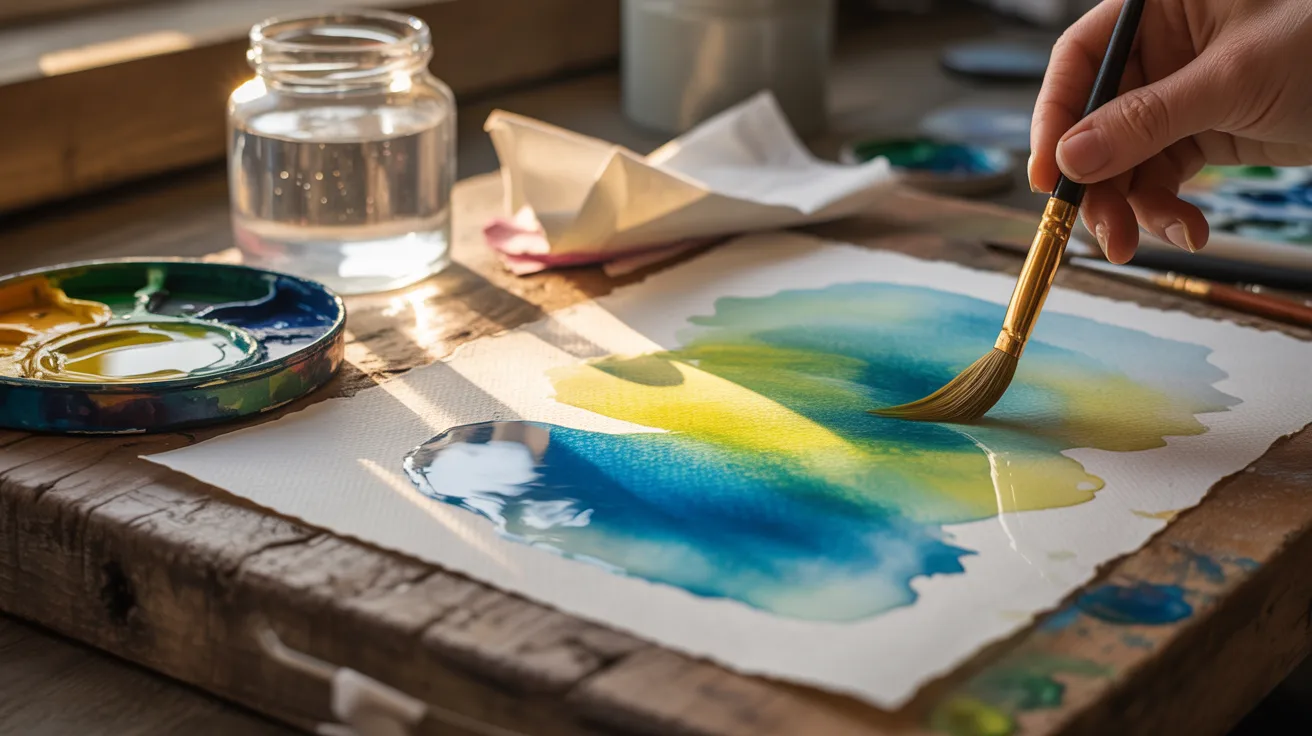
Watercolor is a transparent, water-based paint that has been used for centuries. It creates soft, luminous effects by letting light pass through the pigment and reflect off the paper beneath.
Composition of Watercolor Paint
Pigment and binder: Watercolor uses finely ground pigment mixed with gum arabic, a natural binder that dissolves easily in water. This gives it its characteristic fluidity.
Unlike acrylics, watercolor stays water-soluble even after it dries. You can reactivate dried paint on your palette with a wet brush.
The consistency is light and thin. Adding more water makes colors lighter and more spread out. Adding less makes them more intense and controlled.
Watercolor paper is not optional. Regular paper buckles, bleeds, and falls apart. Cold press or hot press watercolor paper is made to absorb water without distorting.
Usage of Watercolor Paint
Watercolor rewards patience and a certain comfort with letting go. I have found that trying to control every stroke often works against you with this medium.
- Layer transparent washes of color on top of each other, known as glazing
- Control water amounts carefully to manage edges and blending
- Work light to dark since you cannot easily paint a lighter color over a darker one
- Create soft gradients, wet-on-wet blooms, and flowing washes
- Lift wet paint with a dry brush or tissue for soft highlights
The expressive, flowing quality of watercolor comes from working with the water, not against it. Once you stop fighting it, the results can be striking.
Outcome and Finish of Watercolor Paint
Transparency: The defining quality of watercolor is its transparency. Light passes through the paint layers and bounces back off the white paper, creating a natural luminosity.
Edges can be soft and diffused if painted wet-on-wet, or crisp and sharp if painted wet-on-dry. This gives watercolor a wide range of expressive possibilities.
Colors tend to dry lighter than they look when wet. This is the opposite of acrylics, and it takes practice to predict.
The finish is flat and paper-textured. There is no sheen unless you apply a fixative or varnish afterward. The result feels airy, organic, and full of life.
Acrylic Paint vs Watercolor: Side-by-Side Comparison Table
Here is a quick look at how the two mediums line up across the most important factors.
| Feature | Acrylic Paint | Watercolor Paint |
|---|---|---|
| Base | Acrylic polymer emulsion | Gum arabic |
| Drying Time | Fast (minutes) | Slower (reactivates with water) |
| Transparency | Mostly opaque | Transparent |
| Corrections | Easy to paint over | Difficult to reverse |
| Surface Compatibility | Multiple surfaces | Mostly watercolor paper |
| Durability | Water-resistant when dry | Water-reactive |
| Technique Style | Layering and texture | Washes and fluid blending |
| Finish | Bold and solid | Soft and luminous |
This quick acrylic paint vs watercolor paint breakdown highlights how dramatically the two mediums behave.
Which One Is Better for Beginners?
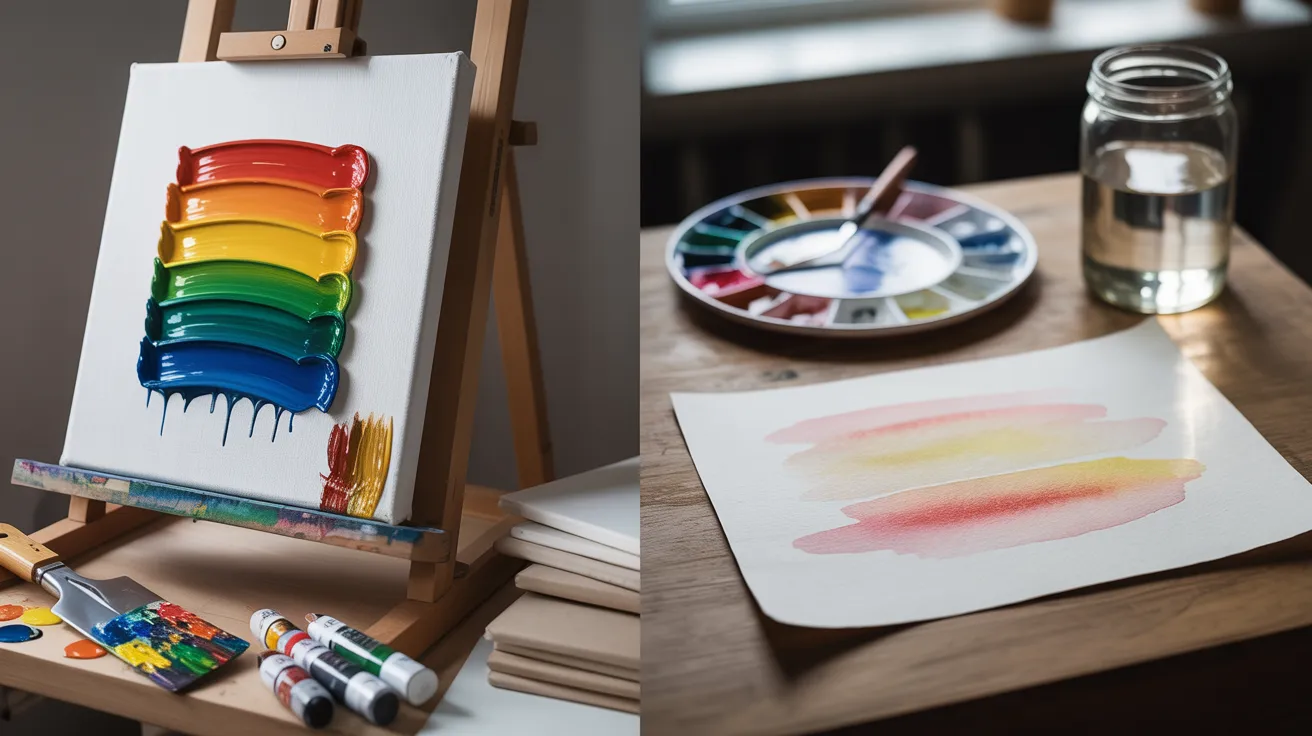
This is the question I get most often.
And my honest answer: it depends on how you want to learn.
Acrylics are more forgiving. You can correct mistakes, experiment freely, and work on a variety of surfaces without worrying much about technique from day one.
Watercolor has a steeper learning curve. Water control takes time to develop. But if you enjoy being precise and intentional, it is deeply satisfying.
Cost also plays a role. Basic acrylic sets with canvas boards are affordable. Watercolor needs quality paper, which adds up. But tube watercolors last a long time if cared for.
At the end of the day, the better medium for a beginner is the one that excites them. Style preference matters more than any technical argument.
Can You Use Acrylic and Watercolor Together?
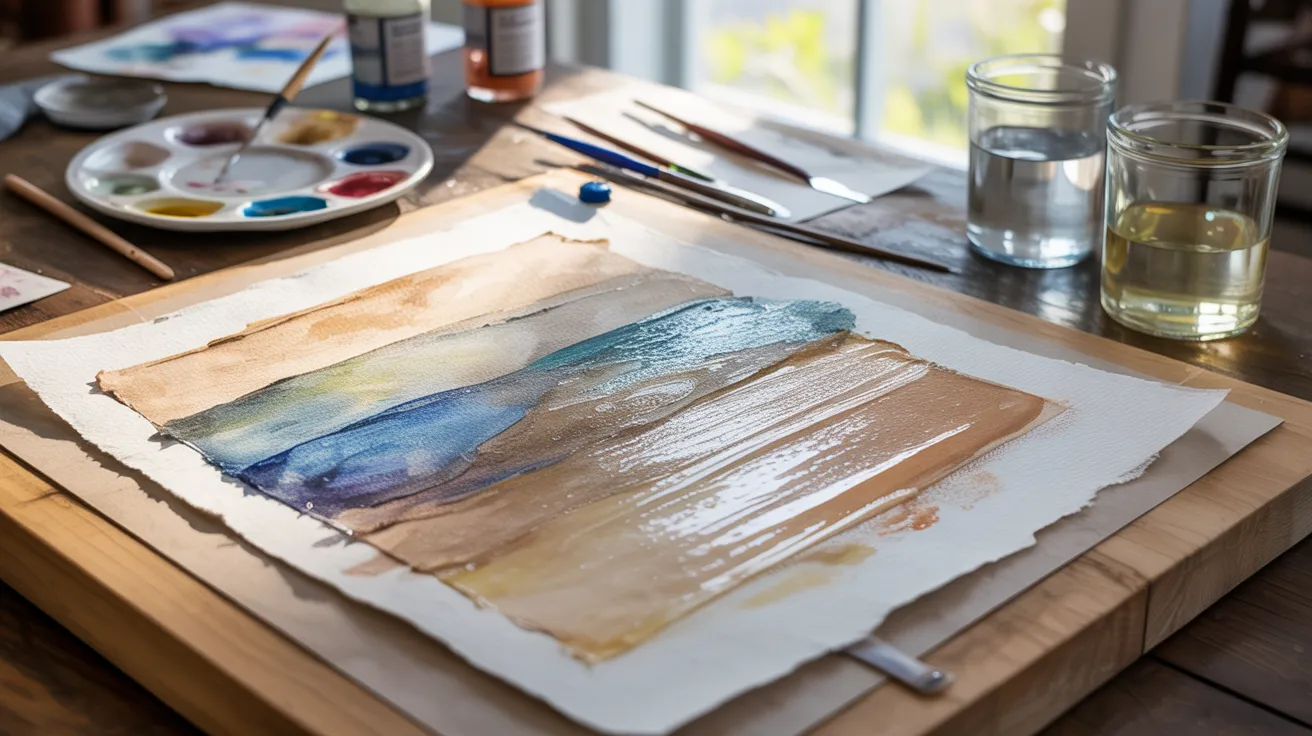
Yes, you can. But the order matters a lot.
Watercolor under acrylic works well. Start with watercolor washes to lay down color and texture. Once dry, go over it with acrylics. The acrylic layer seals the watercolor underneath permanently.
Acrylic over watercolor works. Watercolor over dried acrylic does not. Acrylic creates a non-porous surface that watercolor slides off of rather than absorbing into.
Use a heavyweight watercolor paper or a mixed media paper when combining the two. Regular canvas will not hold watercolor well unless prepared with a special ground.
Conclusion
Both mediums have taught me something different about painting. And honestly, the only way you will find your fit is by actually trying them.
Pick one. Buy a small set. Make something messy.
Understanding acrylic paint vs watercolor is a good start, but putting brush to surface is where the real learning happens.
So tell me: are you team acrylic or team watercolor? Drop your answer in the comments.
I would love to hear where you are in your painting journey and what you are working on next.
Frequently Asked Questions
What is the main difference between acrylic paint vs watercolor?
The main difference lies in the binder and behavior. Acrylics use a synthetic polymer that dries water-resistant and opaque, while watercolor uses gum arabic and stays transparent and water-soluble even after drying.
Is acrylic paint easier than watercolor for beginners?
Generally yes. Acrylics dry fast and allow you to paint over mistakes, which makes experimentation low-risk. Watercolor requires more precise water control and is harder to correct once applied.
Does watercolor last as long as acrylic paint?
Acrylic paint is more durable since it becomes water-resistant once dry. Watercolor can fade with prolonged UV exposure and remains sensitive to moisture unless sealed with an archival fixative or framed under glass.
Can you paint watercolor over acrylic?
Not effectively. Dried acrylic creates a sealed, non-porous surface, so watercolor sits on top and does not absorb properly. The result is usually uneven and the paint beads or slides off.
Which is more expensive: acrylic paint vs watercolor paint?
Entry-level acrylics are generally cheaper to start with. However, watercolor paints are highly concentrated and last longer. The real cost difference comes from surfaces: quality watercolor paper costs more than canvas boards or acrylic paper.
