


Bison look hard to draw. That big shoulder hump, the shaggy fur, the heavy head. It can feel like a lot to handle, especially if you're just starting out.
This guide breaks it all down into small, manageable steps.
You'll learn what you need to gather before you start, simple drawing ideas for different skill levels, and a full step by step tutorial that takes you from basic shapes to a finished sketch.
We'll also cover common mistakes and how to fix them.
I've sketched animals for years, and bison are one of my favorite subjects once you know the tricks. By the end, you'll have a sketch you're proud of.
Understanding the Appearance of a Bison
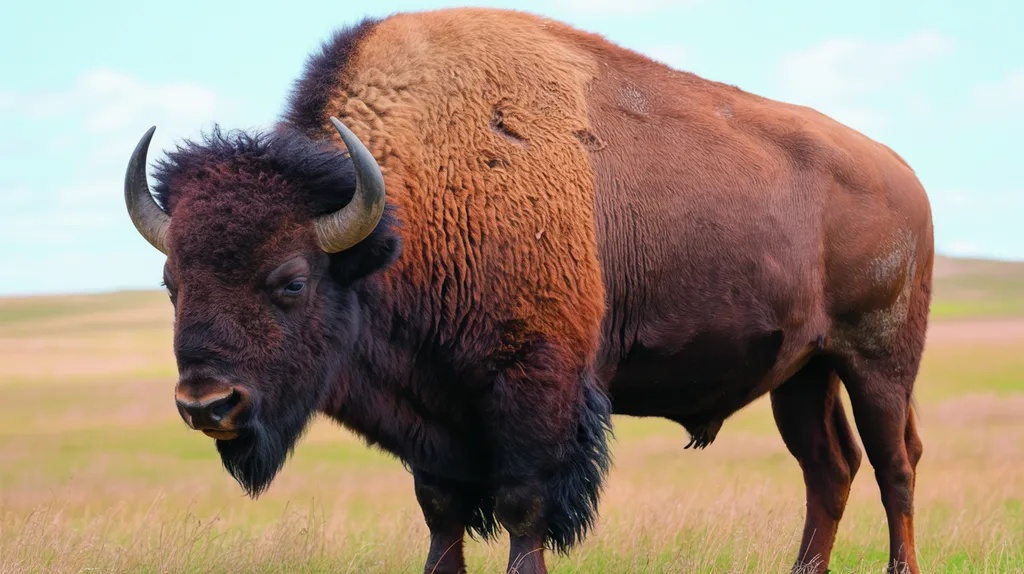
Learn the basic shapes and features that make a bison look like a bison.
Before you draw something, it helps to really look at it. Bison have a thick, muscular front half that tapers down to a smaller back half.
Their head sits low, almost like it's hanging forward. The shoulder hump is the most noticeable feature, rising higher than the rest of the back.
Short horns curve out from the sides of the head, and a beard of fur hangs below the chin. Their legs are short compared to their body size, which gives them a sturdy, grounded look.
Fur covers the whole body, but it's thicker and shaggier around the head, neck, and front legs, then gets shorter and smoother toward the back.
Once you notice these shapes and patterns, drawing a bison becomes much easier.
Get familiar with these shapes before picking up your pencil.
Materials Needed for a Bison Drawing
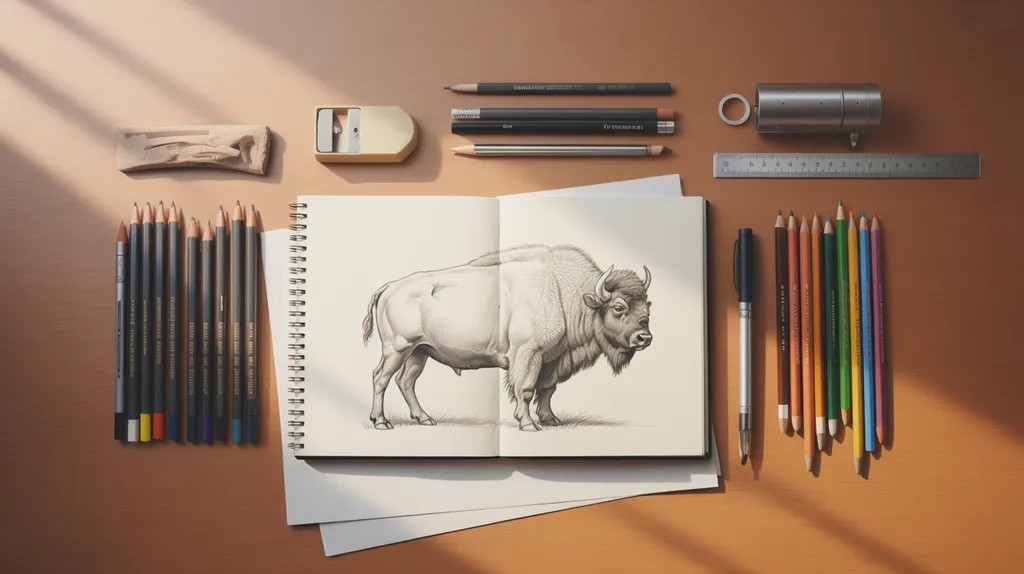
Here's a simple list of tools to gather before starting your bison sketch.
You don't need much to get started. A few pencils (HB, 2B, and 4B) cover most of your line work, along with a standard eraser and a kneaded eraser for cleaning up edges.
Sketch paper or a sketchbook, a ruler for basic guidelines, and a sharpener round out the basics.
These few items are enough for a solid first sketch.
If you want to push your drawing further, a few extra tools help. Blending stumps smooth out shading, while charcoal pencils add darker, richer tones.
Fine liner pens give you clean outlines, colored pencils let you add color, and textured paper helps fur look more natural.
None of these are required, but they add polish once you're comfortable with the basics.
Easy Bison Drawing Ideas to Try
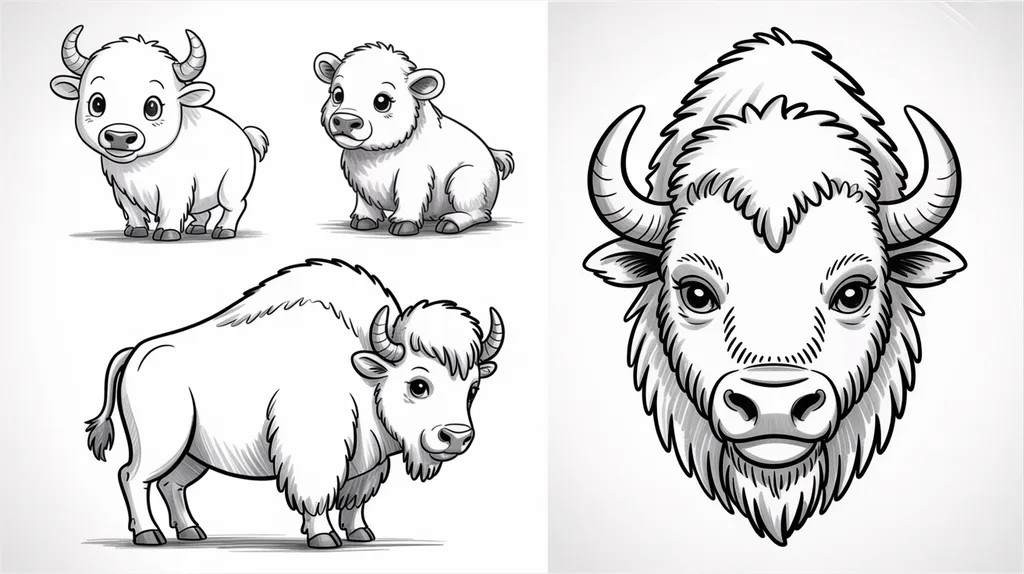
Try these four simple styles to find the one that suits your skill level.
Simple Cartoon Bison Drawing
A cartoon bison is a great starting point for beginners and kids alike.
Cartoon bison use rounded shapes and exaggerated features. Make the head bigger than normal, soften the horns, and add big, friendly eyes.
Keep lines simple and avoid too much detail in the fur. This style is forgiving, so mistakes won't stand out much.
Cute Baby Bison Sketch
Baby bison have a softer, rounder shape than adults.
Baby bison have smaller humps, shorter horns, and bigger heads compared to their body size. Their legs look thin and a little wobbly.
Use soft, curved lines throughout and keep the fur light and fluffy rather than thick and shaggy.
Side-View Bison Drawing
A side view is one of the easiest angles to draw and a good way to practice proportions.
This angle shows the full shape of the bison, including the hump, the slope of the back, and the legs.
Start with an oval for the body and a smaller circle for the head, then connect them with the curve of the neck and hump.
Bison Head Drawing
Drawing just the head lets you focus on facial features and horns without worrying about the whole body.
Pay attention to the placement of the eyes, the curve of the horns, and the shape of the beard. The head is wider at the top and narrows toward the nose, giving it a triangular feel.
Step-by-Step Bison Drawing Tutorial
Follow these seven steps to build a complete bison sketch from start to finish.
Step 1: Draw the Basic Body Shapes
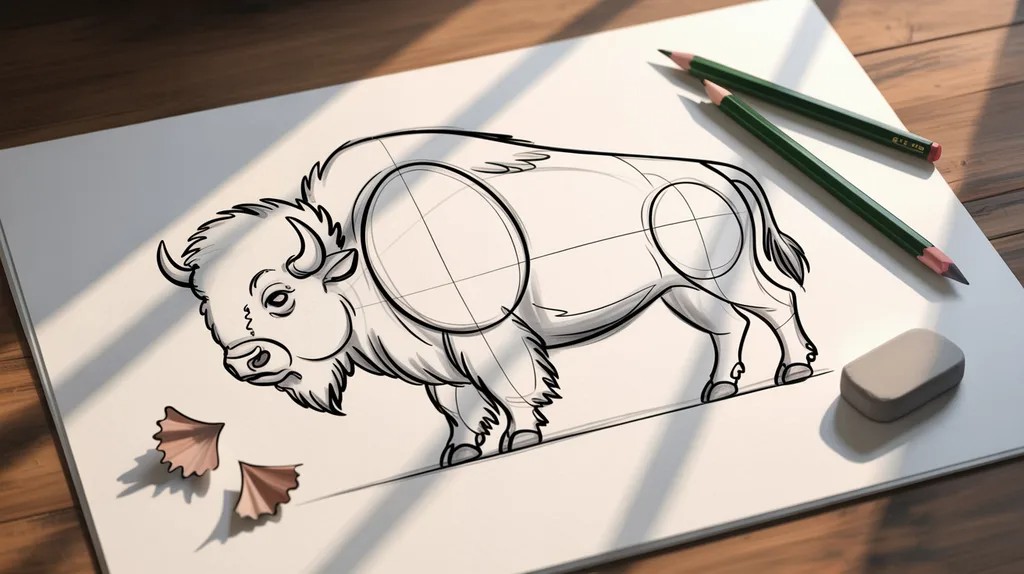
Start with two ovals, a larger one for the front body and a smaller one for the back. Overlap them slightly so the body looks connected rather than two separate pieces.
Step 2: Outline the Head and Hump
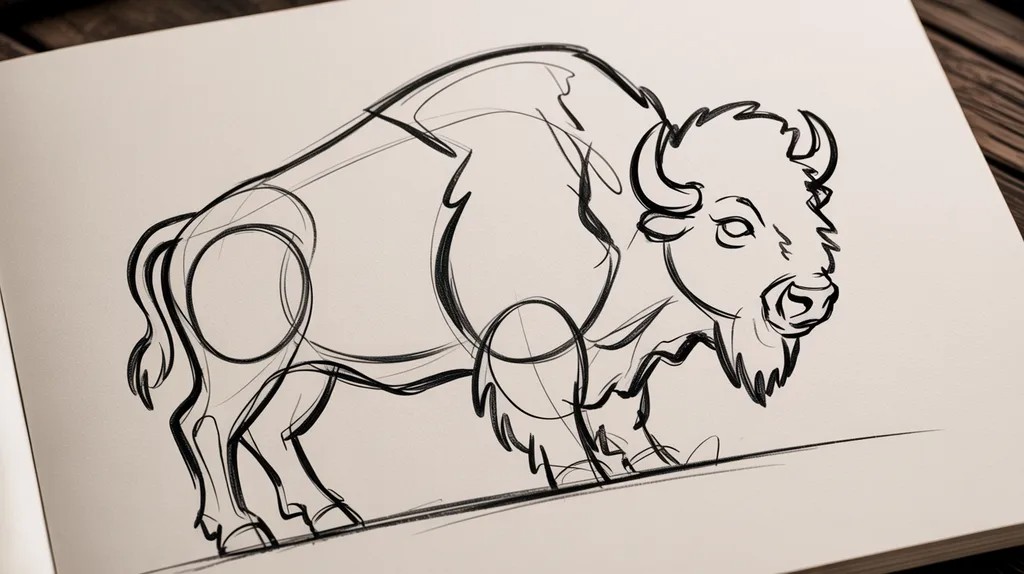
Add a smaller oval for the head, positioned low and slightly forward. Connect the head to the body with a curved neck line that rises into the hump.
The hump should be the highest point on the back.
Step 3: Add the Legs and Tail
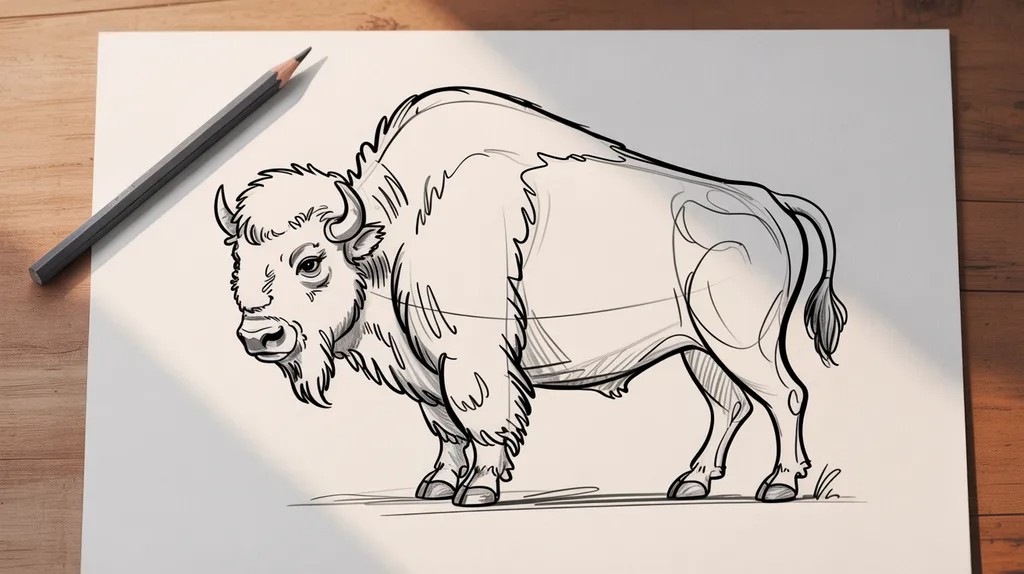
Sketch four short, sturdy legs beneath the body. Keep them simple rectangles for now. Add a thin tail near the back, with a small tuft at the end.
Step 4: Sketch the Facial Features and Horns
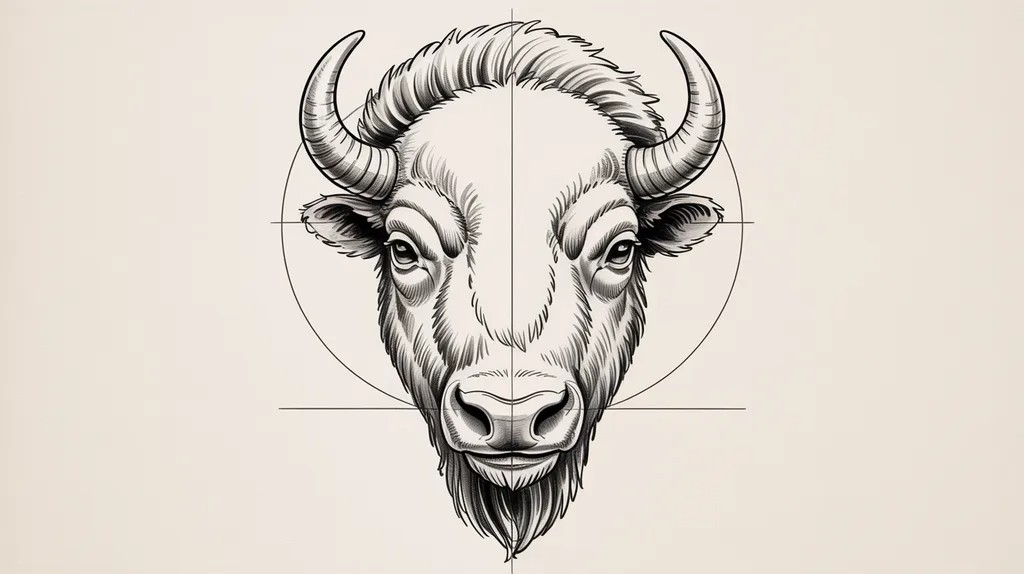
Draw small eyes set low on the head, a wide nose, and two short, curved horns near the top. Add a beard shape hanging from the chin for that classic bison look.
Step 5: Refine the Fur Texture
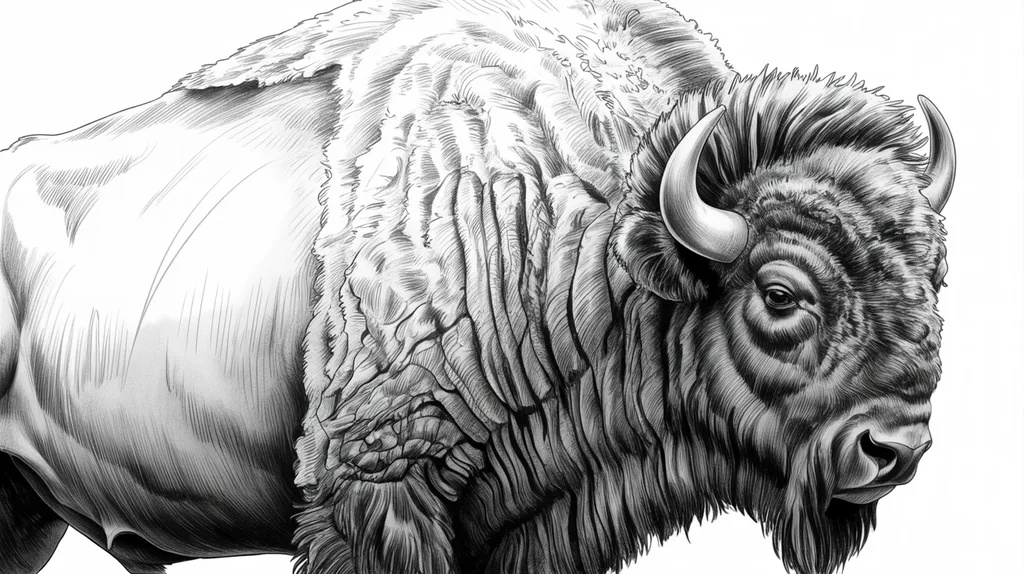
Use short, choppy lines around the head, neck, and front legs to suggest thick fur. Keep the lines on the back half smoother and shorter, since the fur there is less shaggy.
Step 6: Erase Guidelines and Clean the Sketch
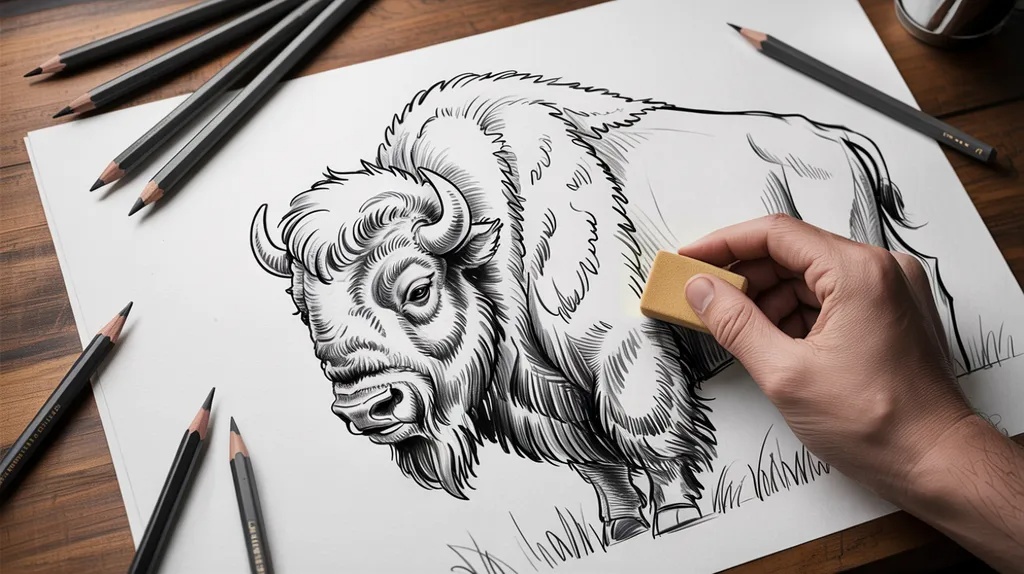
Go over your final lines with a darker pencil, then erase any leftover guidelines. This step cleans up the drawing and makes the shapes stand out clearly.
Step 7: Add Shading and Final Details
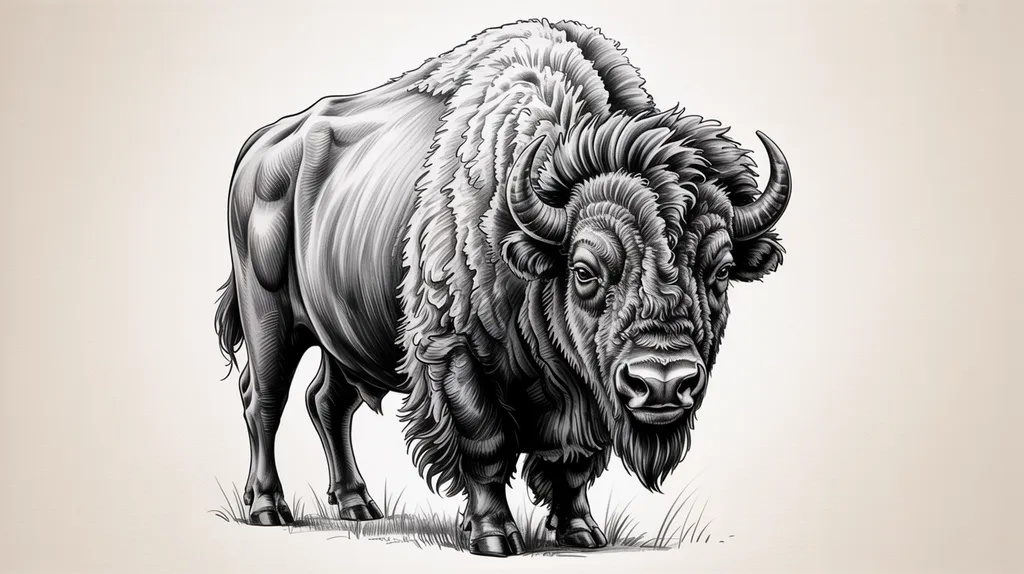
Add shadow beneath the belly, around the legs, and under the hump to give the drawing depth. Darken areas like the eyes, nostrils, and the base of the horns for contrast.
Tips for Making Your Bison Drawing Look Better
These three tips will help your sketch look more polished and lifelike.
Creating Natural Fur Texture
A few tricks make fur look more lifelike instead of flat.
Vary the length and direction of your fur lines instead of making them all the same. Fur should follow the curve of the body, flowing downward and slightly outward around the neck and shoulders.
Improving Proportions and Balance
Good proportions make the difference between a stiff drawing and a believable one.
Compare the size of the head to the body, and the height of the hump to the rest of the back. A common error is making the head too small or the legs too long for the body size.
Adding Depth with Light and Shadow
Shading gives your drawing a three-dimensional feel instead of looking flat.
Pick one direction for your light source and stick with it. Add shadows on the opposite side of the body, under the belly, and beneath the hump to create a sense of form.
Common Mistakes to Avoid When Drawing a Bison
Watch out for these three errors that beginners make most often.
- Drawing the body too compact removes the bulky, powerful look that defines a bison
- Bison are large, heavy animals, so give the chest and shoulders extra width instead of keeping the figure narrow
- Skipping the shoulder hump is one of the easiest ways to make a bison look like a regular cow
- The hump is what makes a bison instantly recognizable, so always raise the back line near the shoulders before it slopes down
- Flat, uniform fur lines make the drawing look stiff and unnatural
- Fur should follow the body's curves and vary in length, with thicker fur near the head and front legs and shorter fur on the back half
Practice Exercises for Beginners
Try these three exercises to build skill and confidence over time.
Quick Bison Sketch Challenges
Short, timed sketches help build speed and confidence.
Try drawing a bison in under five minutes, focusing only on the basic shapes. Repeat this a few times in one sitting to see how your speed and accuracy improve.
Drawing Bison from Different Angles
Practicing multiple angles helps you understand the full three-dimensional shape of the animal.
Try a front view, a three-quarter view, and a back view in addition to the side view. Each angle teaches you something new about how the body parts connect.
Building Confidence Through Repetition
Repetition is one of the simplest ways to improve any skill, including drawing.
Draw the same bison pose several times over a few days. You'll notice small improvements each time, and those small gains add up quickly.
Conclusion
You've made it through the whole guide, and that says something about your drive to learn.
I remember my own early bison sketches looked more like lumpy cows, but practice smoothed out those rough edges over time. Yours will too.
Grab your pencil, pick one idea from this guide, and just start sketching. Don't worry about getting it perfect on the first try.
If this guide helped you, drop a comment and let me know how your bison drawing turned out. Feel free to share this post with a friend who loves to draw too.
Frequently Asked Questions
How do I make my bison drawing look less flat?
Add shading on one side of the body and beneath the belly. This creates shadow and gives the sketch a sense of depth.
What's the easiest angle to start with for beginners?
The side view is the simplest because it shows the full body shape clearly. It also makes proportions easier to judge.
How do I draw bison fur without it looking messy?
Use short, varied strokes that follow the direction of the body's curves. Keep fur thicker near the head and neck.
Why does my bison look like a cow instead?
You're likely missing the shoulder hump or making the head too small. Both features are key to a believable bison shape.
What pencils work best for shading a bison drawing?
A 2B pencil works well for mid tones, while a 4B adds darker shadows. Use an HB pencil for your lighter initial sketch lines.
