

Abstract art can feel confusing at first. Lines, shapes, and colors that seem random but they are not.
I have worked with visual design for years, and abstract art is one of the most misunderstood areas. Once you understand the styles, everything starts to make sense.
In this blog, you will learn what abstract art actually means, how many types exist and why it varies, all 11 major styles explained simply, techniques artists use, and how to pick the right style for your work.
This guide breaks it all down in plain language. No art school required.
What Is Abstract Art? Meaning and Definition

Abstract art moves away from realistic depictions and focuses on shapes, colors, and forms to express ideas or emotions.
It does not try to show the world as it looks. Instead, it shows how something feels or what an idea means visually.
A painting does not need to look like a face to express sadness. It can do that through color and form alone.
Abstract art has been around for over a century. Artists like Wassily Kandinsky and Piet Mondrian helped define early abstract movements.
Today, it spans digital art, graphic design, sculpture, and more.
How Many Types of Abstract Art Are There?

There is no single agreed-upon number for how many types of abstract art exist.
Most art historians group abstract art into broad categories based on technique, intent, and visual style.
Styles blend, evolve, and overlap, which is why no fixed number exists.
When simplified to three core types, most experts point to geometric abstraction, lyrical or organic abstraction, and abstract expressionism.
A four-part classification adds minimalism and color-based styles to the list.
11 Types of Abstract Art Explained
Each style carries its own visual language, purpose, and emotional weight.
1. Abstract Expressionism

Abstract expressionism is built on emotional intensity and instinct. Artists let feelings guide the process rather than planning every detail. The result is raw, expressive, and often large-scale work.
Jackson Pollock and Mark Rothko became icons of this movement. Paint is poured, thrown, or dripped onto the canvas and the physical act of painting becomes part of the meaning.
2. Action Painting

Action painting places heavy focus on movement. The artist’s body, energy, and speed all shape the final piece. Energetic brushwork and thick sweeping strokes create a sense of motion frozen in time.
3. Color Field Painting

Color field painting lets color do the work. Large blocks of color fill the canvas with minimal interruption and no boundary lines.
Artists like Mark Rothko used this style to create work that felt meditative and emotionally charged.
4. Cubism

Cubism broke the rules of perspective and changed art history. An object is shown from several angles at once within the same flat image.
Faces, objects, and spaces are broken into angular planes. Pablo Picasso and Georges Braque pioneered this approach in the early 1900s.
5. Geometric Abstraction

Geometric abstraction is one of the most structured forms of abstract art. Circles, squares, triangles, and grids are arranged with precision and intent.
This style appears widely in logos, architecture, branding, and web design.
6. Line Art

Line art proves that less can say more. A single continuous line or simple strokes can create complex visual meaning without any fill or shading.
Many designers and illustrators use it for its versatility and clean visual impact.
7. Organic (Biomorphic) Abstraction

Organic abstraction takes inspiration from the natural world. Think of shapes that resemble cells, leaves, or rivers but abstracted beyond recognition.
Soft curving designs give this style a warm and approachable feel. Artists like Joan Miró and Jean Arp worked extensively in this area.
8. Memphis Style

Memphis style is loud, bold, and unapologetically fun. Developed in the 1980s by the Memphis Group in Italy, it rejected minimalism in favor of visual noise.
It is having a strong revival in graphic design, packaging, and social media visuals today.
9. Halftone Art

Halftone art brings print culture into the world of fine art. Halftone patterns create gradients and tones through varying dot sizes.
Artists like Roy Lichtenstein used halftone patterns to reference mass media and consumer culture.
10. Surrealism in Abstract Art

Surrealism sits at the edge of abstract and figurative where logic stops making sense. Dreamlike compositions pull the viewer into a space that feels both familiar and strange.
Distorted reality and symbolism are tools surrealist artists use to find the unconscious mind.
11. Abstract Sculpture and Relief Art

Abstract art is not limited to flat surfaces. Three-dimensional abstract forms allow artists to work with space, shadow, and physical presence.
Materials like metal, wood, and stone give abstract sculpture texture, weight, and permanence.
Types of Abstract Art Techniques Used by Artists

Technique is what separates intention from result in abstract art.
Common Techniques in Abstract Art
Dripping, pouring, and splattering were made famous by Jackson Pollock. These methods allow paint to move on its own, creating organic patterns that no brush could replicate.
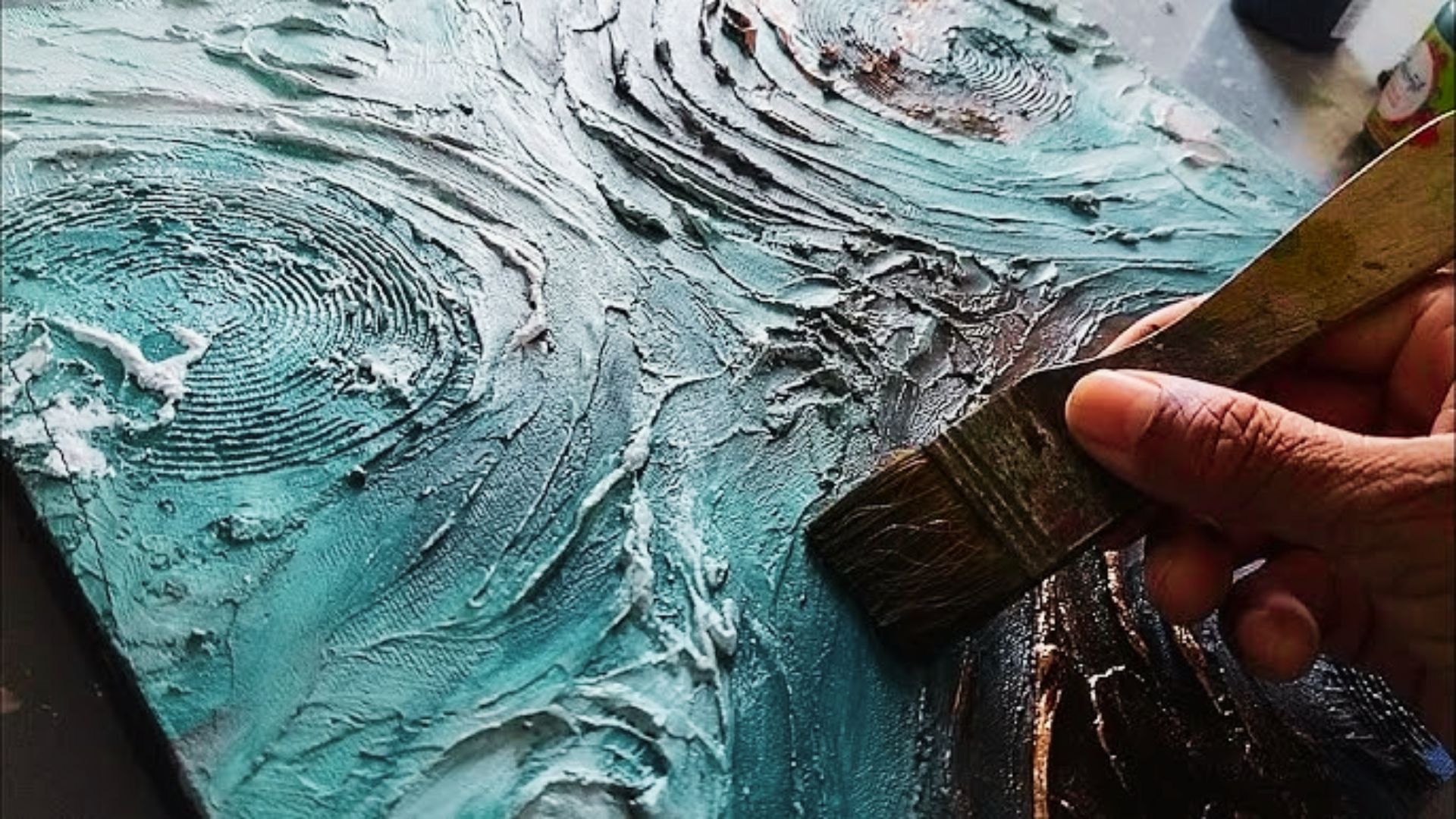
Layering and texturing build depth and visual complexity. Artists apply multiple layers of paint, sometimes mixed with sand or fabric, to create surfaces that reward close inspection.
Modern Digital Abstract Art Techniques
Three-dimensional rendering and digital illustration have opened new possibilities. Software tools allow artists to create abstract work with precision and effects that would be impossible by hand.
AI-generated abstract designs are now a growing area. Algorithms can produce abstract visuals based on prompts or data sets, raising new questions about authorship and creativity in art.
Common Mistakes to Avoid in Abstract Art
Even in abstract art, certain mistakes can weaken a composition.
- Overcomplicating compositions by adding too many elements without purpose
- Ignoring color harmony so colors clash in ways that feel accidental rather than intentional
- Lack of a focal point, leaving the viewer with no visual anchor
- Using random elements without intent, which makes the work feel unplanned rather than expressive
- Skipping the planning stage entirely and assuming abstract art requires no thought or structure
Why Different Types of Abstract Art Matter in Design

Abstract art is not just for galleries. It shapes the visual world around you every day.
Use in Graphic Design and Branding
Creating a strong visual identity often relies on abstract elements. Color choices, shapes, and patterns tell a brand’s story without using words.
Many well-known logos and brand systems are rooted in geometric or color field abstraction.
Psychological Impact of Abstract Art
How colors and forms influence emotions is something designers and marketers understand well. Red creates urgency.
Blue builds trust. Circular forms feel safe. Sharp angles feel dynamic. Abstract art taps into these responses directly.
Versatility Across Industries
Web design, packaging, advertising, and more all make regular use of abstract art styles.
From a product label using Memphis patterns to a tech company website built on geometric abstraction, the range is wide and practical.
Tips for Choosing the Right Abstract Art Style
Picking the right style takes clarity about your goal and your audience.
- Match the style with your purpose or message before anything else
- Use color psychology to guide emotional response in your work
- Keep balance between creativity and clarity so the work communicates clearly
- Experiment with multiple abstract art styles before settling on one
- Combine geometric and organic elements for a composition that feels both structured and alive
Conclusion
Abstract art once confused me too. I remember staring at a color field painting and thinking, what am I missing? Then I learned the styles, the intent, and the history. Everything shifted.
Now I see types of abstract art everywhere, in logos, websites, and product design. Once you understand them, you start noticing them all around you.
Try one style. See what fits your work or your voice.
If this guide helped you, drop a comment below or share it with someone who loves art. I would love to hear which style speaks to you most.
Frequently Asked Questions
What are the different types of abstract art?
There are many recognized styles including abstract expressionism, cubism, geometric abstraction, color field painting, and surrealism. Each style has its own visual approach and intent.
What are the main types of abstract art styles?
The core categories are geometric abstraction, lyrical abstraction, and abstract expressionism. Many other sub-styles have grown from these three over time.
How many types of abstract art exist?
There is no fixed number. Classifications vary between three and eleven or more. Art styles often overlap and resist strict categorization.
Which abstract art style is best for beginners?
Line art and geometric abstraction are great starting points. They use simple forms and clear structures that are easier to practice without formal training.
Can abstract art be used in graphic design?
Yes, abstract art is widely used in graphic design. Geometric abstraction, color field approaches, and Memphis style all appear in branding, packaging, and web design regularly.
