


The 100th day of school always seems to arrive faster than expected. One moment you are planning lessons, the next you are rushing to put together a project that actually teaches something meaningful. This day matters more than just being a fun celebration.
The crafts and activities help children practice important math skills. Students get hands-on experience with numbers to 100, place value, and skip counting in ways they remember. Grouping items in sets of five, ten, or twenty makes counting easier and keeps children engaged without feeling overwhelmed.
I have seen many families throw together last-minute projects from pantry items. Some work well, others do not. These eleven craft ideas, from quick snack bags to LEGO builds, provide easy options that reinforce counting skills while keeping kids focused, having fun, and ending the day on a positive note.
Why 100 Days of School Crafts Matter for Learning
The 100th day of school is more than a celebration, it’s a hands-on math lesson. Crafts help children see and organize 100 objects, turning an abstract number into something concrete they can touch and count.
These projects reinforce skip-counting and grouping skills. By arranging items in sets of 5, 10, or 20, kids practice counting by tens and begin to understand place value, laying the groundwork for multiplication and division.
Making math fun and memorable is key. Hands-on activities like creating a monster with 100 googly eyes make numbers exciting, helping students build confidence and a positive attitude toward math that lasts beyond the classroom.
11 Creative and Fun Project Ideas to Celebrate the 100th Day of School, Involving DIY Crafts
Here are 11 projects that actually work in real homes with real kids. I’ve organized them from super simple to more involved, so you can pick what fits your situation.
Trail Mix in a Bag (Quick and Edible)

This easy 100th day activity is suitable for families who need a last-minute project. Simply gather 10 different snack items and count out 10 of each to create a fun math mix.
Kids love it because they can eat their homework the next day. Counting in groups of ten makes learning fast and stress-free, and it works well for kindergarten through second grade.
100-Eyed Monster (Creative and Crafty)

This 100th day craft is a fun way for kids to get creative while practicing counting. They design a silly monster on construction paper and cover it with 100 googly eyes, counting in groups of ten.
The project may need some adult help with cutting and guidance, but the results are eye-catching. Each monster is special, making a fun display that works for all elementary grades.
Gumball Machine with 100 “Gumballs”

This 100th day craft helps kids see what 100 looks like in a fun, visual way. They create a gumball machine and add 100 dot paints or stickers to represent the gumballs.
Using different colors for groups of ten helps children understand that 10 groups of 10 equal 100. This activity is Suitable for kindergarten through second grade and makes a colorful classroom display.
LEGO Number 100 Build

If you have LEGO at home, this 100th day craft is simple and fun. Kids gather 100 bricks in groups of ten and use them to build the numbers 1-0-0.
Some children build the digits separately, while others get creative with 3D designs or decorations. It works for all elementary grades and can be done almost independently with minimal adult help.
100-Legged Styrofoam Spider

This 100th day craft teaches grouping and counting skills in a fun, hands-on way. Kids create spiders by inserting 100 pipe cleaners as legs into a styrofoam ball.
Organizing the legs by color in sets of 20 helps children practice counting by 20s while making a colorful, creative spider. It works best for first through fifth grade with some adult support for younger students.
Nature Elements Display

This outdoor 100th day craft uses nature to teach counting and grouping. Students collect 100 items like sticks, stones, and pinecones in sets of ten during a scavenger hunt.
Back in the classroom, they arrange and glue the items onto a poster board to create a special display. It encourages hands-on learning, creativity, and works for all elementary grades, with adult supervision for the glue gun.
Jewel Flowers (Dollar Store Craft)

This 100th day craft uses dollar store jewels to teach counting and grouping. Students place 100 jewels on 10 flower shapes, using 10 jewels per flower to show the concept clearly.
The project creates a sparkly, eye-catching display without advanced skills. It works well for kindergarten through third grade with low to moderate adult support.
Pom Pom Butterflies
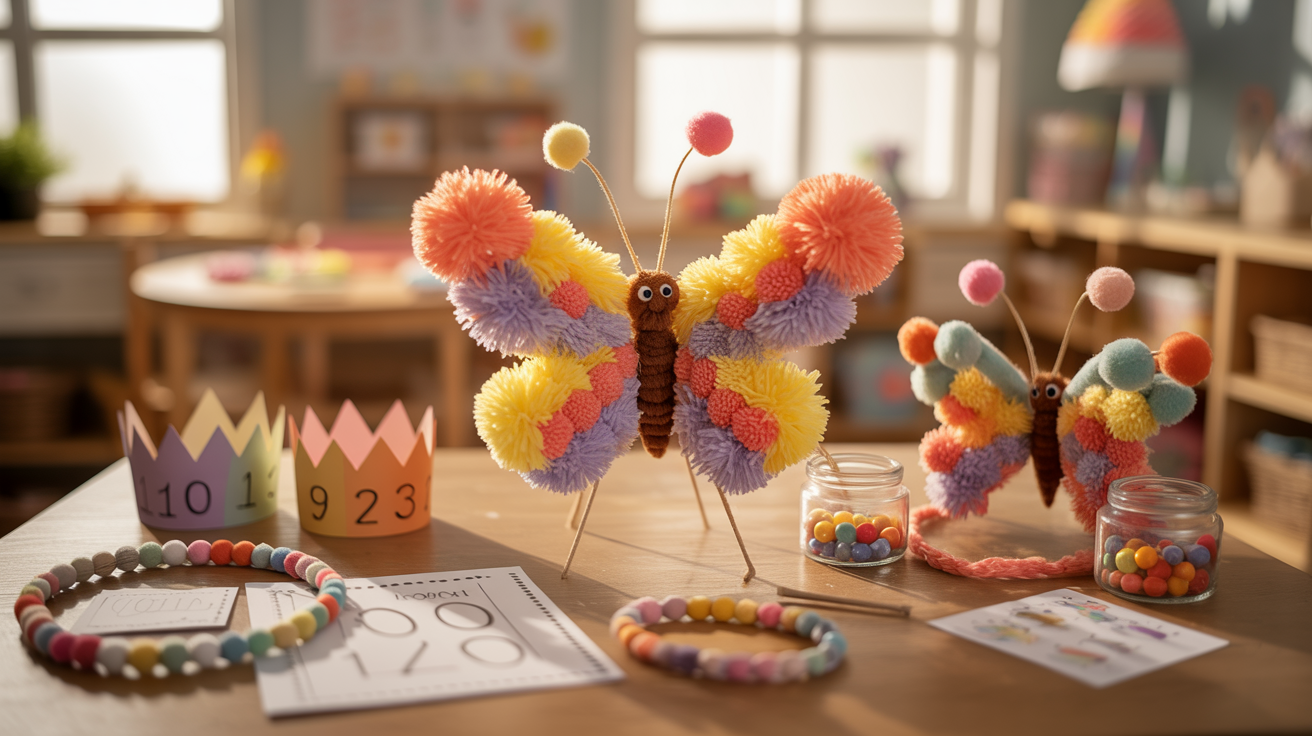
This last-minute 100th day craft uses 100 pom poms to teach counting in a fun way. Kids fill a butterfly outline with pom poms, using different colors for sections to group by ten.
The project takes about 30 minutes and can be done mostly independently. Preschool through second-grade students enjoy gluing while practicing counting naturally.
Goldfish Cracker Creation

This edible 100th day craft uses 100 goldfish crackers to teach counting and grouping. Students arrange the crackers on the poster board in patterns, scenes, or organized rows of ten.
The project can be done quickly, even in the morning, and it works for all elementary grades. Kids practice counting while having fun, and can eat any leftover crackers afterward.
100 Cities Map Project

This 100th day craft combines geography and math for older students. Kids mark 100 cities on a world map, organizing them by continent or region to practice counting and spatial awareness.
Adult support may be needed for research and geography questions, but the discussions are valuable. It pairs well with writing a list of the cities and works best for second through fifth grade.
Turn the Number 100 Into Art
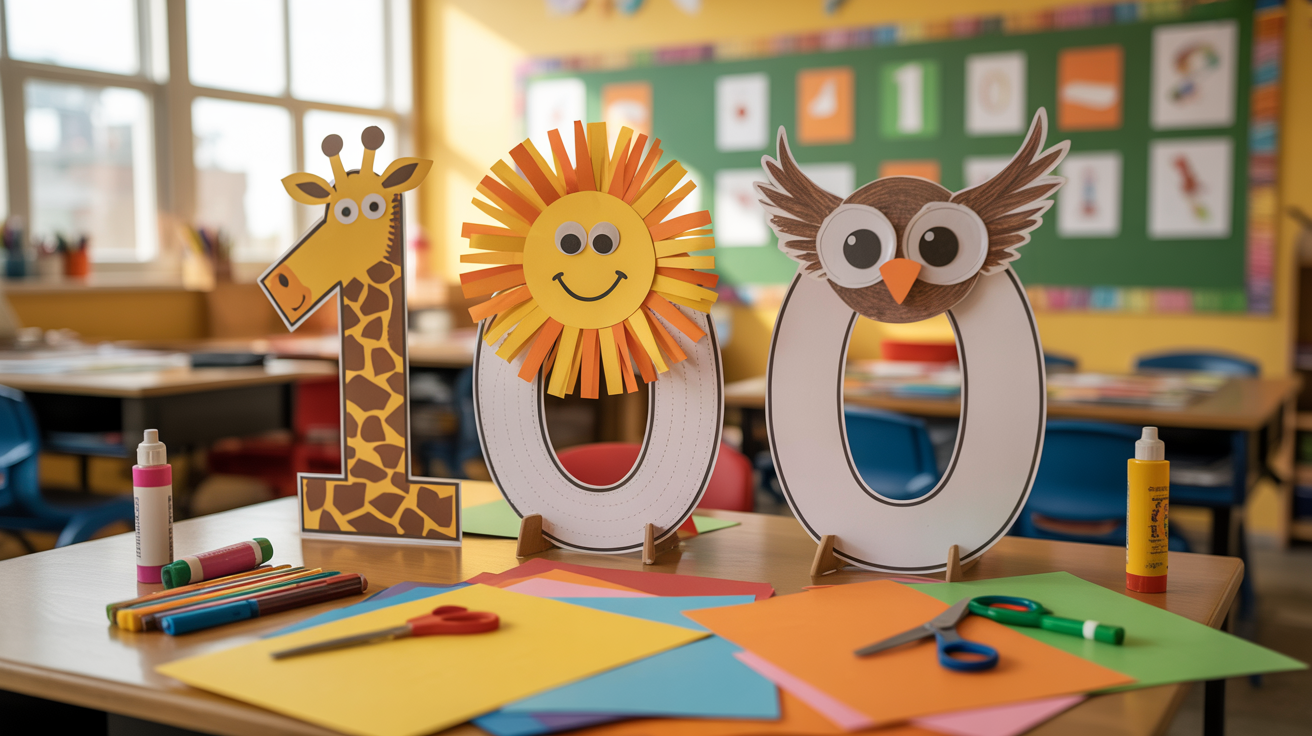
This 100th day craft is simple and requires minimal supplies. Students use the numbers 1, 0, 0 to create art, turning them into imaginative designs like faces, animals, or objects.
The project encourages creativity while reinforcing number recognition naturally. It works for all elementary grades and needs very little adult support.
Tips for Successfully Completing 100th Day Projects
The difference between a successful project and a stressful disaster? Preparation and mindset.
- Start with a plan by checking school requirements early, gathering supplies in advance, and involving your child in project choices.
- Emphasize learning over appropriateness, focusing on counting and grouping rather than a flawless final product.
- Make the project age-appropriate, using larger items for younger children and more complex organization for older students.
- Adjust fine motor and writing tasks to match your child’s actual abilities, not just their grade level.
- Use the project as quality time, counting, discussing patterns, and sharing ideas for a fun family activity.
Making 100th Day Meaningful Beyond the Craft
Don’t let the celebration end when the glue dries. Use it as a springboard for deeper learning.
Connect to Real-World Math
Talk about where we see groups of 100 in everyday life. Money concepts make this real: 100 pennies equals one dollar. A $100 bill is common currency.
Measurement connections: 100 centimeters equals one meter. Time: 100 seconds is less than two minutes, but 100 minutes is over an hour and a half. These conversations help students see math everywhere.
Celebrate How Much Students Have Learned
Reflect on growth from day 1 to day 100. Think about skills they couldn’t do in September that feel easy now.
Share favorite memories from the first 100 days. Discuss goals for the remaining school days. Build confidence and excitement about continued learning instead of treating it like the finish line.
Build Community Through Shared Celebration
Students share their projects with classmates. They learn from each other’s creative approaches and see dozens of different ways to represent 100.
This appreciation for diversity matters. Some kids brought trail mix. Others built elaborate displays. All of them counted to 100 and learned the same skills. Strengthen classroom bonds through this collective celebration of a shared milestone.
Conclusion
These 100 days of school craft ideas give you simple options, whether you are planning or putting something together at the last minute. From edible trail mix to LEGO builds and nature collections, these projects help children practice counting while staying focused and enjoying themselves.
The most effective craft group items are in tens or other easy numbers. This approach turns a simple activity into a real learning opportunity and helps children see patterns in numbers as they work. It also keeps things organized and manageable for parents.
Choose a project that fits your schedule, supplies, and your child’s interests. Let them do the counting and creating while you provide guidance. Share how it goes in the comments or pass the ideas to another parent getting ready for the 100th day of school.
Frequently Asked Questions
What makes a good 100-day school craft project?
A good 100 days of school craft organizes items in groups of 5s, 10s, or 20s rather than random counting. It should reinforce place value and skip-counting skills. The best projects use materials you already have at home and can be completed with age-appropriate adult support, while letting kids do the actual counting.
What are some quick, last-minute 100-day school craft ideas?
Trail mix in a bag (10 each of 10 snack items), LEGO number builds, pom pom butterflies, and goldfish cracker creations work great for last-minute projects. These require minimal supplies you likely have at home and can be completed the night before with little stress while still meeting educational goals.
How do 100th-day crafts help with math skills?
These crafts teach kids to recognize, name, and sequence numbers to 100. They build understanding of place value by showing that 100 equals 10 groups of 10. Skip counting practice happens naturally when organizing items in sets. Hands-on counting makes abstract math concepts concrete and memorable.
What supplies do I need for 100 days of school crafts?
Most projects use common household items: pantry snacks for trail mix, LEGO bricks, construction paper, glue, markers, or nature items like sticks and pinecones. Dollar store supplies like pom poms, craft jewels, or googly eyes work appropriate. Free materials and items you already own are ideal choices.
How much help should I give my child with their project?
Let your child do the counting and creating while you gather supplies and provide structure. Younger kids need more guidance with cutting and glue guns. Older students can work independently. Your role is supervising safety and helping organize, not doing the project for them or making it appropriate.
